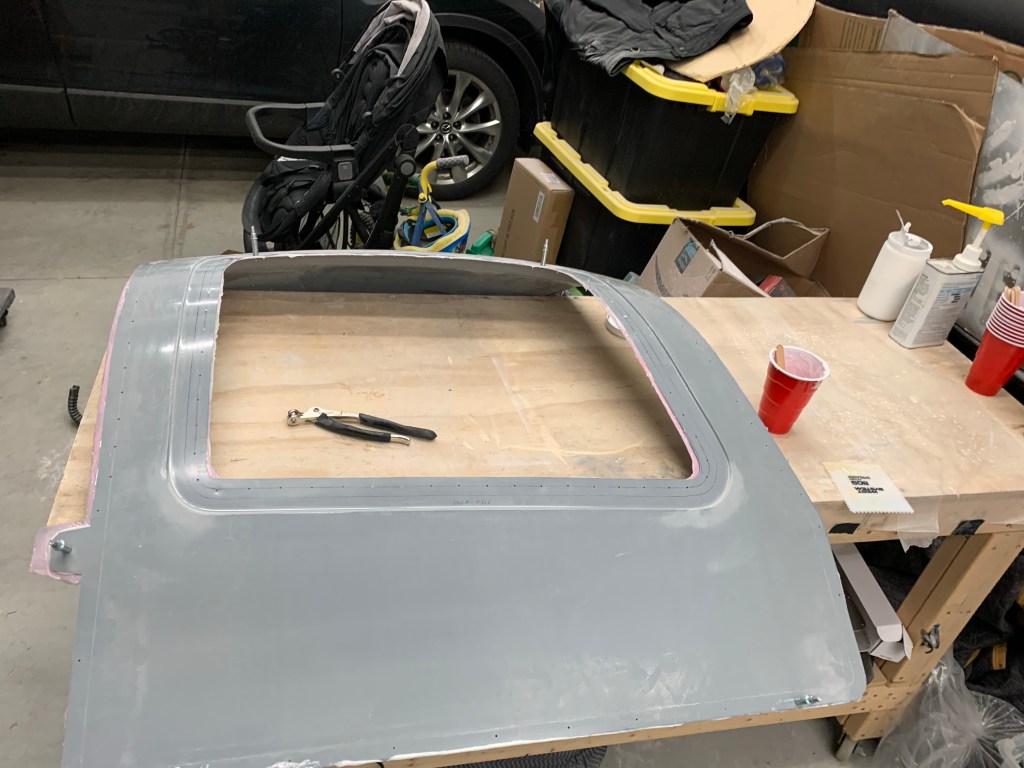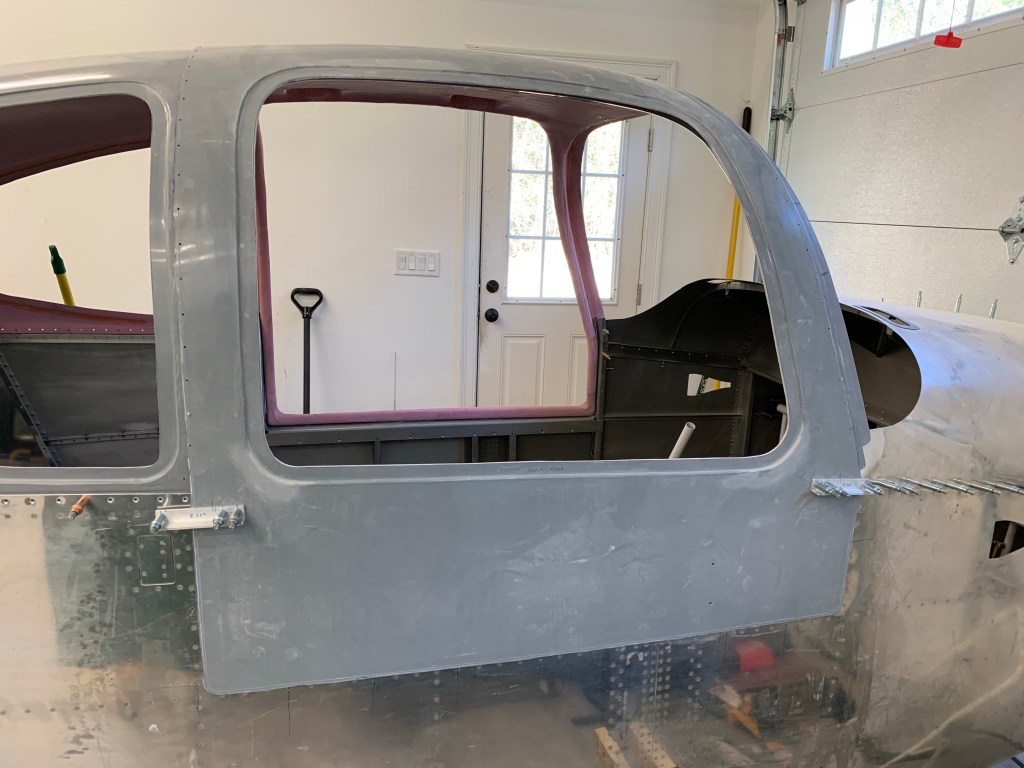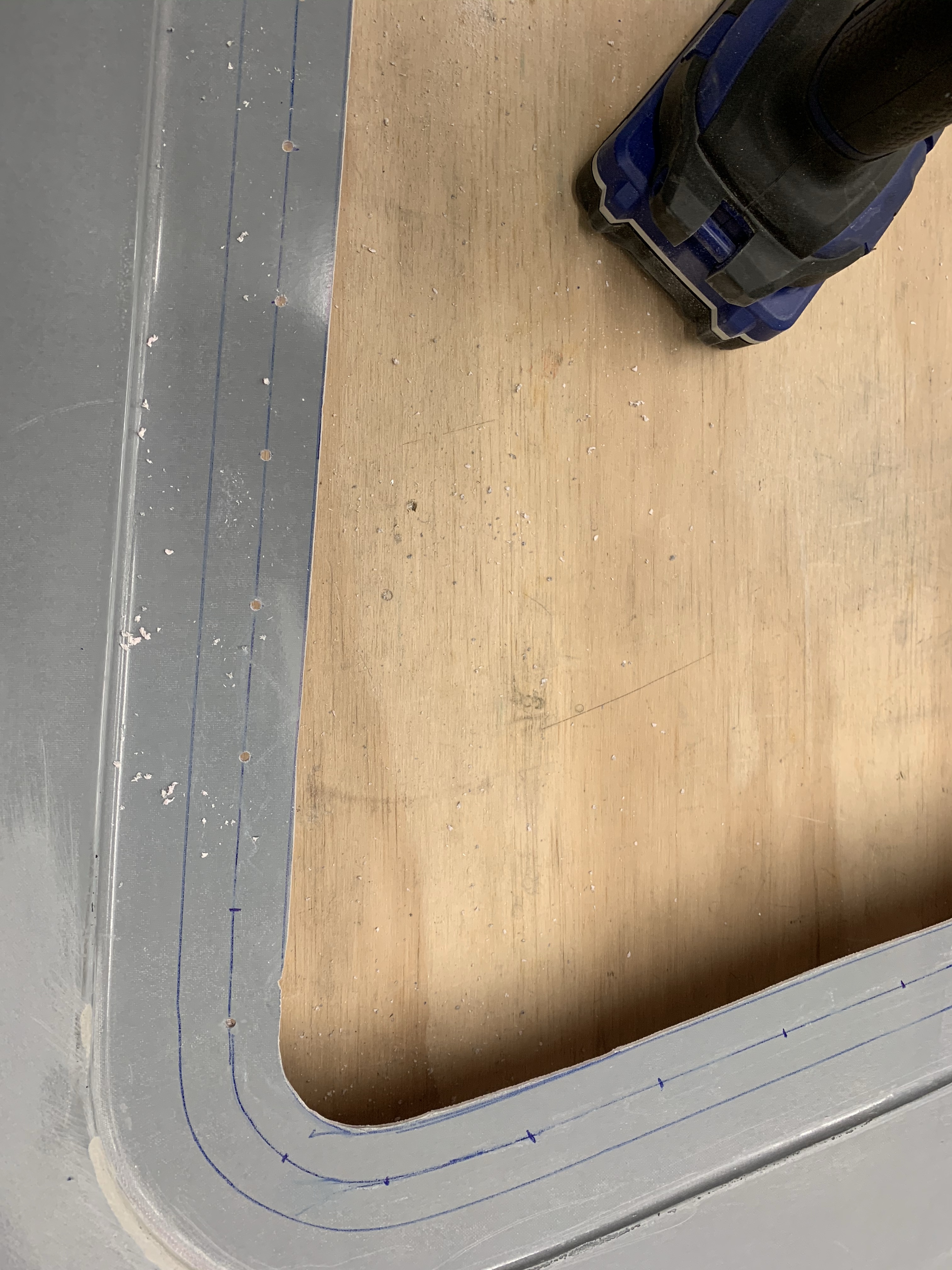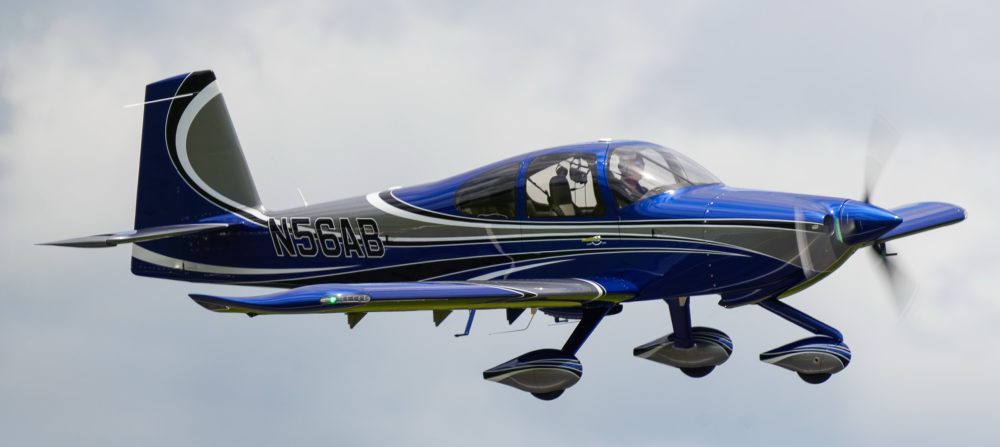
Cabin top shaping and finishing

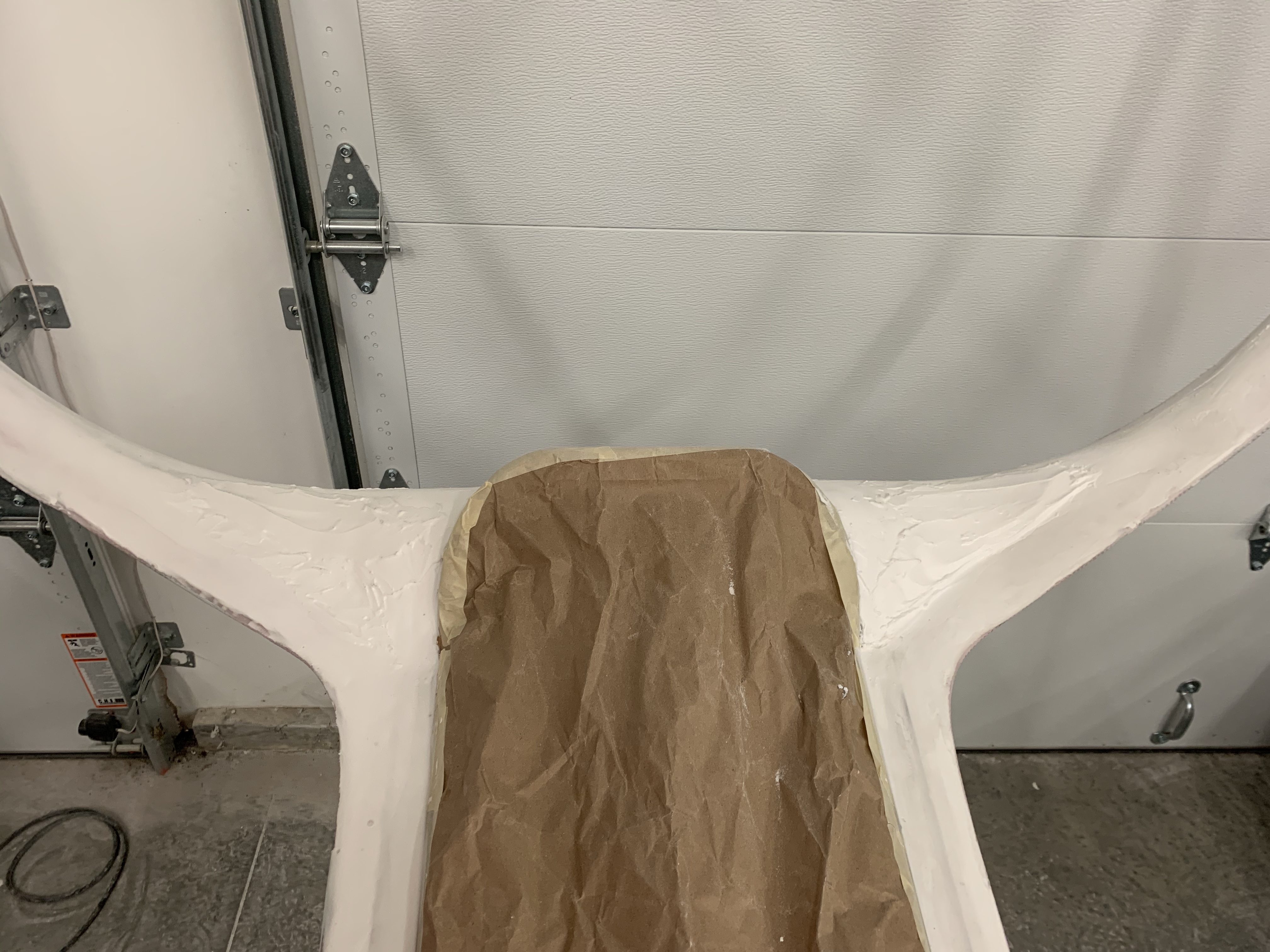
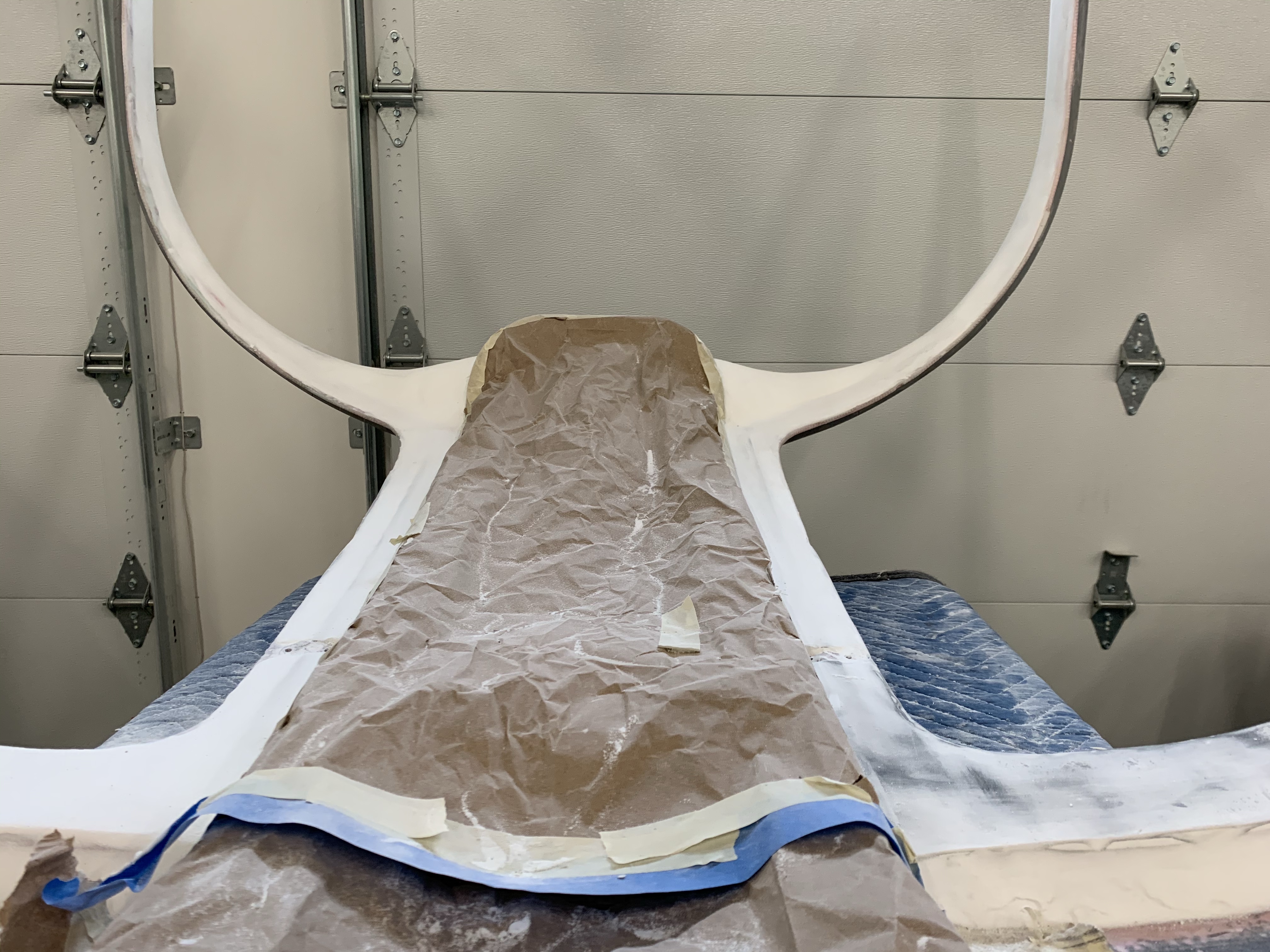
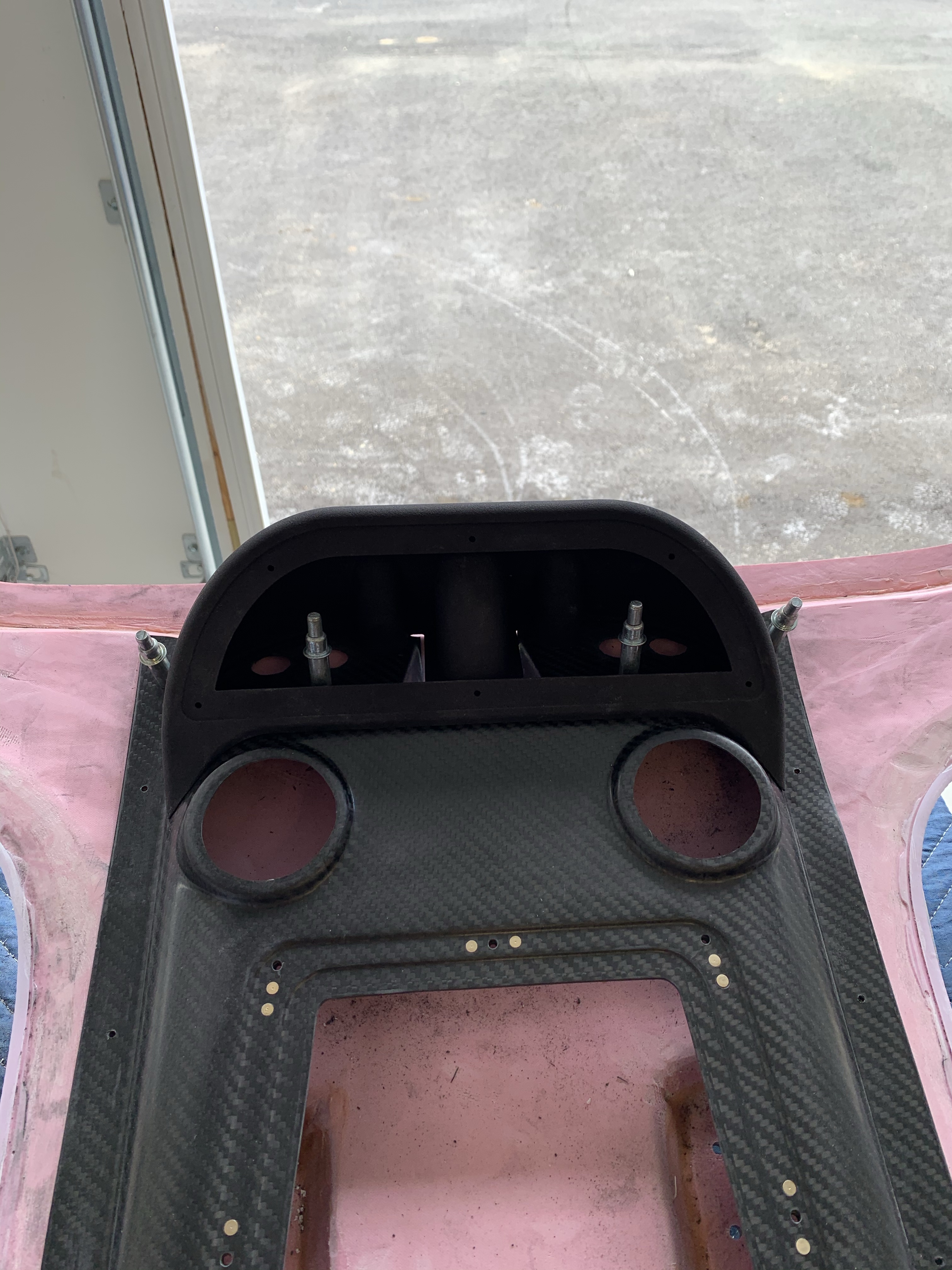
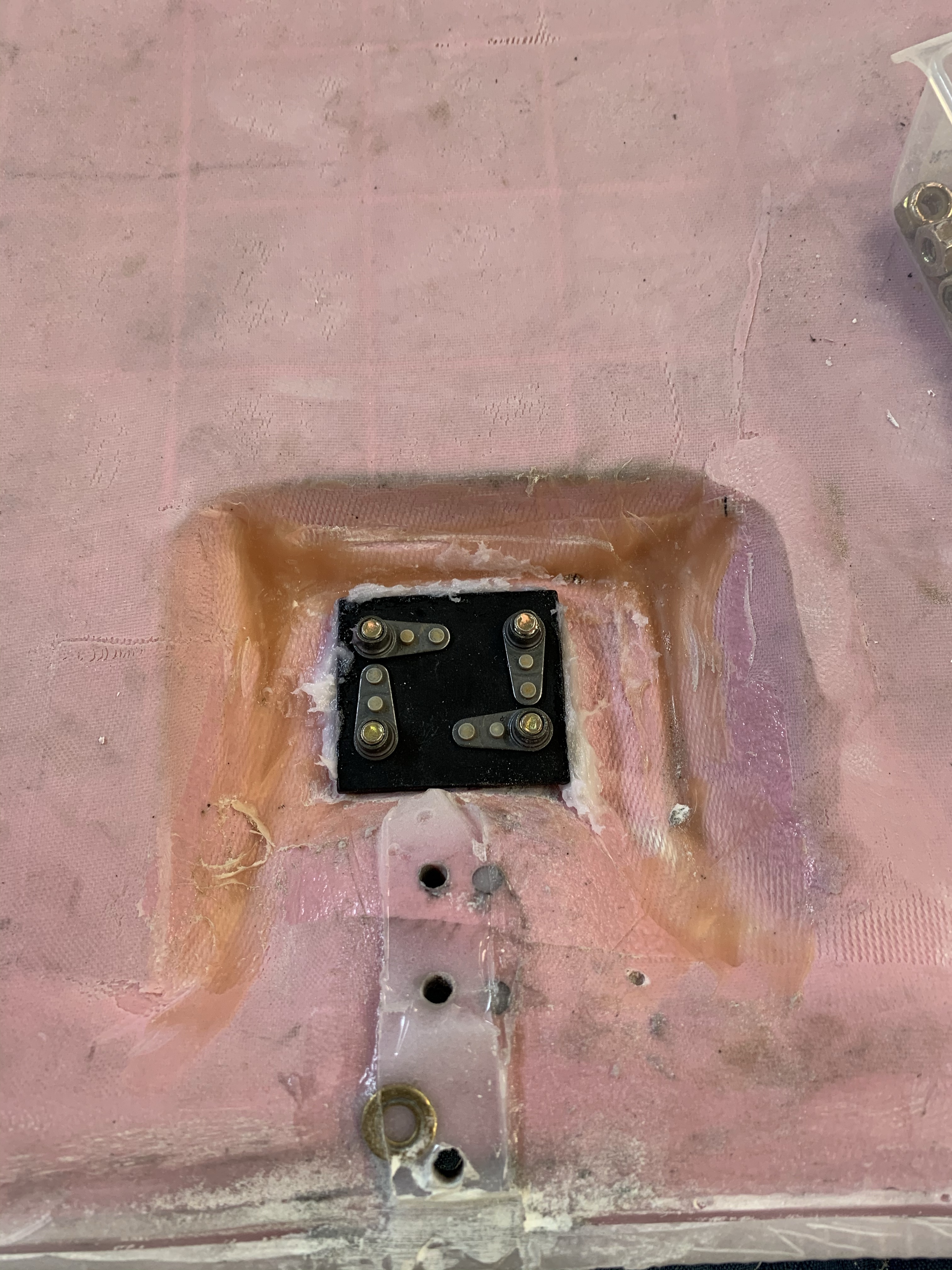
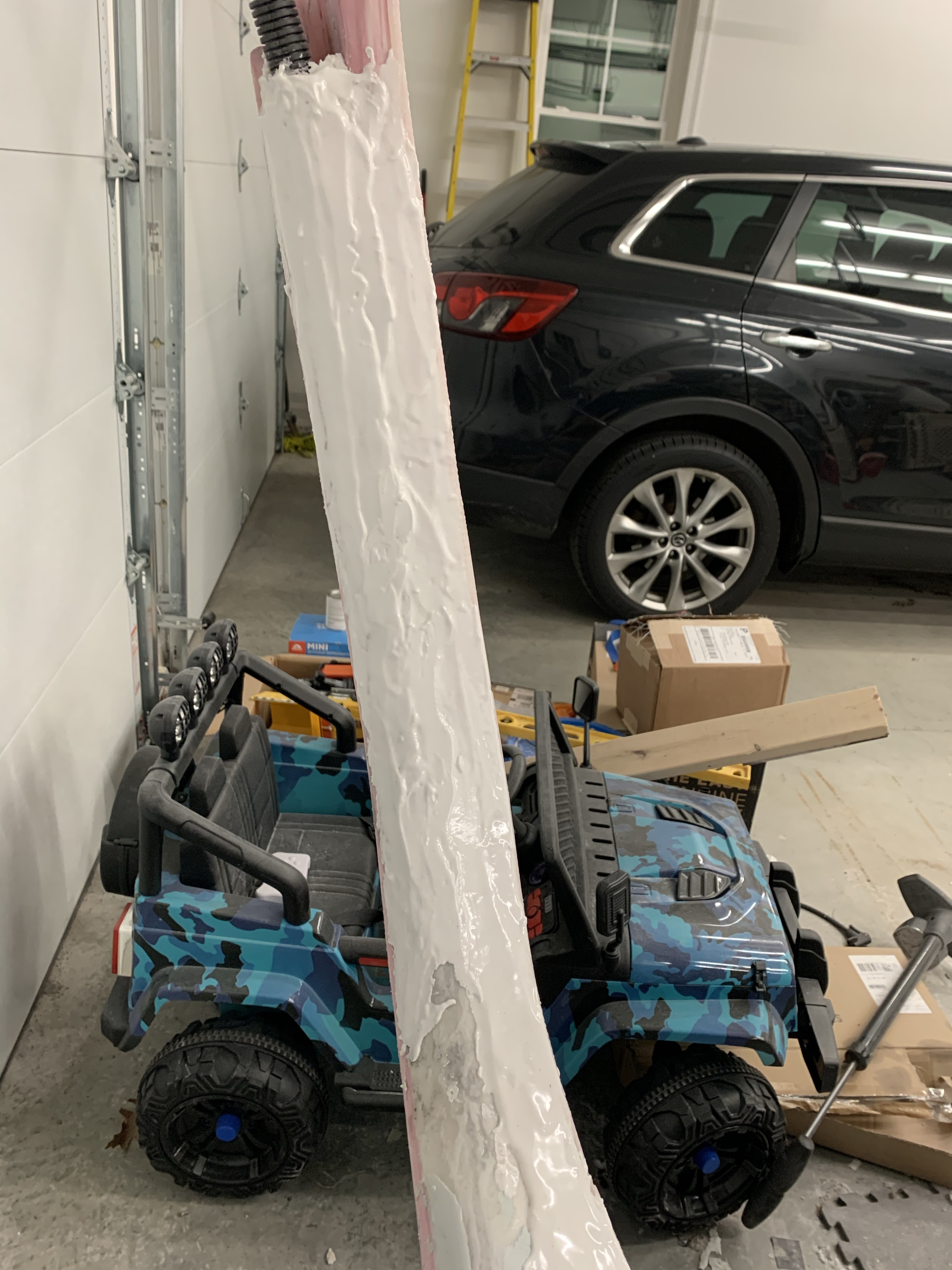
Continuing from last time, I shaped the foam build ups that house the conduits into the switch pod with a long knife and sandpaper. Here you can see the basic shape I was after. There were some imperfections, so in the end I put a layer of epoxy flox over this whole structure to harden it up and provide a good base for filler on top. I’m leaving a gap for the support bar to go into place and get bolted down. I’ll then glass over this front area later once the cabin top is attached to the plane and make it look nicer.

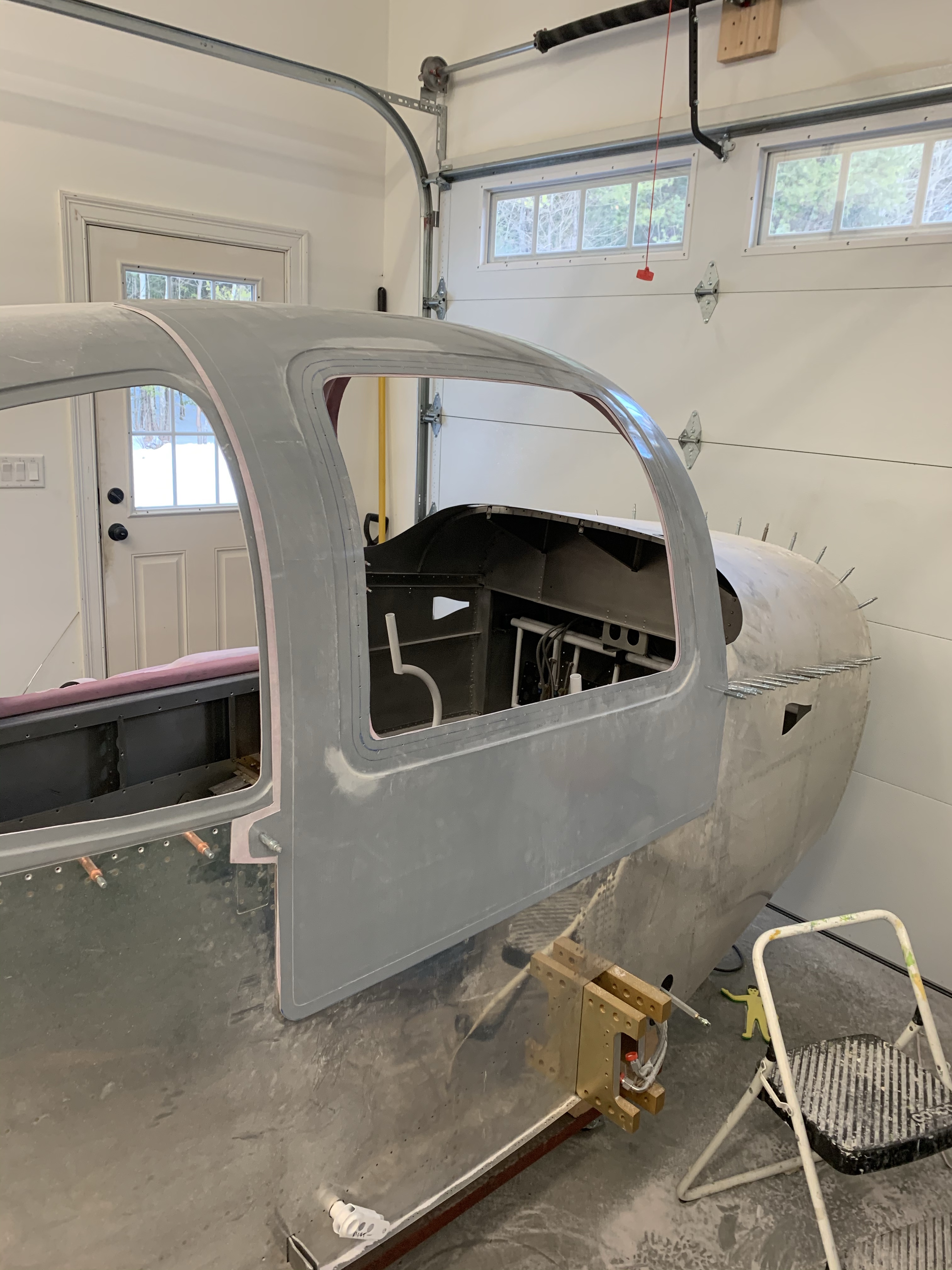
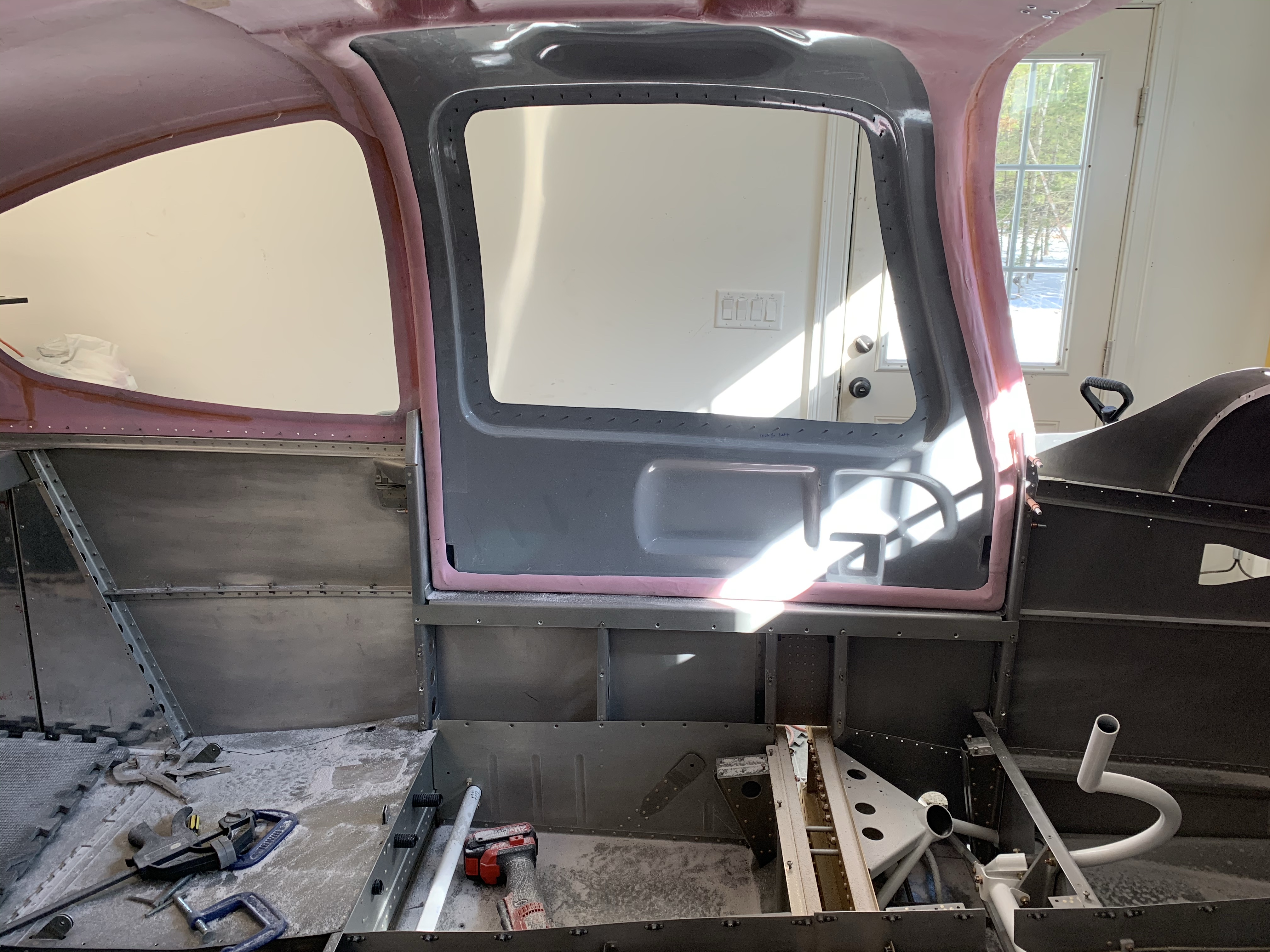
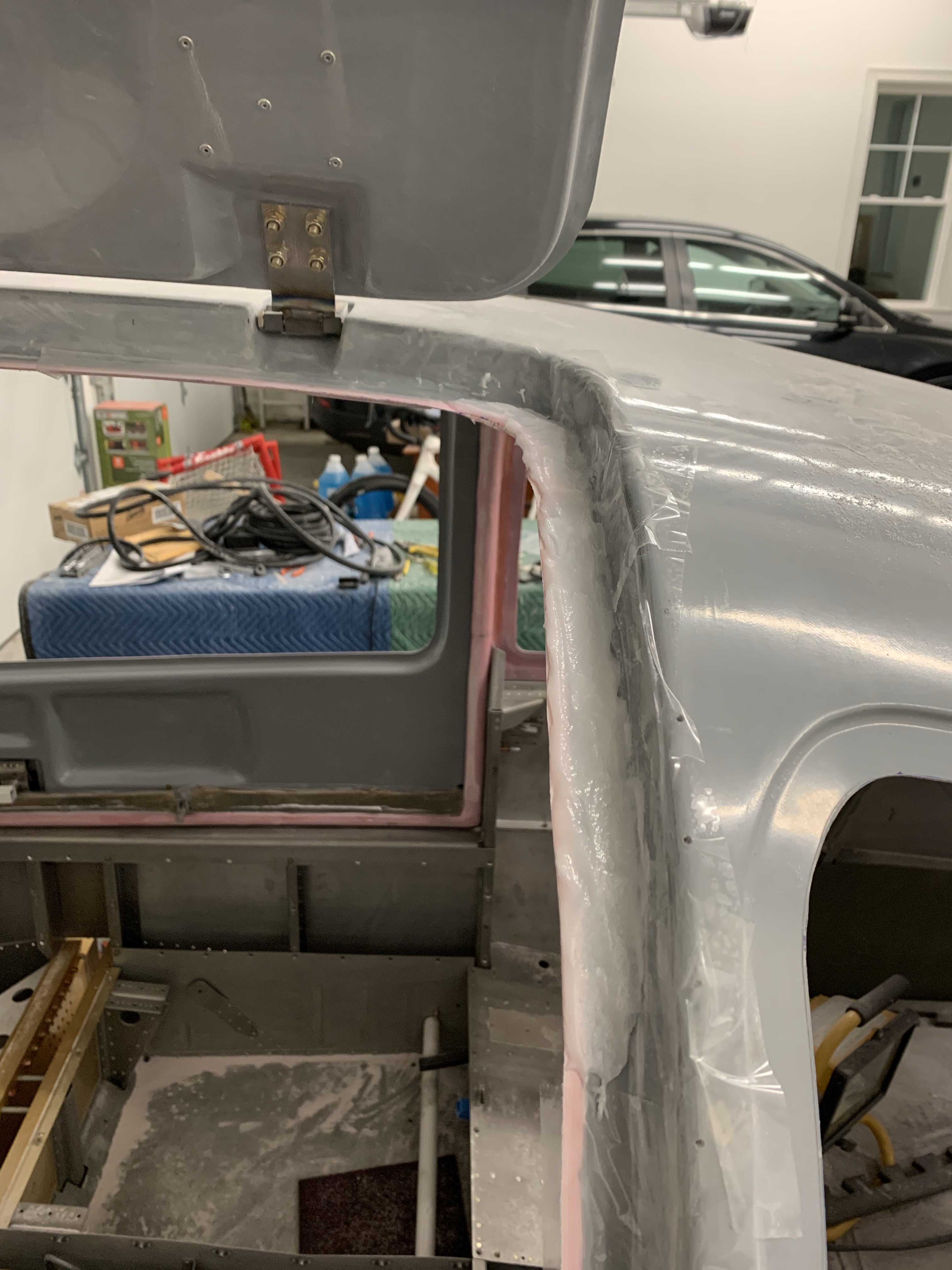
Then it was time to start filling in the surfaces that will be exposed and painted with filler. Initially I chose to use a polyester bondo material called Evercoat Rage Ultra. I did the vast majority of the right side with this.. I wasn’t really happy with it in the end. I found it difficult to mix properly and it did really stink the garage up really badly. I then tried using the more generally accepted epoxy and microballons as a filler on the left side. This seemed to go much better. I felt like I could mix it up properly and fairly consistently each time and it was easier to spread. I also doesn’t smell at all.. I’m sure most of my struggle with the bondo was inexperience and sticking with it probably would have gotten better, but I decided to forge ahead just using the micro. I spent the better part of 2-3 hours sanding off the bondo that I had put on the right side until I was down to pink again.. . I then spent several sessions of filling and sanding.. filling and sanding the micro over all the exposed areas. Through this process, I learned that it’s ideal to mix up enough for the whole job and spread more than you’ll need rather than doing multiple fill and sand sessions. The thought here is that you’ll never mix the epoxy and micro to the same ratio between batches and the 2 different mixtures have different densities making it hard to sand well. So far I haven’t found it to be too much of a problem, but I’ve also not painted it yet.. so maybe time will tell. The below pictures are various stages of slathering on micro around the door pillars and flat areas in the door entries.
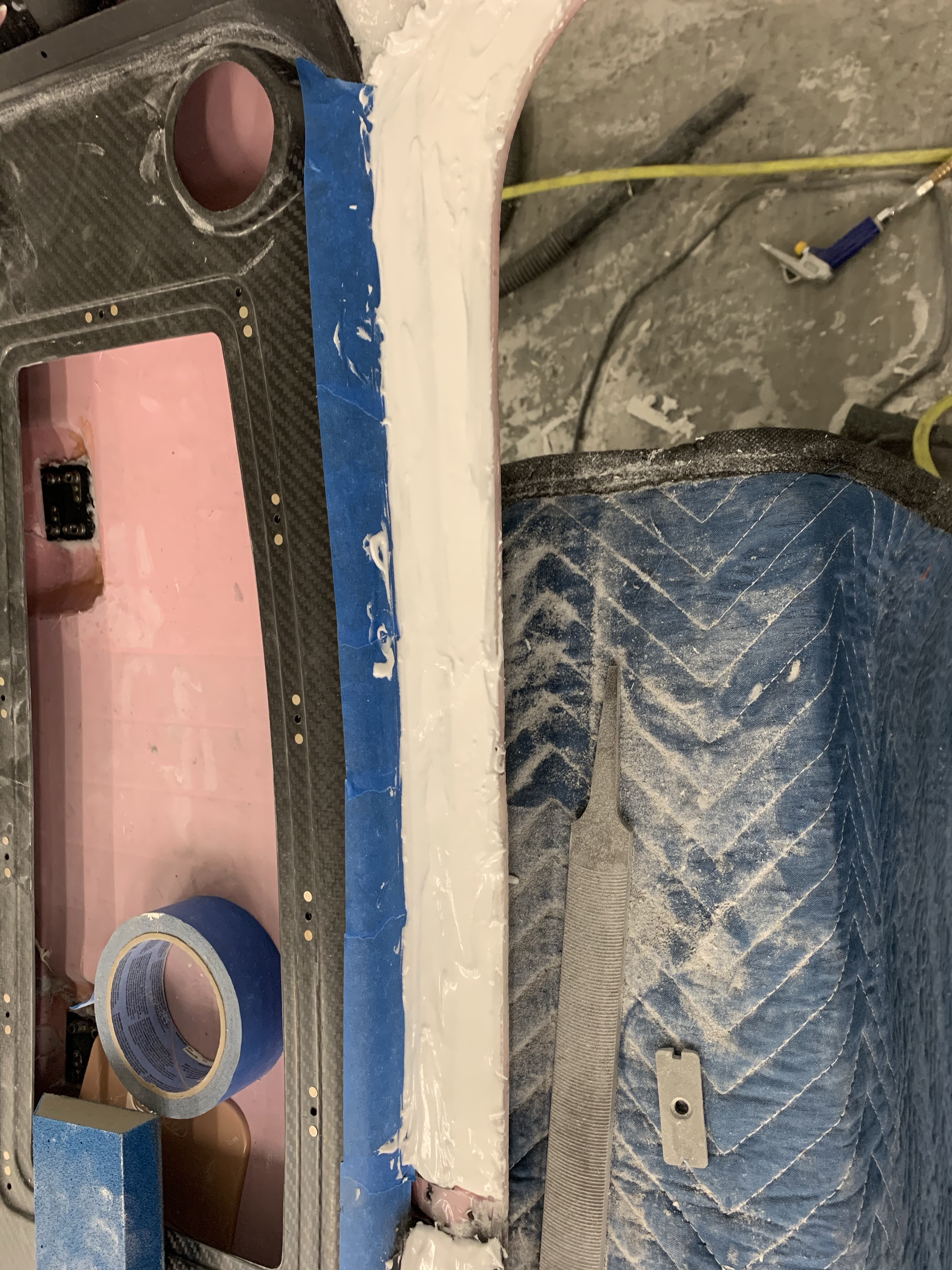
Left Side door

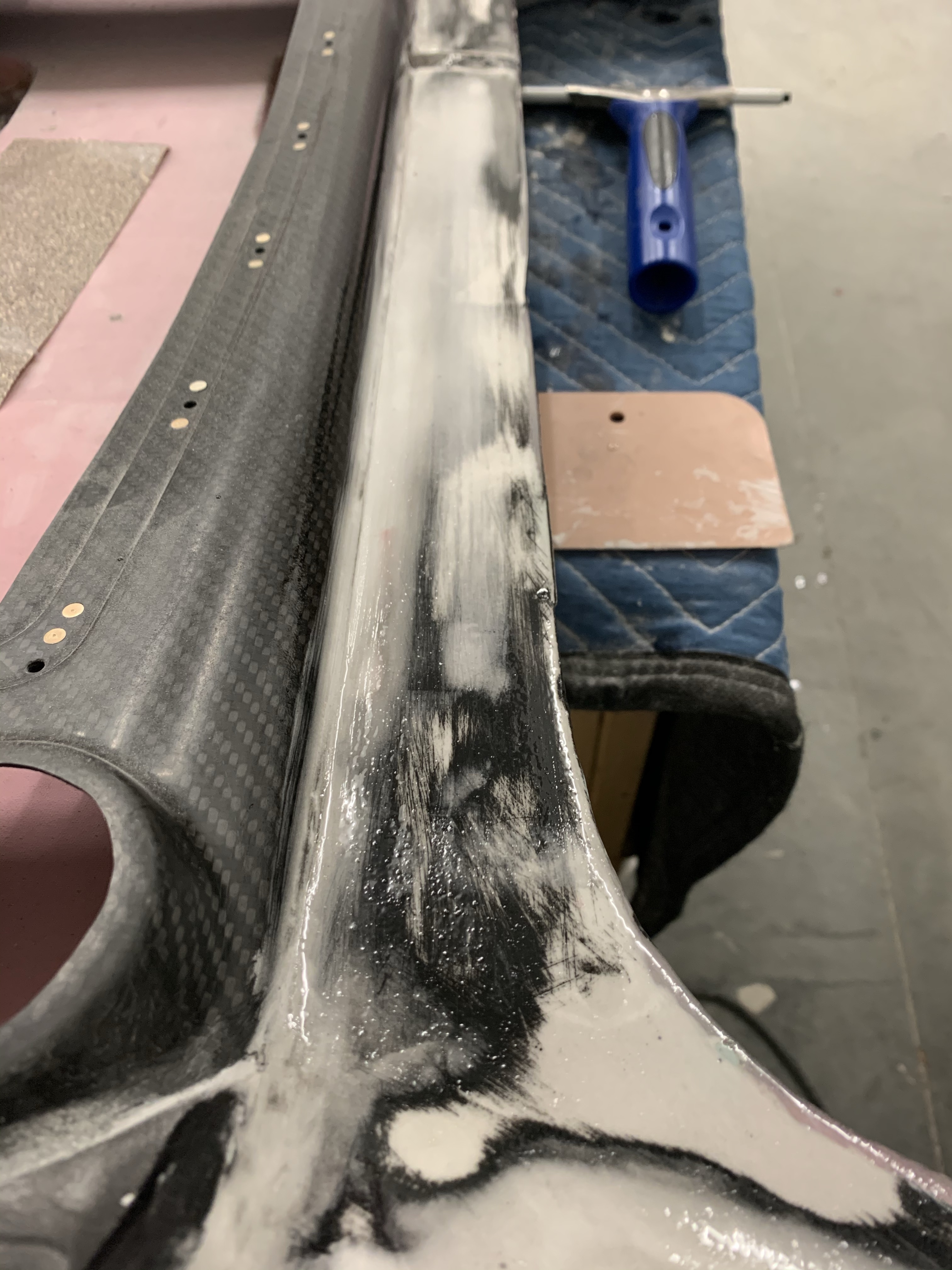
You’ll see below that I did end up spraying some black primer that I had lying around as sort of a guide coat prior to adding more micro. This can help see low spots easier as well as help as a sanding aide to not sand deeper than before. If you see black start coming through, you know to stop. In the end, I don’t think this was really needed.. I think judging with your eyes and fingers do just as good of a job in the right light.
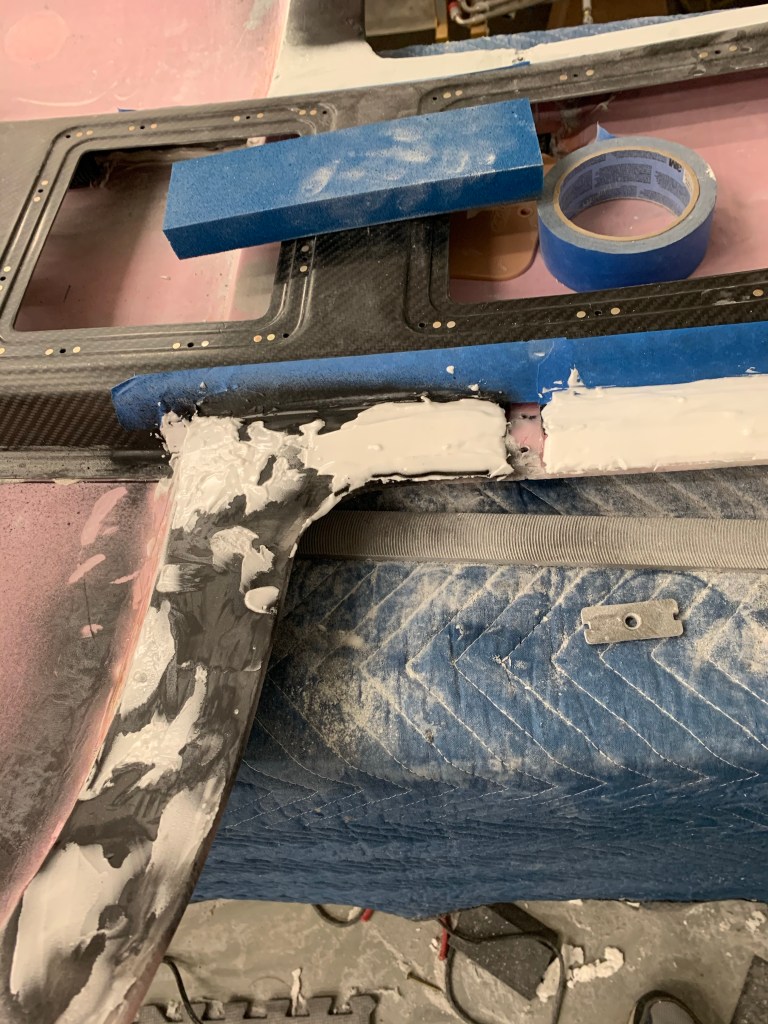
The below pictures show a better profile of the build up into the switch pod. Here it’s still not perfect yet as I needed to fill imperfections and blend into the flat part a bit better.
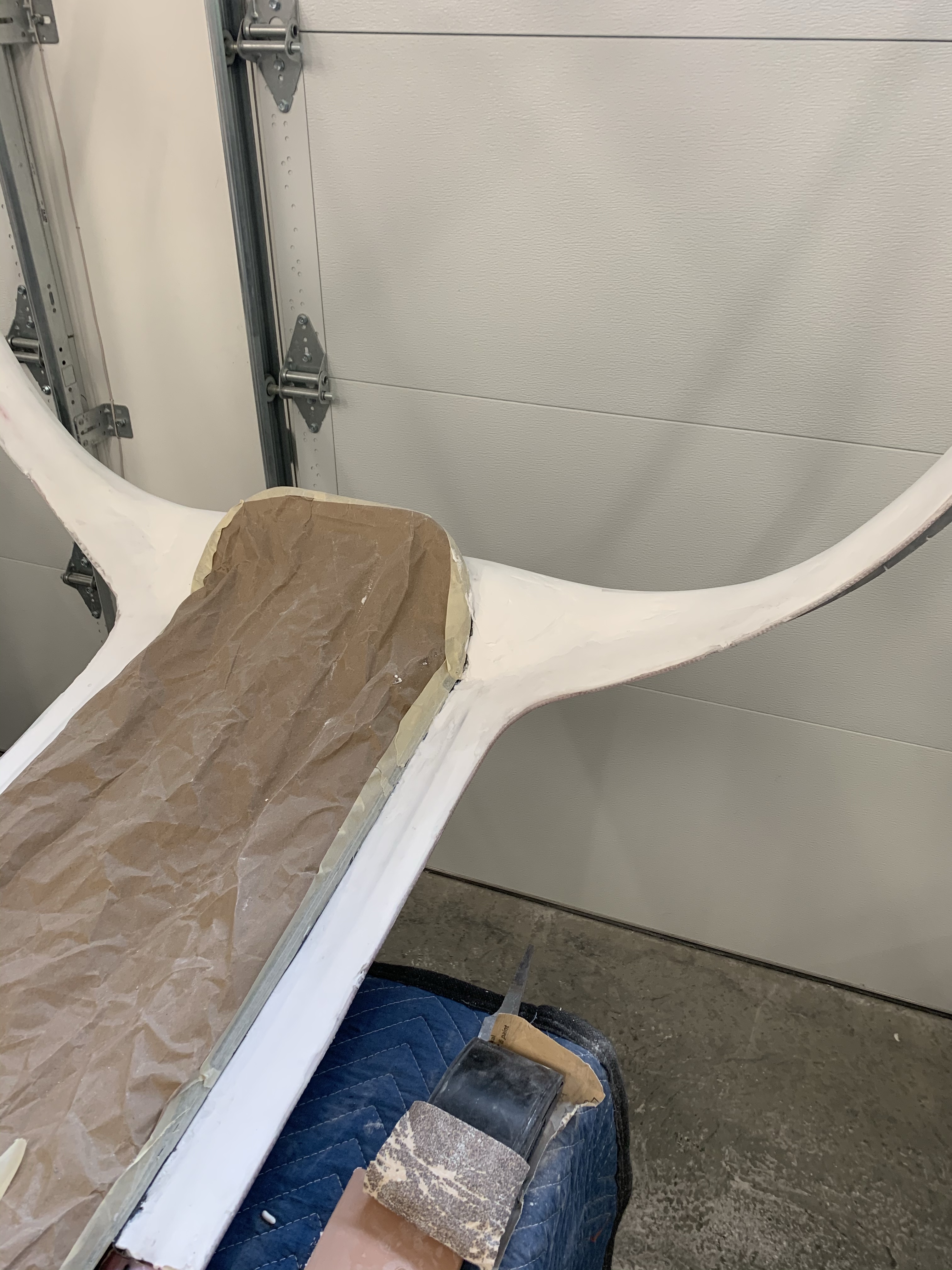
Still some sanding to do
Still some divots to fill in.
Getting closer

Here I’m just about at the point of being happy with the overall shape and have little to no imperfections.

Just about ready to finish off the part.

Once you’re happy with the contour of everything, you apply a skim coat of neat epoxy and I used a squeegee to move the epoxy around in all directions to fill in any pinholes. I then used a 4″ foam roller to smooth it out and let it cure overnight. The foam roller leaves some small “dots” from the nap of the roller which I will lightly sand after things cure.

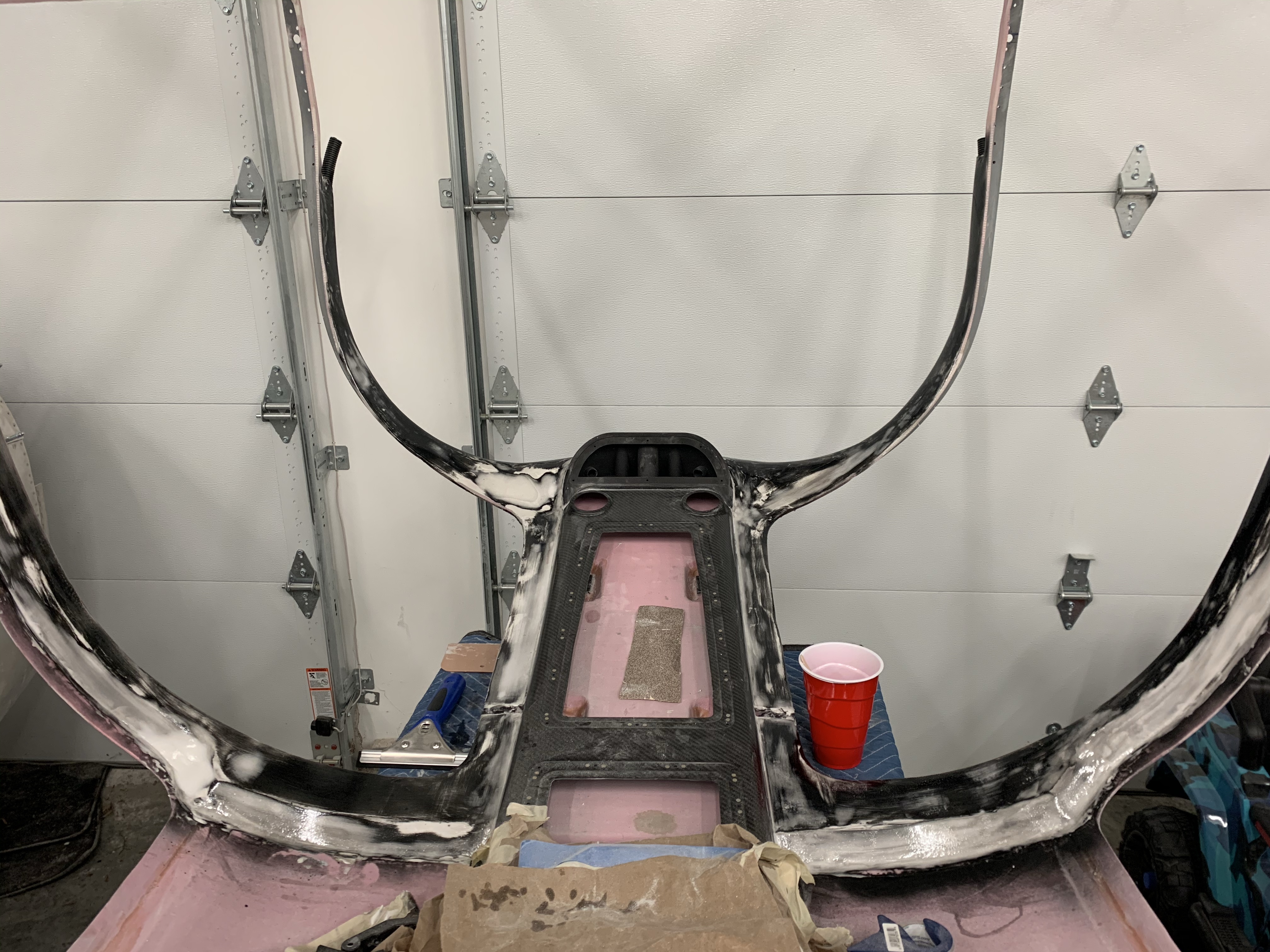
Finishing off with Epoxy via a squeegee
Finished the neat epoxy application over all surfaces.
Closeup of the right side door entry.
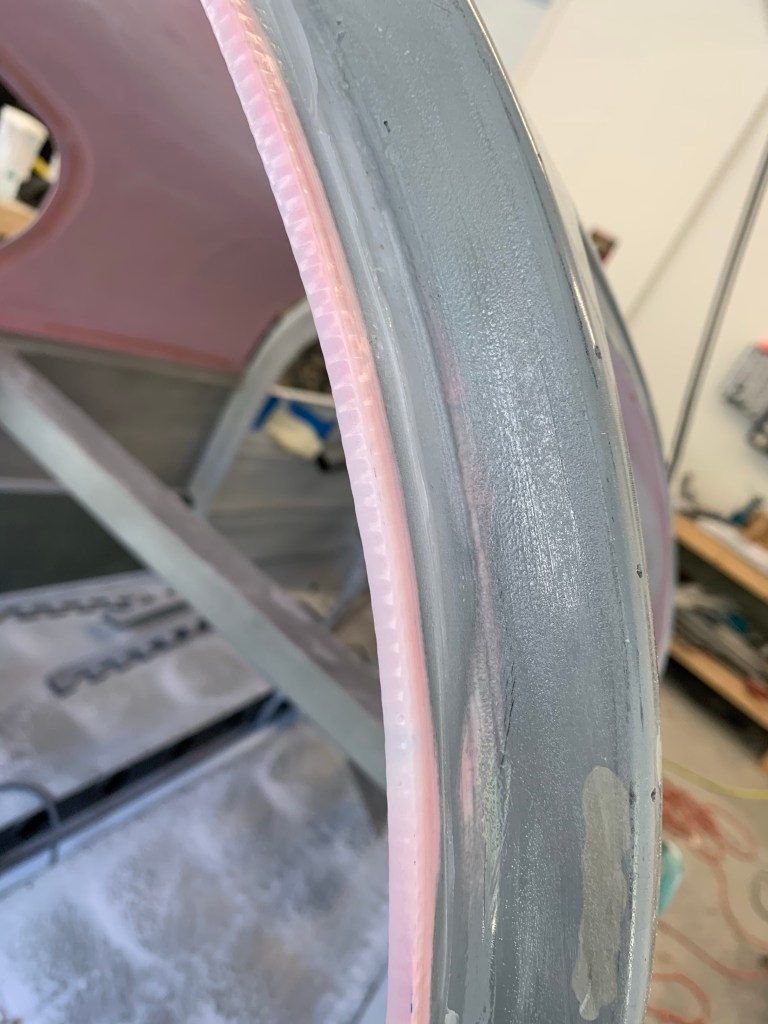
Closeup after cure and still a little sanding to do

I’m relatively happy with how it looks currently. By no means is it perfect, but I really just want something that is presentable and isn’t an eye sore. Next up is to paint it. The plan is to use a dark PPG epoxy primer and do a wet-on-wet application of PPG K36 high-build primer. There will likely be at least a couple of rounds of that building up the surface, block sanding, and repeating until the surface is as perfect as I can get it. Then a top-coat of paint will be going on after that. I’m planning of a charcoal and oxford white interior scheme, so this will be painted an Oxford White. I’m currently working of getting supplies together to build a temporary paint booth so I can shoot primer and paint in a reasonable atmosphere.
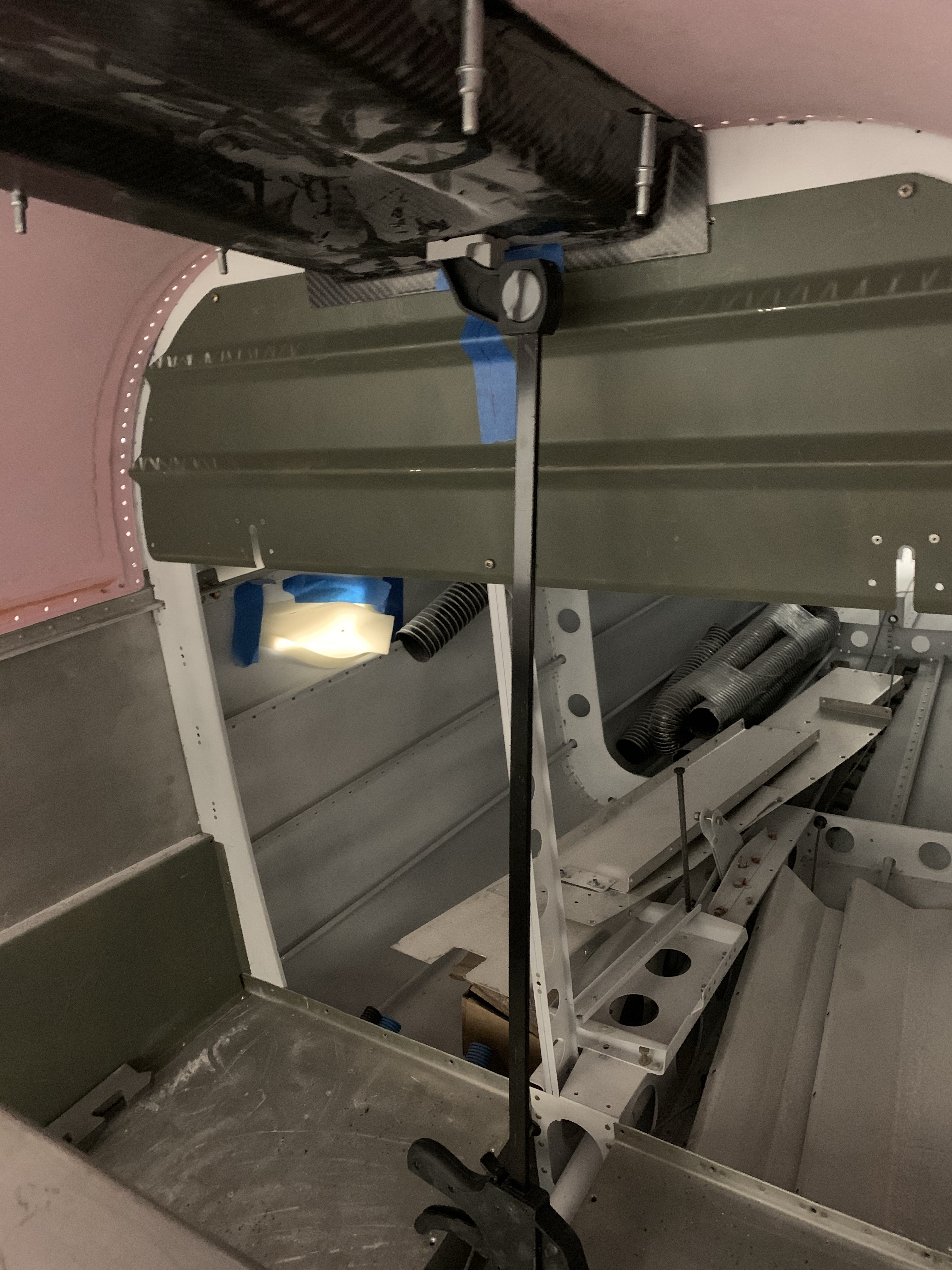
Overhead Console

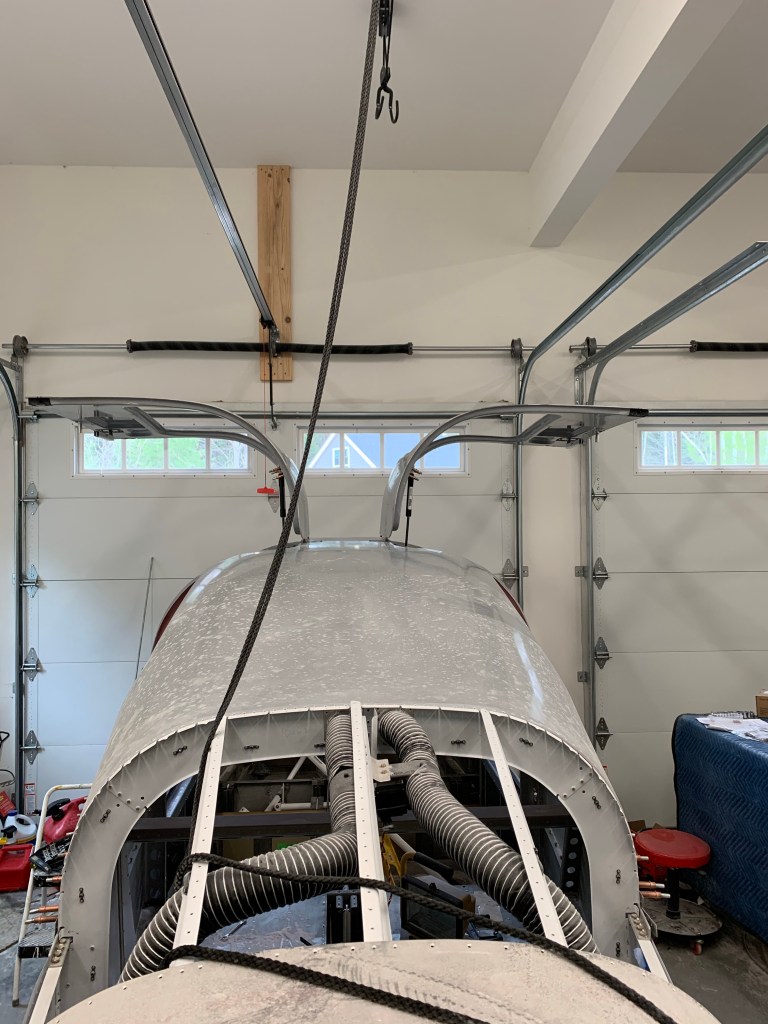
I started off by getting the center of the cabin top marked in the aft and forward positions as well as marking spots on the overhead console itself to align both the front and rear to the top. I also installed the top baggage bulkhead and the skin to keep the rib steady as it can be floppy otherwise. Below is a picture of the spreader I bar I used to hold the aft end up while drilling holes (not all the way through, just enough for a cleco to bite) through the flange and into the cabin top. The forward end was held with clamps in the door openings.

Holding the Aft end up
Front Alignment to center

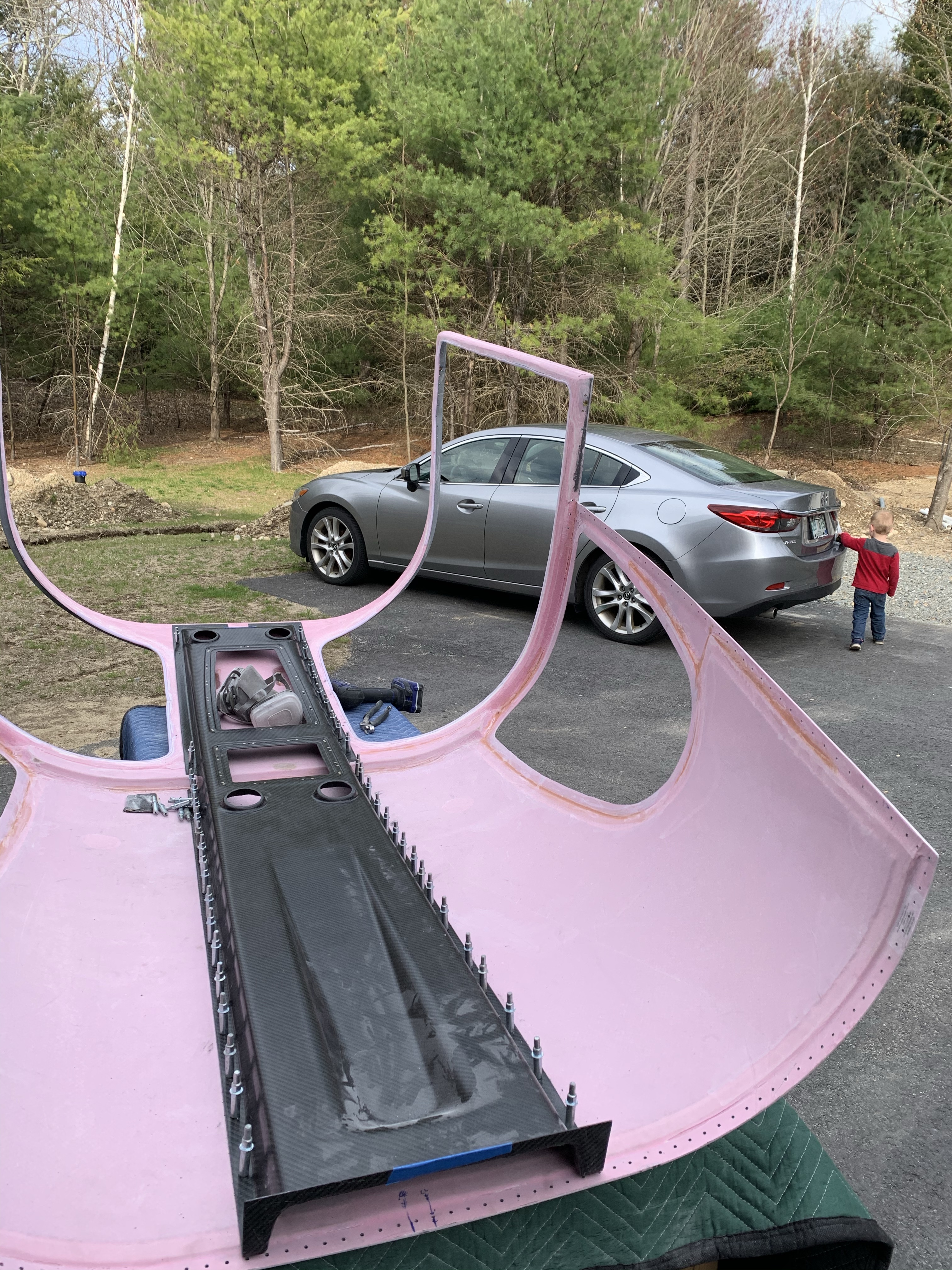
Once that was done, I took the cabin top off of the structure to work on finishing it upside down on the bench. First up was to sand down the high and ugly spots around the door frame and near the hinge pockets. It was such a nice day out that me and my son (who is up my butt constantly) went outside to make some fiberglass dust out there for a change. One note is that I am using a headliner material for the back half of the plane, so that area I don’t have to be too fussy with. I just need to make the areas around the doors pretty. As you can probably see from the pictures, the inside surfaces aren’t the best. I can say that this is the most recent top that is gel coated on the outside and the best quality that Van’s has put out yet. The 2 prior versions, especially the first, green color, one was really bad, and a lot more work to deal with for the early builders.

Sanding the high spots down
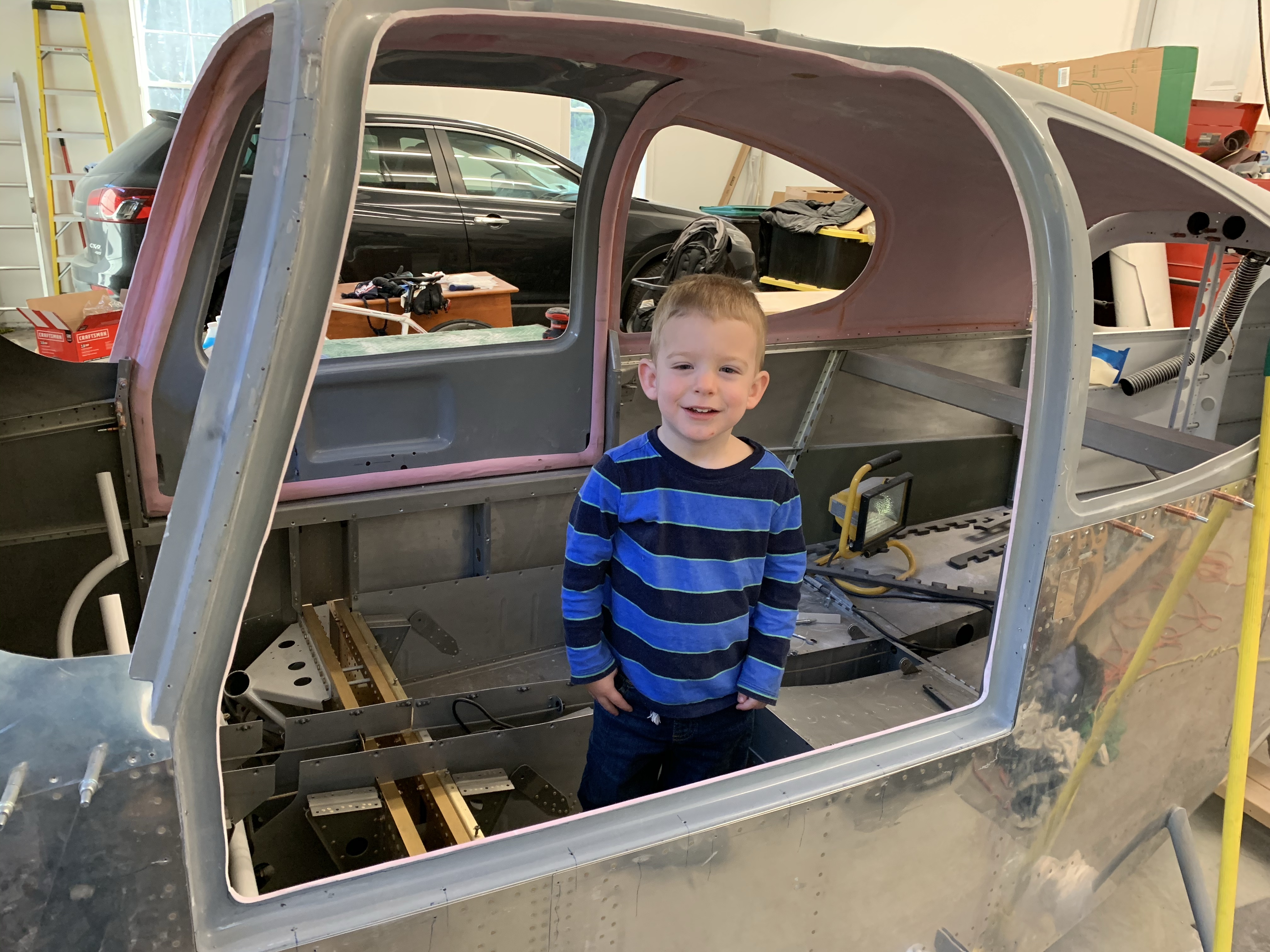
Me and my buddy!
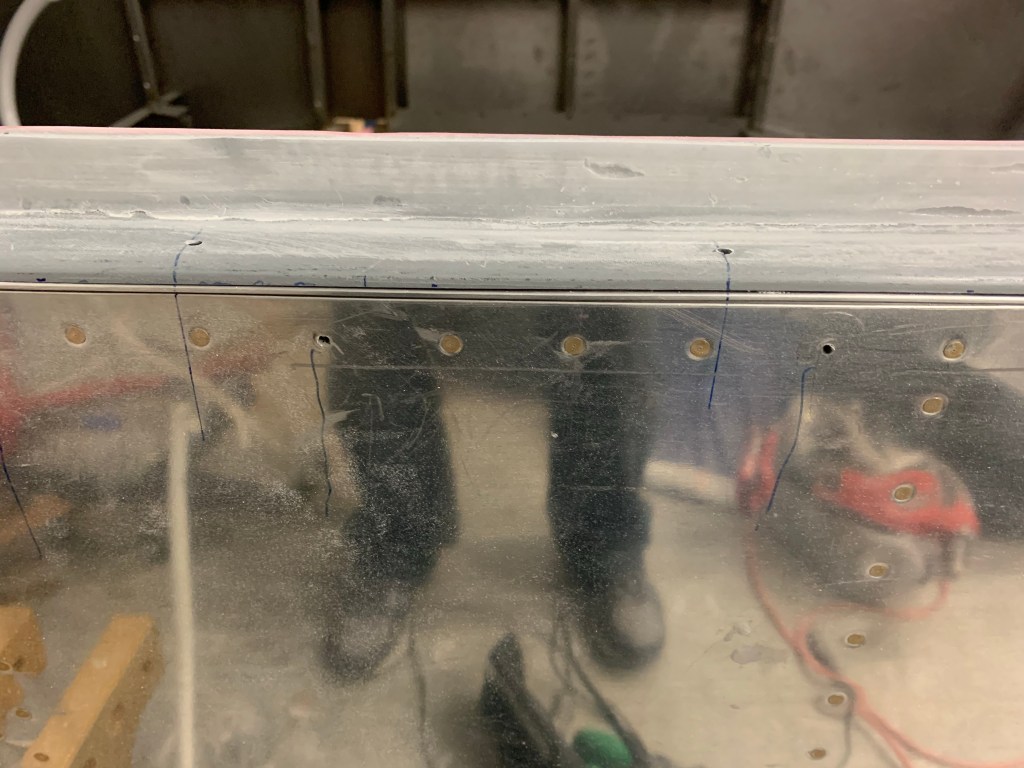
Drilling extra holes to make sure I get adequate squeeze out for the adhesive

I then got the switch pod match drilled into place. This will house my light switches for taxi, landing, etc.. along with light dimmers for all interior lighting.

The overhead comes with a bar over the baggage compartment area to hang things on, if needed. I got to installing that by finding the center line and drilling the holes for screws to hold it in place.

I plan to do a matte clear coat on the overhead and leave the carbon fiber finished look. I think it’ll come out great. This is the 2-part clear coat I am using for the job (to be done later).

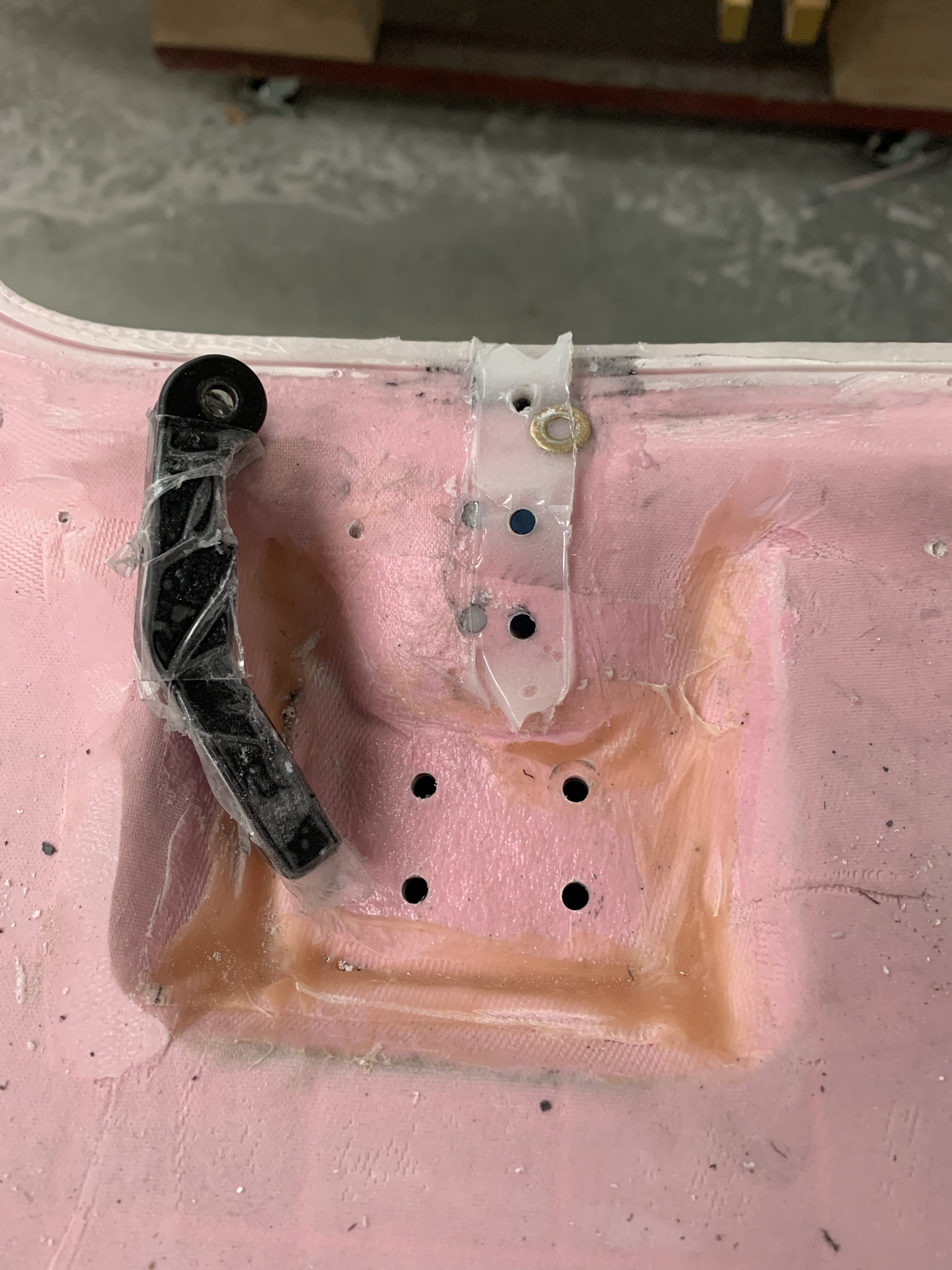
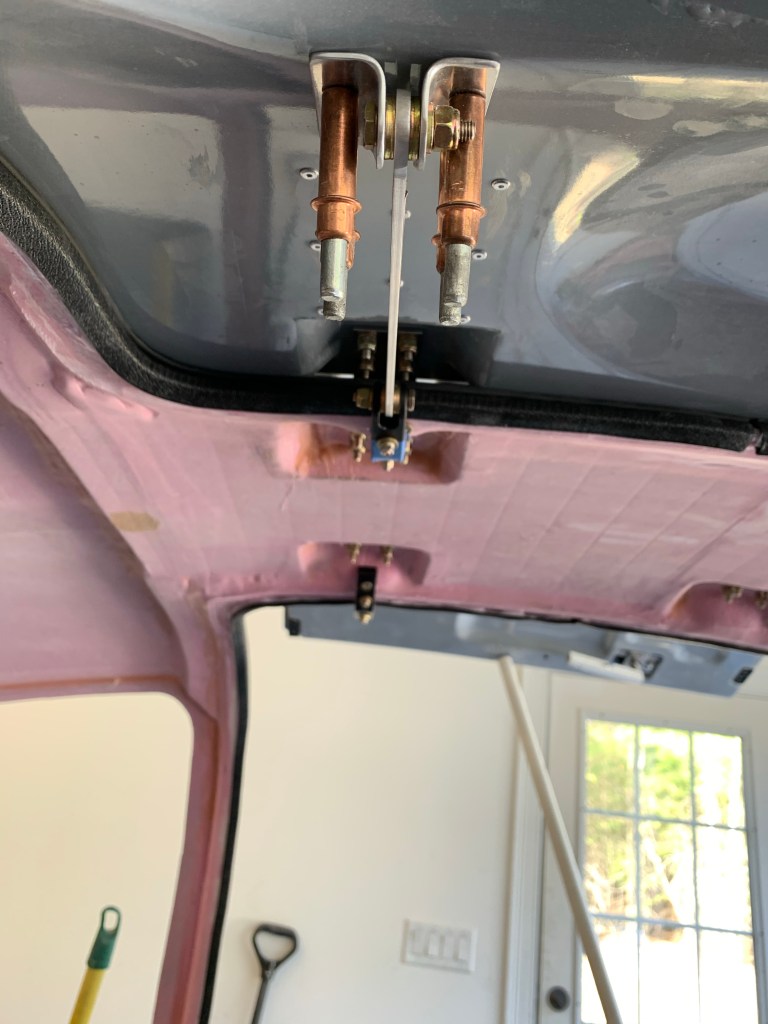
I then finished something I delayed a little but until I took the top off. I used the door strut brackets and wrapped them in packing tape and epoxy/floxed the area underneath of them. There were some gaps in the curvature of the fiberglass compared to the angle of the brackets and this provides a nice solid underlying surface for them to rest on. After curing, I popped them off and this is the end result. This side is the side that I used a washer to get the strut angled the way I wanted it, and you can see it is now permanently part of the structure.

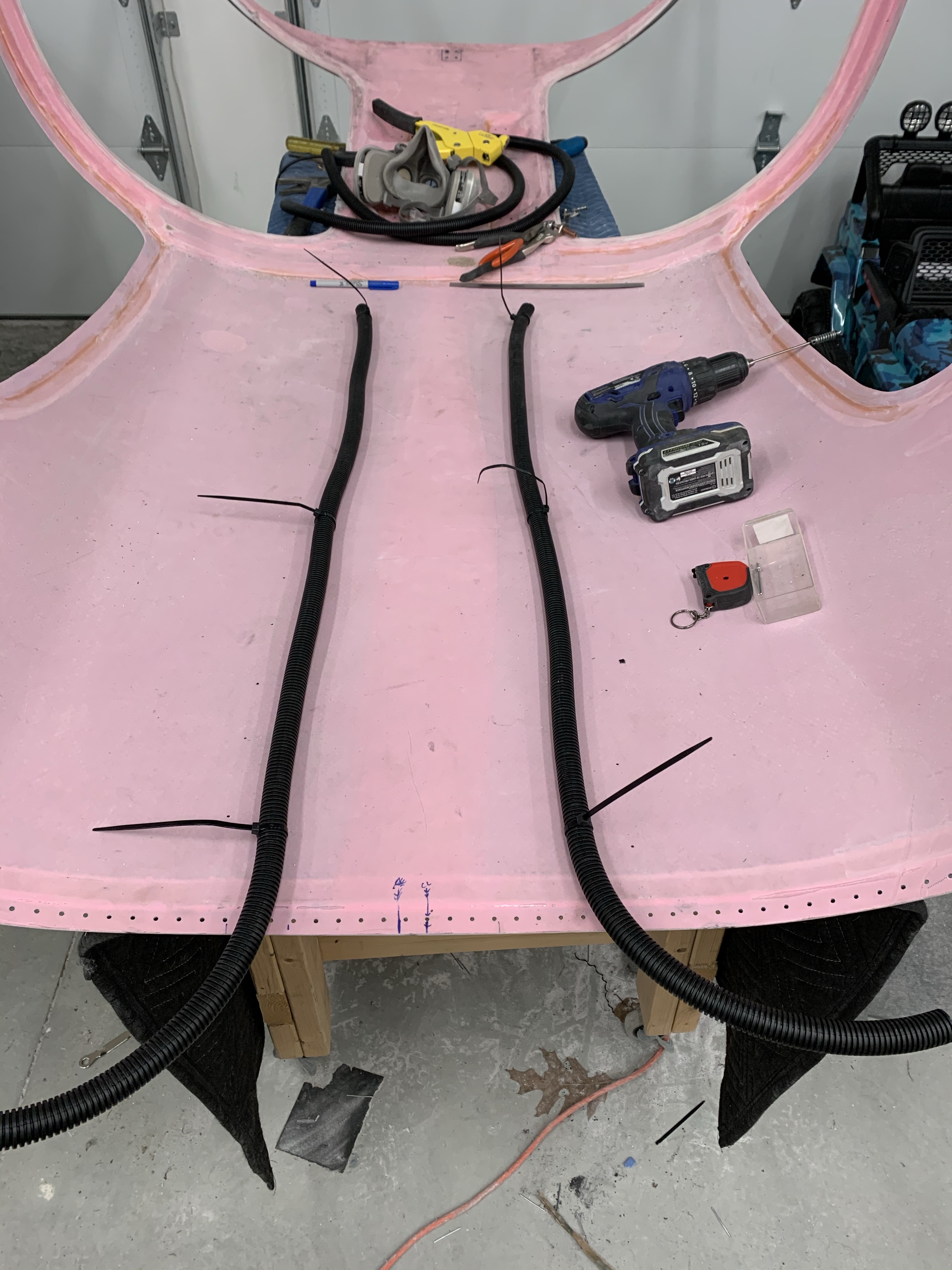
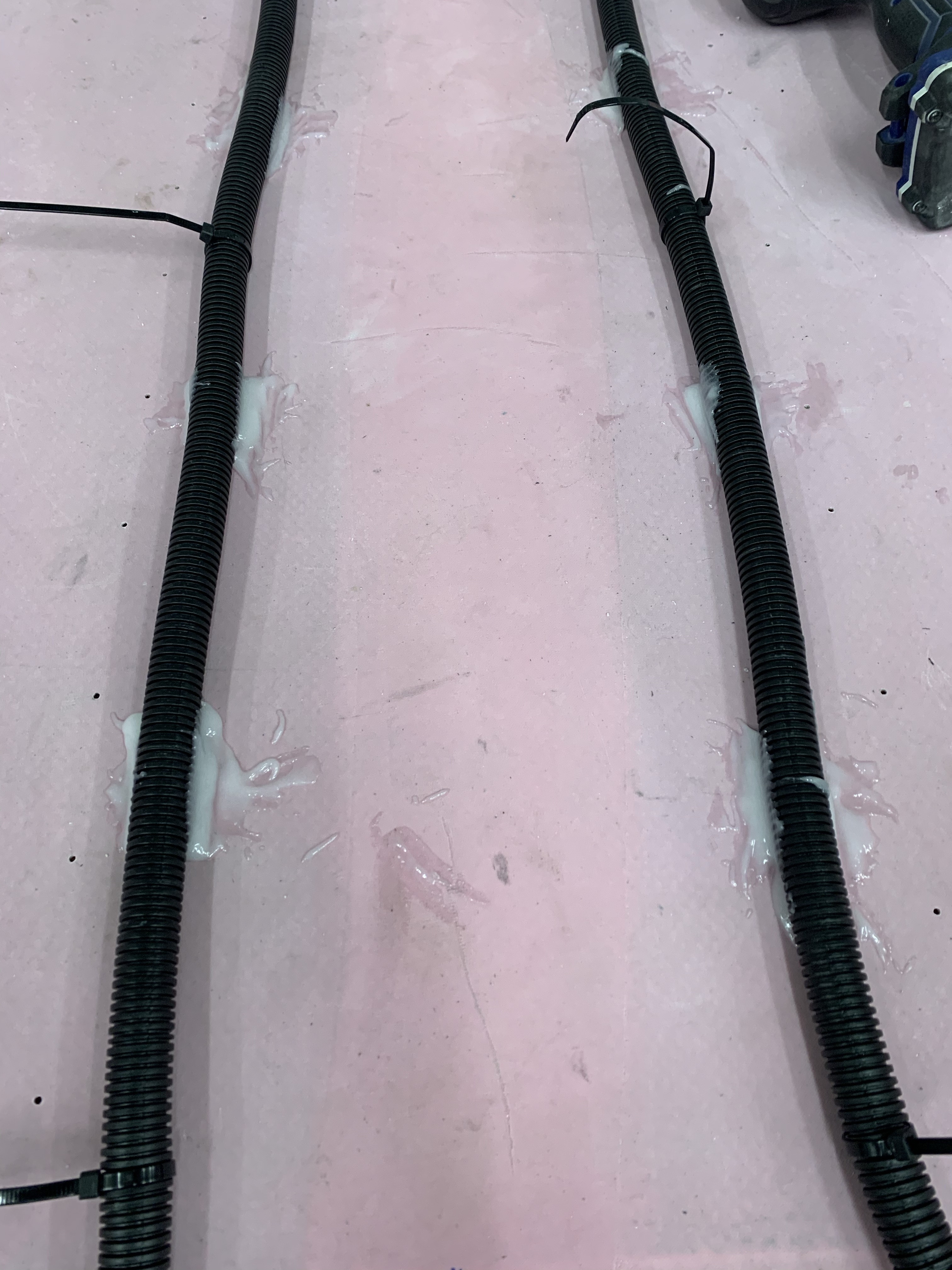
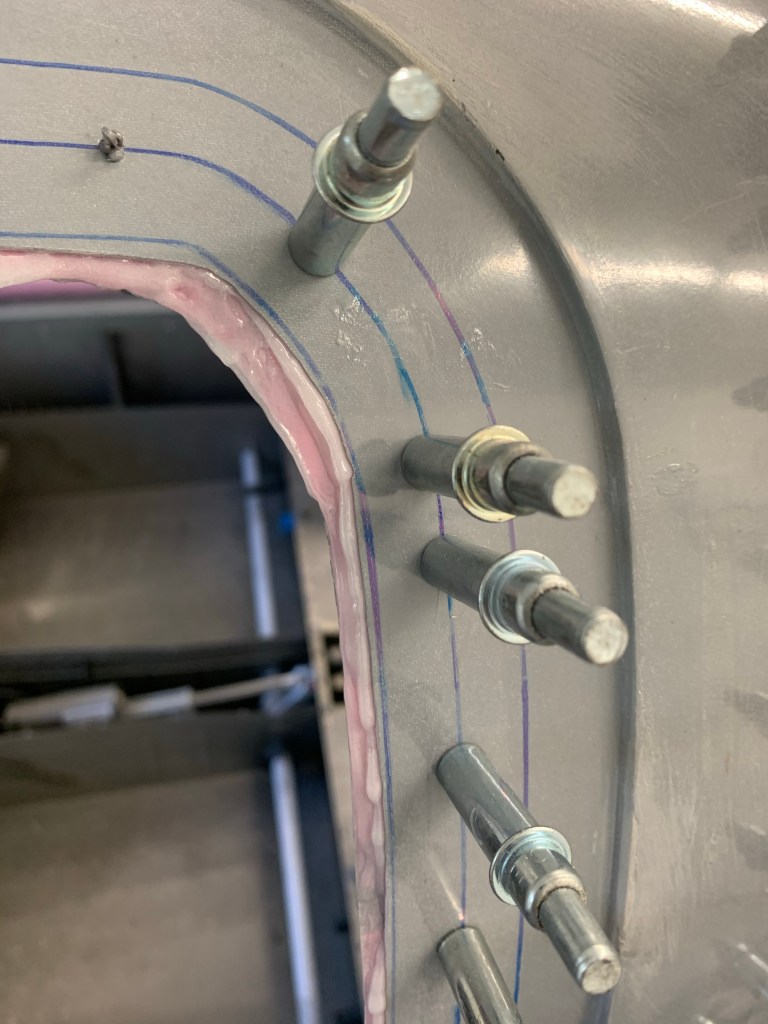
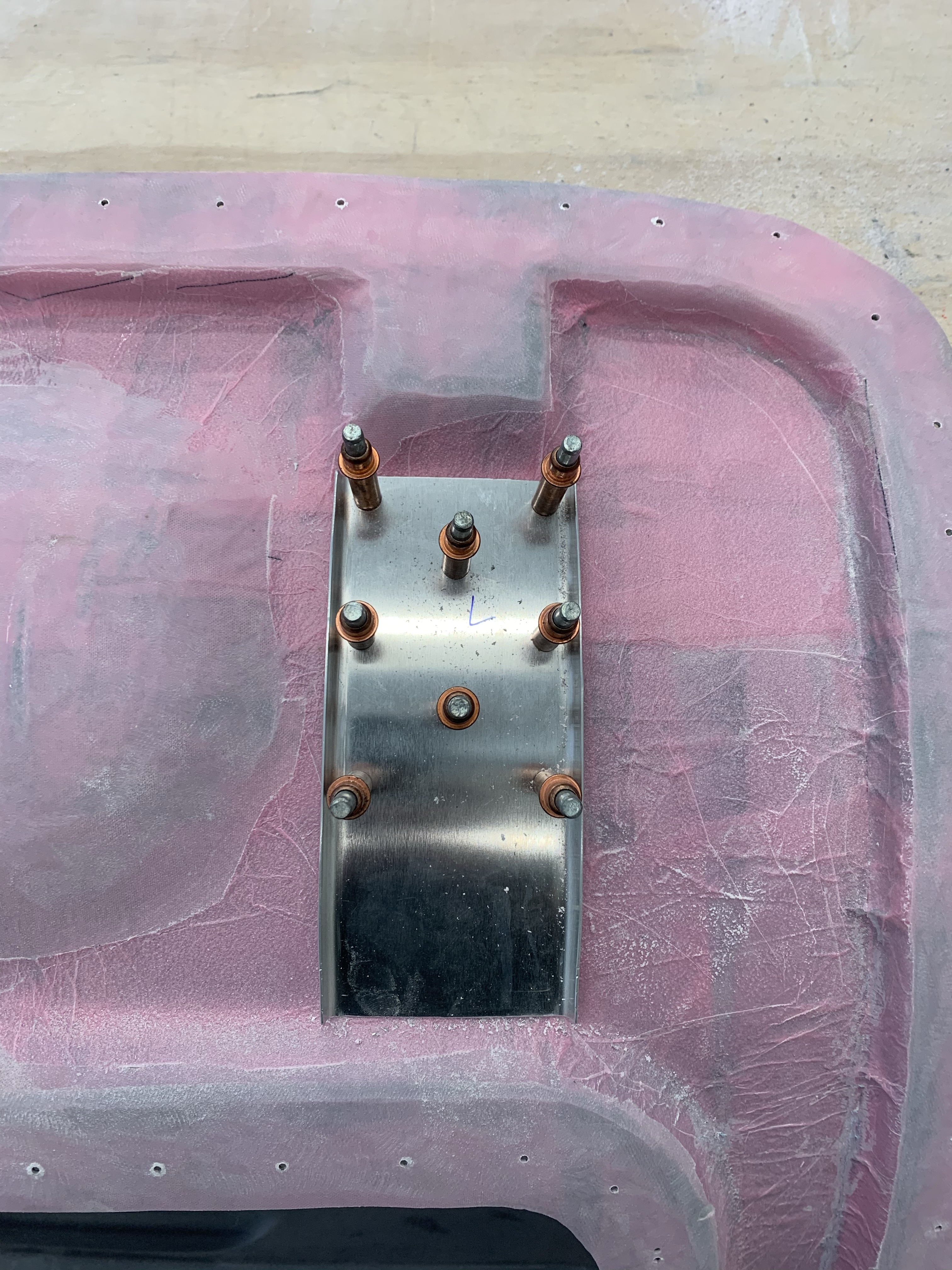
I then worked on putting conduit runs on the back half of the overhead to easily run whatever I want/need through here. First to secure it, I copied what Dr. Mark in TX did with using zip ties and small pieces of metal riveted into shallow holes (same depth as the cleco holes) in the cabin top. This worked really well. Once done, I used some epoxy and flox to secure the areas between the ties so they don’t flop around and make noise.

Then it was time to run conduit in the door pilars. This will allow me to easily get wires up to the switch pod for all the functions intended. It’ll also allow me additional paths to get wires from the back of the plane down to the front, as needed.

Spot Epoxying the conduit in place

Once cured, I used some Loctite Expanding foam to fill in the gaps around the conduit. This will eventually be covered over with some epoxy flox mix for strength, but can be sanded down to shape beforehand.

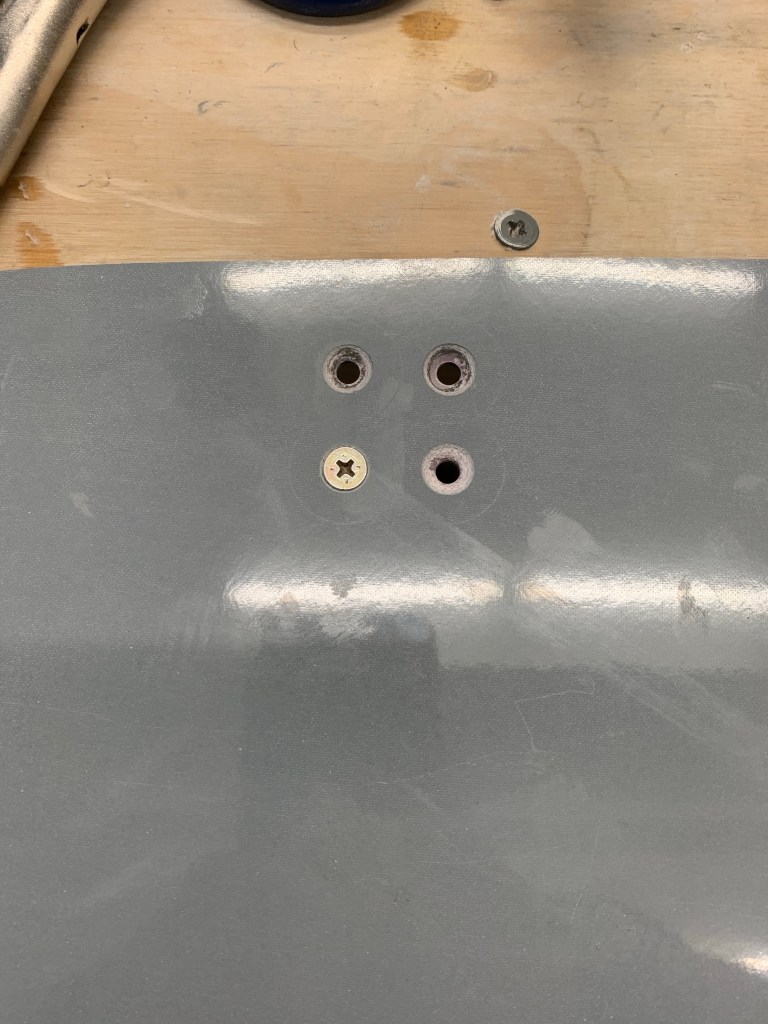
Even though I did decide not to use the Airward hinge reinforcements I bought, I did decide to use the backing plates on the interior of the cabin and door hinges on the door side. Here is a picture of the cabin side after attaching them with some epoxy/flox and using screws to hold it in place while curing. This will alleviate needing to fumble around with nuts and washers.

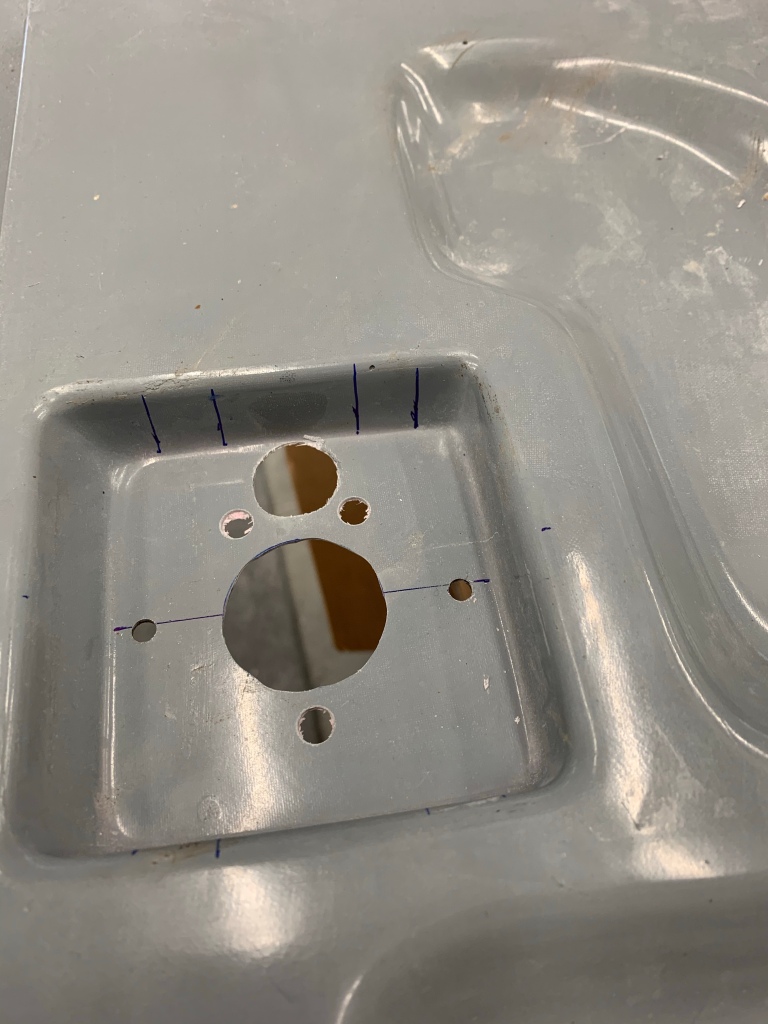
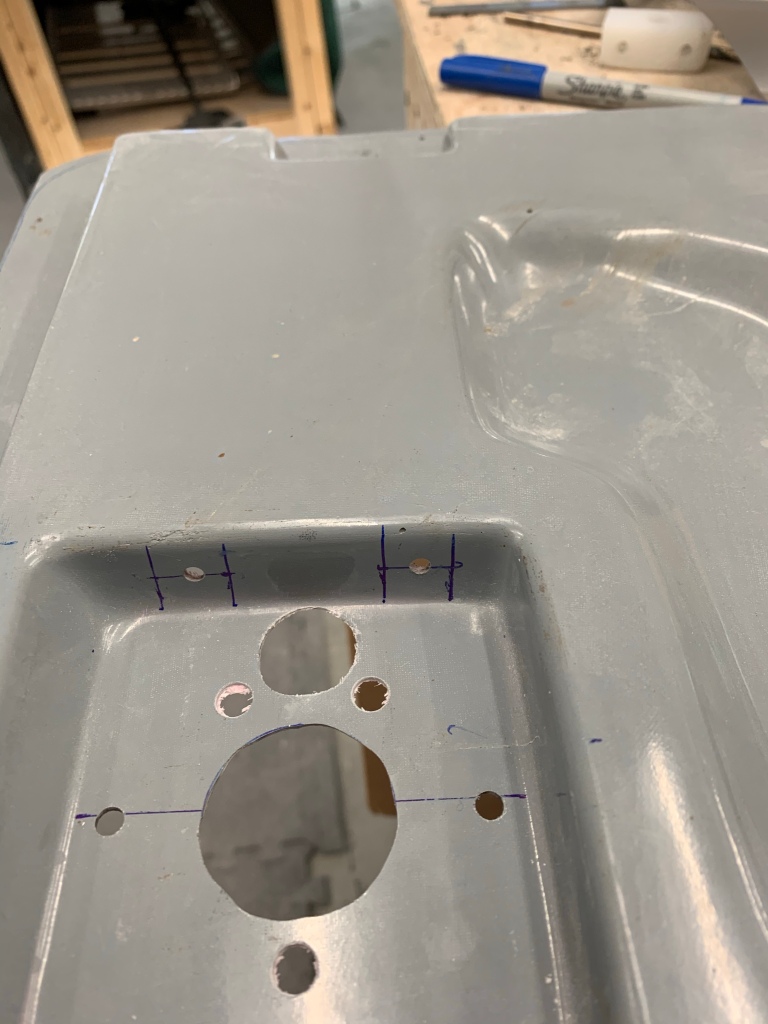
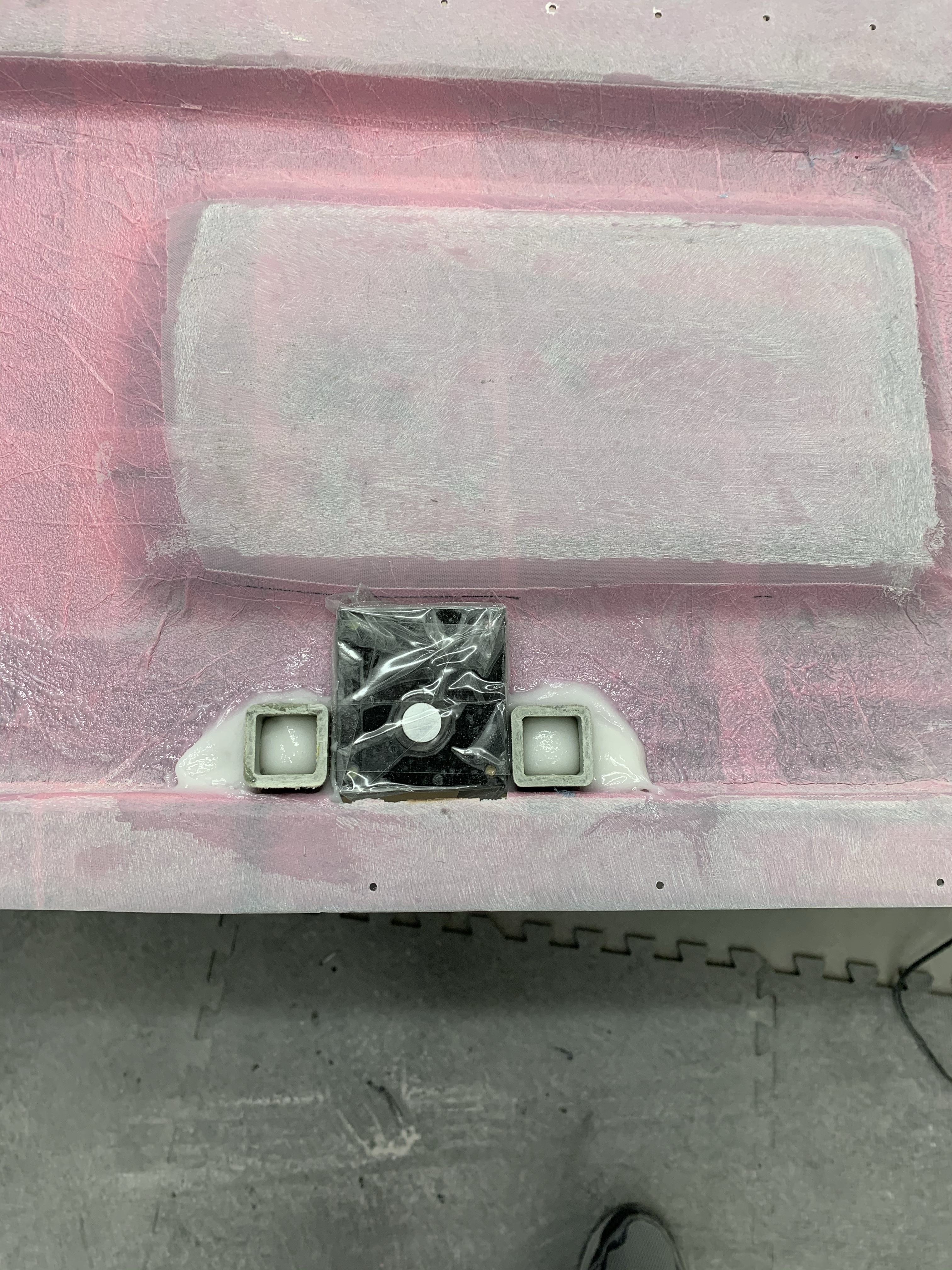
One of the last things I needed to do was to figure out lighting for the overhead prior to bonding it down permanently. Most lighting will end up in the metal panels that screw into the openings you see, so really nothing to do for those right now. I did, however, decide to put two small LED lights in the baggage area. So I centered those around the hanger bar drilled the holes, and test fit them in place.

I drilled some 3/4″ holes in the back of the switchpod to run the conduit into it and as you can see, I also drilled a couple of holes on either side of the overhead to more easily allow wires that come from the back and get them into the switch pod and down the conduit.

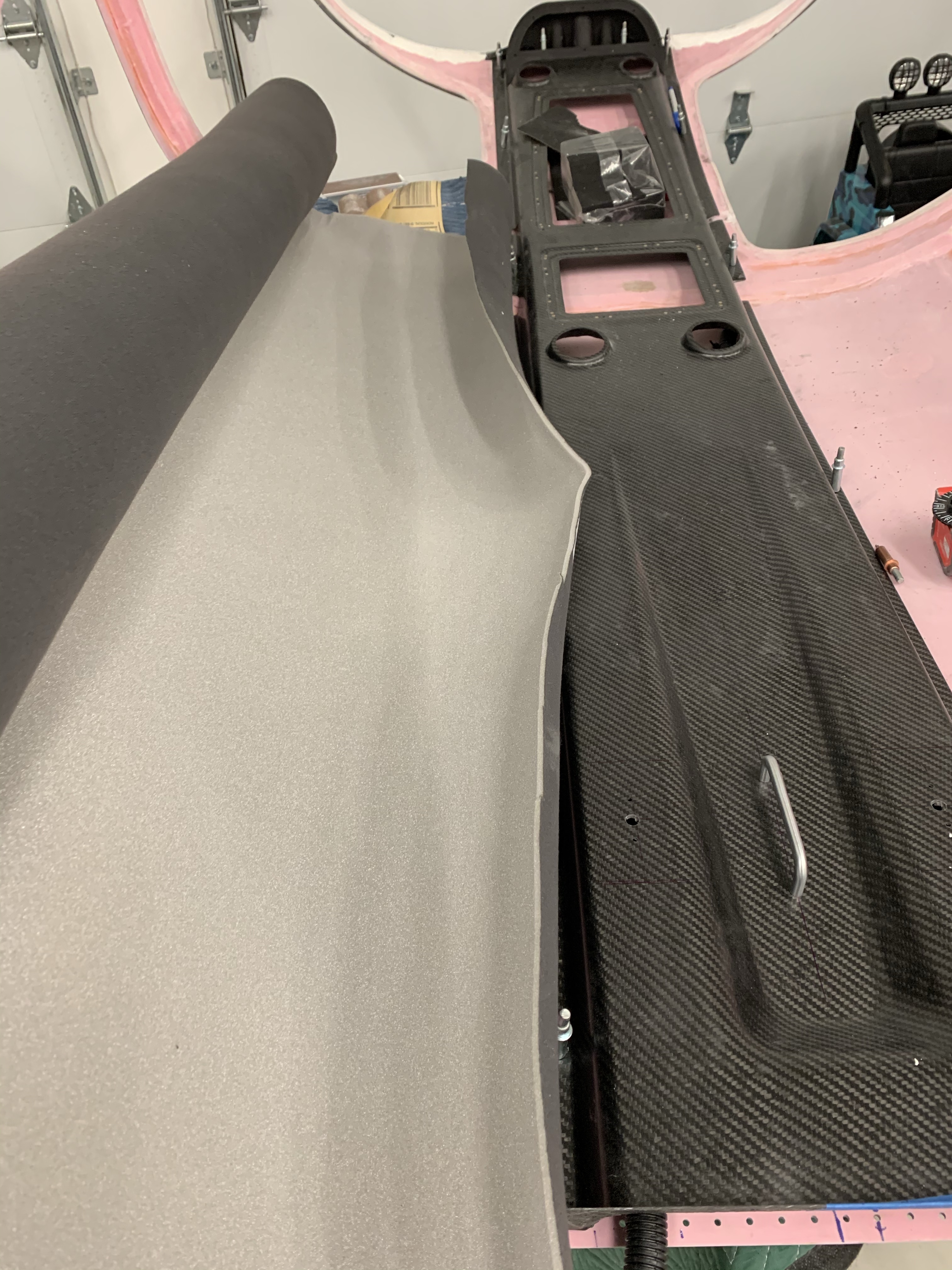
I decided to unroll the headliner material (graphite is the color name) that came in to see how it looks against the dark carbon fiber finish of the overhead console.

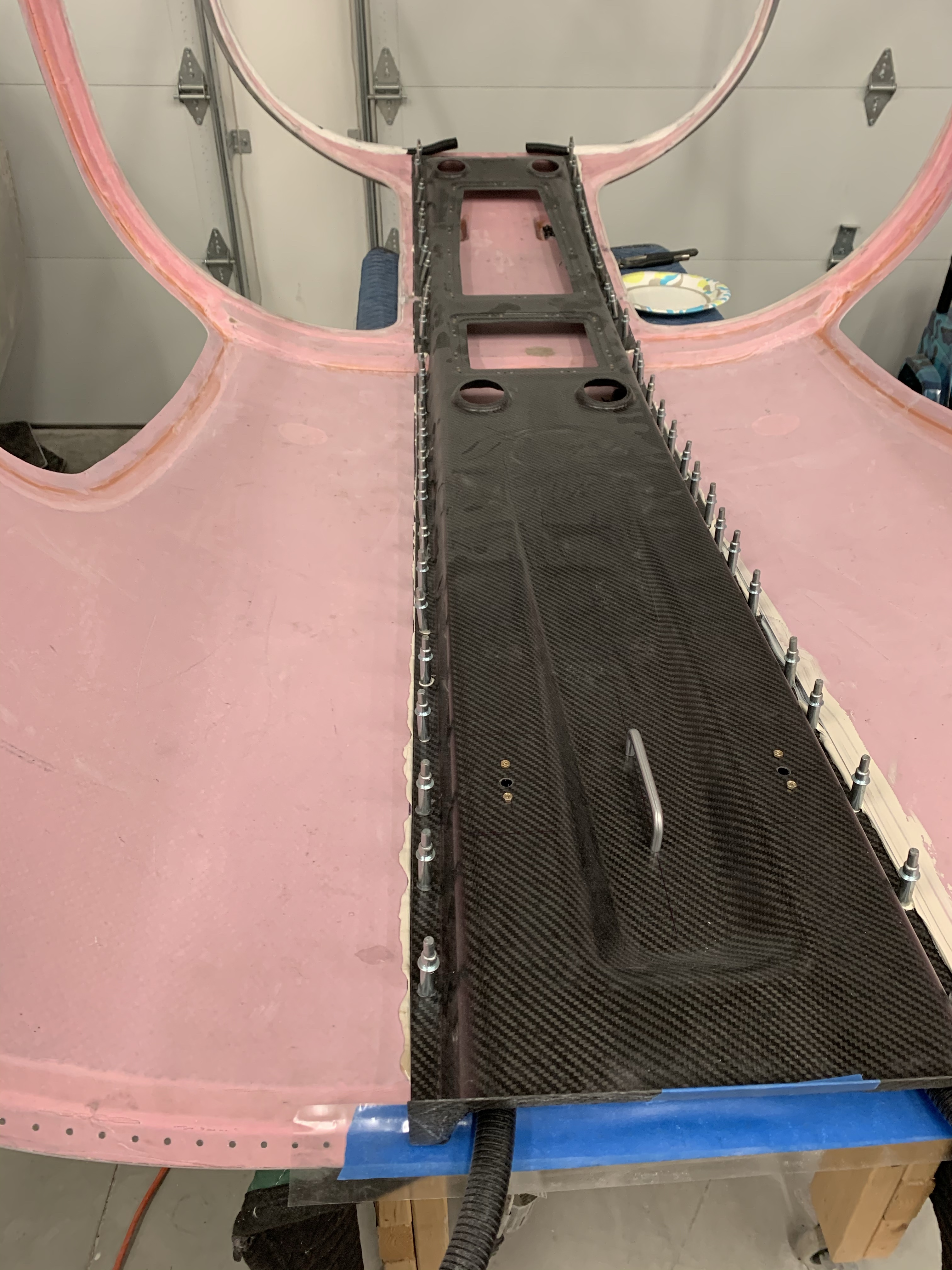
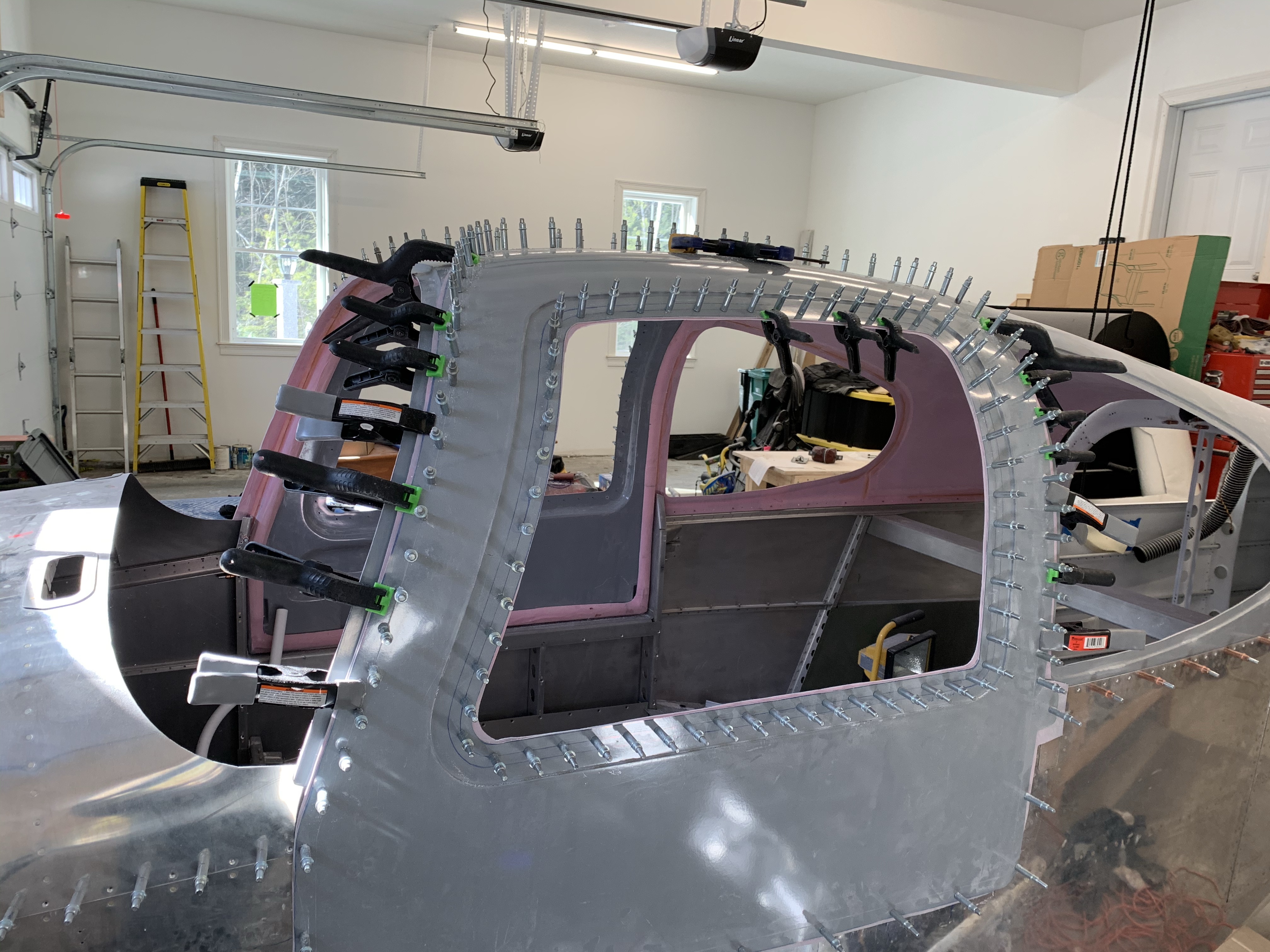
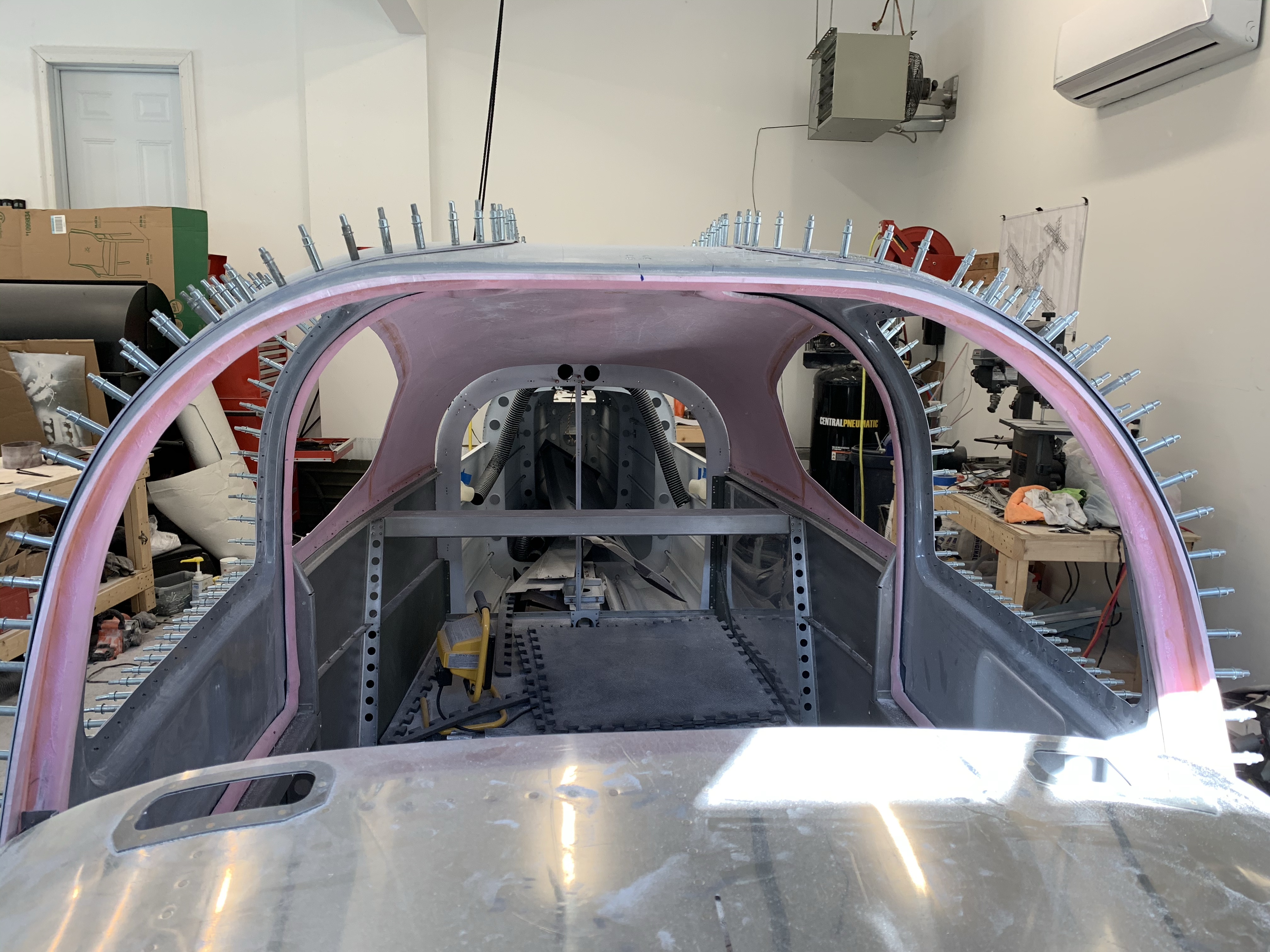
Then the time came.. to permanently attach the overhead to the cabin top! I used the 2 part Lord Adhesive from Aerosport Products for this job and made sure to use a release agent on the clecos so they wouldn’t get stuck!.

I then used some #6 screws and some epoxy/flox to attach the switch pod in place. You can see some squeeze out here, which I wiped up prior to finishing up for the night.

After things cured overnight, I then took all the clecos out. Sanded down some squeeze out and filled in the area around the switch pod with some more foam to start to shape the transitions from the door pillars to the switch pod. I’ll let that cure overnight and then I’ll sand it to a basic shape and then next up will be starting to perfect the surfaces around all of this for final paint.

All bonded to the cabin top!
Building up the area into the switch pod

Door Struts

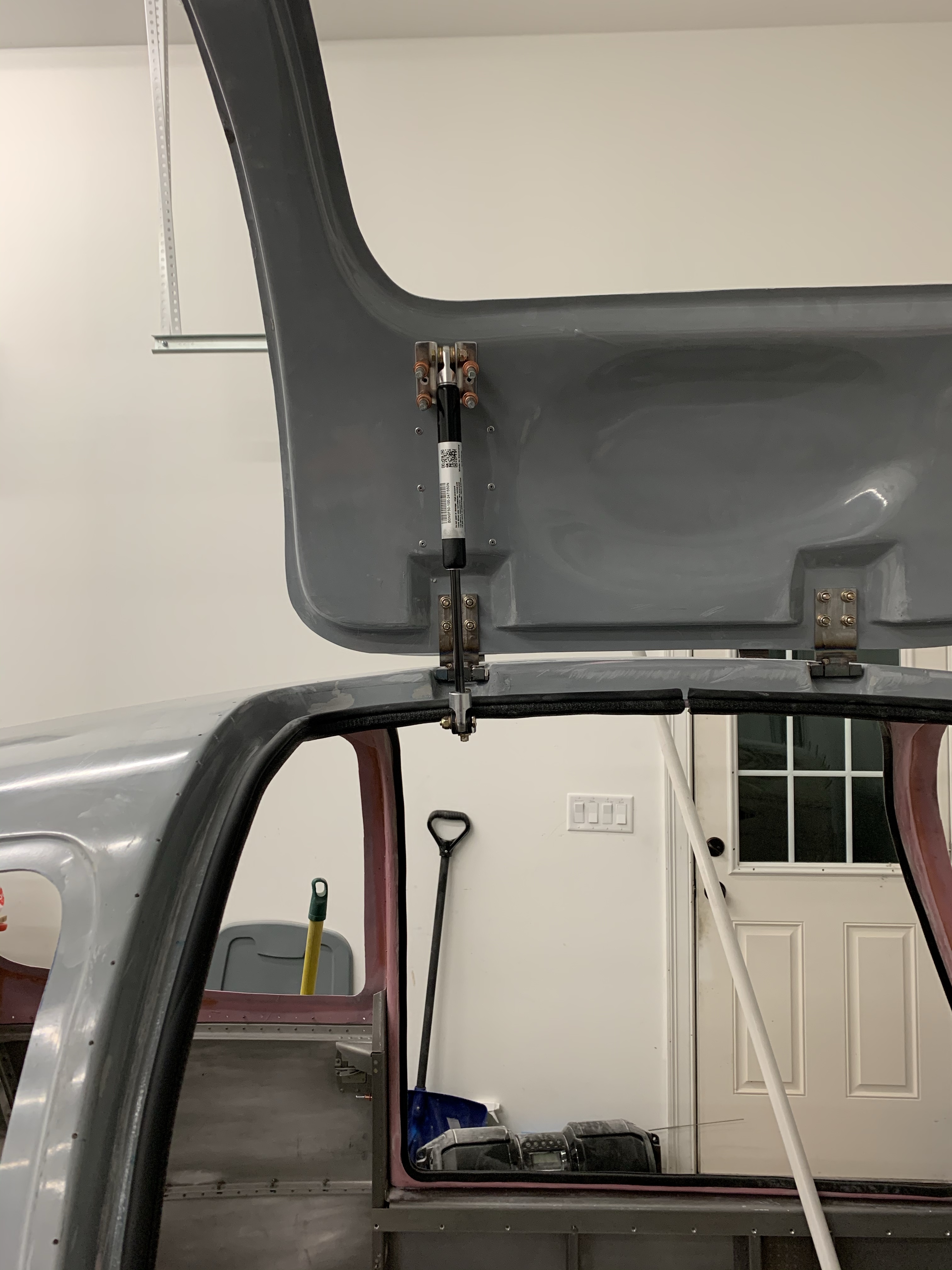
I got started by using a laser level to find the optimal position for the center of the door strut brackets. The end result might have been a little different than this line as I found the brackets tended to want to sit cocked aft and not want to be straight up and down to connect to the center of the rivet pattern (and where there’s a metal backing plate bonded in the door). I also inserted a washer under the right side door to get it to sit the way I wanted it.

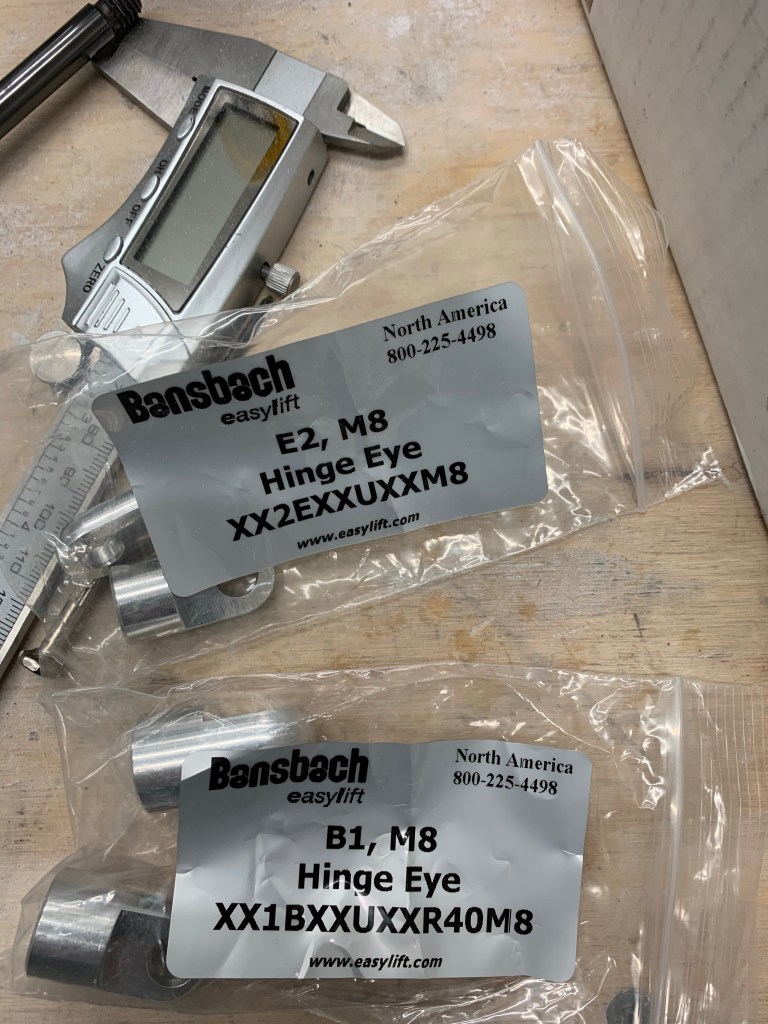
I ordered an aftermarket strut from Bansbach Easylift. The part number was B0N0F50-100-247/XXXN with a 550 newton force. The extra oomph is needed with the extra weight of the Planearound 3rd latch kit so far out on the door as it swings up. I read a bunch of posts on which ends to get and ended up going with 2 E2, M8’s for the door attachment and 2 B1, M8’s for the strut bracket side. The trouble with the B1, M8’s is they are too thick to go into the 3/8″ opening of the strut bracket. I knew this going into it, but read that you can sand them down to fit. Which is what I did, but I still would need to sand more to get the proper washers on either side of the eye. I decided to buy a couple more E2, M8’s to make things 1000% easier. These are 25mm each and the overall length of both plus the gas strut itself is very close to the stock Van’s setup.

You then fabricate a locating bar out of 1/8″ thick material to locate the brackets on the door. I got this bar attached to the strut bracket and matched drilled the holes into the doors.

Then I clecoed the bracket to the door for now and what do you know. The door stands on its own!! Below are shots of a couple of different angles.

Both door struts done!
Door closed view.

And a short video to show the operation of the doors.

Now it’s onto fitting the overhead console and taking the top off and finishing the insides of both the doors and cabin top on the bench.

McMaster Seals

Like many others, the bottom lip of the door was greater than 1/4″ from the inner door skin. In order to get a decent seal along that edge, I had to build up the edge. I mixed up some Epoxy with Flox and Cabo and applied it to the lip. I also had one section of the top of the left door that I sanded a little too much and needed to build it back up too. I then took some 1/4″ cardboard all wrapped with packing tape to fill the gap between the door and the lip and create the perfect gap. Any squeeze out was wiped away. I then left it overnight to cure.
Flox/Cabo mix on lower door lip
Another spot to build up.
Cardboard spacer

The end result was pretty good.

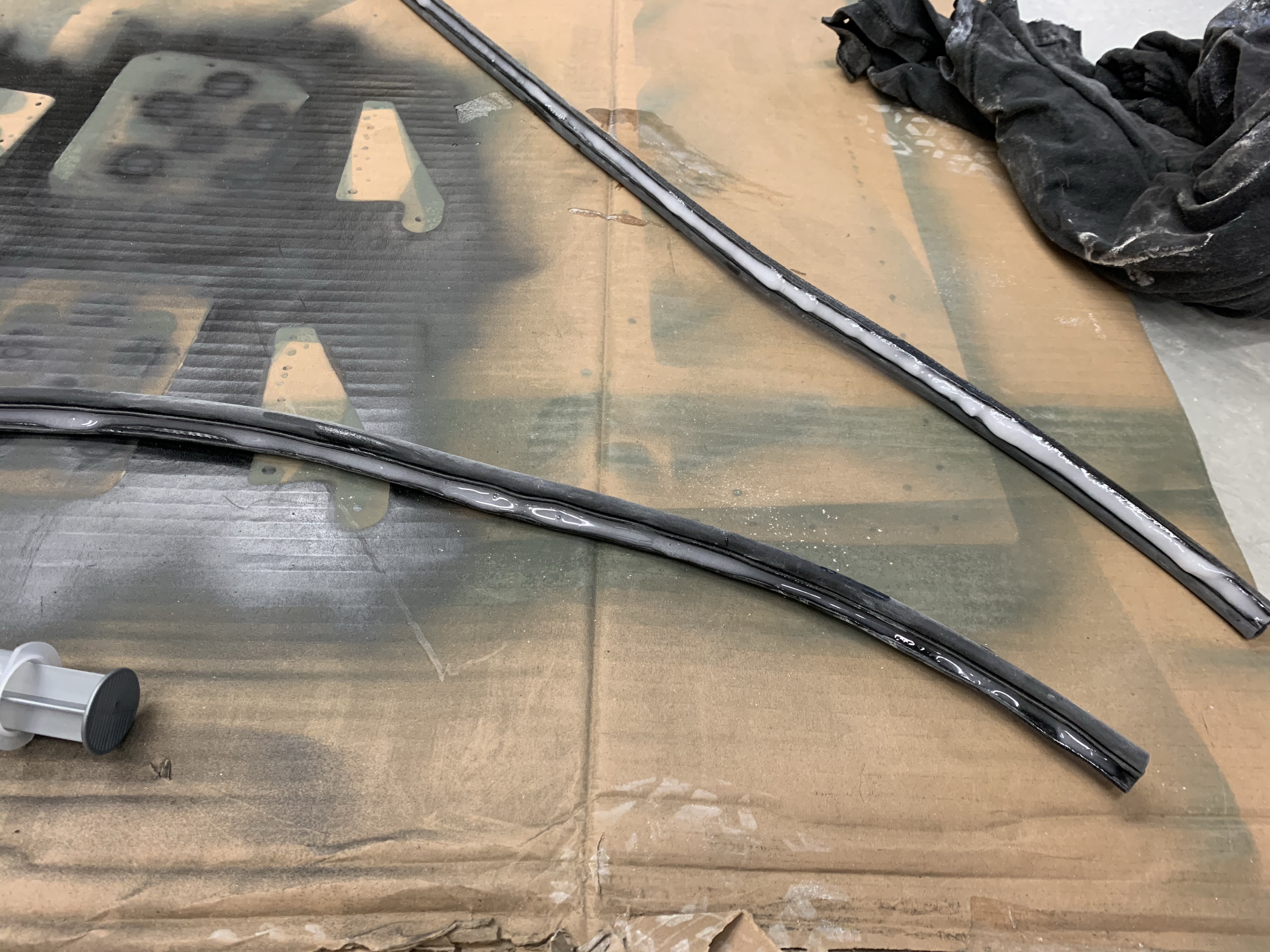
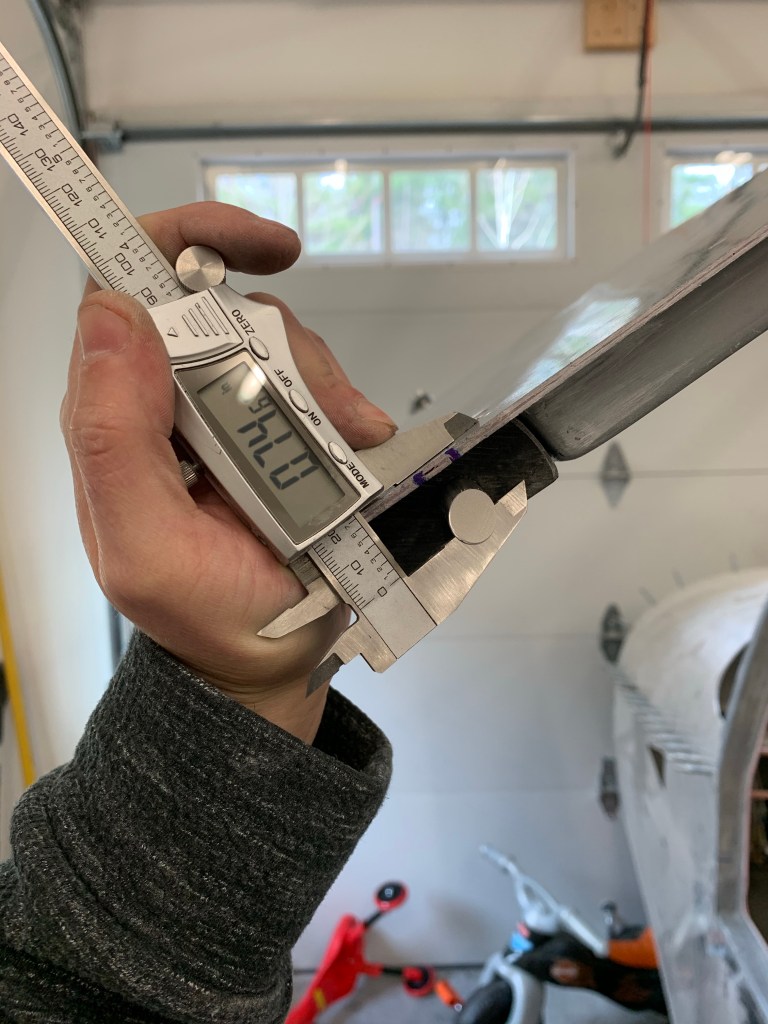
I then took a bunch of time to sand the inside portion of the lips to make sure it was as close to the 3/16″ grip width for the seal. Because the lip was pretty thin in several spots, I did decide to fill each seal with a flox/cabo mix made relatively thick and push it onto the edge of the door to create a perfect shape for the seal to adhere to. I bought 50′ of seal material, so I used one set for this step, and the other half for the final seal to be used for each door. I had just enough to do this.

The end result!

I was pretty happy with how the edge turned out. I then spent some time sanding the raised area around the perimeter of the seal that resulted and replaced the seal on both doors with new sections. Now it’s onto the door struts. Won’t need to keep holding the door up with a piece of PVC for much longer.

Doors part 3 and Aerosport Handles

Once both doors were hung on their hinges and operational, I looked at the Airward Door main door hinge kit that I had bought. This is supposed to beef up the hinges by providing plates on both sides of the door, and I’m sure it does, but they do sit proud of the surface by at least 3mm. I just wasn’t happy with that prospect. It just looks really out of place not being anywhere close to flush with the rest of the cabin top.. After doing some more reading and research, I’m convinced that the stock way of doing the hinges is just fine. I may use the inner plates of that kit to provide support and nutplates for the hinge screws; or just use some nutplates on the door side of the hinges themselves. To be determined later. So with that, I countersunk the outer door surfaces for the screw heads and also have bought some countersunk washers that I’ve seen suggested.
Hinge Countersinks

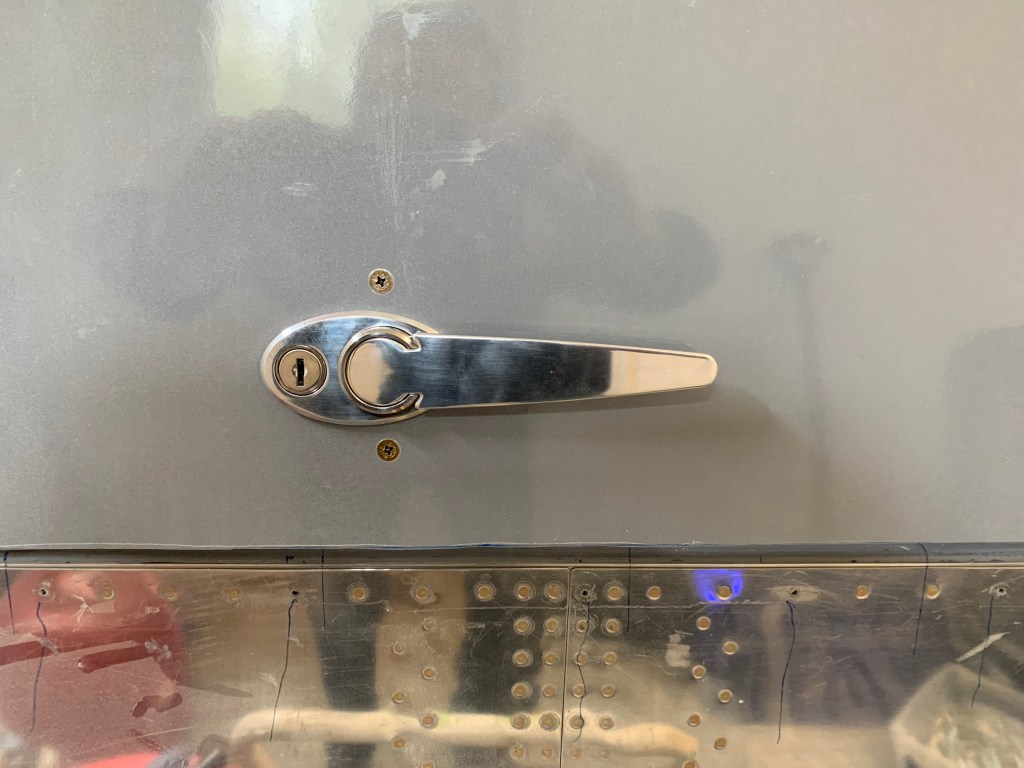
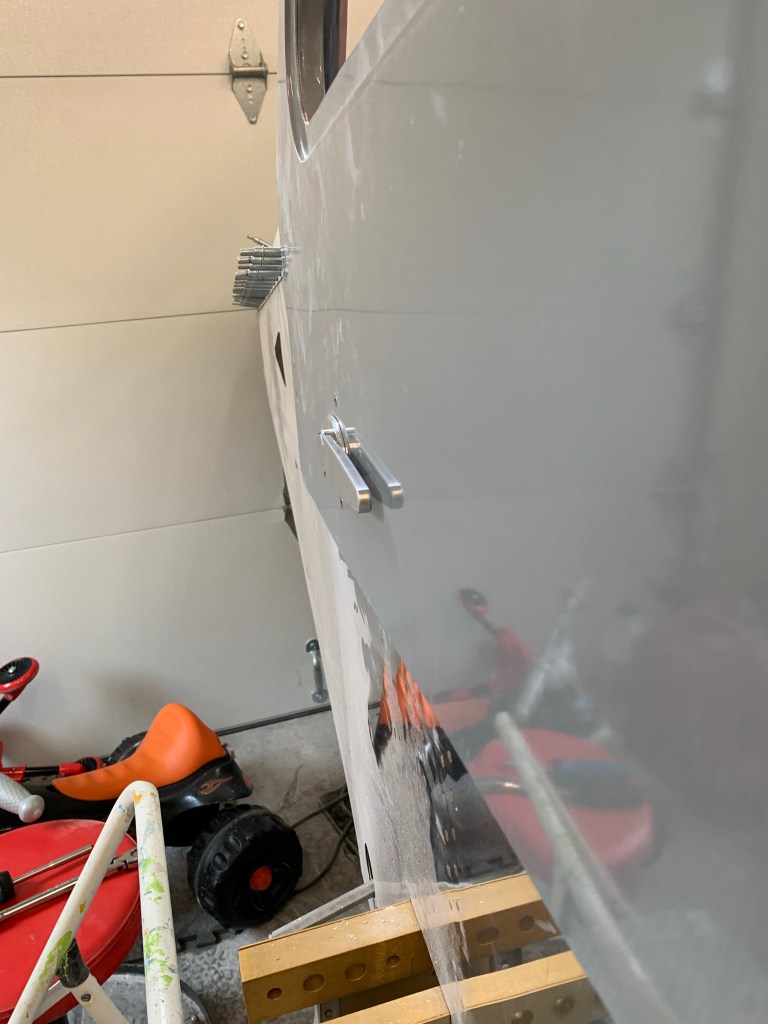
I then got working on the Aerosport exterior low-profile handle assembly. The next several pictures show how the exterior handle will look. It was pretty straightforward following the instructions from Aerosport on trimming the door for the lock and inner ring of the handle.
I then got back to re-assembling the door latch mechanism and safety wiring the pins to hold the racks to the forward and aft pushrods. The Planearound 3rd latch gearbox was reinstalled and the lock mechanism re-installed. One thing I had to take care of was some Parabeam material and epoxy had oozed out and block a portion of the void where the racks slide. I spent about an hour one night getting that relatively small chunk of glass out of the innards of the door so the latch mechanism would work freely. I had seen, after the fact, that some other builders had put some scrap aluminum just below the elbow cavity to prevent this and would certainly be something that I would suggest doing if I were doing it again. I got lucky in that it only happened in 1 of the doors and was relatively minor from what it could have been.
Forward Left pin safety wired to middle rack

Once the door latch mechanism was back in and installed it was time to drill holes into the door frames to accept the pins and keep the door closed. I went against the plans of using a bolt ground down to a point to mark the spot where the pin comes out and instead used a method I saw on Dr. Mark’s build and using some math. I first marked the top and bottom of the door skin where the pin comes out. Then transferred that to the fuselage and used a square to further transfer those marks to the inside door edge.

Marking the pin exit points; top and bottom

Then I measured the distance from the outside of the door to the inside of the pin and transferred that measurement to the inside of the door frame.

Measuring the door to pin
Transferring it to the door frame.

I then measured the thickness of the pin, which was 14/32″ and divided by 2 to mark the center points of the where the pin would be as shown below.

Then I under sized the drill working my way up from a #30 all the way to a 10mm, which is what I had and was smaller than the called out 7/16″ in the plans. I then used a dremel tools with a grinding wheel and a small file to work slowly to get the pin to go through the hole with no extra slop. This step required a lot of patience and repeated grind a little away and recheck, but in the end it paid off and the holes for the pins are nearly perfect and keep the door flush to the fuselage surface.

Final hole for the pin to go through

Next up was to get the Planearound guide blocks into place. The best way I found to drill the 2 holes needed to hold these in place was to close and latch the door and place the block on the inside of the door with the pin going through the center hole as shown below. In most cases, without trimming, these hit up against the outer skin and prevented them from rotating or moving while drilling the holes. I then trimmed those guide blocks as needed when putting the on the other side of the door frame.

While I had previously sanded for a very close to 1/4″ gap around the doors for the McMaster seal, as you can imagine, this fit of the door closing with the pins engaged required a little more sanding in some spots. I also bought the 3/16″ grip McMcaster seal so I sanded the inside of the cabin top to get that as consistent as I could. For the most part, I don’t see much of a need to build up the door gutter for the seal as many others have done, as I had to sand down most of it to get to a decent 3/16″ edge thickness, but we shall see. I just may do it anyways to get a perfect fit. There are a couple of spots which are thinner and squeezing the attachment point seems to hold it on fine.

A quick video of the right door progress.

One door down (up), one to go.

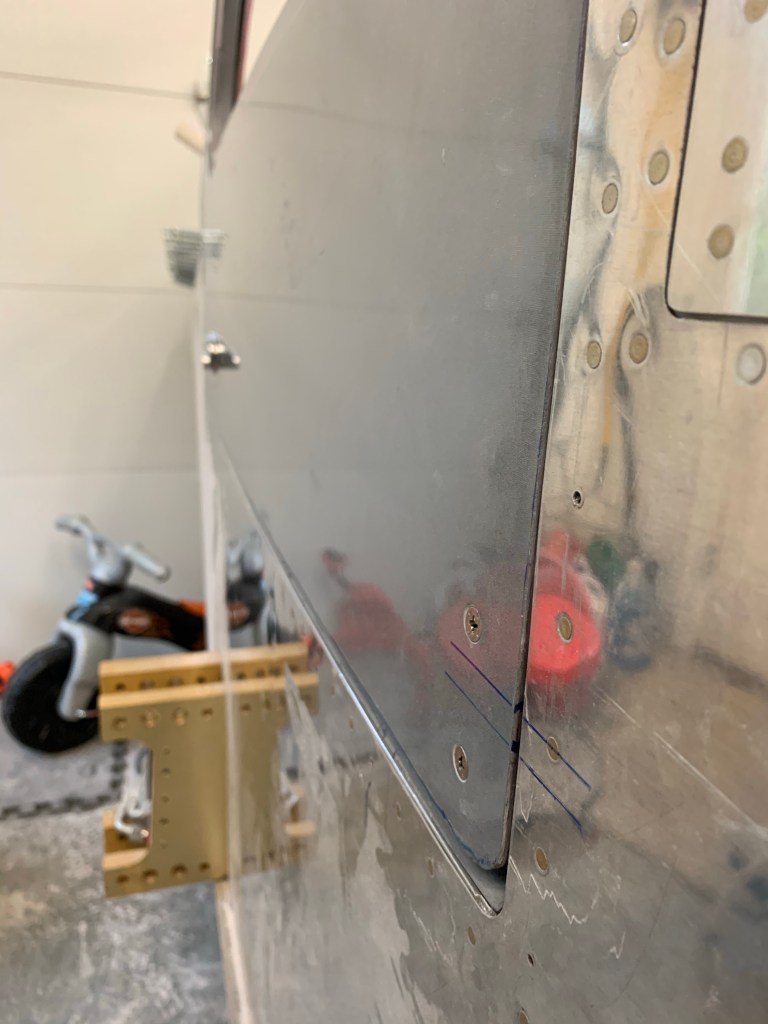
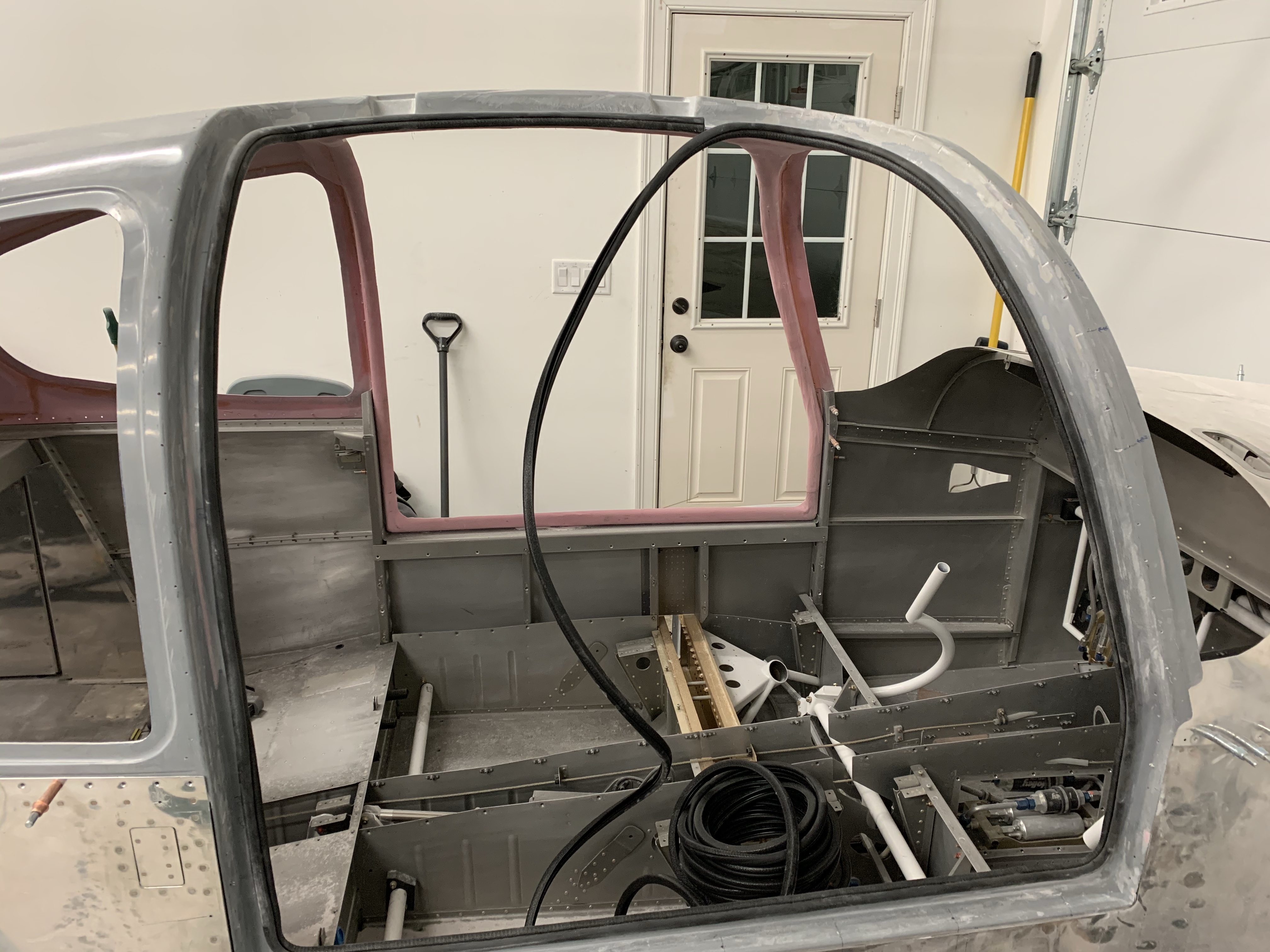
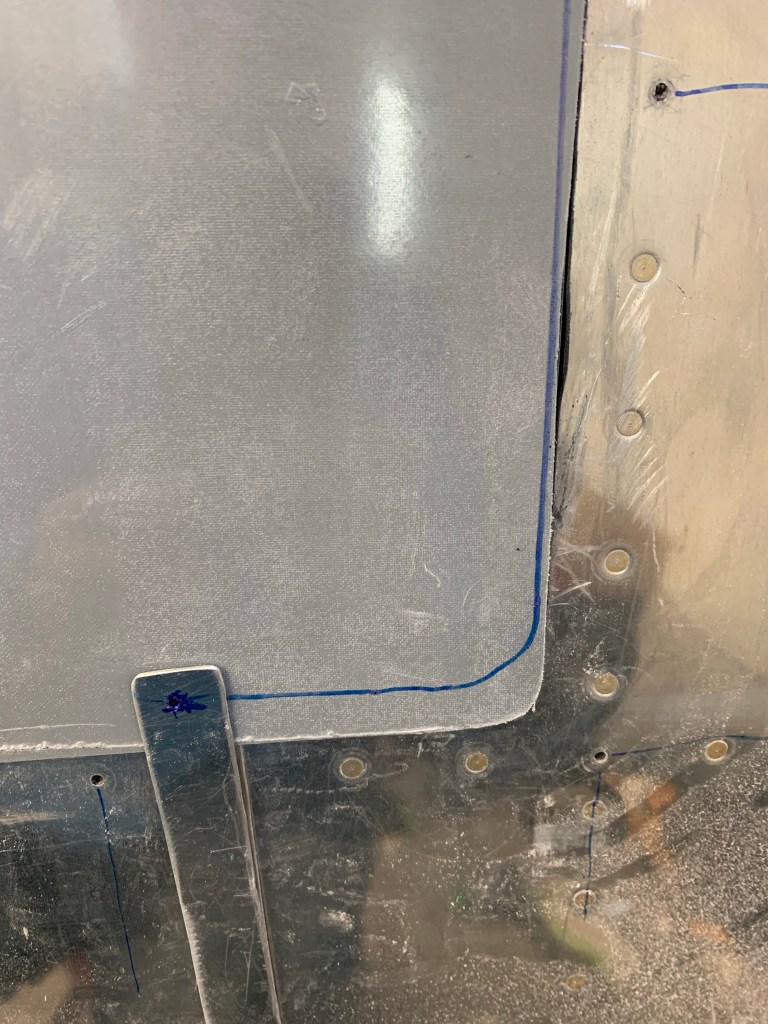
After the last post, I cut the edges (rain gutter) of the door openings on the cabin top to Ivan Kristensen’s measurements. Approx 1 5/16″ along the top, 1 1/4″ in the top corners, going down to approx 1″ along the sides and bottom. I then drilled a 1/16″ hole in a skinny piece of aluminum to mark a 1/4″ line from the inside edge of the door. This gap will allow room for the McMaster door seal bulb to sit in and allow the door to close and squish the seal bulb properly.

pretty close to even 1/4″ gap.

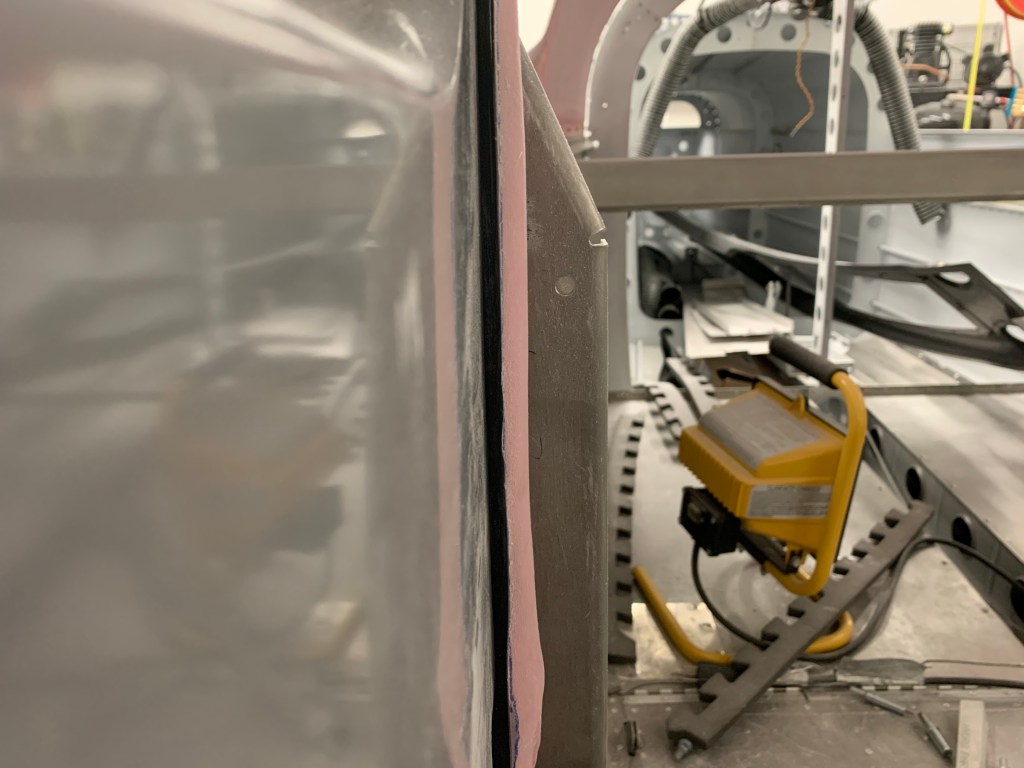
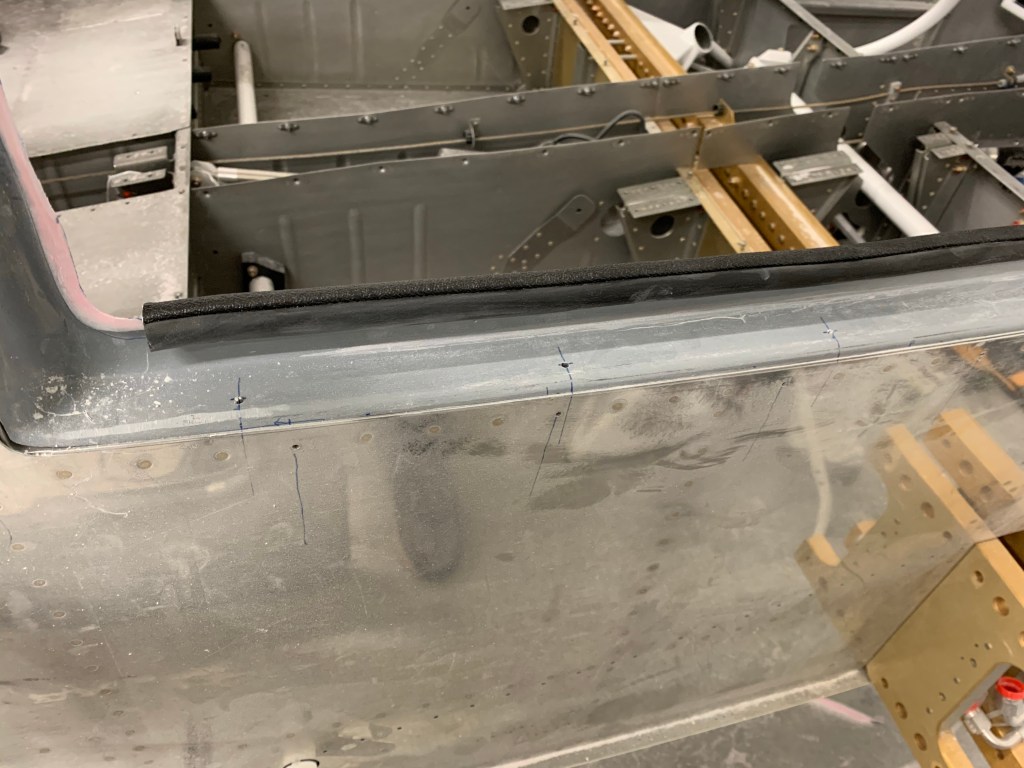
I then test fit the McMaster seal. Initially just a section along the bottom of the door, then all the way around. I will still need to sand down a couple of high spots in the corners as the thickness of the fiberglass is > 1/4″. I might also need to build up some areas using the seal as a template for an epoxy/flox mix, although I’ve seen some builders say that they didn’t need to do this.. so guess I’ll see what makes the most sense a little further along.

Door squishing the seal
Test fit all the way around the right door opening

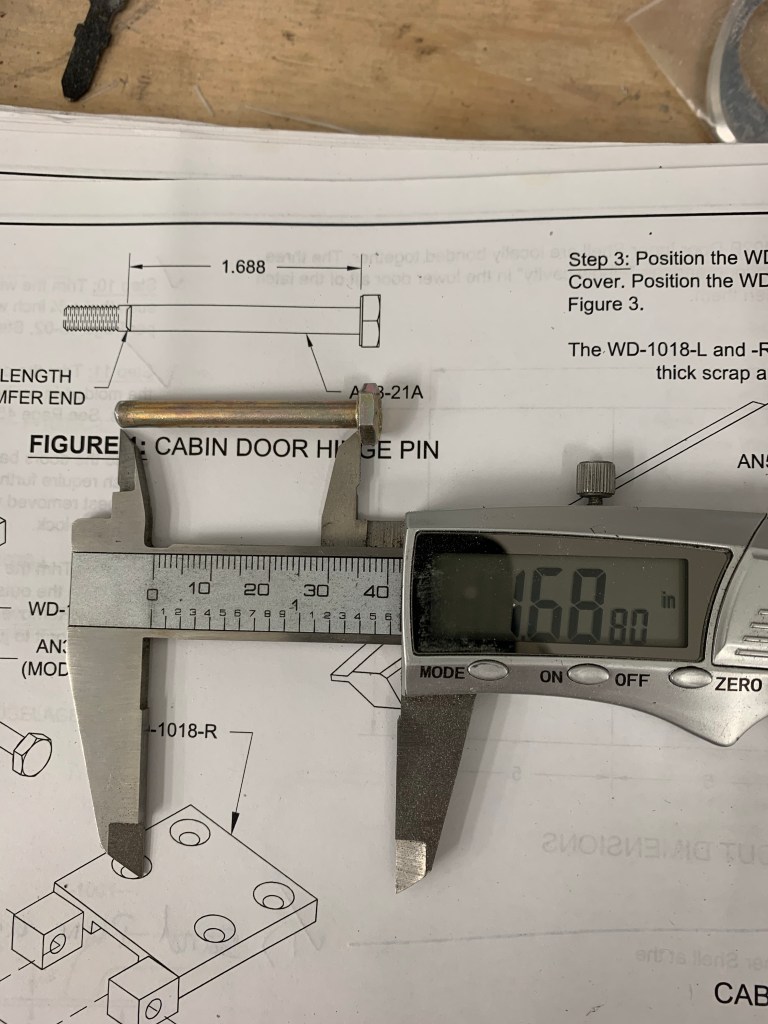
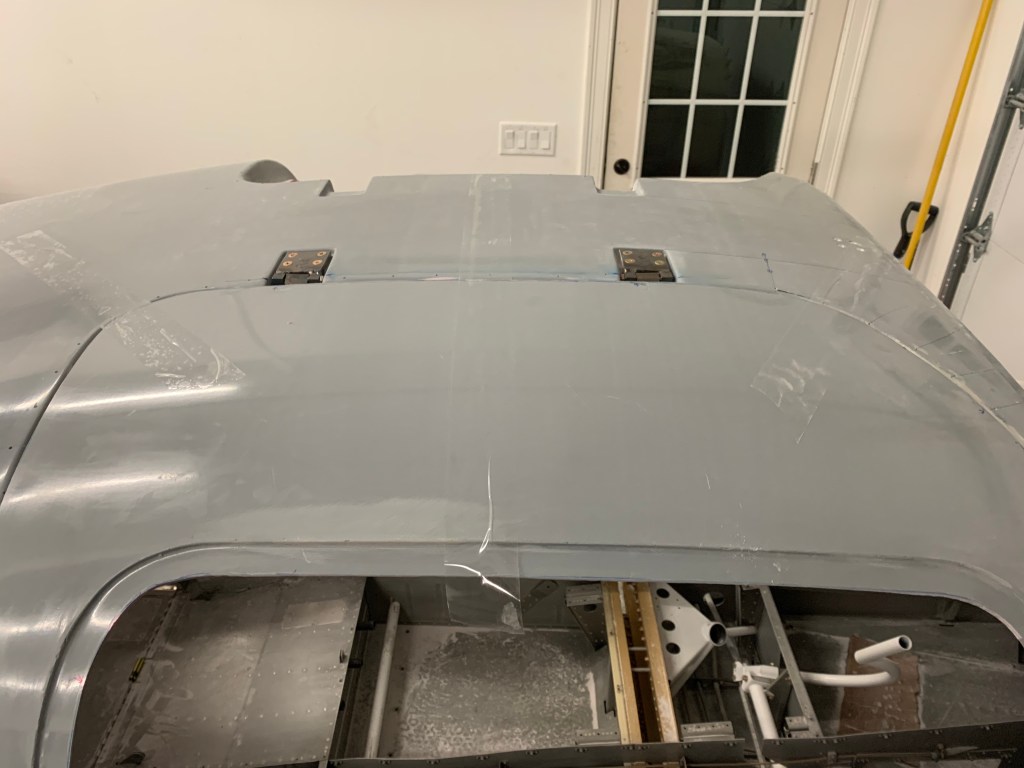
Then it was on to preparing the hinges. You use an AN3 bolt with the threads cut off as a hinge pin. Then proceed to get the hinges up in their pockets and match drilling the 4 holes. The main thing here is identifying that the hinges are different and getting them in their proper location. You can actually see in the hinge pin picture below that the hinge “legs” where the pins pass through actually have an offset to them to match the curve of the cabin top. It’s important for the high side on the forward hinge to point forward and the high side of the aft hinge to point aft. The lower points should be inboard.

The door was put into place, taped up top to hold it in place and the 4 holes on the door side match drilled.

Closeup of hinges

The end result is a functional door!!

Bonded!

I was a little nervous walking into this part of the build. In the end, I’d say it wasn’t as bad as I had expected. My door halves are now bonded together! Before starting, I used packing tape to cover the cabin top all around the door opening so that any epoxy that squeezed out wouldn’t bond the door to the cabin top. I worked on one door at a time and only mixed enough epoxy and Cabosil for one doors worth. The plans have you first spread some straight epoxy on the three areas that actually bond the door together, the elbow cavity (shown below with fiberglass parabeam on it), the cranial cavity at the top of the door, as well as the latch cavity. You then wet out the Parabond material previously cut with straight epoxy and put it in place on the inner door shell. Then add some Cabosil to the mix until it thickens enough to not pour out of the cup. That mixture was then spread over the remaining mating surfaces (the window flange and the outer door flanges).

Parabond on the elbow cavity

Once done, the outer door shell is placed on top of the inner shell and cleo’ed along the lower edge and 2 places in the upper window flange prior to placing it onto the fuselage.

Door shells together and minimally clekoed together

Attached to the cabin top and cleko’ing the window flange. A reasonable amount of epoxy squeeze out along the edges.

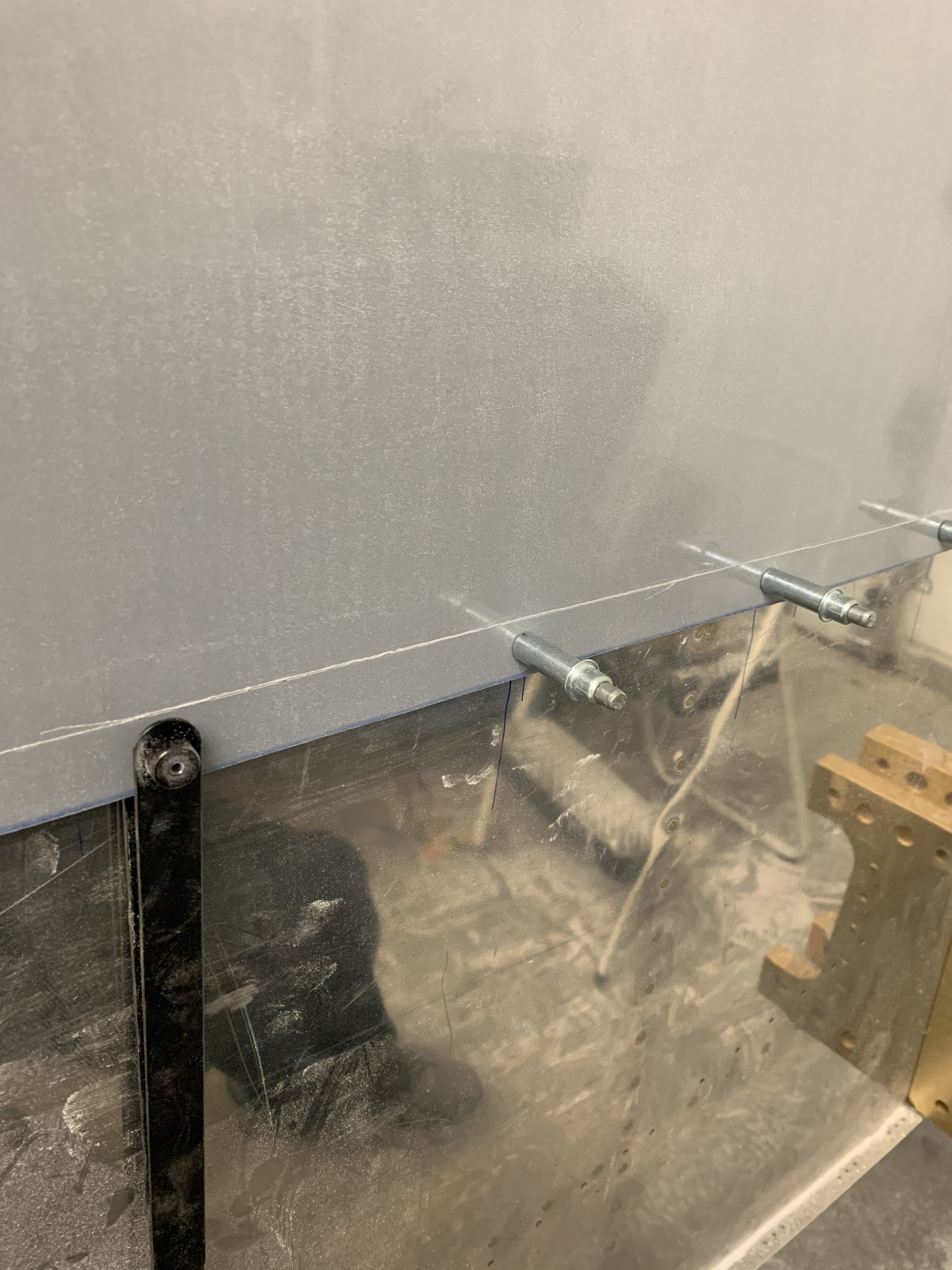
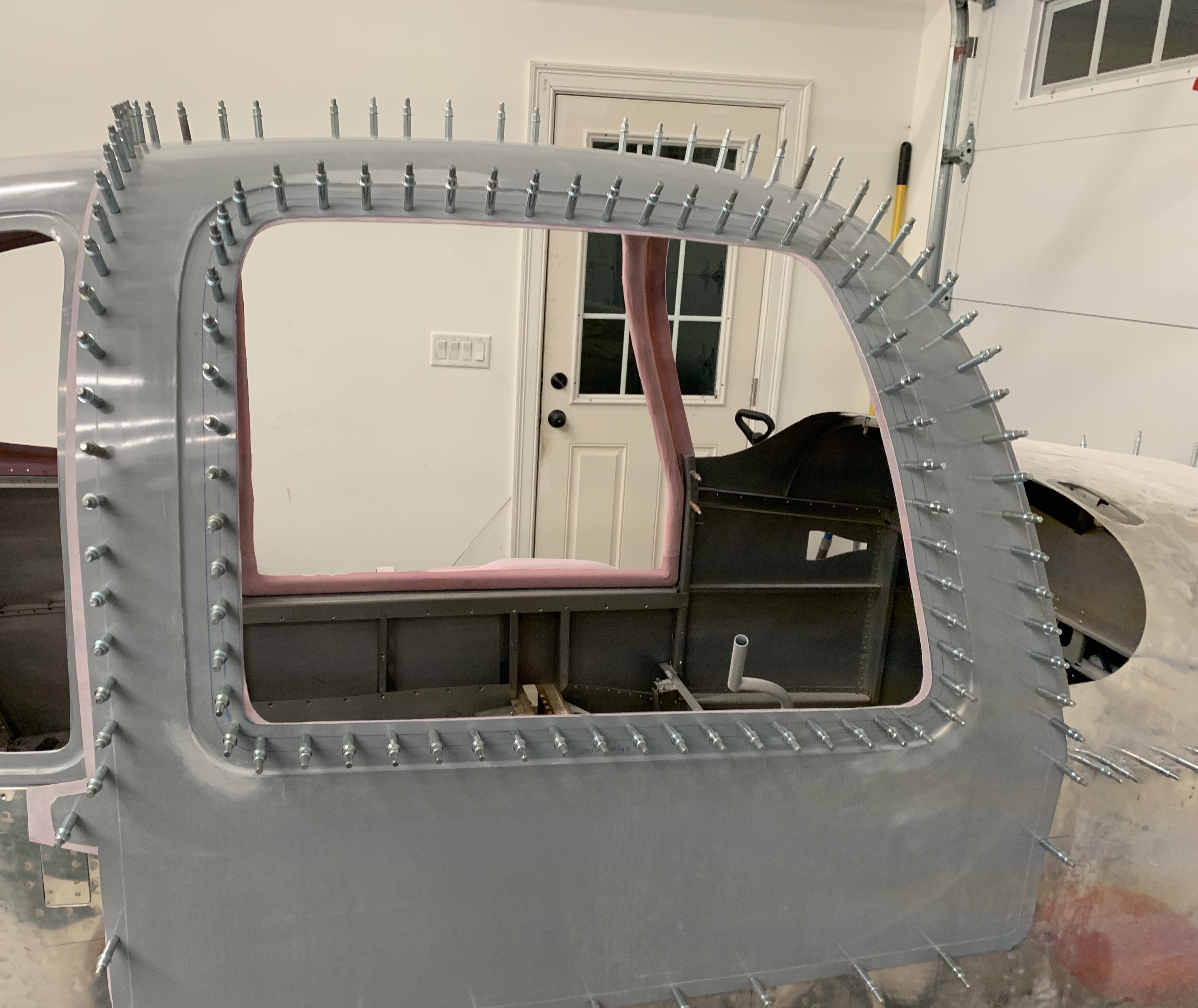
The entire door was cleko’ed to the cabin top so that it cures into the outer shape of the cabin top. The plans have you use clamps, tape, and weights. This, to me, is a much better method that I’ve seen other builders suggest.

I then left the garage heat on 60 degrees and let the doors cure over 2 days. I took the doors off and removed all the Clekos.

I then cut the window flange down to the 3/4″ line previously marked. Additionally, I made up a couple of angles and match drilled them to the forward and aft index holes and then drilled a couple of holes into the door to hold the doors in place so they could be trimmed. This will also allow me to keep the doors in the same position for all other door work without them moving.

One of the next things is to trim the outer door edges to within 1/8″ of the scribe line, which I did. I then did something that I saw on Dr. Mark’s blog in terms of making a tool to mark the inside edge of the cabin top on the outside of the door. I riveted 2 pieces of metal together and bent one piece at a 90 degree angle to follow the inside cabin top door edge. I then drilled a 1/16″ hole aligned with the 90 degree bend to trace on the outside of the door where the inner edge was. That was the line I used to trim to for the entire perimeter of the door.

Tools to mark the inner cabin top edges on the outer door.
Tool in action

I then had my buddy come out and check out the progress.

This is the result after trimming to the line made by the tool. I’m at the point of needing to trim the cabin top rain gutter back some more in anticipation of using the McMaster door seals. The door won’t fully sit flush with the cabin top just yet until I do that. So that and door hinges are up next.

Doors Part 2

Slow progress lately…

This part of the build is somewhat challenging in that I am reading from 3 different sets of instructions from 3 vendors and trying to understand what to do next. Next up was to grind down the stock pin blocks in order to drill #12 holes into the doors to hold the blocks in place.

Then you take the new oversized blocks from PlaneAround and sand them to fit well into the recessed pockets of the door. Then match drill them to the holes you drilled with the stock blocks.

Shaped Pin Blocks

Then it was time to take the striker plate from the Aerosport Low Profile handle kit and center it in the handle pocket by rounding off the forward corners and drilling the holes needed for the inner ring and lock.

Once that was done, the inner handle assembly was completed per plans with some modifications based on the Aerosport instructions. One modification that I did was to cut a longer slot in one side of the handle assembly so that the handle would only lock in the closed position and not the open position too. I didn’t take any pictures of that.

Modifying the interior handle for the Aerosport handle on the exterior

I then took some scrap metal and made it the width of a rack without teeth and just long enough to stay in the handle gear mechanism while marking the sidewalls of the handle cavity where the racks will come out and need a hole for clearance.

A rack and piece of scrap to be used to mark cavity
Scrap piece coming out of gear mechanism to mark sidewall.
Marks made for the width of the racks
Holes drilled in center of these marks

Clearing out the area for rack clearance.

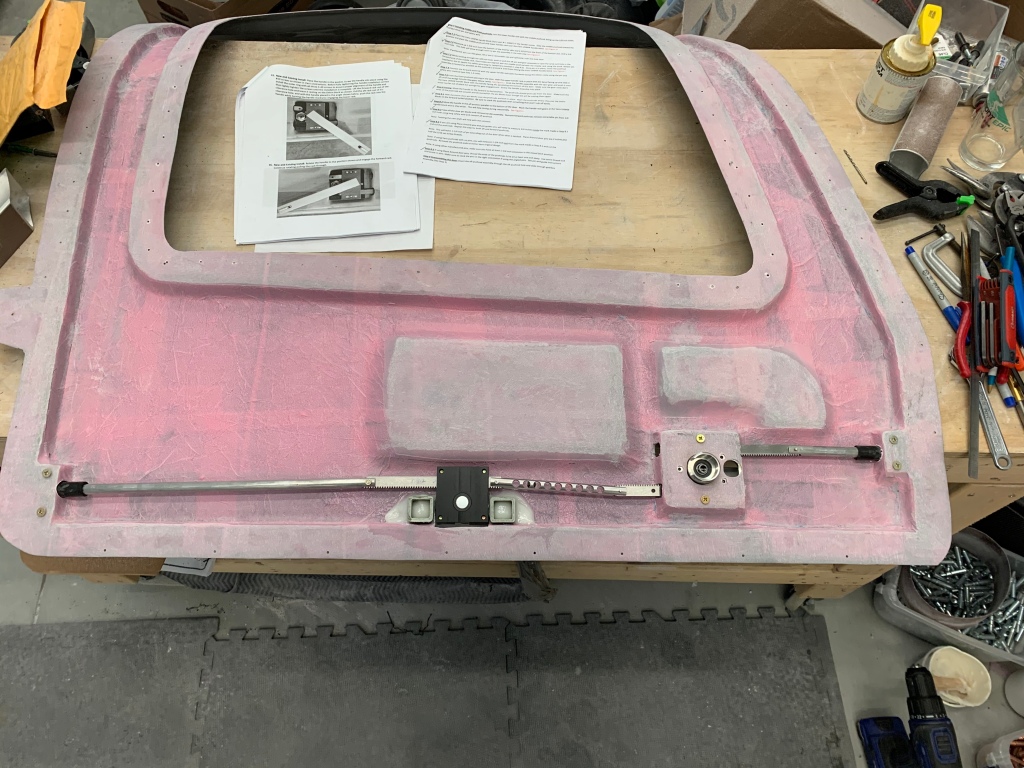
I then assembled the push rods with the Planearound 3rd latch system and got everything the way I wanted it. This allowed me to mark the push rods for 1.5″ protrusion from the sides of the door and about 1/2″ retraction into the Derlin pin blocks.

Long push rods marked to cut down to proper length.

I’m also using the angled machined pins from Planearound. The push rods were cut down 2 more inches to accommodate the length of the pins themselves, and tapped with a 5/16″ x 24 tap to attach the pins with a screw.

Planearound pins installed in push rods
Inside of the door with handle all finished.
The interior workings of the door handle/latch mechanism before door halves bonded.
1.5″ pin protrusion when handle closed.

Below is a quick video that I made to explain the operation of the door handle and pin/latch operation.

Doors part 1

Knowing that there will likely be several posts about doors… I will do posts in “parts” Otherwise I will quickly run out of ideas for post titles. Unless, of course, there’s something more clever that comes to mind at the time.

I’ve decided to postpone bonding the doors together just yet to get the Planearound latch , door handle mechanism, and Aerosport exterior handles all installed. Nevertheless, I did sand down the spots on each shell depicted on the plans that will touch and bond together.

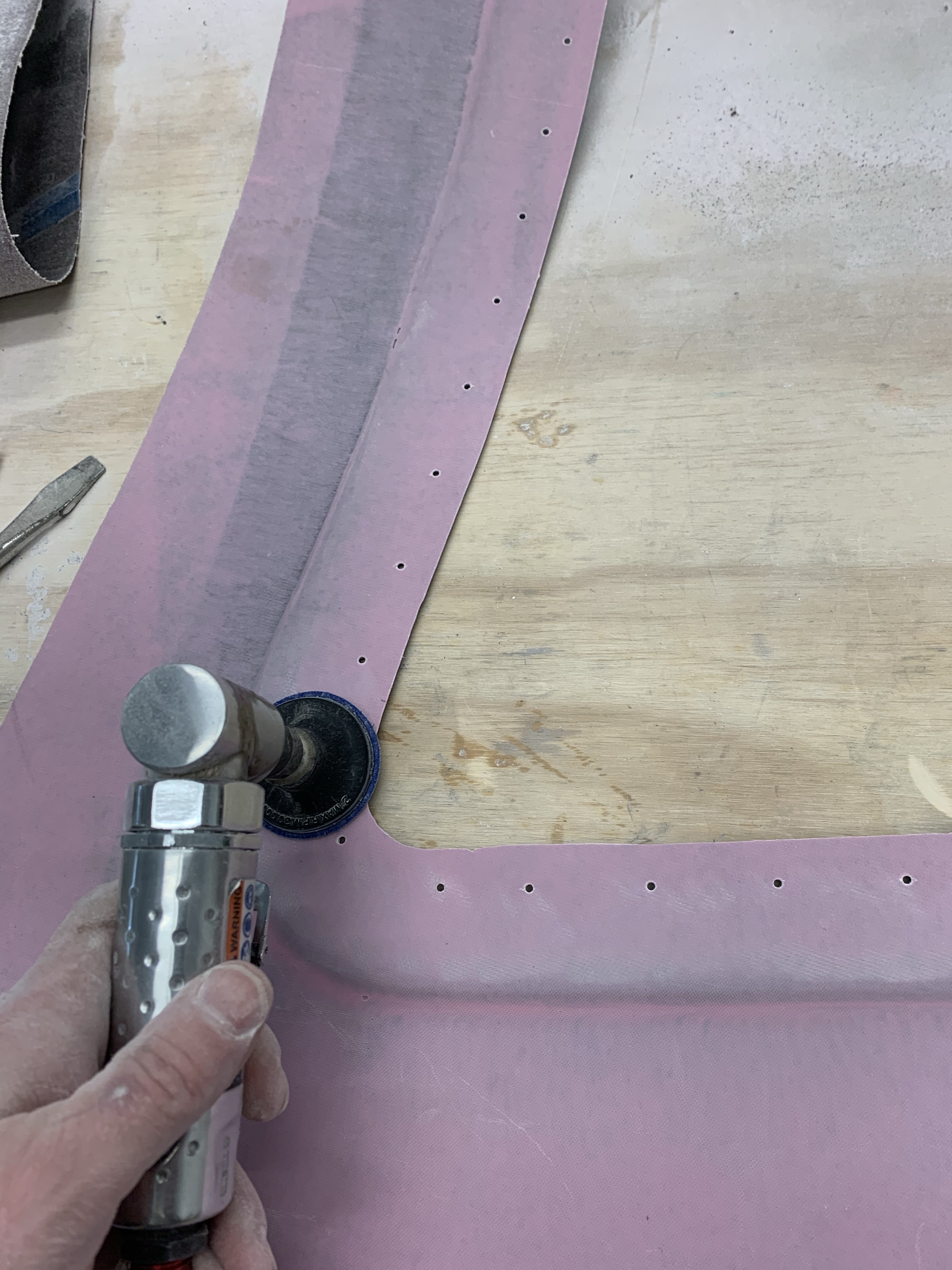
Trying out a sanding pad on a pneumatic die grinder

Next you put the door shells together using the dimpled index holes in the fiberglass that were drilled in each half. Like so many others, mine didn’t line up very well. The aft index hole lined up okay, as did the forward index hole (although it wasn’t aligned with the fuselage hole in the plans). It was aligned with the last hole of the upper forward fuselage about 4 holes up from what the plans say. The index holes in the corners of the window were pretty much useless. There was 1 on 1 door that did line up and another on the other door that was close, but the others weren’t even close. Doing some reading this seems to be fine, you basically make sure the door is centered the best you can. Mine seemed to be fine using the aft and forward index holes, so I went with that.

Right door attached to forward and aft index holes

Then you use a hole finder (seeing I had one) to perfectly match drill the open rivet holes in the fuselage with the door shells. This allows a cleko to be put in and the doors held tight to the fuselage.

Hole finder to drill the door shells perfectly.

Once the bottom holes were done along the fuselage, you’re supposed to tape the upper part of the door to the cabin top. Then match drill and cleko the window opening. I had read of others drilling holes along the door pillars and cabin top to hold the door shells very tight to the fuse and not have to rely on tape. To me, this is a much better method that allows the door shells to hold the shape of the door opening much more precisely. It may not be obvious from the picture, but the door shells are still oversized for bonding so they make contact with the outer surface of the door opening in the cabin top. This is what allows the door to be shaped to the cabin top when bonding.

Right door attached to cabin top/fuse.

Left door done too showing clamps that were used while drilling the pillars.

A view from the front after both doors done.

Inside of pilot’s door

An example of extra holes drilled in the cabin top/door pillars

Next up was to drill and attach the door strut stiffener. This is a simple match drill holes.

I then hopped over to start working on installing the Planearound center latch system. First is locating the proper position, cutting out a slot on the bottom of the raised door edge, and also drilling and slotting a hole for the shaft.

center cam gearbox and markings for the cut.

After drilling a 1/2″ hole, and making a slot for the shaft in the gearbox. 

I then drilled the 4 holes that will hold the gearbox in place and countersunk them in each door and prepped for attaching the supports for the cut area of the door. I mixed up some Epoxy and cabosil first as I will attach both the door strut and these door cut supports all at once. Once I did the door strut supports with Expoy and Cabosil, I didn’t have too much left, so I added more epoxy and thicken it up with flox. So I ended up with a mostly Epoxy and flox mix with a tad bit of cabosil too.. No big deal. I wrapped the gearbox in packing tape so it doesn’t accidentally get adhered to the structure and added a generous blob in each corner with the support pieces in place.

Gearbox taped and supports added with Epoxy/Flox. 

Door Strut support plate cabosil’ed in place. 

Now I’ll wait for these pieces to fully cure before continuing.

More Cabin Top, Overhead prep, and Start of the Dreaded Doors

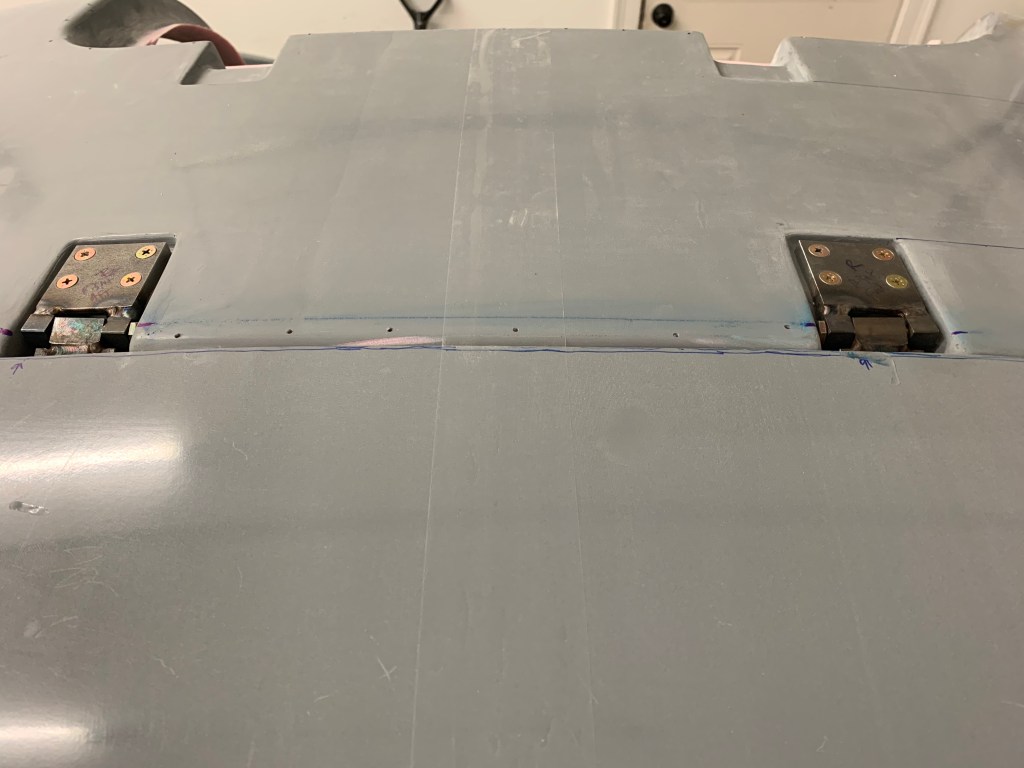
A little more cabin top work in locating the center of the top to align the center support bar. I drew 2 lines at the recess for the door hinges, extended them to the front of the top,  and then measured the center point between those 2 lines to find it. That method seemed to work well.

Center support bar in place.

One thing of note is that section 44 (Wing attachment) is the last section of the Fuselage section. I will be skipping this for now as it’s mostly working on the fairings that go between the wings and the fuselage as well as tank vent lines etc… Seeing my wings are in the basement still, and I’m not sure I have a ton of room to do this in my garage anyways, I’ll likely skip until I get to the airport and have the wings permanently on the plane.

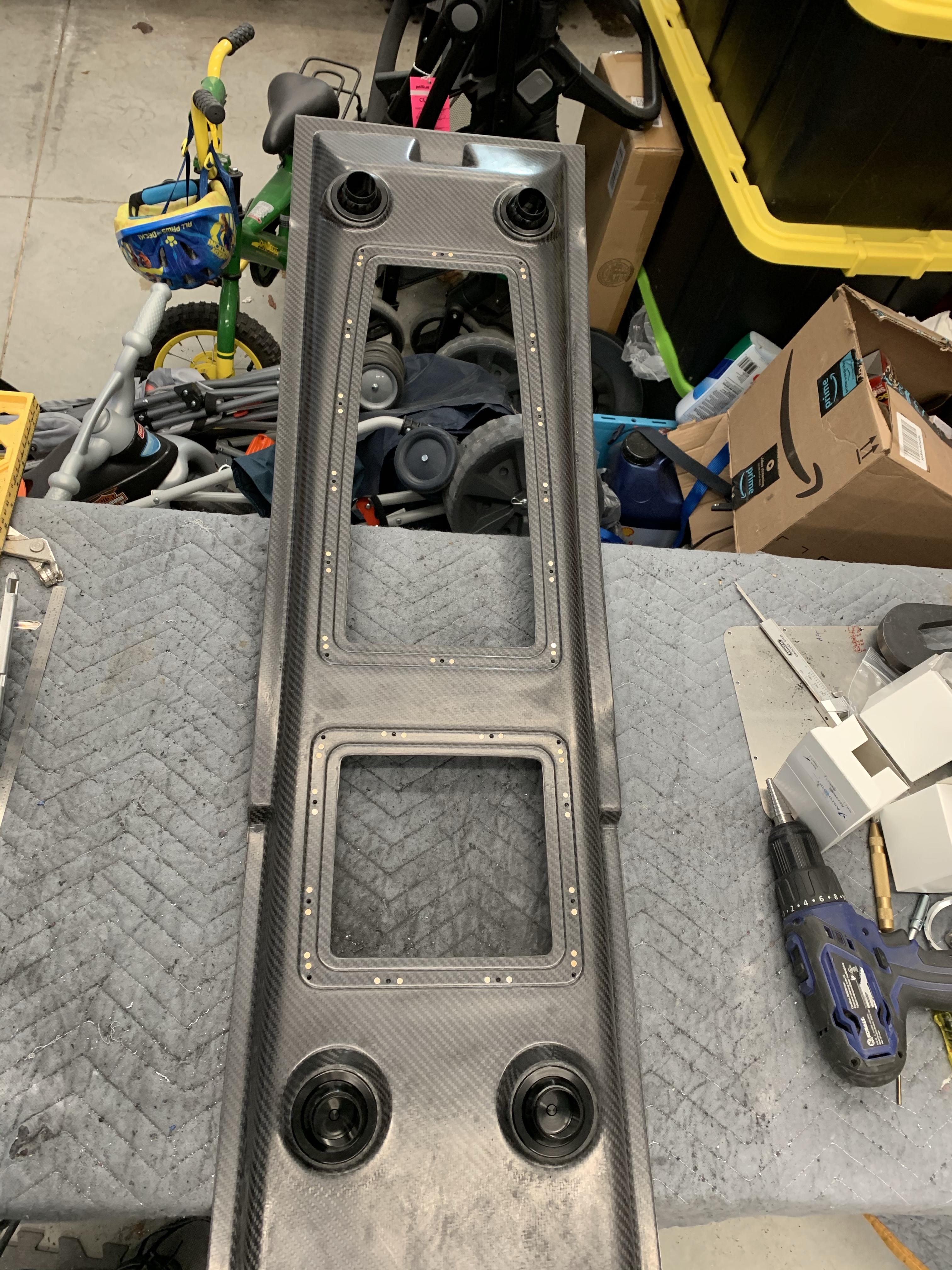
So now some bouncing around in the plans, as well as off plans, will start to happen. I turned my attention to prepping the overhead console as much as I can. This involved match drilling holes in the joggles for the metal covers plates, drilling, countersinking, and installing nutplates.

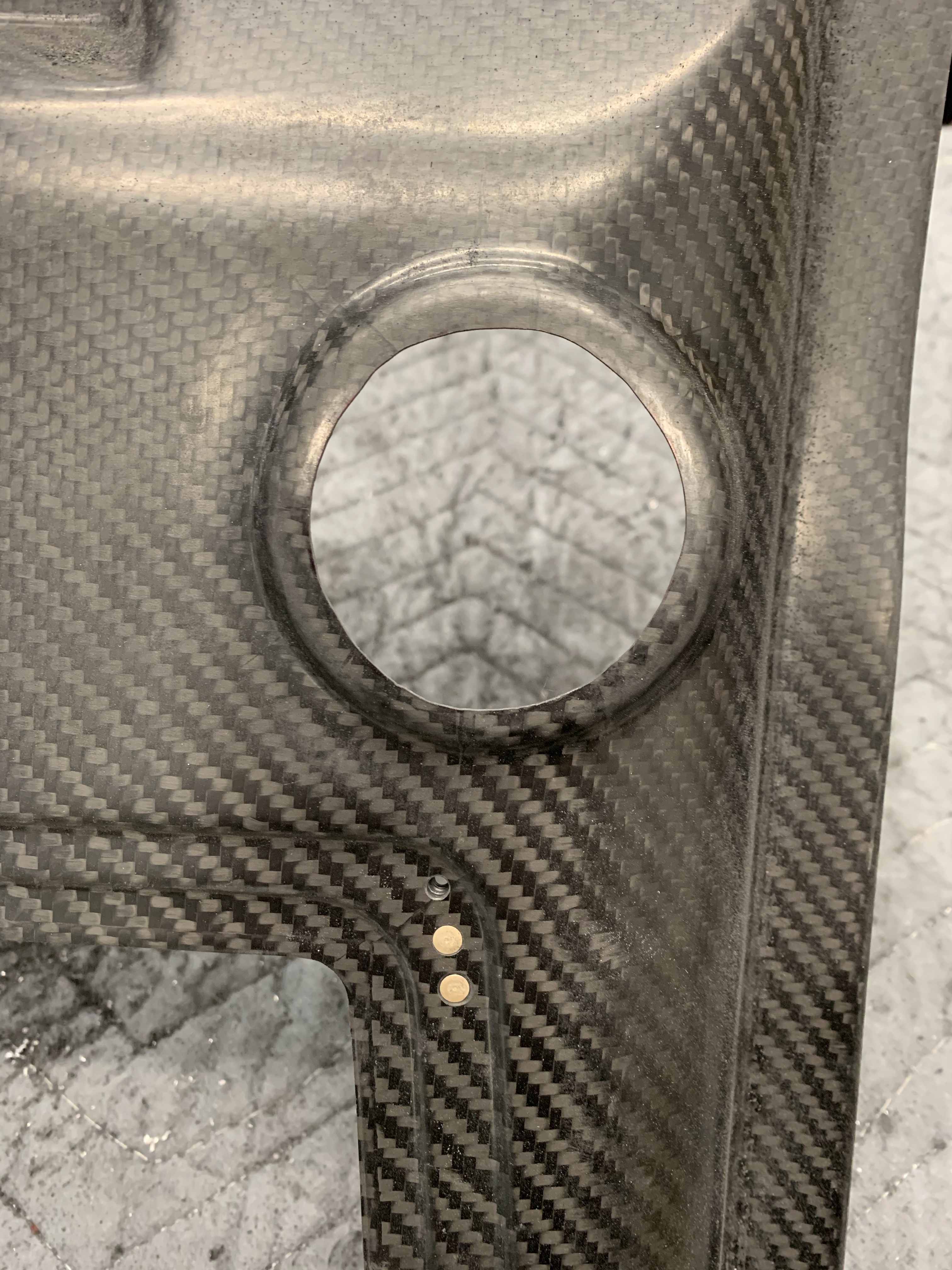
Then onto cutting out holes for the overhead air vents. A little geometry to find the center of the circle to start cutting a hole. I originally attacked this by trying to drill a hole in the exact center and using a unibit to cut the hole. I have one that is pretty big and just shy of the size I needed. I figured I’d finish up with a little sanding/filing to get it right. In the end, once I went above a 3/4″ hole, it started getting off center for whatever reason. So I found it was best to just lay the retaining nut for the vent on the circle eyeballing it for center and marking the inner edge for the cut. Then drilling a large enough hole to get my jigsaw blade in there to finish it up. Worked out well. Maybe not 100% centered perfectly, but not too bad.

Geometry to find center of circle

Initial hole drilled. Looks good. 

All nutplates are complete

Overhead air vents in place.

An example of one of the holes cut out for the air vent.

That’s about what I can do with the overhead console for now. From what I’ve read on others blogs, it’s best to have the doors rough fit prior to attaching the overhead, so I’m bouncing onto starting that section.

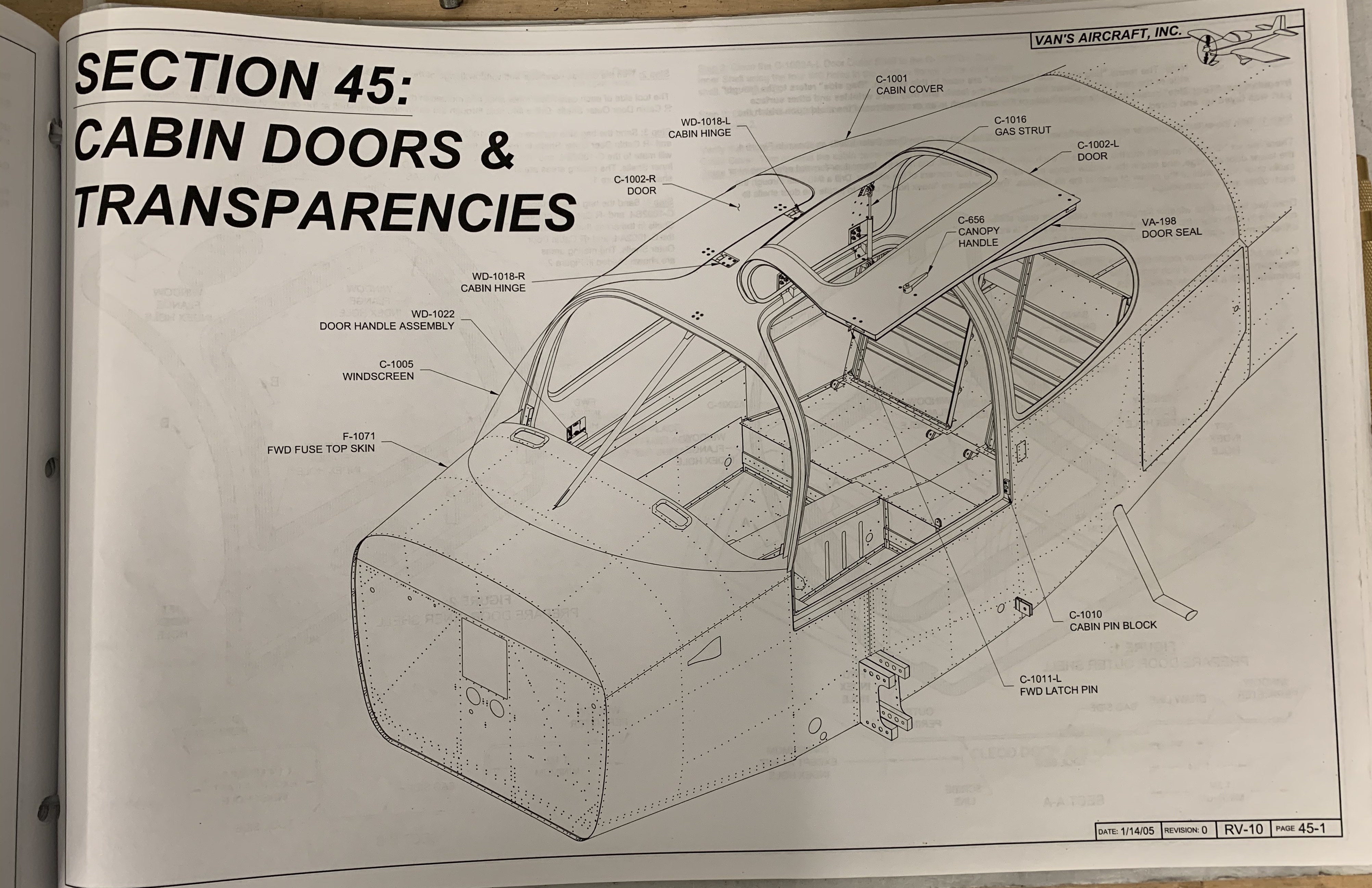
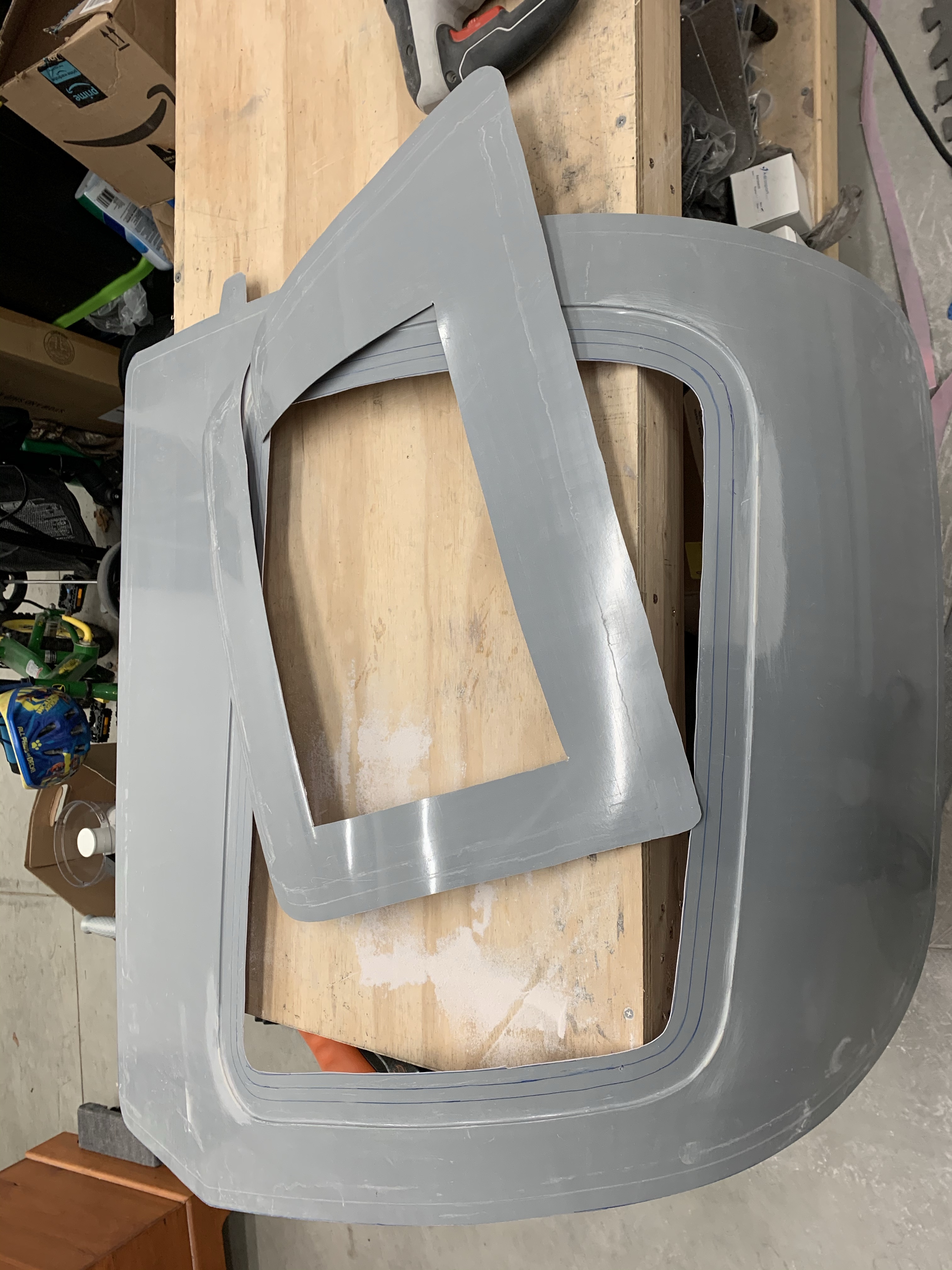
The RV-10 doors are basically fiberglass shells (inner and outer) that the builder has to bond together. The first steps of getting the doors going and initially fit to the cabin top involves marking a bunch of lines for both trimming and eventually holding the doors together during the bonding process.

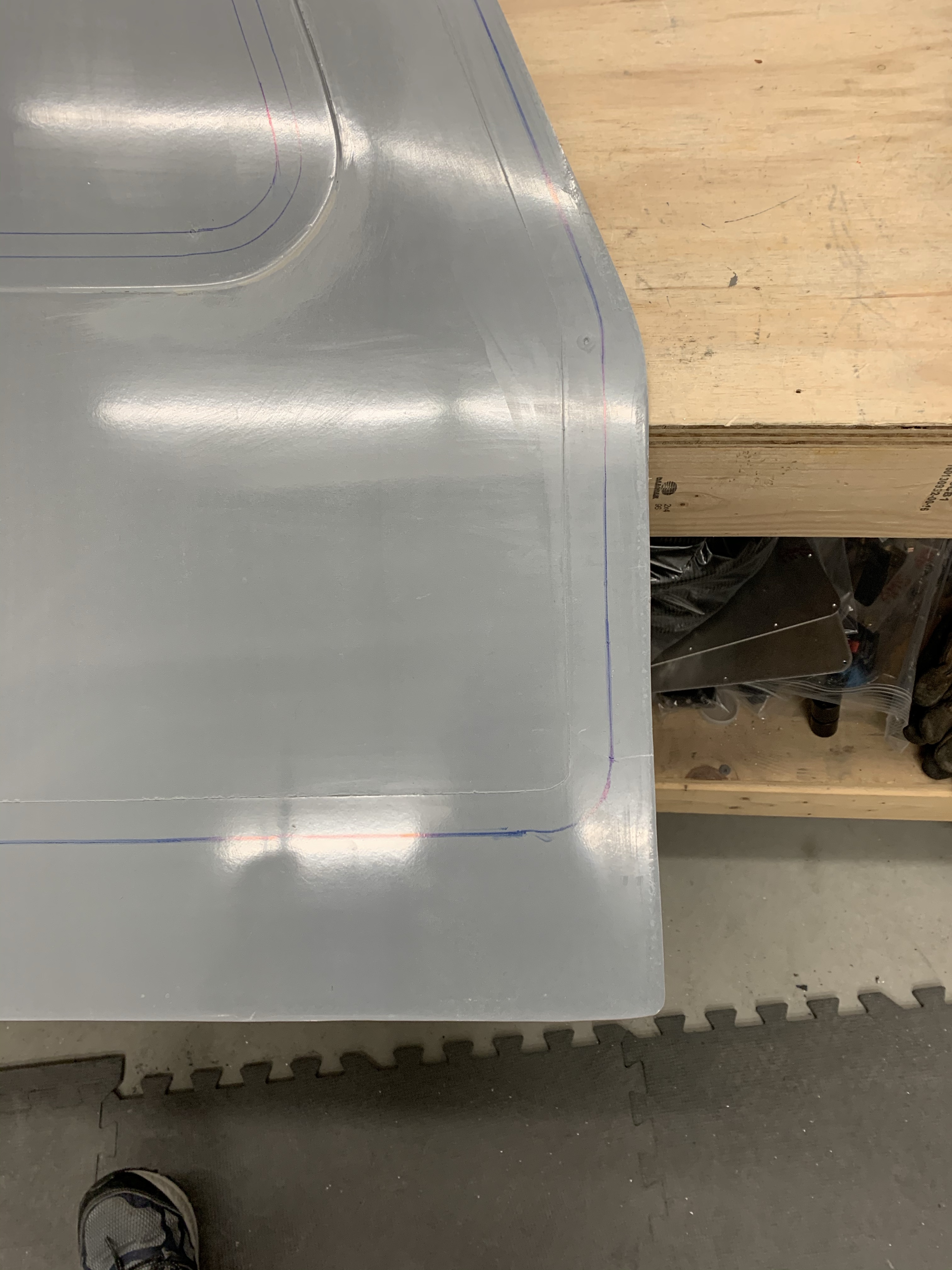
Marking Window Joggle lines

Marking the outer trim lines.

The easiest way I’ve seen to make these marks is by using a popsicle stick with holes drilled through at the various dimensions called out in the plans. This way you can insert your fine point sharpie through the hole and trace a line that is that distance away from the reference point, which is usually a joggle or raised structure easy to slide the stick along.

Tool for marking trim lines

Trimming and making dust (while making sure not to breathe it in)

Window area initial trim.

And finally marking along the 1-1/4″ line about every 1.5″ and drilling a #40 hole.

I’ve now started working on the outer door shells and will be soon starting the initial fit to the cabin top.