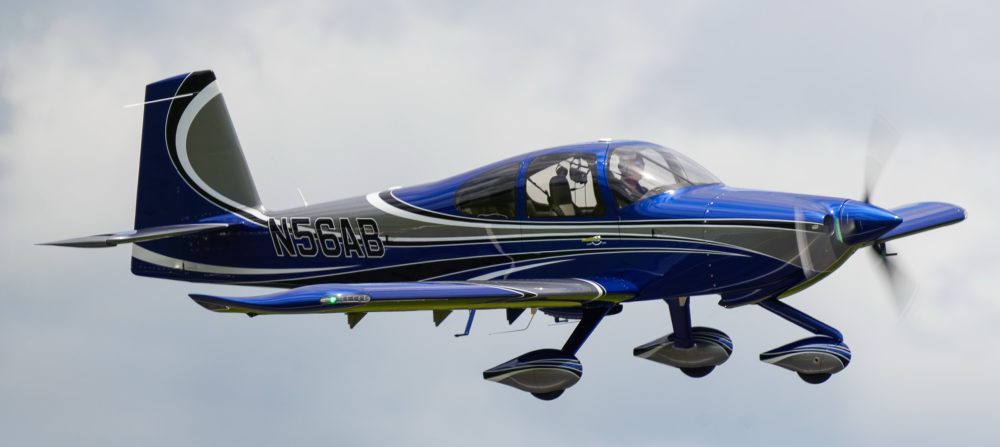
Tail and Wings

Lots of progress since moving to the hangar. It started by getting the tail pieces back on.
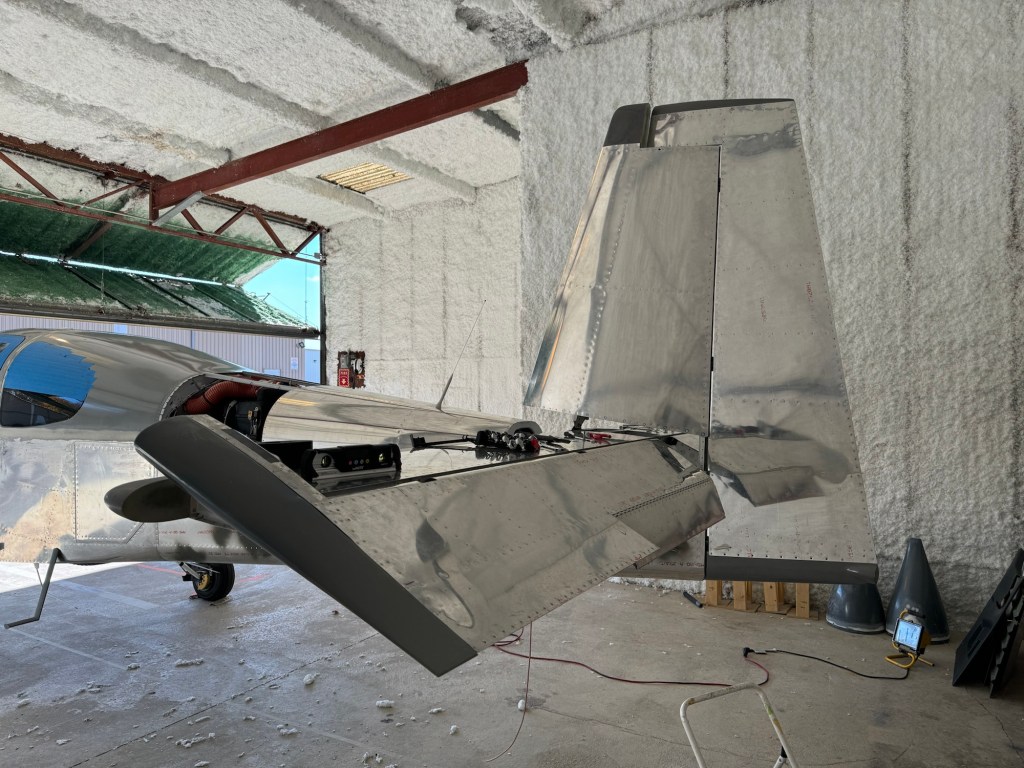
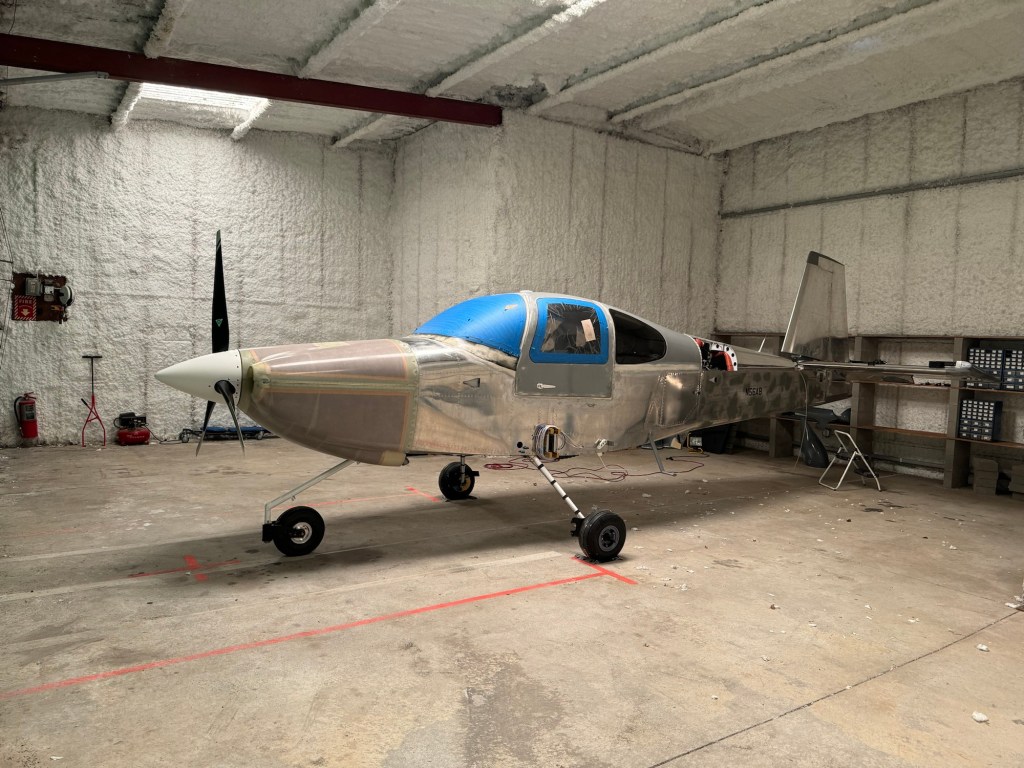
I then worked to get the emp fairing cover trimmed and in place and matched drilled to the holes in the metal using a strap duplicator. Then added nutplates so it can be held down with screws.

I needed to double check the nose wheel nut break out force and get a cotter pin installed. I really should drill a hole in the floor to thread a ring into for the strap, but I was able to use some blocks I had lying around and my creeper to pull the tail down, lifting the nose wheel off the ground.

I also spent an inordinate amount of time trying to bleed my brakes. In the end, I had to use a garden sprayer type setup to be able to build up enough pressure to push the hydraulic fluid from the brake caliper all the way up to the cylinder on the firewall. All other methods I tried (oil can, and also a vacuum bleeder from the top) failed to be able do the job.

I knew when I got my hangar that the single halogen light was not going to be enough. Still, in order to make progress, I made due with the use of some portable lights in the area(s) I was working. One day the bulb burnt out and rather than replace it, I took it as a sign that I needed to stop and just upgrade the lighting in the hangar. Below is the result of adding some new LED lights.

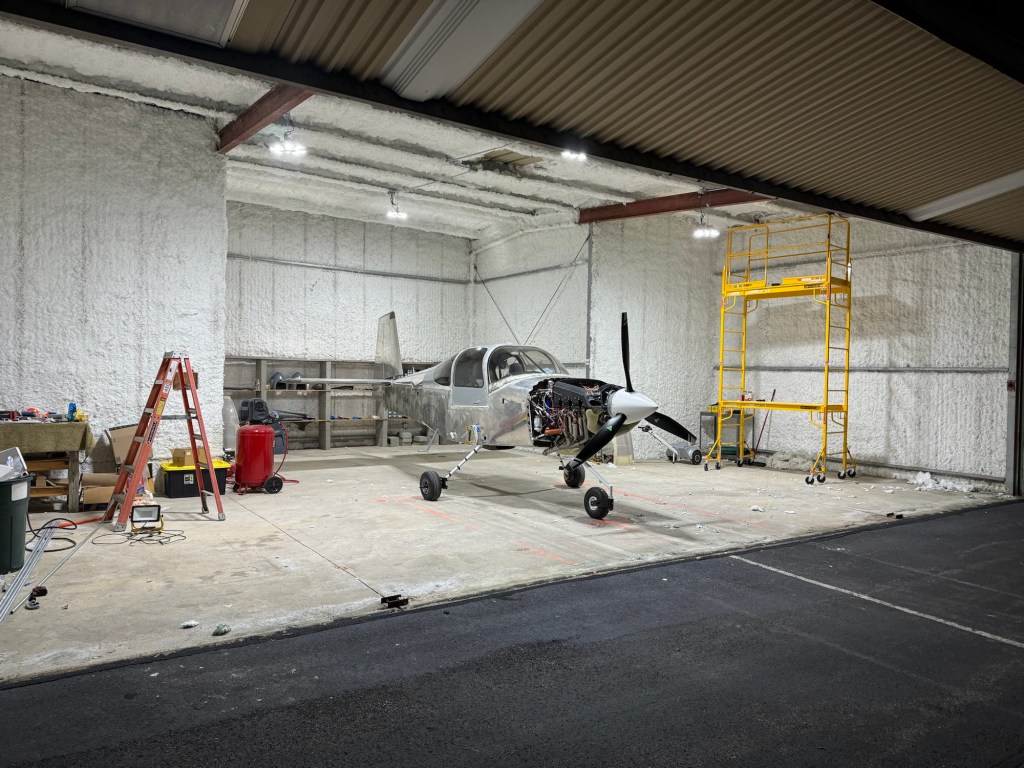
Once my ZipTips were done at home and before the first snow, I was able to get some help to transport the wings to the airport and subsequently get them onto the airplane!!!

Since getting the wings on, I’ve been able to get the flaps and ailerons on and rigged.

I’m now working on finishing up section 44 which is mostly about wing root fairings, fuel tank vent lines, and connecting the fuel lines between the tanks and the fuselage.

Flap connected
Aileron push bar connected.

In testament to the user friendliness of avionics these days, Declan seemed to pick up on how to use the EFIS right away. 🙂

I used some of the soft aluminum tubing to make the vent lines for the tanks as shown below.

So what remains is to finish the wing root fairings and get my fuel lines connected. Then I will need to take the wings off one last time to debur some things and finish some nut plates on the tank. Then I can bolt the wings permanently and finish up the electrical wiring.

After that it is mostly getting ready for first engine start and preparing for inspection.

Houston, The Eagle has landed!

Some additional tasks to finish up in prep to move to the airport.. Below you can see the small wrench I had to grind down in order to fit into the very tight spot and tighten the top arm of the main alternator. This had to be done after the prop was installed.

I had another tech councilor visit and he reviewed my FWF wiring/plumbing. A couple of minor suggestions for changes were made. One thing we discussed is getting the prop governor cable able to hit the stops on the governor itself before the lever in the throttle quadrant hits. I was having a hard time with this specifically. No matter what I did I could adjust one way and hit that stop, but not the other and vice versa. In the end I was able to rotate the face of the governor after removing the safety wire and loosening the face plate screws to fix the cable geometry issue. It just couldn’t pull aft and downward.

Working on getting the throttle and prop cables to hit the stops fore and aft while also having a little extra between the control lever and the end of the slot it travels in.

I also needed to get the AC hoses hooked up to the compressor and the dryer. In order to do this and charge later, I wanted to make sure that a vacuum could be held and that there were no leaks. I followed the procedure in the Airflow systems manual for evacuating the system. I hooked my gauges into the high and low side hose ports and pulled a vacuum on the system. I let that run for 10-15 minutes and then shut the vacuum pump off and let things sit for 30 minutes.

Gagues showing a vacuum.
High side hooked up to the port.
After 30 minutes still a -1 bar vacuum being held. Success!!

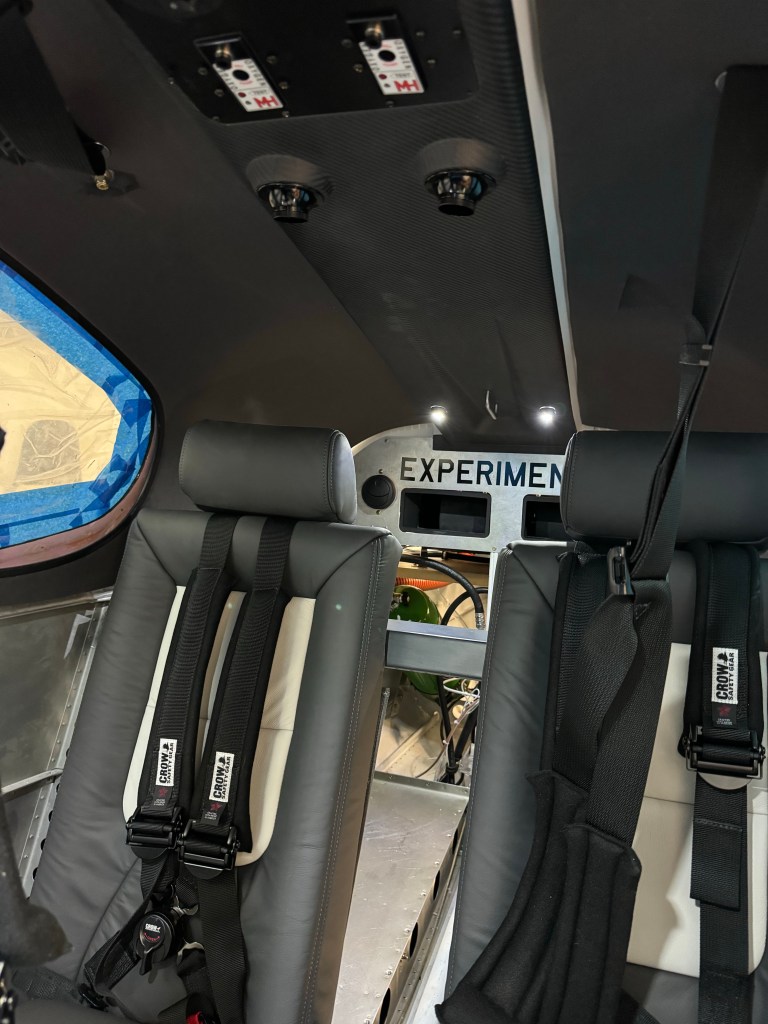
I also built and installed my light control circuit that turns the lights on when the doors open. Quick couple pictures with the main flood light and baggage area flood lights turned on by that circuit.

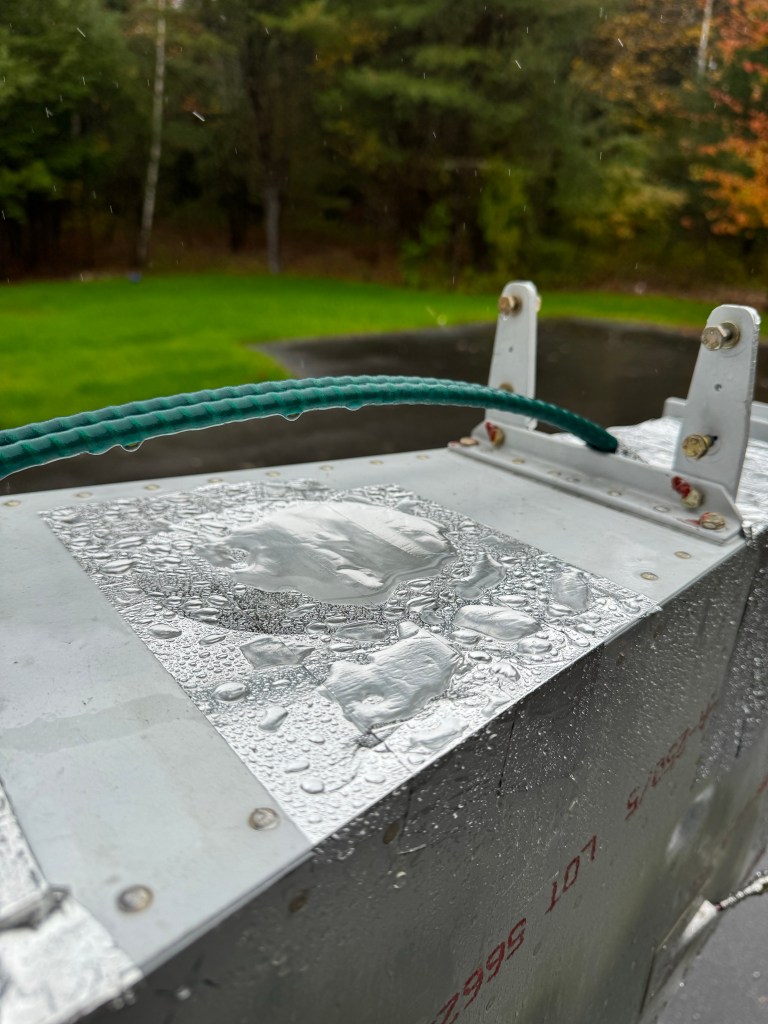
I the completely buttoned up the airplane for transport, getting the aft skin in place, cowling on, and speed tape on major openings because rain was in the forecast.

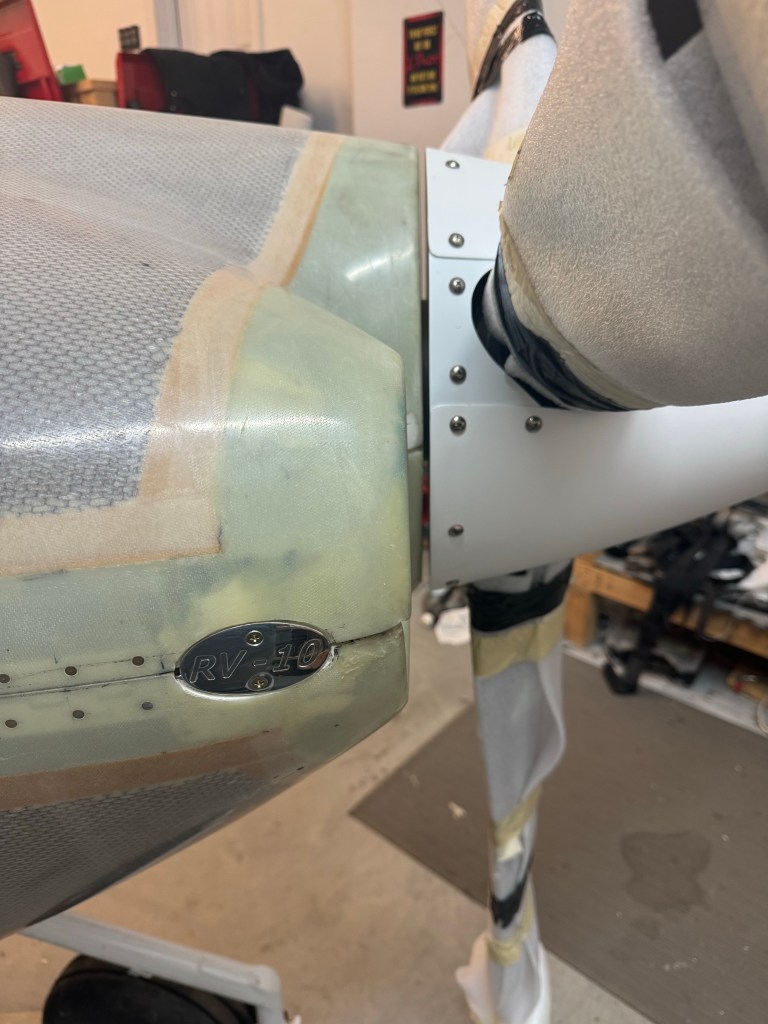
RV-10 plate to cover the side cowl pin.
Ready to go!

Then the day came.. I got the plane moved around so I could get it out the middle door of the garage.

Not the best day.. A decent example of the rain before we started loading and the speed tape doing a decent job of keeping it out of the plane.

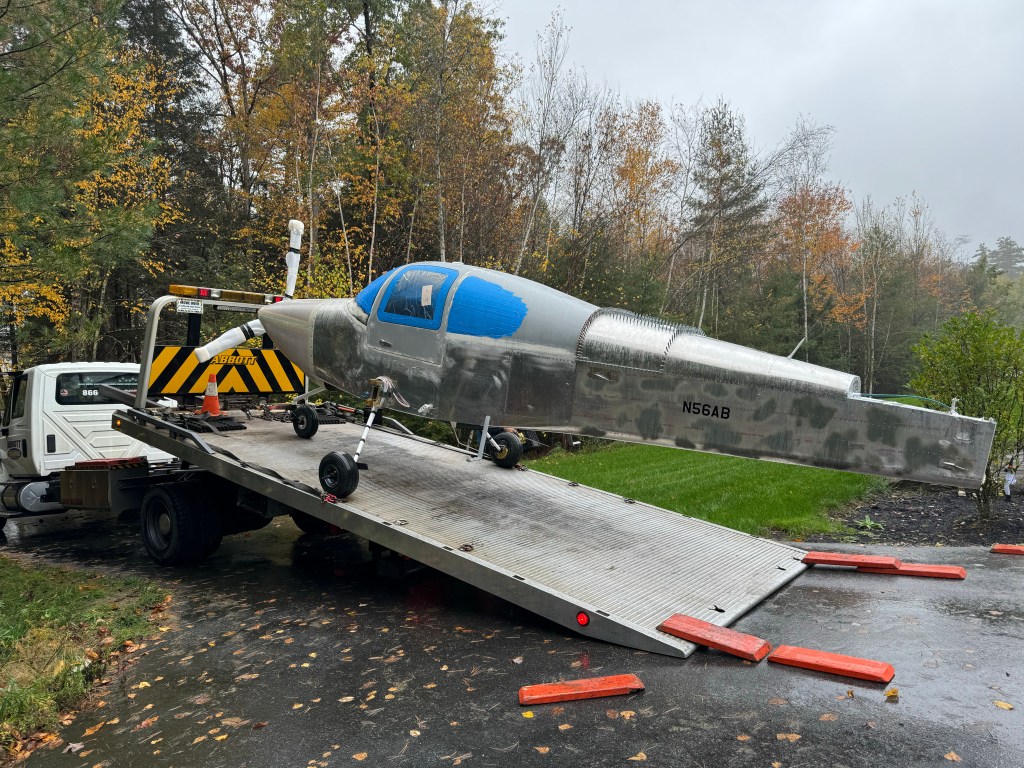
I helped the driver get the plane in position and also kept the nose wheel straight with the tow bar as we pull the plane up onto the ramp. With the castering nose wheel, this really needed to be done to keep the plane coming up the ramp straight.

Nosewheel on!
All the way on. Now to tie down.
Mostly secured.
Flagging the minor overhang.
Ready to go!
On the road.. nerve-racking ride behind my baby!
We’ve arrived safely!
Offloaded into the hangar!
Another angle.

Now work has started on getting the tail pieces on. I’m still finishing up the wings bottom skins and ZipTips at home. It’ll be good to be able to work some at the hangar on the emp, while I still make some progress at night from home for the next few weeks.

Horizontal stab is on and elevator trim cables fished through.

Working the punch list

I’ve gotten down to a short enough list of things to do, it was time to write them all down and formulate an approx. schedule to move to the airport. A Punch list of sorts. That approximation had me moving on Oct. 1st. I’m still within about a week of keeping to that schedule. Below are lots of the items that I’ve checked off that list.

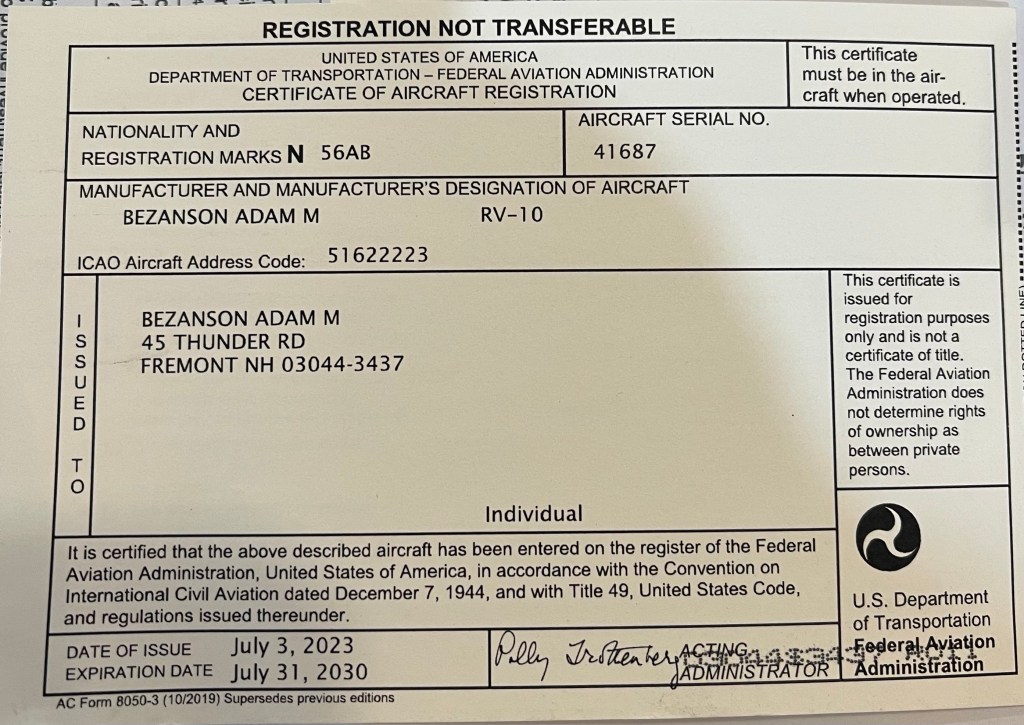
  1. Ask Van’s for a bill of sale, fill out registration paperwork, and apply. Done!

I do have to say, the FAA was rather quick. I know that they expedite new registrations, but still they were quick. The tracking said they received my paperwork on a Sat. So figured no sooner than Monday would they look at it at the earliest. My mid week I noticed they cashed my check. By the end of that week, my info was live with an online lookup, and by the end of the following week, I had the paper cert mailed and in hand.

I needed to still drill holes in the cabin top and countersink for screws for the front seatbelt attachment. I wanted to do this before getting the interior done going as well as needing to locate this hole through the headliner material used on the rear ceiling. You drill a 5/16″ hole in the center of the reinforced section of the cabin top. Then countersink it. I bought a countersink bit just because this hole is so large and I didn’t have a bit that would properly do it.

Left hole drilled and countersunk
Screw fits flush
The Countersink bit I bought for these 2 holes.

I then started working on interior items. I got the new McMaster door seal in place and installed the door handle plastic.

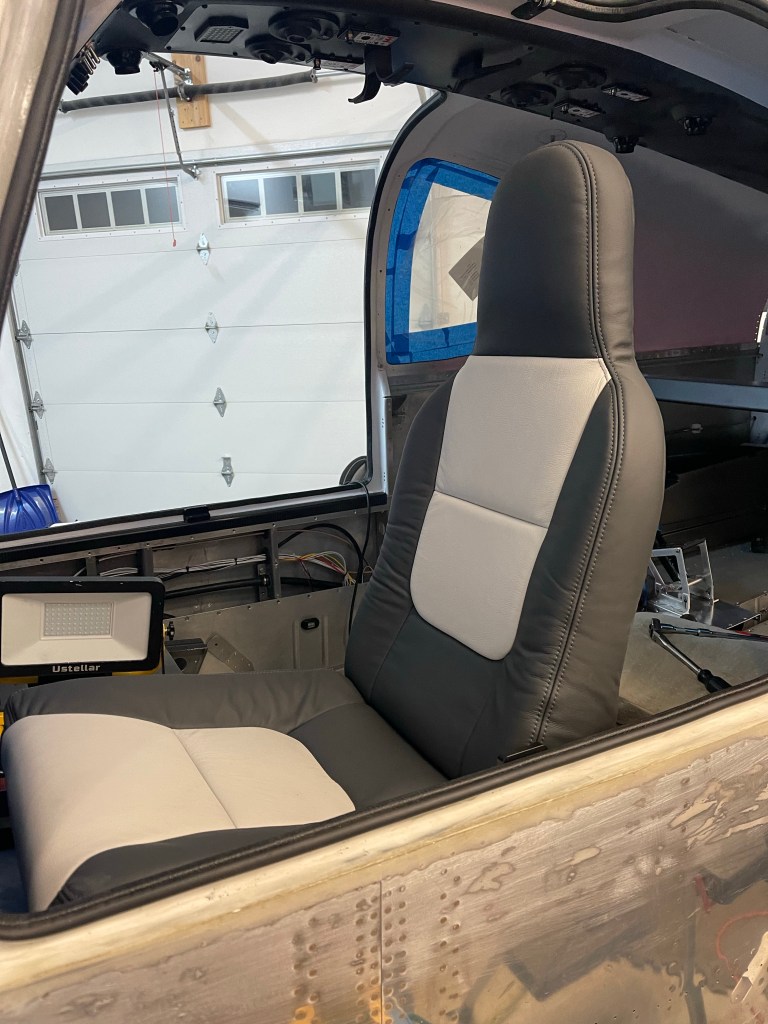
I then needed to install the seats, but first up were the seat rails. These are pretty straight forward, however, I did do one useful mod to easily remove the seats. I took the seat stop bolts out, placed the out-most rail in place and drilled 1/4″ holes into the seat pan below. I then installed nutplates. This allows you to simply install the aft seat stop with AN-4 bolts (slightly longer bolts are needed) from the gap between the door and the seat with a socket. The seat then glides backwards off the tracks and can easily be taken out. I also took out the plastic slides in the rails themselves and cut the first 1/2″ off to help get the seat tilted down a bit earlier to clear the flap tube cover.

Below is a picture of the seat rail sitting next to where it goes and the 2 new holes with nutplates drilled.

Nutplate mod on seat pan
Seat rail stop installed and is easily removable to slide the seat out.

I also installed the Aerosport Products seat levers to have the seat adjustment knob just under the front of the seats to more easily get to. I didn’t seem to take pictures of that install.

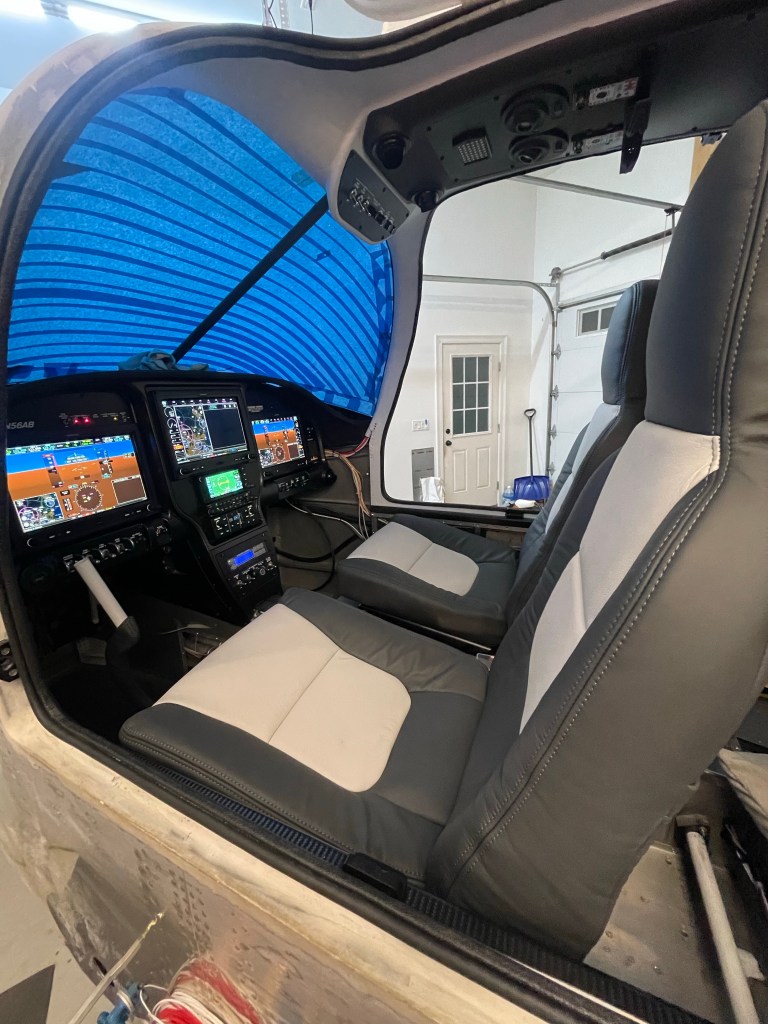
Then I installed the front seats.

Sticks and stick boots were also test fit.

I will say I’m up much higher than I’m used to. I’ve gotten so used to just sitting on the seat pans themselves.

Testing out the seats
Front seats in and avionics on.
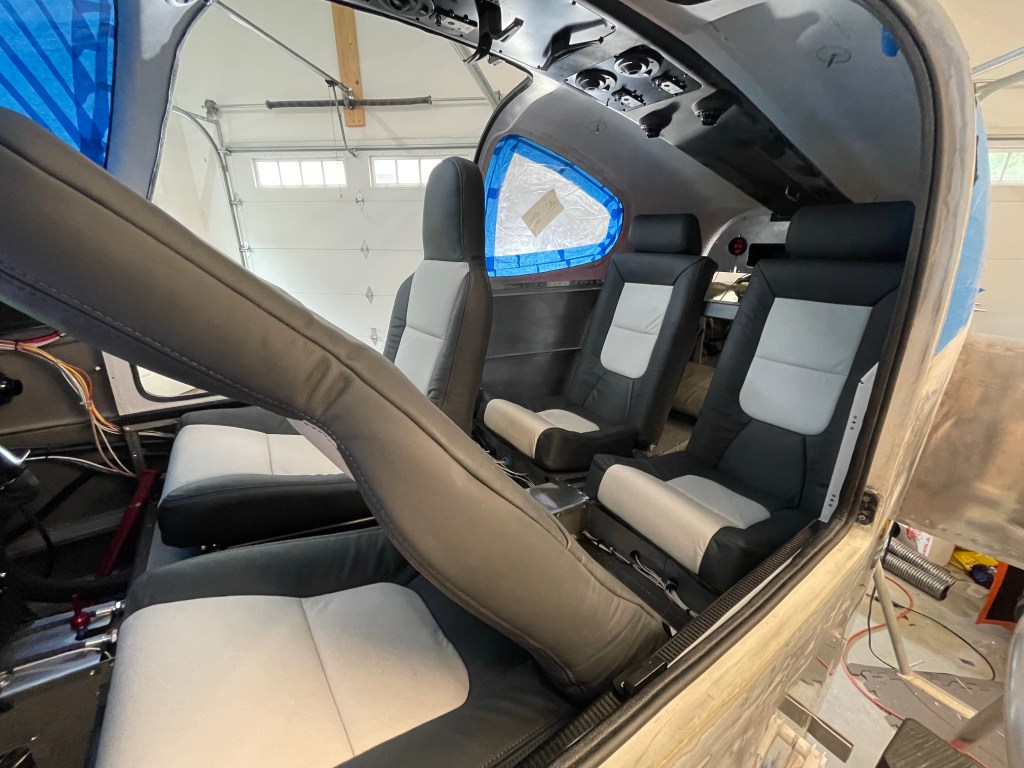
Rear seats are now installed.

I then got the seat belts installed and the center console loosely in place.

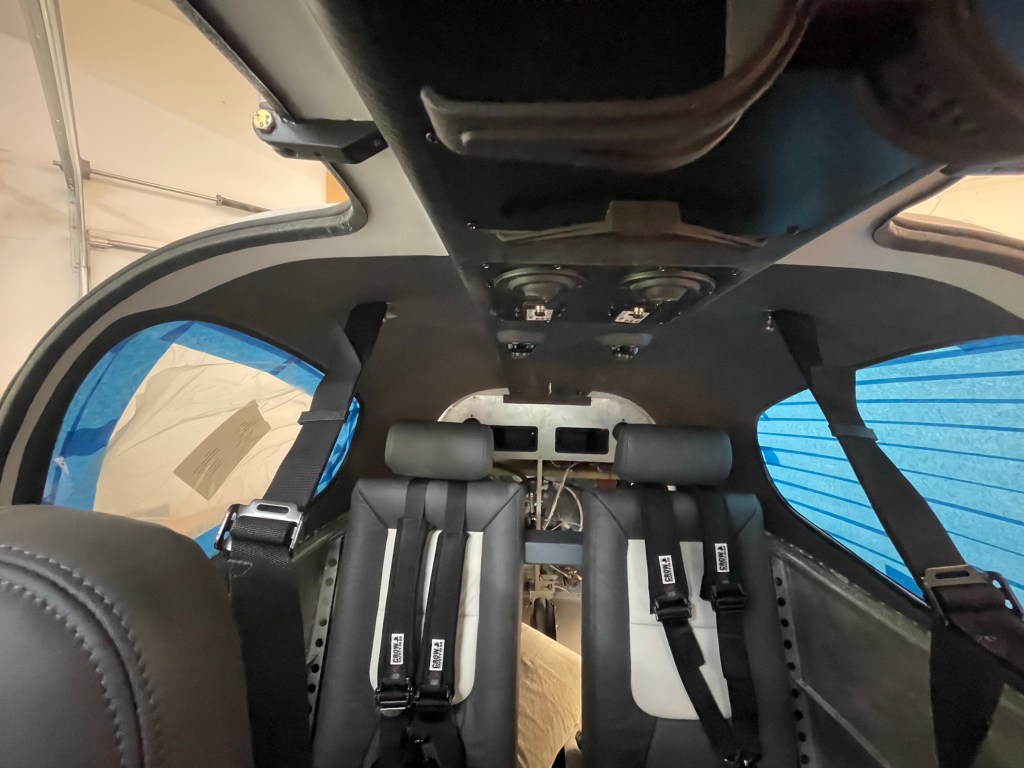
Before I could get the front seat belts anchored to the cabin top, I had to install the Aerosport Products headliner onto the previously trimmed fiberglass substrate. Headliner adhesive from the autoparts store was used to adhere the fabric. I followed the videos on how to make cuts and wrap the material around the backside of the substrate dealing with the inside and outside corners.

Material on substrate
All finished up with the window gasket installed.

I then used some various widths of velcro to install this into the rear portion of the cabin top as shown below.

Headliner material installed.
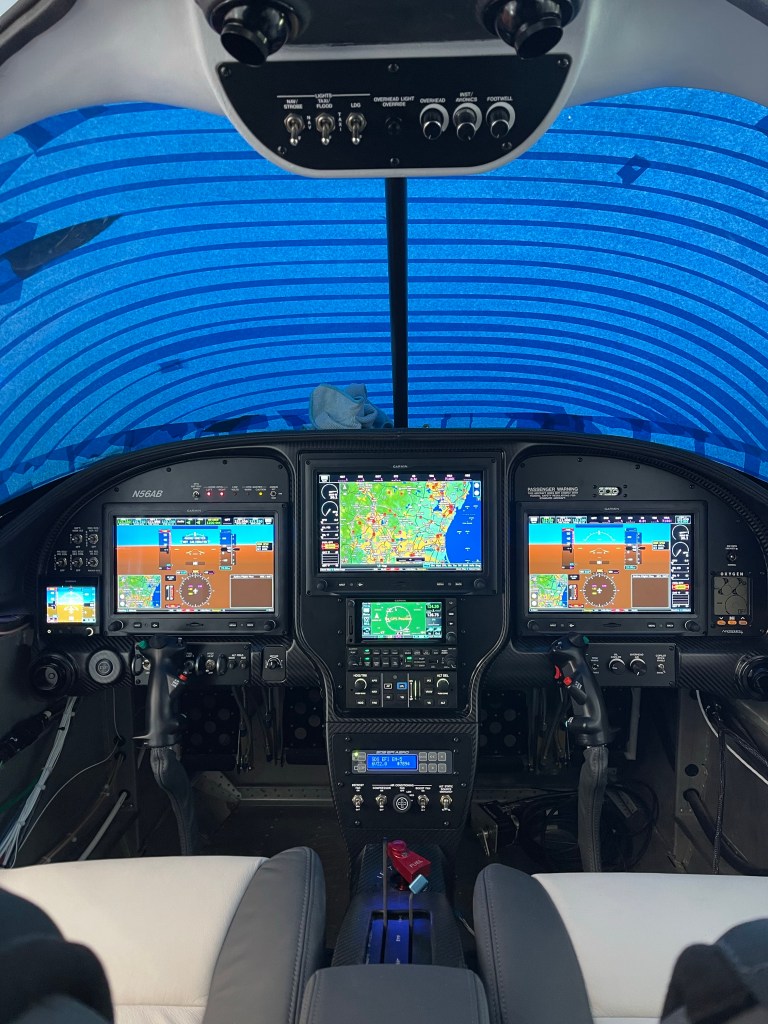
Just had to take a fuller pic of the panel while I was sitting in the rear seats

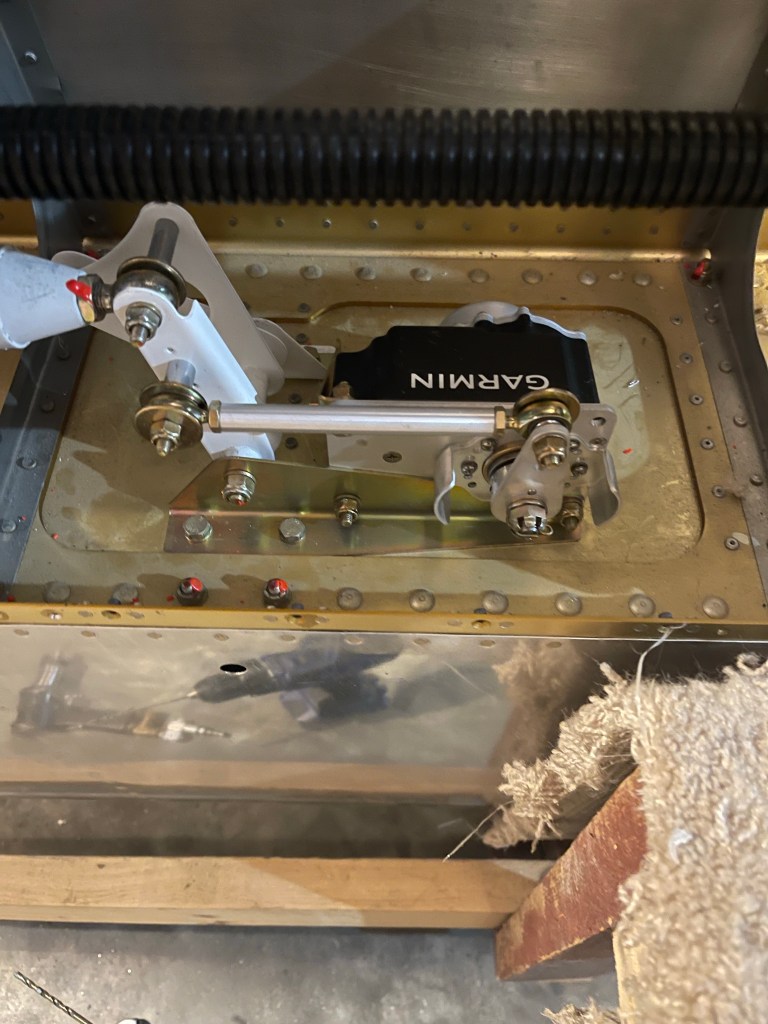
Then some things to finish up in the wings prior to riveting on the bottom skins. I installed the aileron trim motor and springs along with the roll servo.

Roll Servo
Spring of the aileron trim.

Then I mounted the prop once again and got it safety wired and the spinner installed.

Panel is Powered!!!!

Continuing from where I left off. Wiring continued… Pulling wires to where they need to go. Cutting to length, stripping, crimping a pin on, and inserting into the connector.. Rinse.. Repeat! It’s always a fun time contorting myself </end sarcasm/> on the front seat area to get underneath the panel..

Working on some wiring behind/under the panel

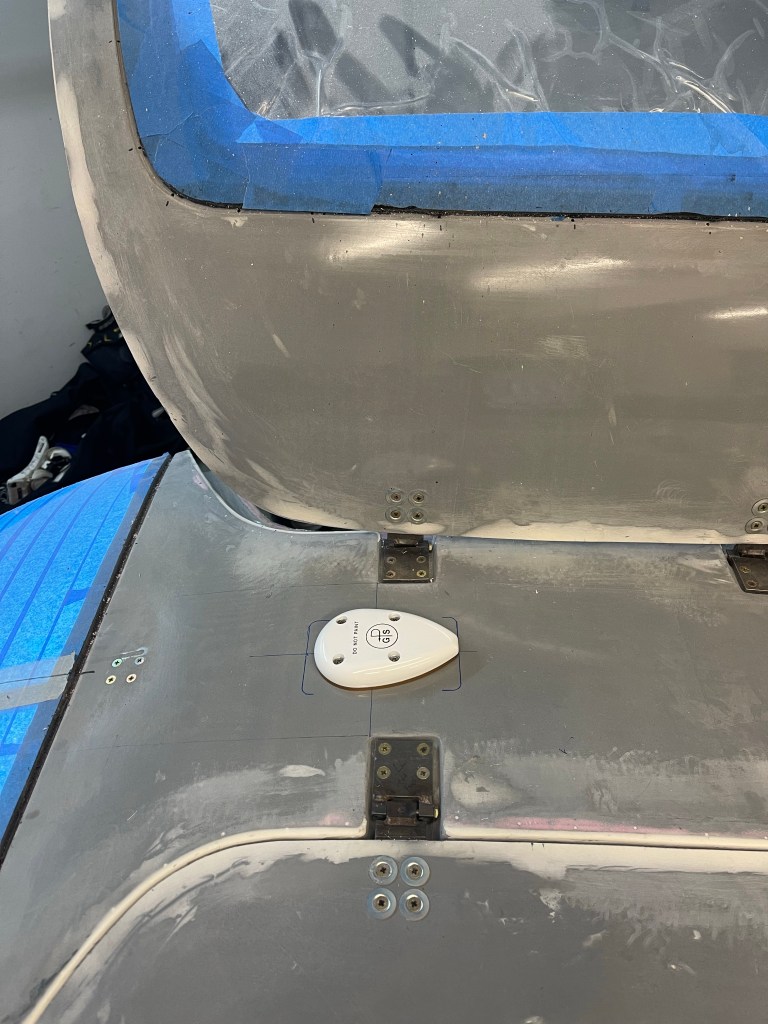
I got the remaining GPS antennas installed.

GA35 between the doors.

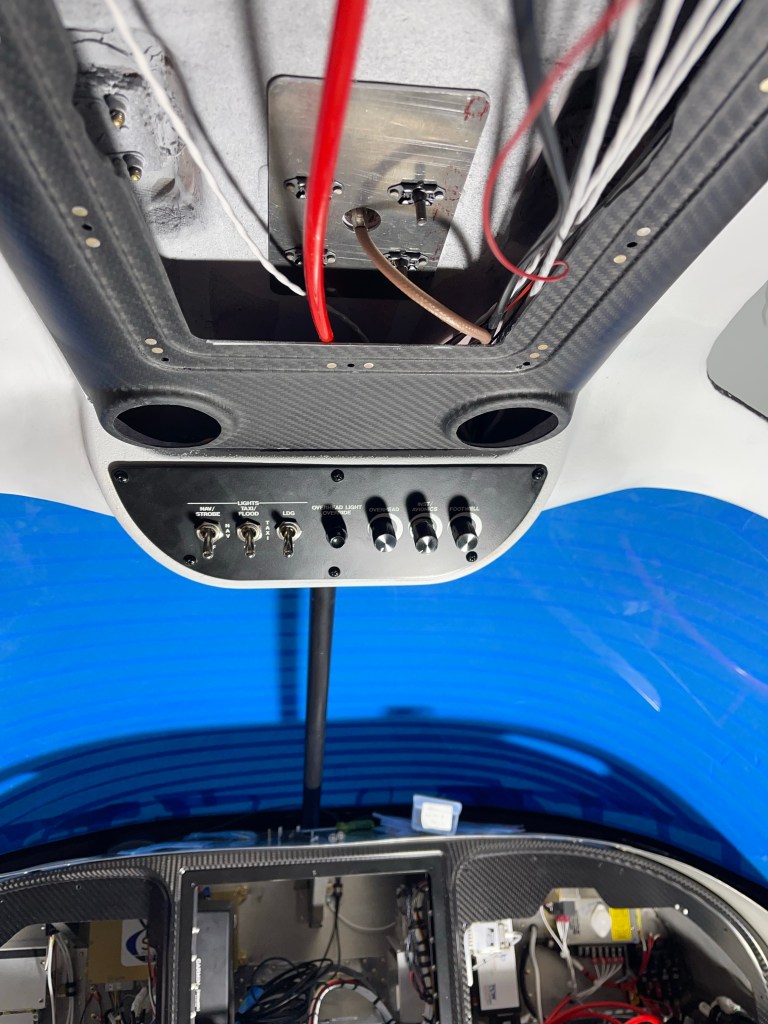
I also got the switchpod finished up and wired down the A-pillar conduit.

Closeup of switchpod

I installed the GA-57X on the aft metal portion of the airframe. Just behind the AC evaporator to avoid interference.

Inside view of XM/GPS antenna
Outside view of the GPS antenna

One other thing I wanted to do before closing up the panel was to put the leather glareshield material in place with the two GPS pucks mounted on top of it. Below you can see me getting it lined up properly and the final product.

Getting the material aligned
Wider view of it all done and tucked under/between the glareshield overhang and the carbon panel.
Closeup to see the detailed stitching. Also a defrost fan grate in place.

I then installed the Pitot static and AOA tubing, distributor blocks, and connected them up to the G5, GSU25’s and the alt static switch. I then mounted all the avionics back into place in the panel.

I also decided to pin out the harness that will go out in the right wing. It houses the roll servo and magnetometer. Without it the CAN bus wouldn’t have been terminated properly and communication errors would have happened. I have those things laying in the footwell for now. I’ll have to depin from the CPC connectors later to route the harness through the wings, but that’s easy enough.

A number of triple checks to make sure I didn’t see any shorts between power and ground and making sure +12V was connected to the + side of the battery and negative to negative.. The moment of truth came…..

The panel powered up and everything seems to be working!!! A bunch of wiring work to get to this point, and it represents another major milestone in my build.

I really can’t say enough about the work that Aerotronics did to build this panel. They make it really easy to put it all together.

Now on to pushing forward and getting the remaining pieces finished up so I can get this bird to the airport and signed off to fly!

Wiring

Not too many updates recently. I’m at a point where it gets harder to take meaningful pictures. So here’s a photo dump of some of the more significant updates over the last couple months

I worked on finishing up the forward tunnel by wiring the fuel pumps and getting the transponder antenna doubler installed with the help of a fellow builder. I then got the cover on and secured the throttle and prop cables and some wire bundles for the headsets in the center console.

I cut out the rear portion of the arm rest where the jacks for the rear passengers and a USB charging port.

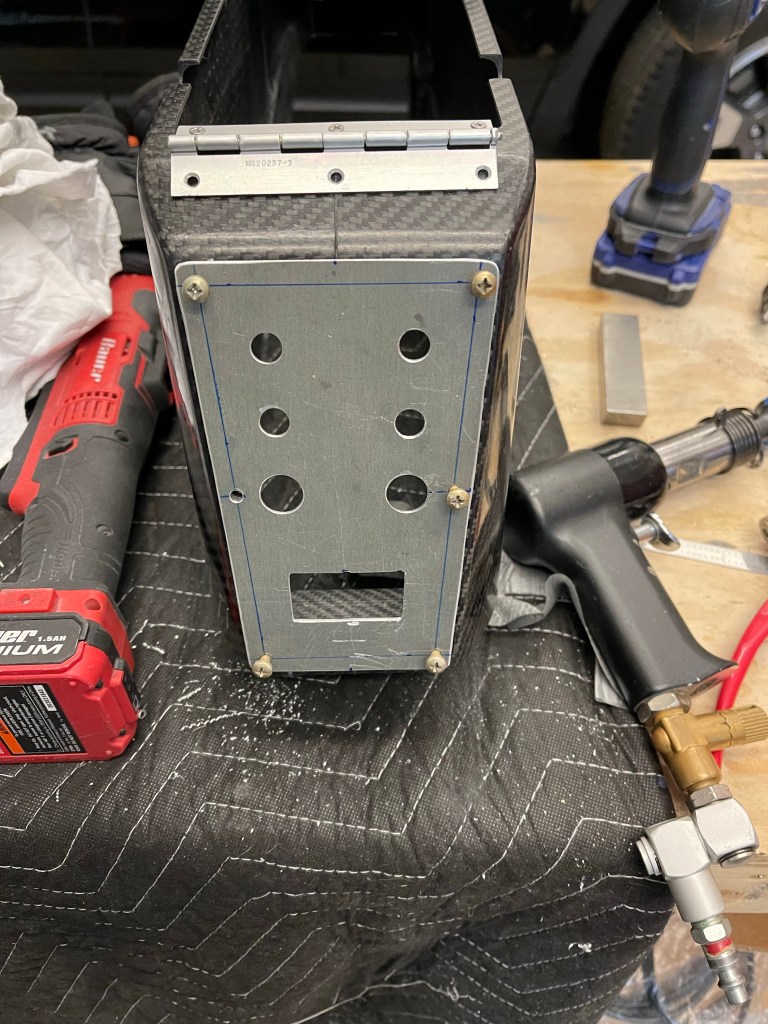
The metal plate to cover up the hole I cut and house the jacks.

I also cut holes out in the plastic insert in the arm rest for headset jacks for front passengers.

Jacks installed.

I also installed the 2 GPS pucks on the glare shield in front of the defrost fans.

Left side of the panel area.

Lots of the panel is connected to the rest of the airplane with CPC connectors. Here, I am wiring the P1 connector which houses things like the master contactor switch, starter relay, alternator regulator connections, flap motor connections, fuel senders, door sensors, pitot heat, and boost fan for the AC.

P1 wiring complete.

Secured into place with a clamp.

Wiring like the P1 wiring will continue.. Next post will likely be when I get to the point of powering up the panel for the first time.

FWF Done!

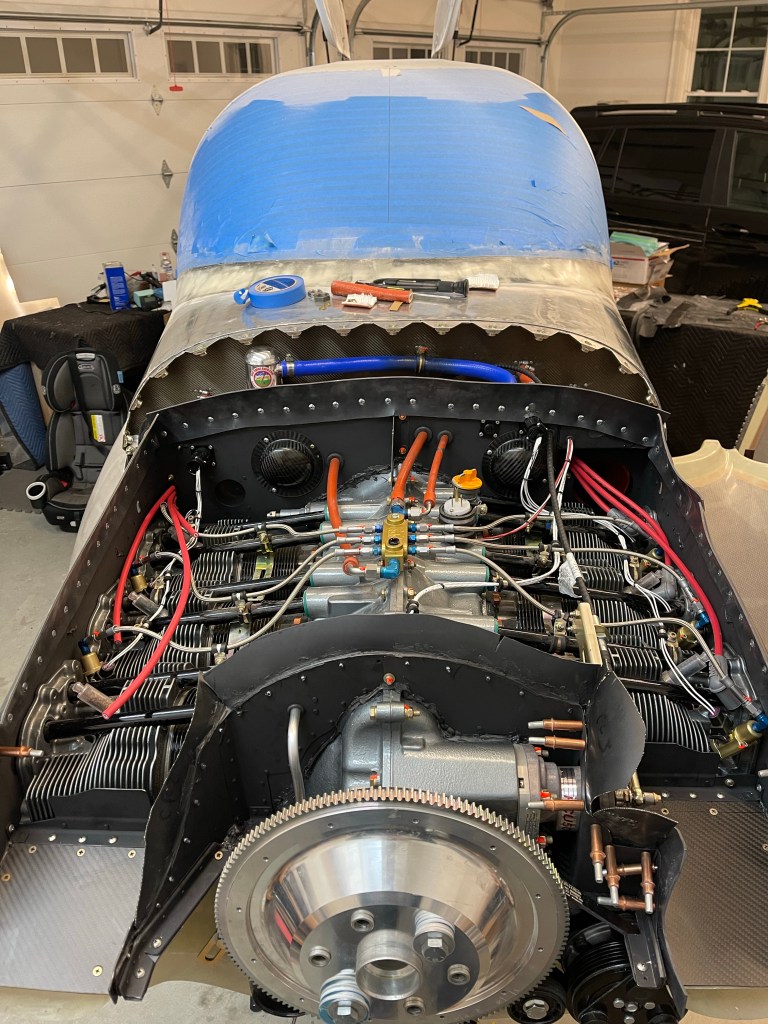
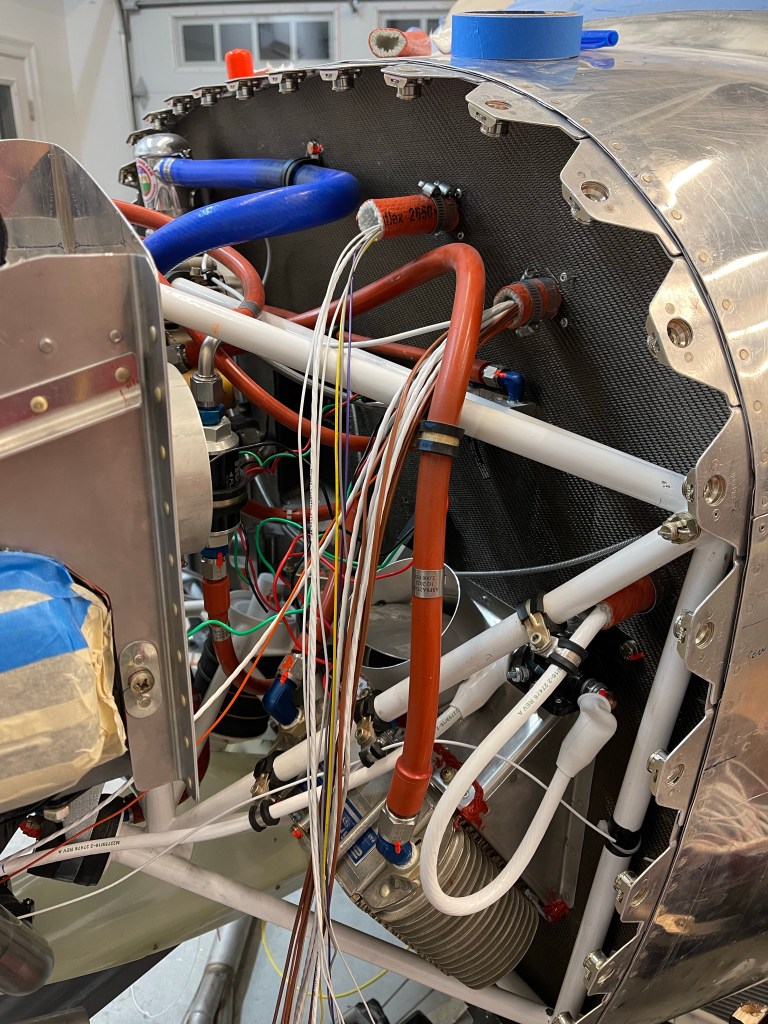
Wow.. What a ton of work! I’ve now completed all the Firewall Forward plumbing and wiring. The only thing left to do is to put spark plug ends on the wires and maybe tidy up a couple of wires, but outside of that.. I’m done. I also took a little extra time to revisit my baffle material seeing I wasn’t completely happy with it the first time. I changed the left, right, and aft material so each was one contiguous piece of material. Previously they were broken into 3 pieces. The aft part had some puckering that I didn’t like as well, so was addressed with this update.

The next couple of pics are from the front.

The right side of the engine.

Boy does it really get busy in the space between the firewall and the engine. Especially when you have 2 coil packs for the spark plugs.

The left side of the engine.

Again busy busy.. It really took so much time not only to wire things, but to come up with reasonable routes and securing things.

Now its back to finishing the inside wiring and getting my panel powered up!

FWF wiring never ends

Mostly been focused on FWF wiring. There are lots of connections to be made and properly securing the wires seems to take considerable time. Fabricating brackets.. etc..

Below you can see the metal L brackets I made along with a short straight metal piece to secure the #2 starter cable to the oil sump. The straight metal piece allowed me to mount the adel clamp for the #2 wire inwards, sort of on top of the sump. The adel clamps down lower allow for the lower voltage signal wires, mainly CHT and EGT, but also throttle position sensor wires to be secured.

Left side brackets

I also secured the AC hoses FWF along with putting the ends on the compressor side of the hoses. I secured the hoses to the forward-most intake tube, a plate secured to the left side of the cold air sump.

Left side AC hoses

The hoses connected to the FW and secured (although not in sight) to another metal bracket attached to the bottom of the cold air sump. I may also secure them to the engine mount in the middle of the run shown below.

Right side AC hoses
AC hoses ready to be connected to the compressor

CHT probes were screwed into their locations in each cylinder. I then got to locating the EGT probes making sure they have clearance seeing they stick straight out of the exhaust pipe. I targeted 2 1/4″ down from the flange. I was able to locate 2 of the 3 on the inside of the pipes and #2 needed to be pointed outside due to the angle of the pipe and the heat muff being on this pipe giving few other options.

Drilling a hole for the EGT probe
Probe secured in place
Left 3 pipes have EGT probes installed.
Left side coming along

I’ve run spark plug wires to their destinations. The left coil pack services the top set of plugs and the right coil pack services the bottom plugs on each cylinder.

Top Right spark plug wires routed.
Top Left Spark plug wires routed.

At this point the left side is just about complete. Still need to finish the spark plug wires and the Tanis wiring to each cylinder heat element. Time to work on the right side.

Left side nearing completion.

Below are some other pics of having a bung welded into the right side exhaust collector for the SDS O2 sensor installation spot. I had a local guy TIG weld this on for me.

O2 sensor bung.

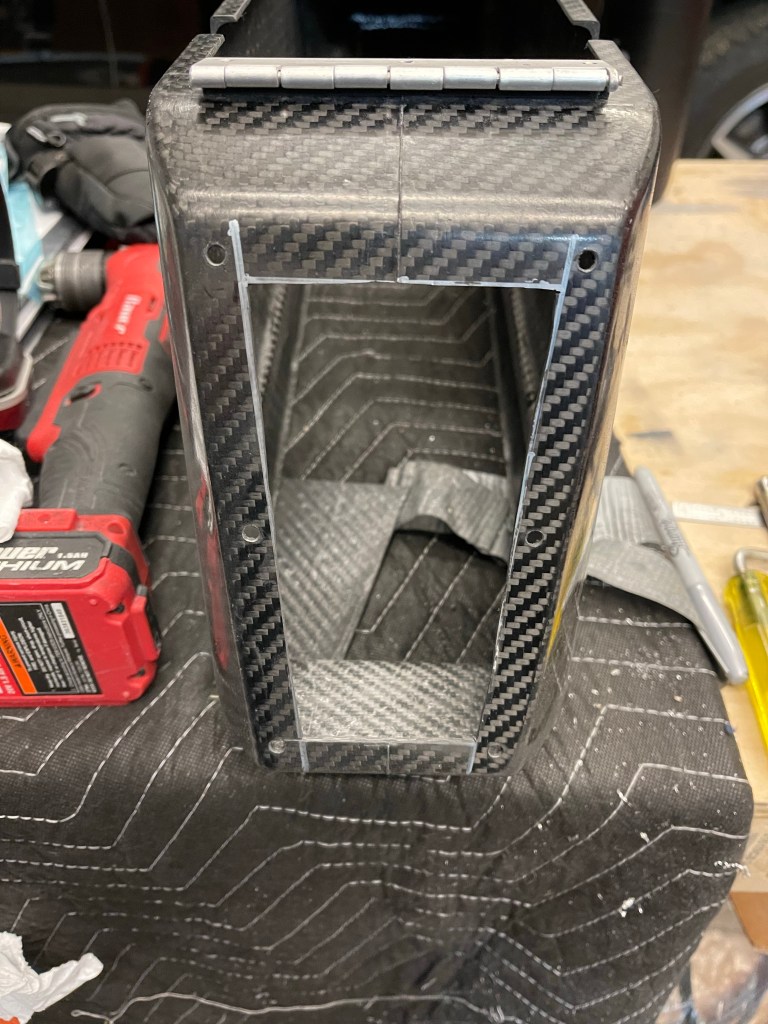
I also split the forward tunnel cover into 2 pieces like most builders do with an Aerosport center armrest/console. I also mounted my bracket for the throttle and prop cables.

In unrelated news.. I received my Aveo Engineering Zip Tip wing tip light units. I ordered these at Oshkosh, so 6-8 weeks turned into 6 months wait time, but they are here and they look great!

Zip Tips!

Lower instrument console and armrest

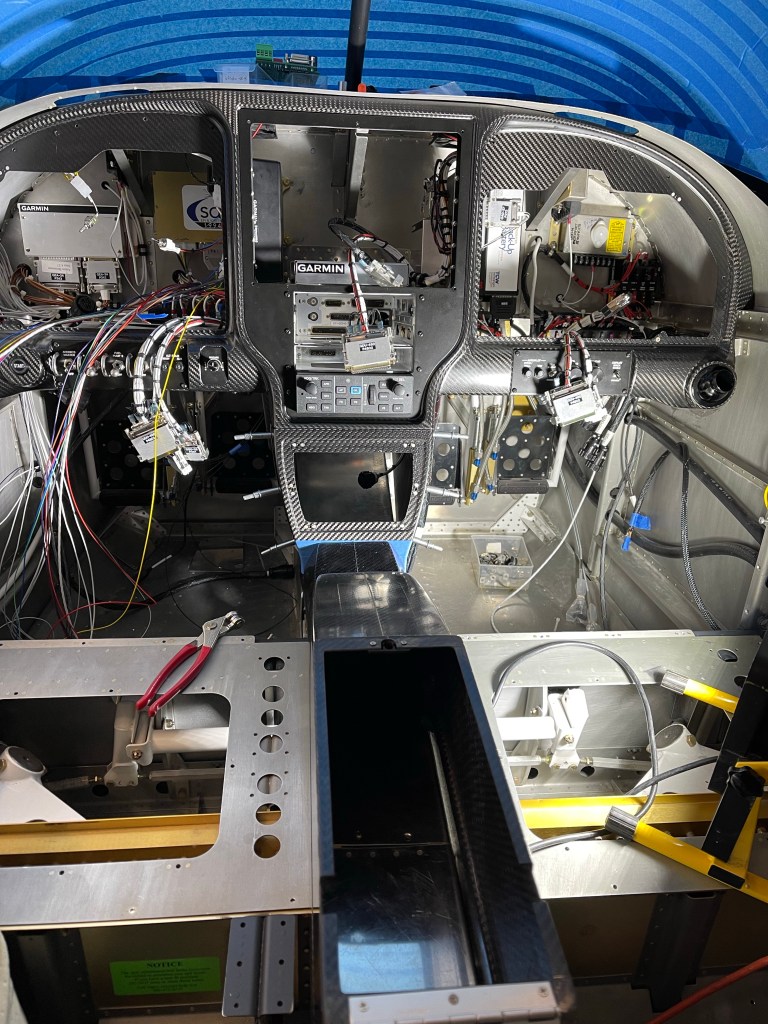
Prior to starting to wire all the FWF stuff, I decided to get my lower console with its side panels and the center armrest with the fuel selector and throttle quadrant installed. The main reason for this, is I need to measure for my throttle and prop cable lengths and I can’t do that with out placing the quadrant.

I first mounted the lower instrument panel console and got it match drilled to the left side panel. The same was done to the right side panel. I used a strap duplicator to match drill holes into the side panels along the top of the tunnel so we can secure them to the existing hole/nutplate locations. Once that was done, I located the center armrest into position and matched drilled 6 holes (3 per side) also to the existing screw holes on the top of the tunnel.

I then cut out the armrest for the throttle quadrant based on the scribe lines. I placed the quadrant into rough position in the armrest while it was upside down and taped it down. I placed masking tape down on the tunnel cover approx. where the quadrant will sit. Then with the center armrest placed down and screwed to the tunnel cover, I marked the legs of the quadrant on the masking tape through the top opening of the armrest. I then removed everything and drilled holes and bolted the quadrant to the tunnel cover. The holes are slotted, so you have some fore/aft as well as up/down adjustment. Getting it pretty close was sufficient. The harder adjustment was the up/down as you don’t have access to the screws with the armrest in place.

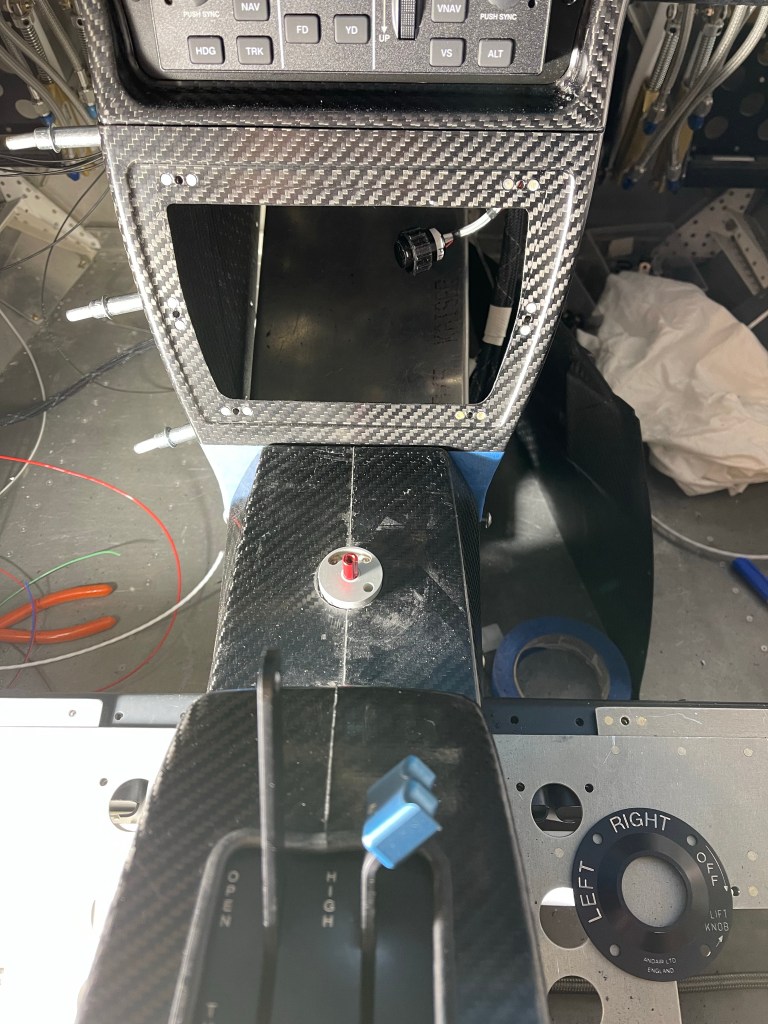
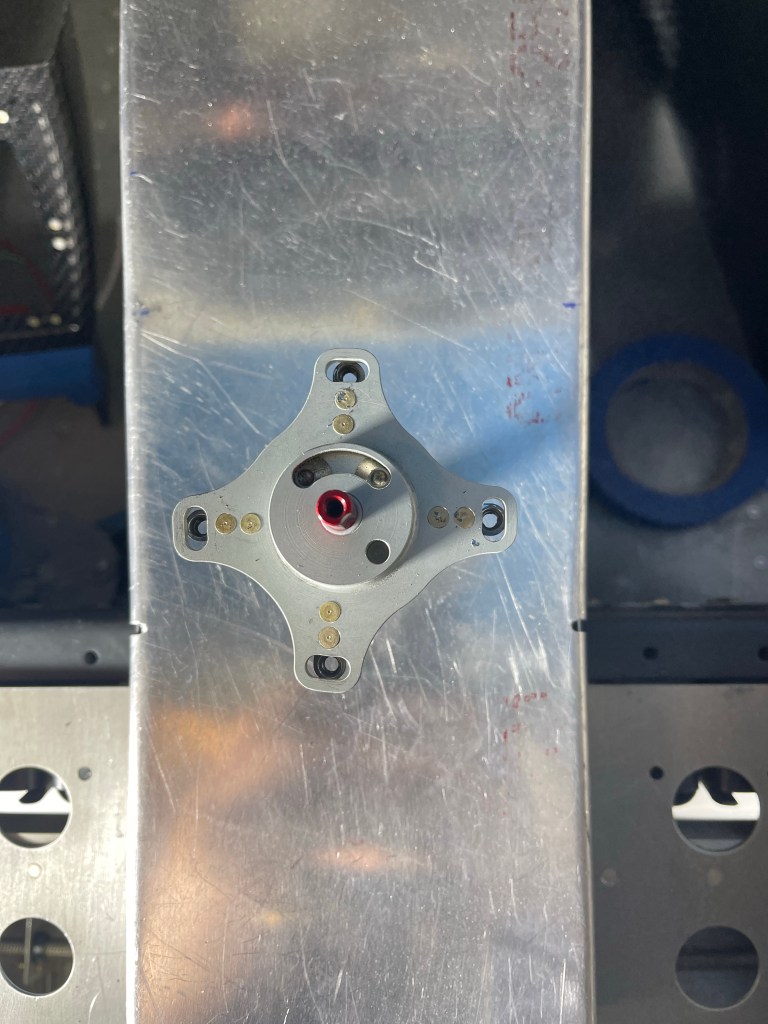
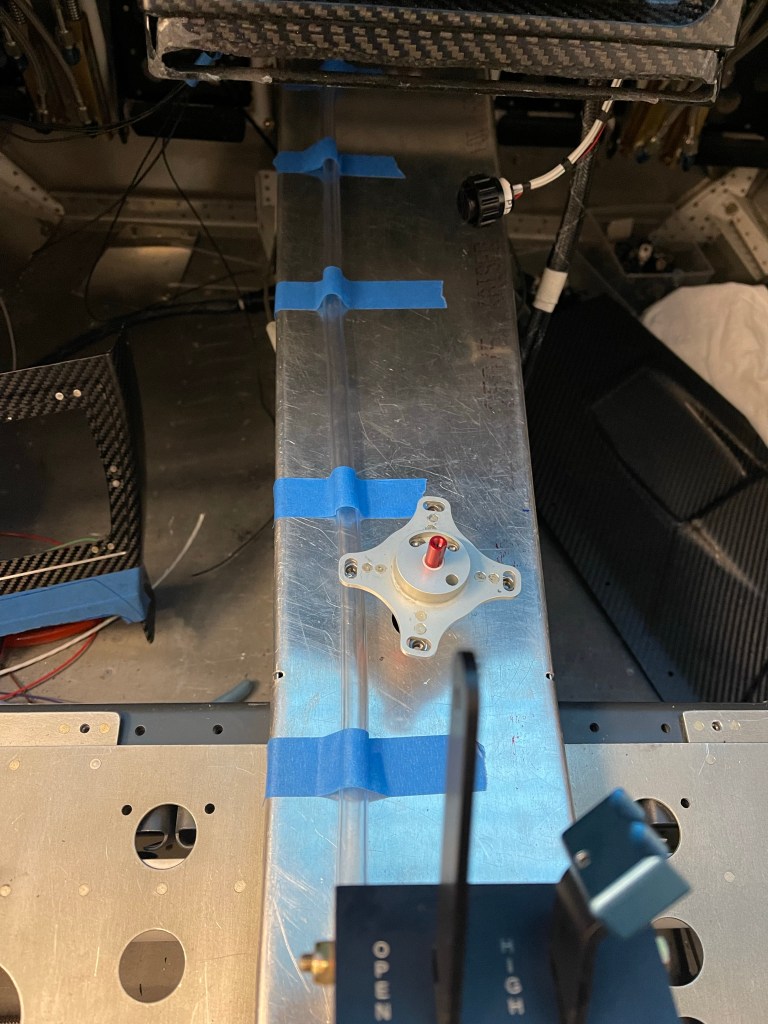
Once that was done, I had previously placed the Andair selector valve more or less in the stock location. So I drilled the hole provided by Van’s up to 3/4″ round hole for the Andair extension arm to come up through the tunnel cover. The extension was pretty close to centered on that hole, so I left it as is.. I used that hole in the tunnel cover to locate and drill the hole in the carbon armrest for the selector.

Throttle quadrant and fuel selector valve hole cut

Then the extension arm was cut to the proper length following the Andair instructions and the bottom part of the selector was placed onto the arm and test fit to the hole in the armrest.

The faceplate was put into position and I used the 4 screw holes on it to drill holes into the armrest. I prefer the orientation to be as shown below. I feel like it’s a little more clear this way as the selector will be pointing left and right for selecting the respective tank. Mounting the faceplate so that the “Lift knob” is right reading, so to speak, would have left tank selection pointing really left and right tank selection still pointing left, just not as much.

In order to be able to potentially remove the center armrest without removing the lower console nor the fuel selector valve, I used nutplates on the piece that sits under the selector valve as shown below. A couple of the holes on the armrest has to be oblonged a little bit to make the screws meet the nutplates properly, but that isn’t a big deal as the faceplate covers that area.

Nutplates on face plate screwdown plate

With all that done, below are the end result at various angles.

I was then able to measure for my cable lengths. I used some vinyl tubing I had lying around to emulate the route for both the throttle and prop cables. I marked around the mid point of the threaded part of the bearing/tie rod terminals and made sure the controls were both full deflection in the same direction (fwd/fwd or aft/aft), I then pulled the tubing out and measured the marks. I did add a couple of inches for some slop or slight variations in the install path that I measured to.

FWF Wiring

Most of my time recently has been getting all the wiring for the Firewall forward needs out through my firewall passthroughs and in a position to hook up.

This has largely been things coming from the Garmin GEA-24 and the SDS EFII ECUs.

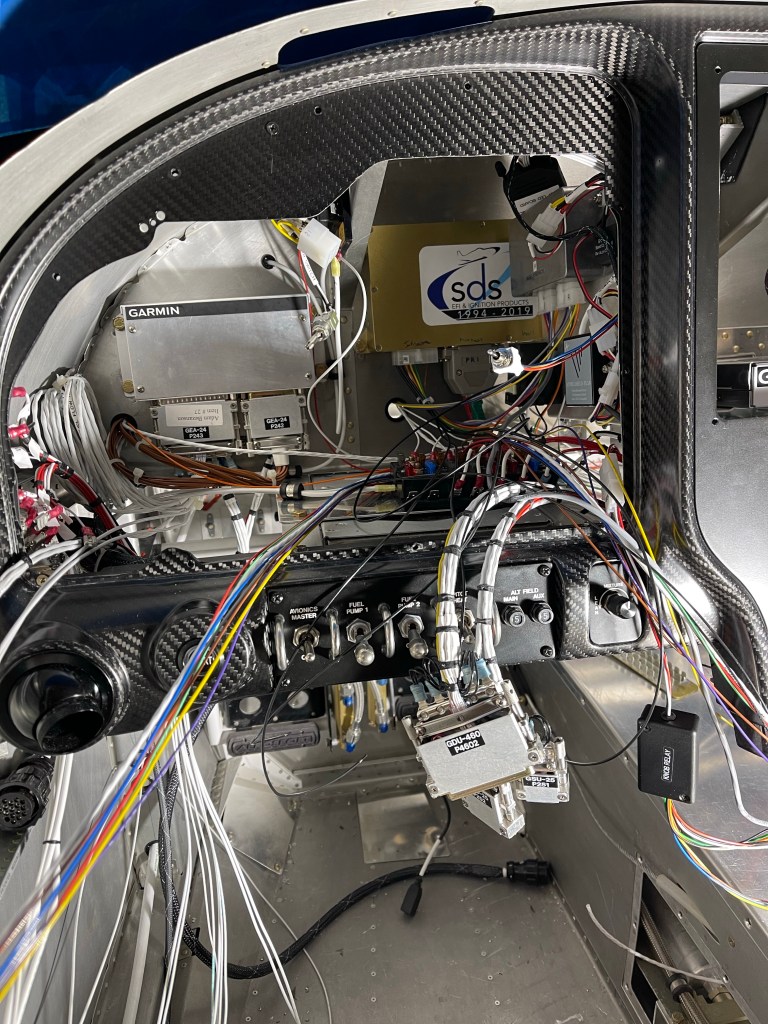
Pilots side wires needing connection
Co-Pilots side wires needing connection.
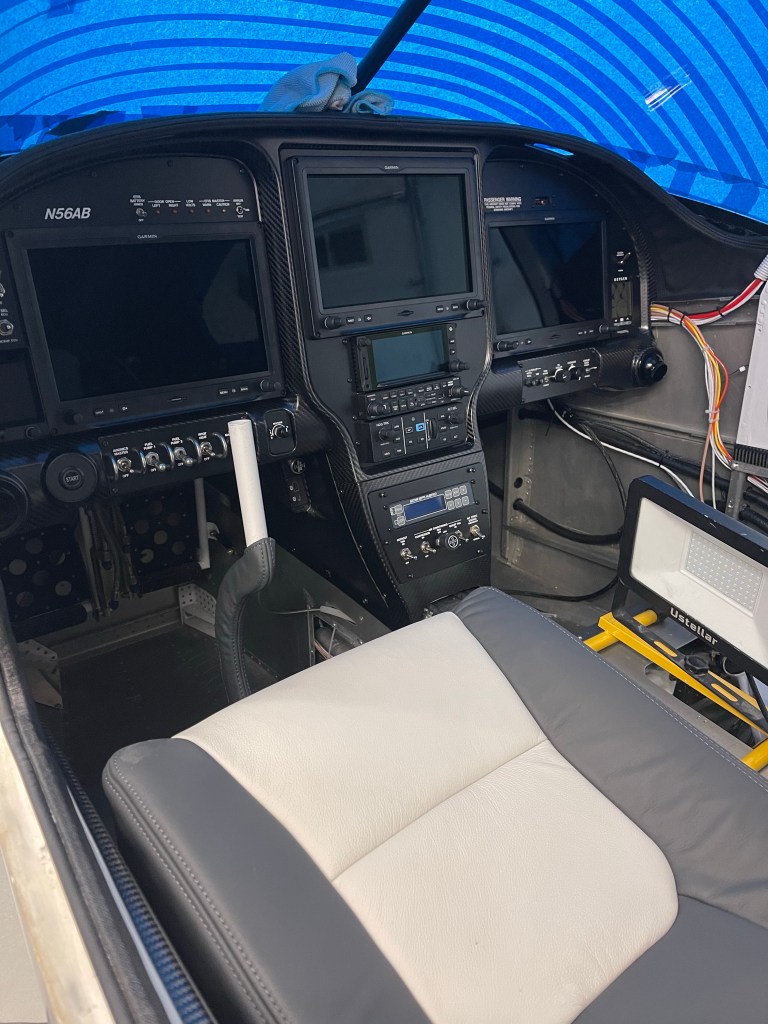
On the co-pilots side, the main bus feed was brought from the primary alternator through a 60A ANL to the fuse blocks on the right side of the subpanel.

The left (pilots) side is mostly the GEA-24 (on the left) which has wires for cylinder head temps, exhaust gas temps, and various fuel, oil, and manifold pressure sensors.

Along with the SDS ECU box which has connections to the manifold pressure sensors, Cylinder head temps, airflow temps, wideband O2 sensor for air fuel ratio measurements, and injector power and ground wiring.

Also Coil pack wiring. This thing needs a lot of connections.

Lots of Spaghetti on the left side still to be cleaned up.

And finally, an overview picture of the panel so far.

Getting there.. little by little..

Ac and O2 nearly complete

A bunch of additional work on the AC and O2 Systems. Both of these are nearly complete now. I mounted the remote O2 Fill port in the cross brace near the baggage door for easy access for filling.

Remote fill port with gauge.

Below you can see the remote O2 regulator mostly plumbed and the line along the side wall going to the remote fill port.

remote O2 regulator mounted
Remote O2 regulator complete except the DB-9 electrical connector.

I spent a bunch of time looking at what to do for an air collector to combine air-conditioned air with fresh air coming from the rear NACA vents. I didn’t have a ton of space to work with somewhat due to shifting the evaporator forward for clearance to the top J stiffeners. I eventually settled on expanding the 2″ cut on the left side to an oval 3″ cut to match the fiberglass piece provided by Airflow AC. I kept the 2″ opening on the right to feed fresh air to the overhead.

3″ duct on left for feeding AC to the overhead. 2″ duct on the right for fresh air.

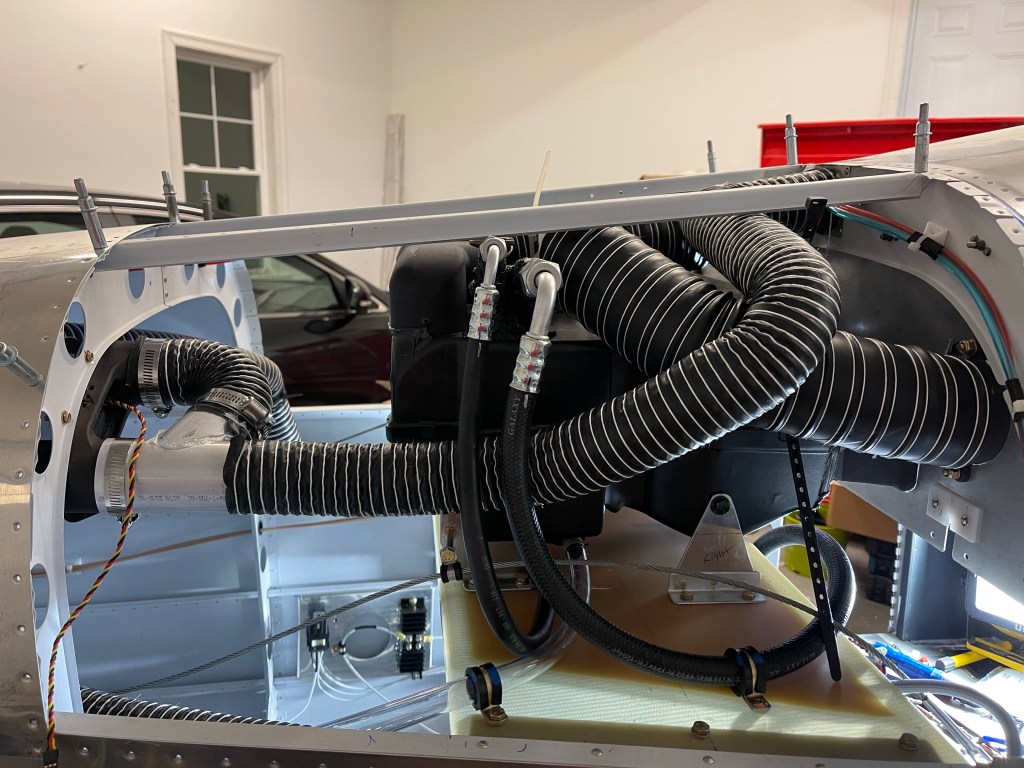
Below are the 99% complete pics of the evaporator and all the associated hoses. I did use an AN3 blot with some tubing as a standoff and an adel clamp near the rear of the shelf to hold the seat belt cable up so it wouldn’t fall downward and rub against the hoses.

Left side.

I ended up using a Y adapter to combine the fresh air from the left and right NACA vents through the Aerosport NACA vent controller to the overhead.

Right side with Y adapter shown to combine both left and right fresh air into a single 2″ duct.

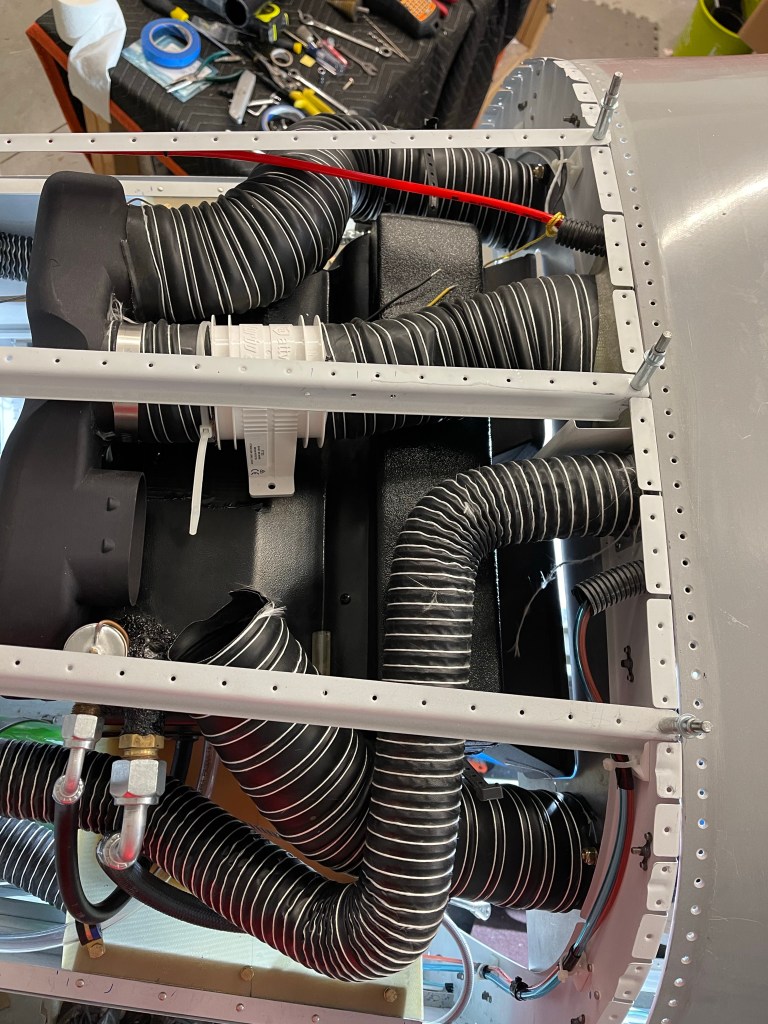
An overhead view. of the routing. I ran a little short of 3″ tube and need to get some more to finish the right side cabin flood connection.
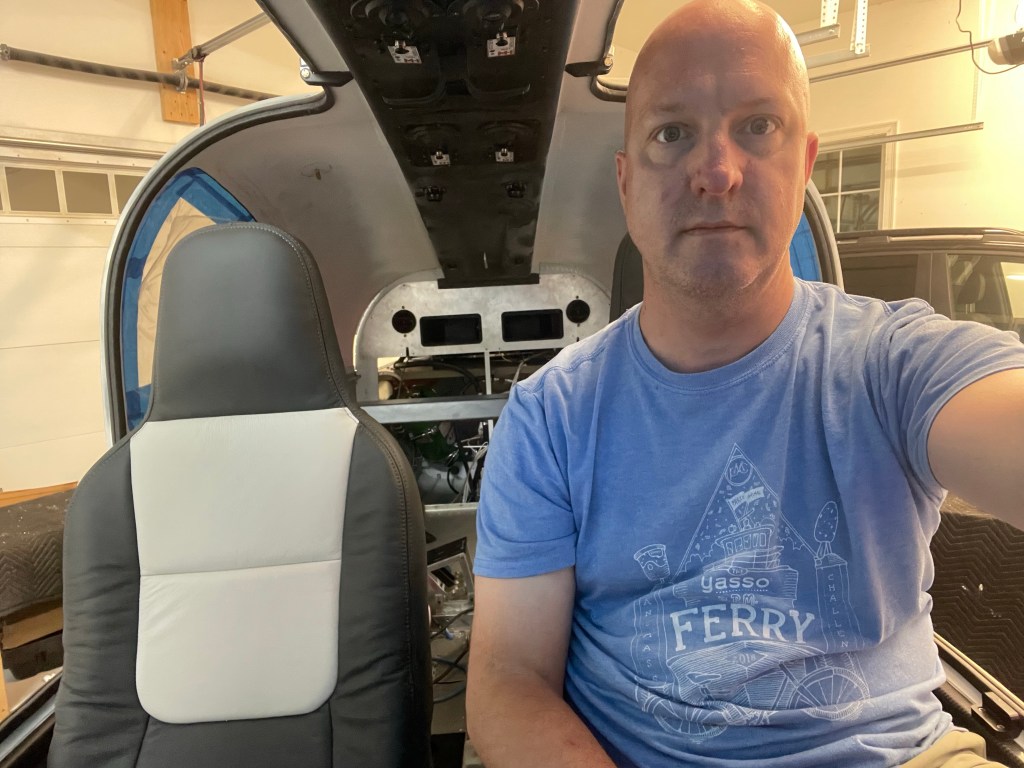
Finally a view from the left side showing the fresh air connections from either side to the NACA vent controller to a single 2″ duct. Here you can also see the evaporator condensation drain in place, but not riveted yet to the belly of the plane.