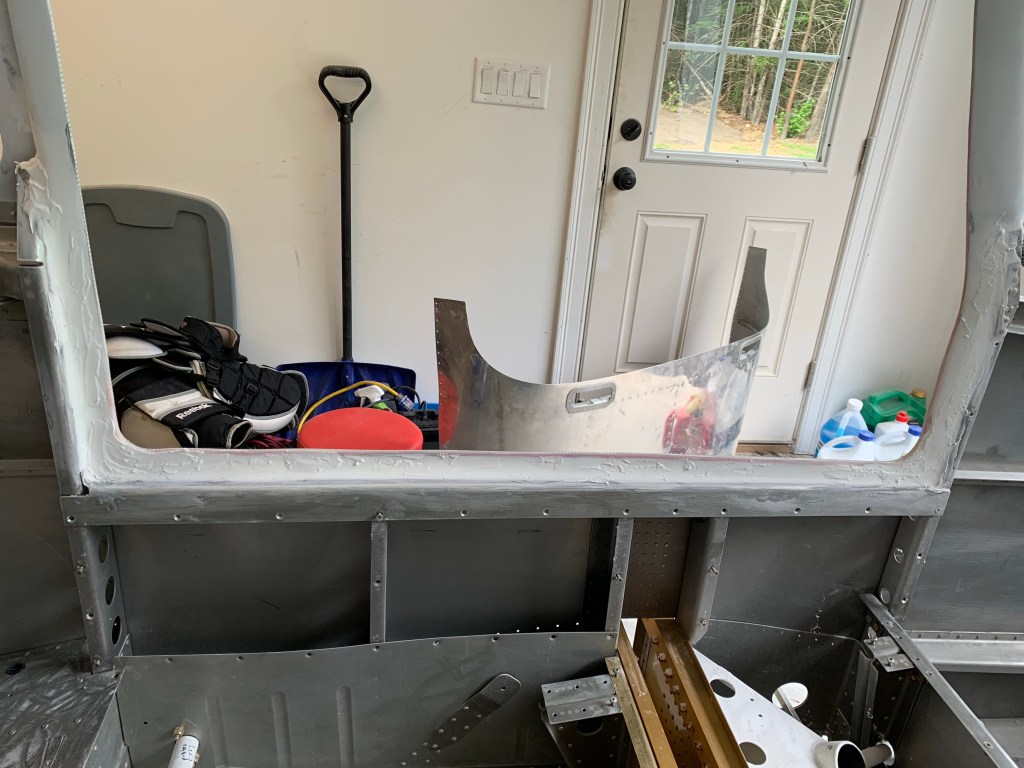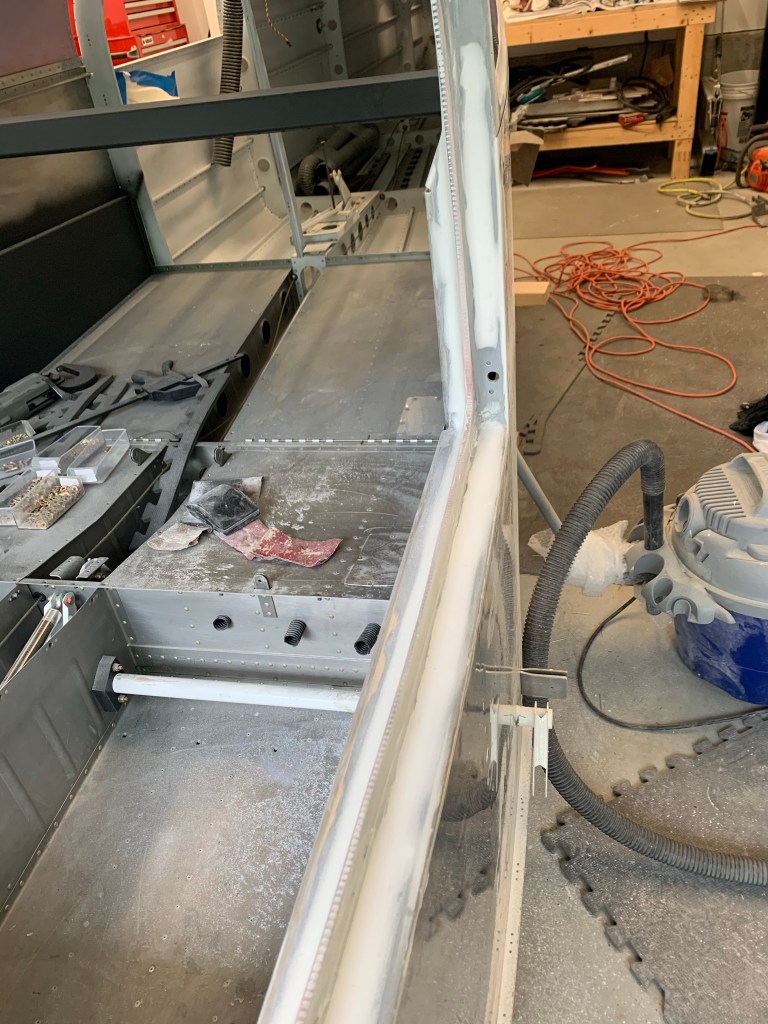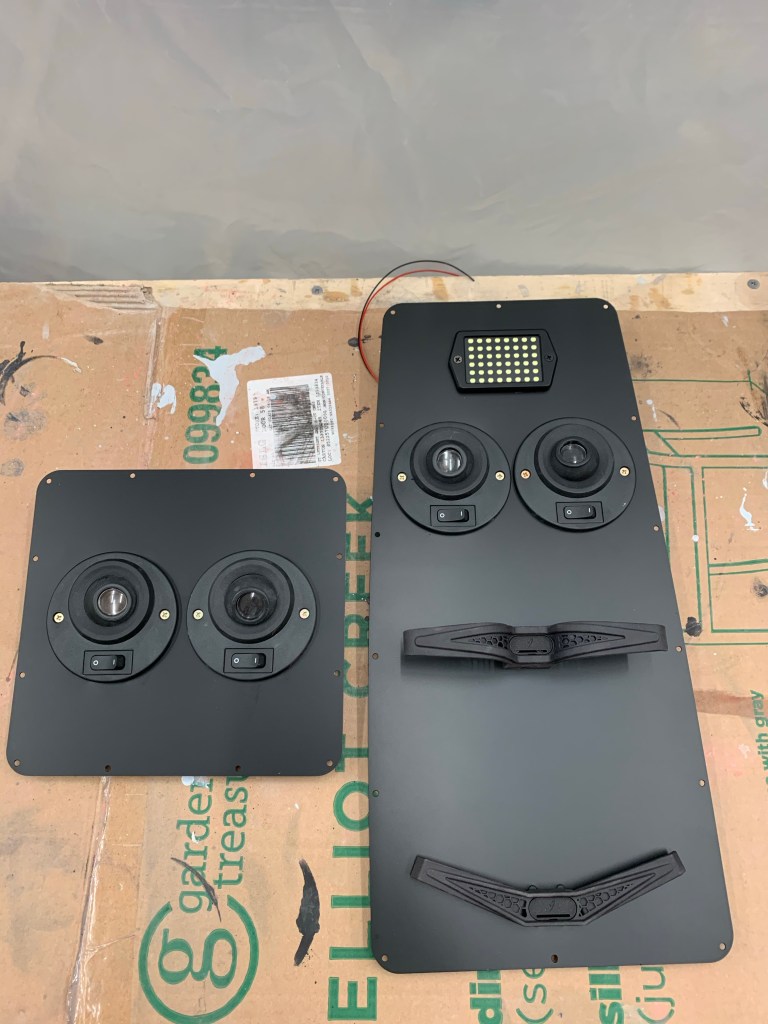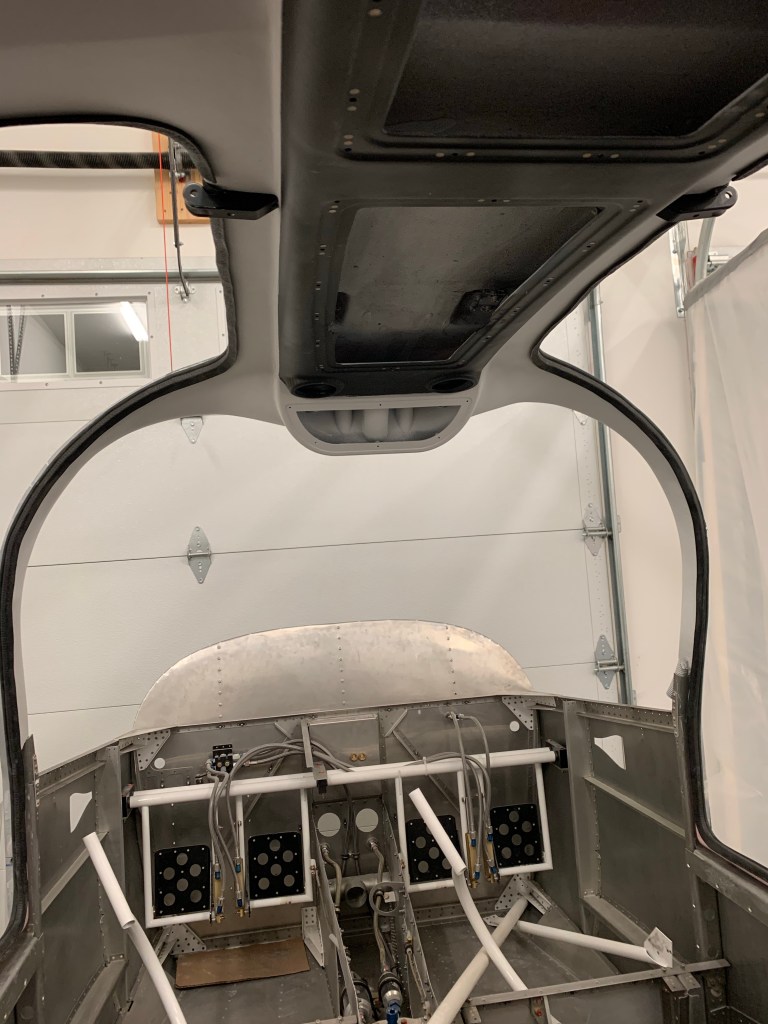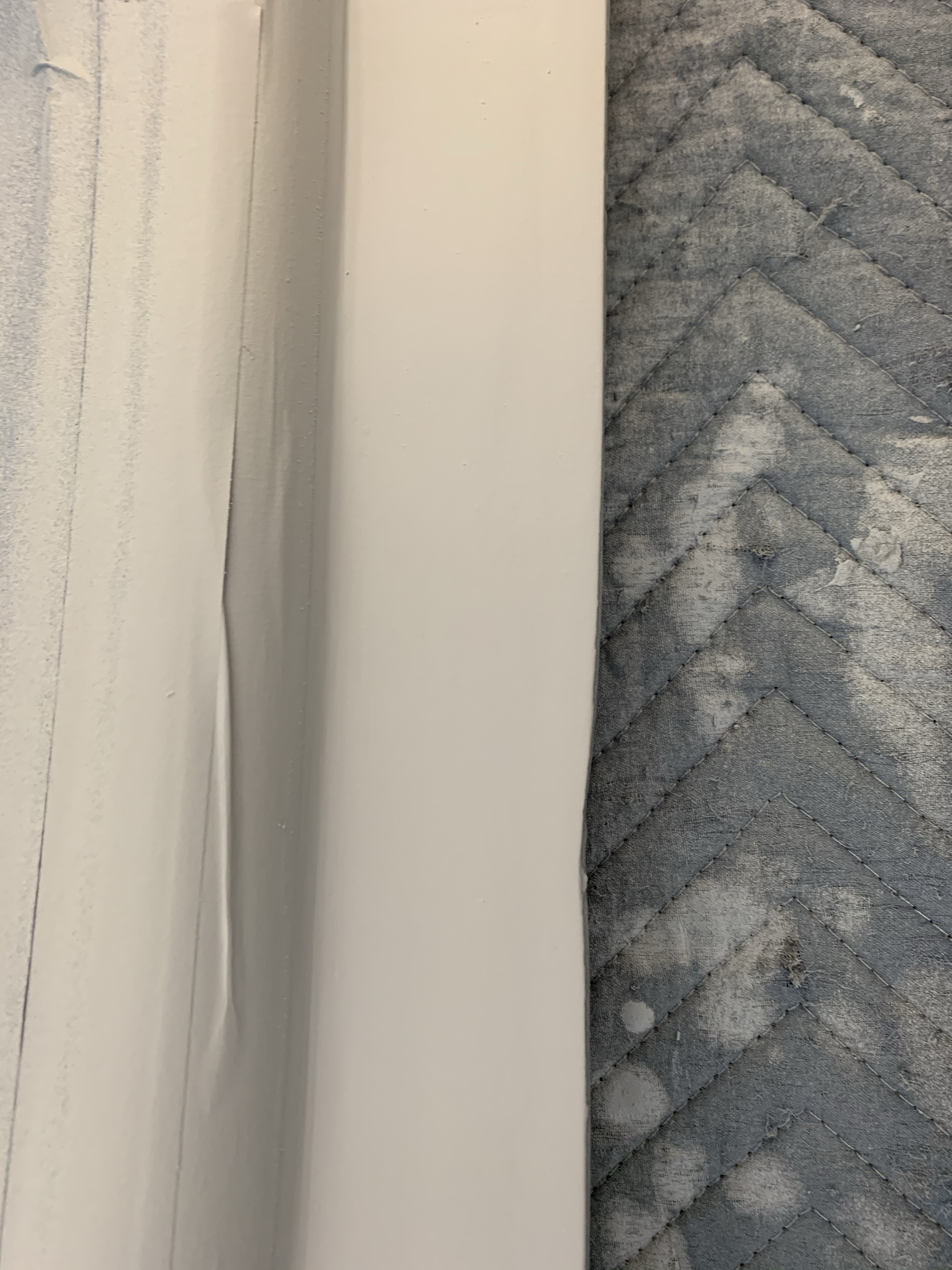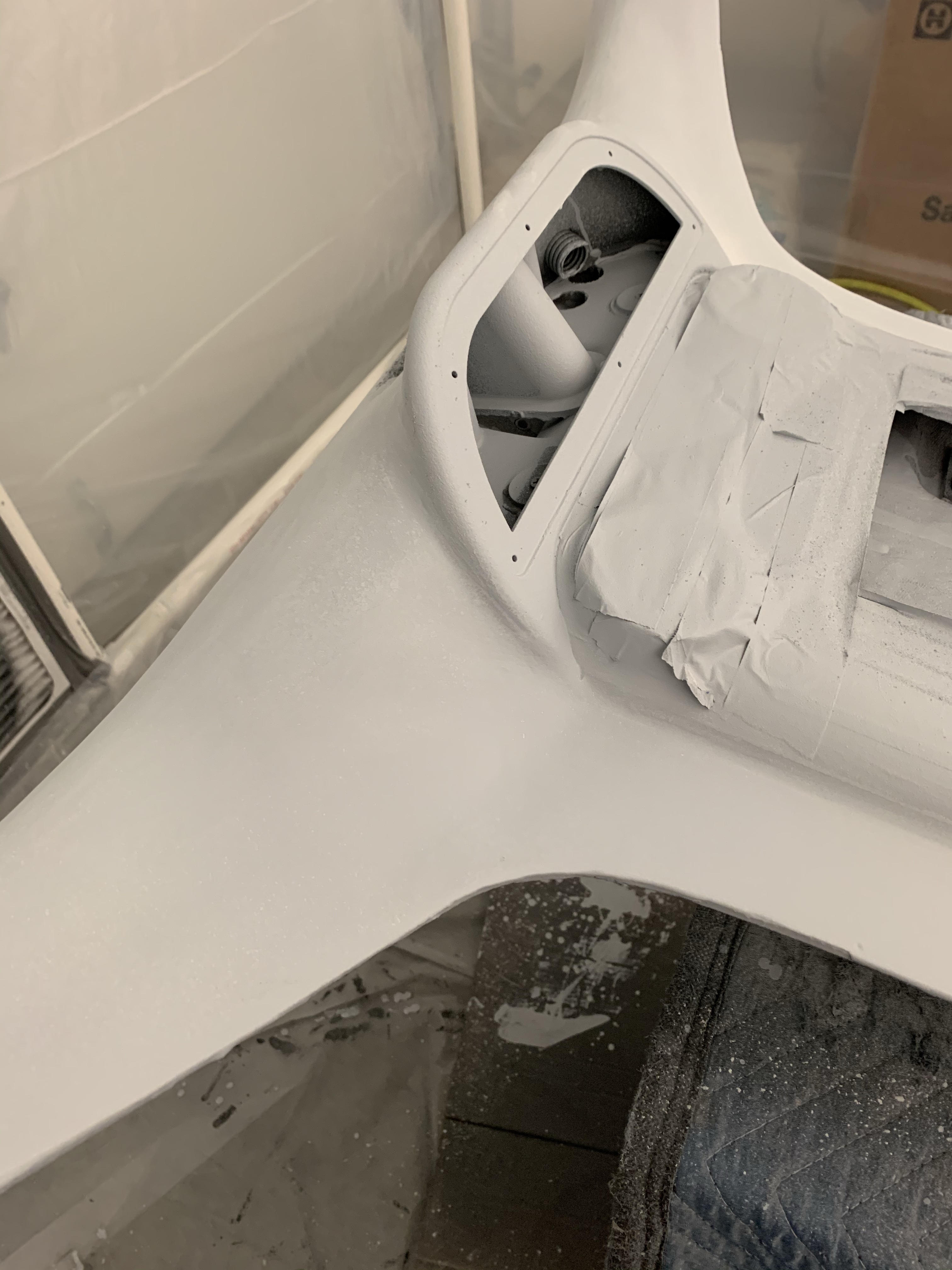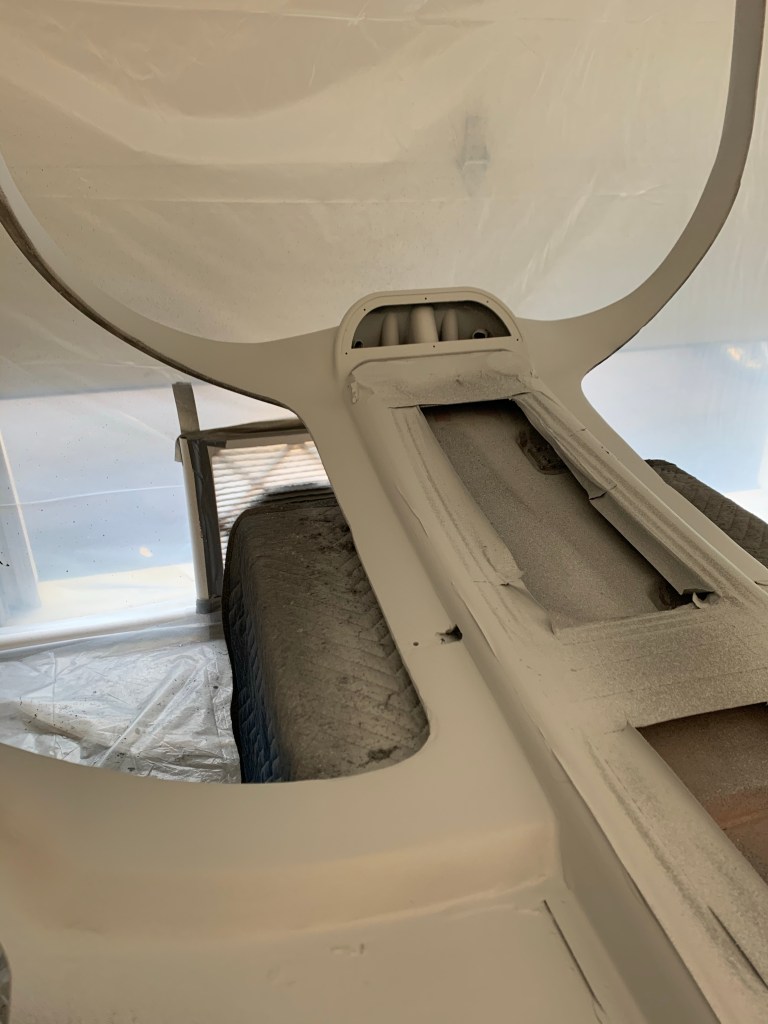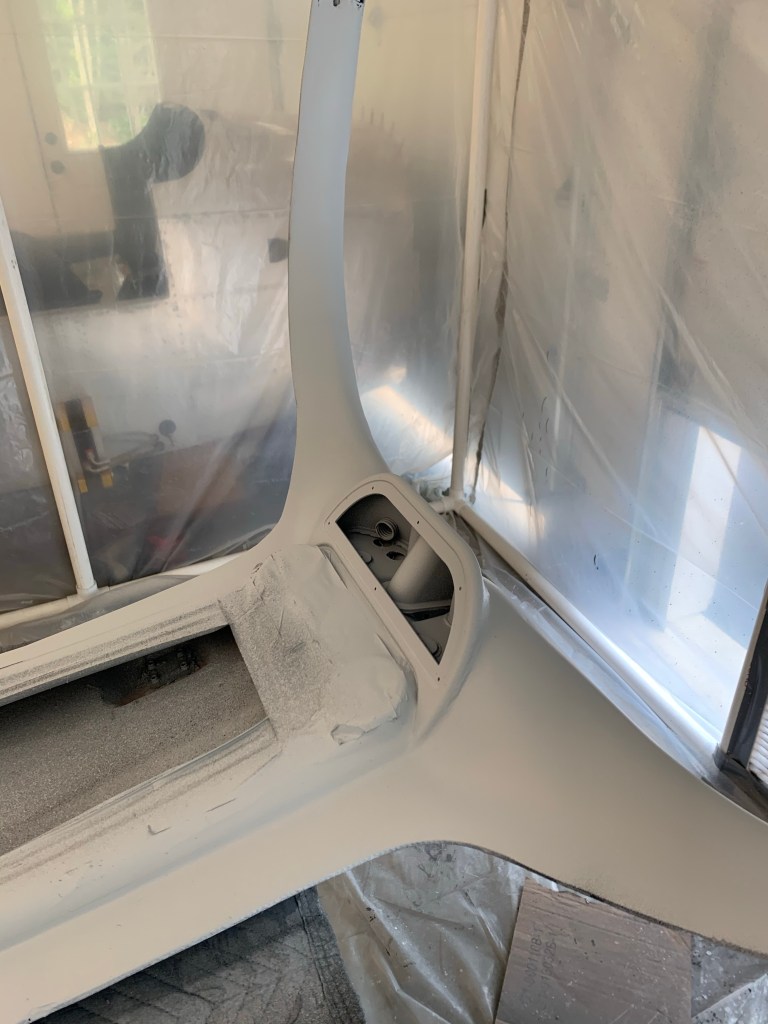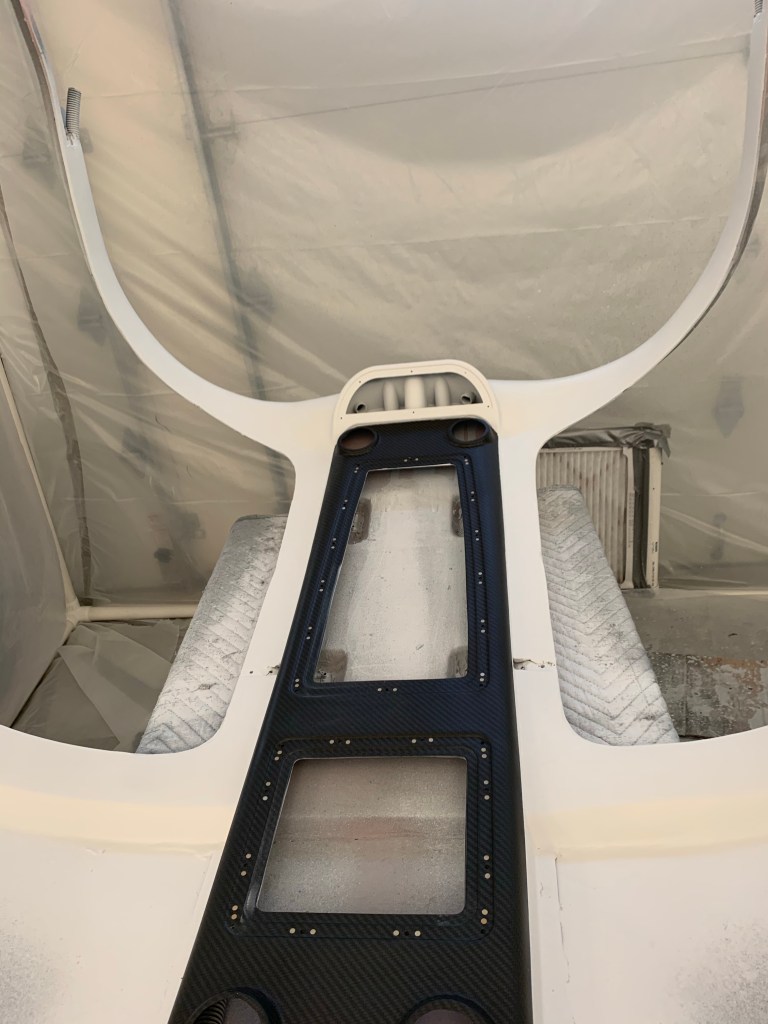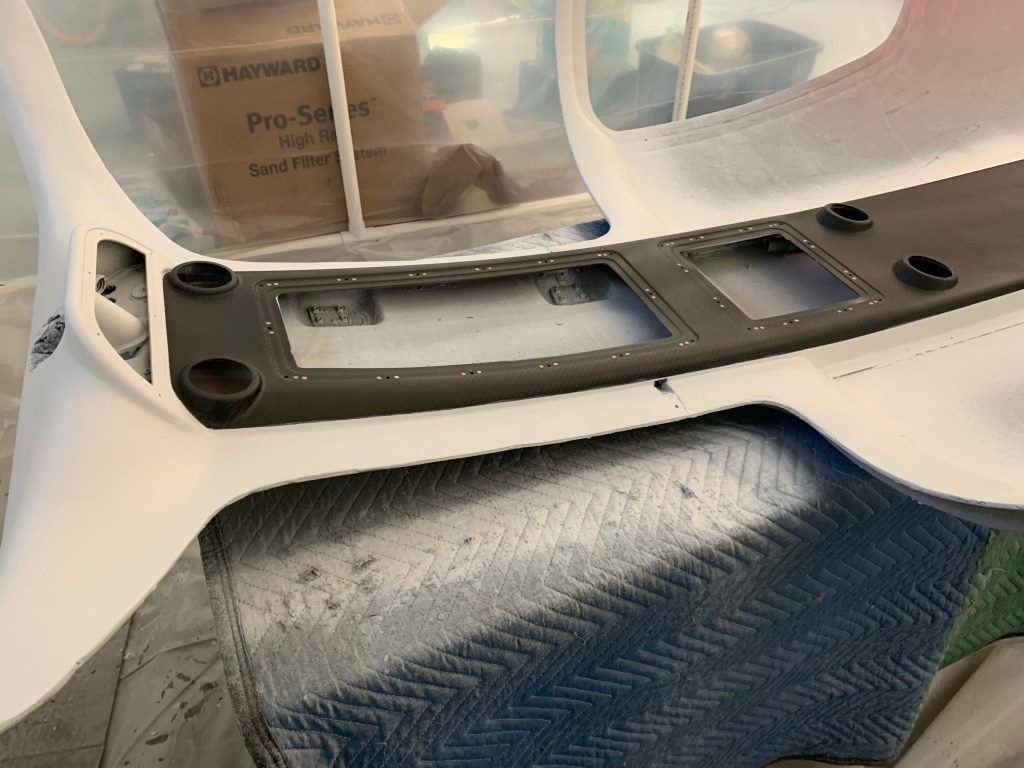
Firewall insulation and upper forward fuse

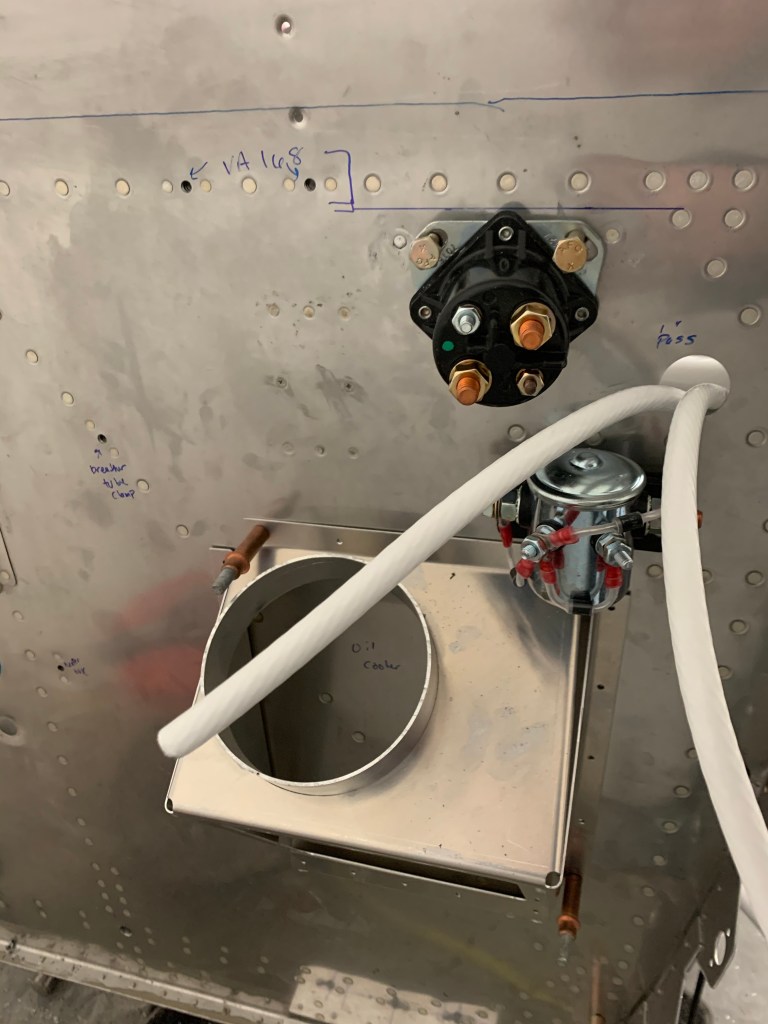
A quick pic of the ANL bases installed on the firewall as I finished up placement of most items. There will still be a few others, but I’ve got the bulk of them done prior to installing the Firewall insulation and engine mount.

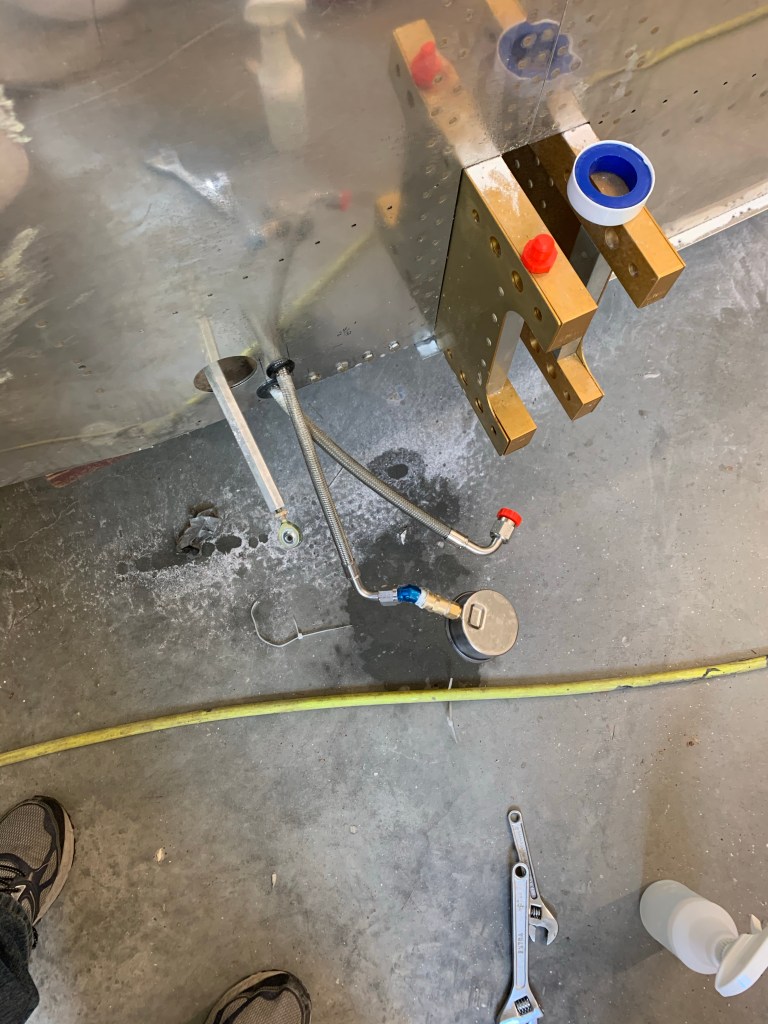
I also got my oil separator from Anti Splat Aero and the first batch of Air Conditioning parts arriving.

New Flywheel, compressor, and AC parts

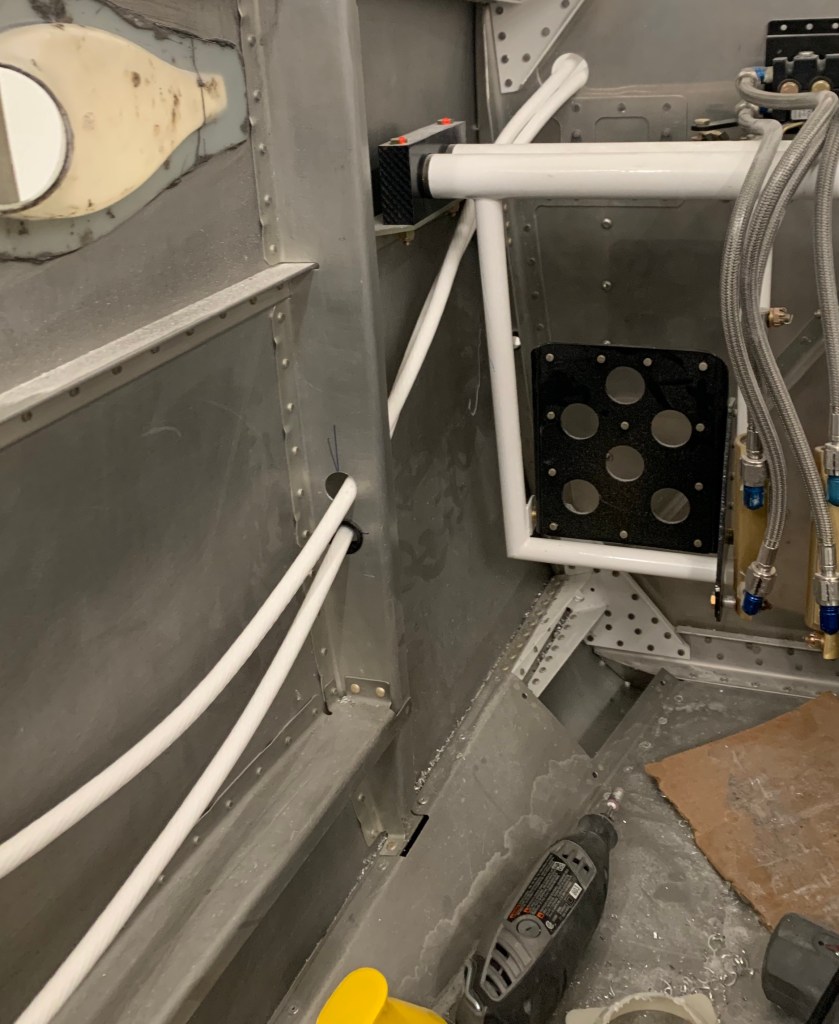
That allowed me to place the 2 pass throughs for the AC hoses in the firewall prior to continuing. After a bunch of debate, I decided to route them down the right side of the aircraft. A lot of people route them down the tunnel, but it gets pretty crowded in there, especially up in the front, and you’re also competing against rudder cables and elevator push rods. So I decided to do the right side. The fittings are placed closer to the right side of the firewall.

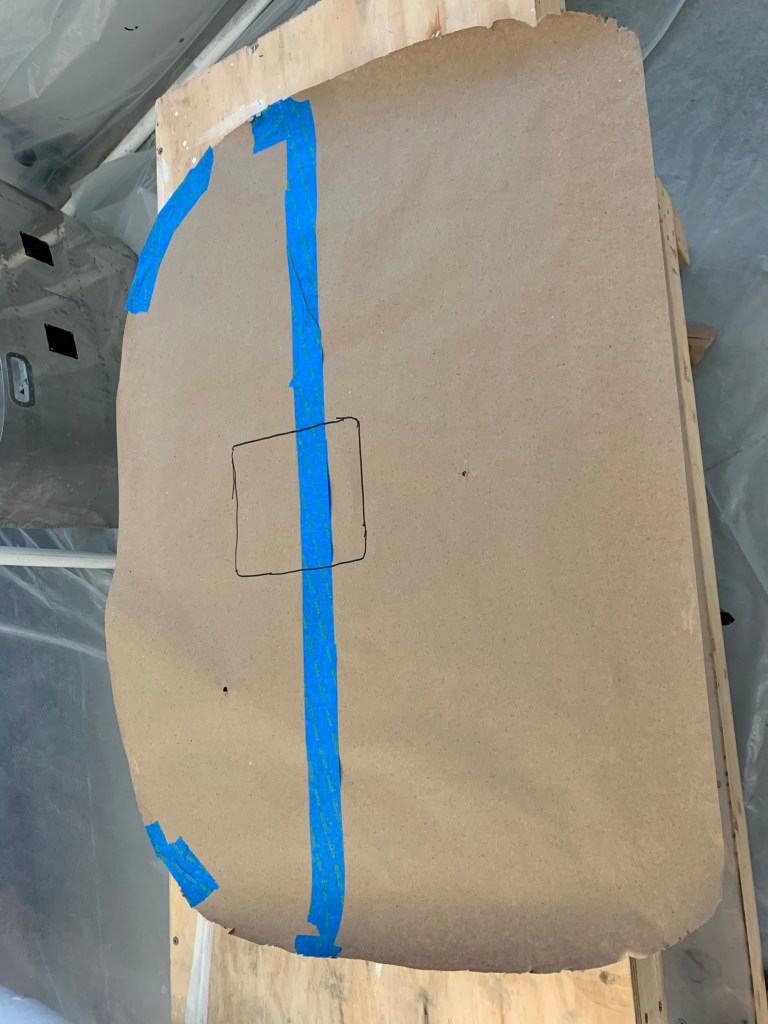
Now that the bulk of the items were placed on the firewall, I made a template for the Lavashield insulation material. I really had planned on using fiberfrax with stainless foil over the top, but I was fighting lots of competing priorities that led me to use this instead. On this template you can see I cut out an area for the recess. I also made another template for the recess so it would be one piece.
Below is the one piece lava shield for the recess area. The larger piece will go over this making the end result look nice.

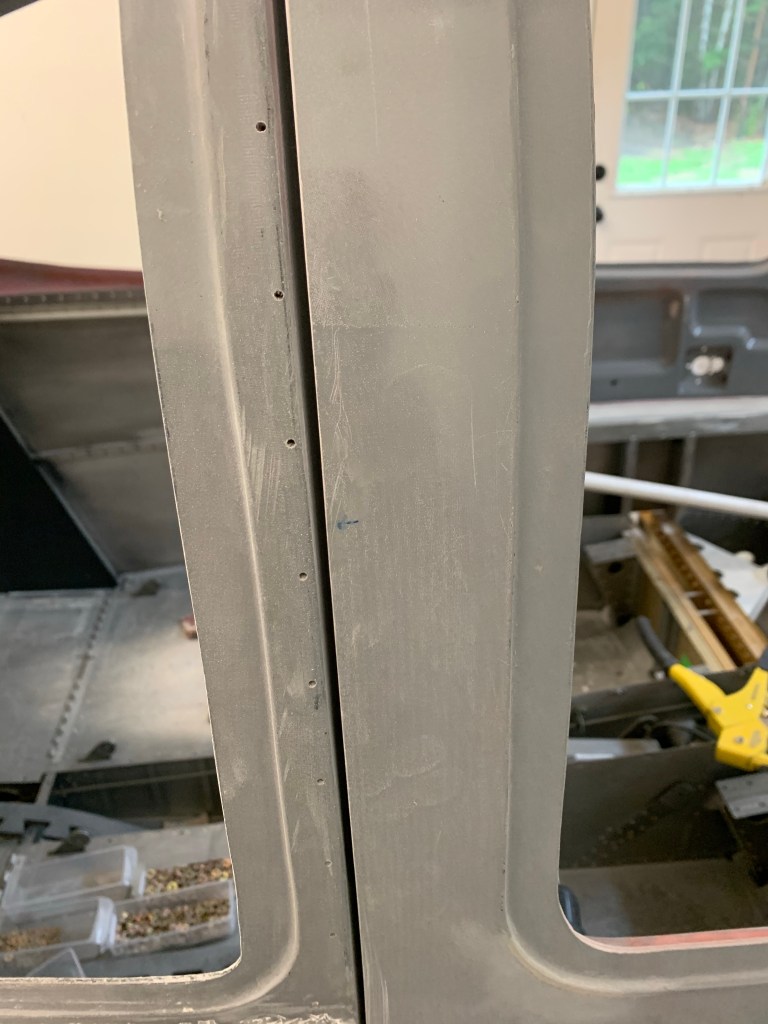
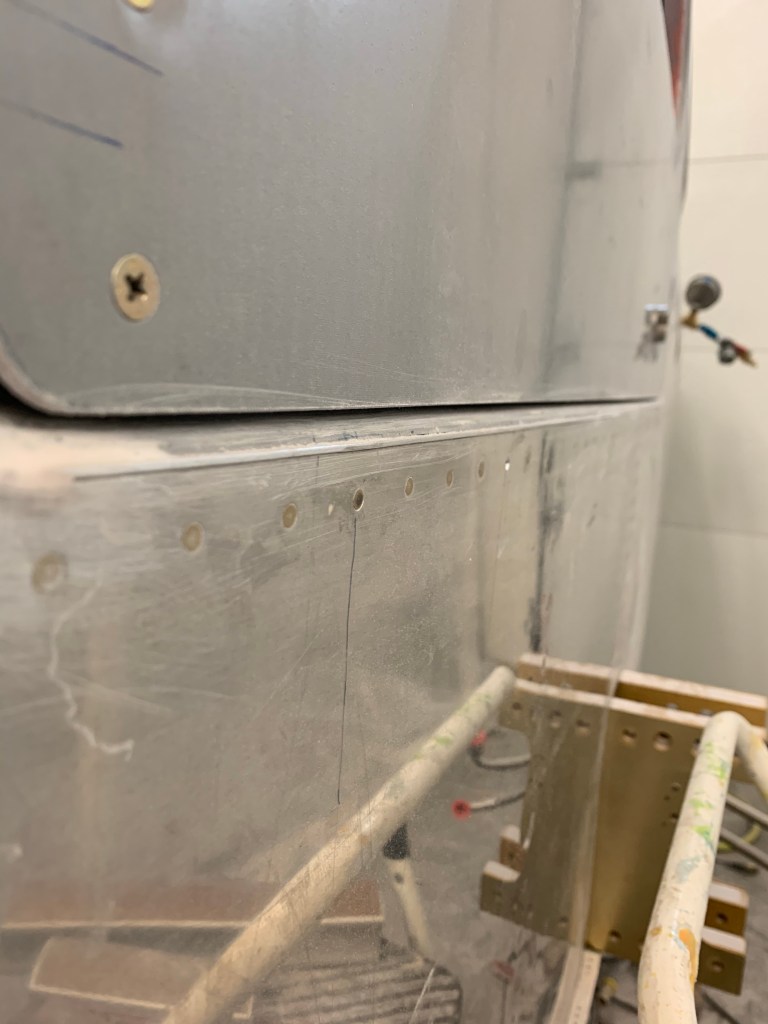
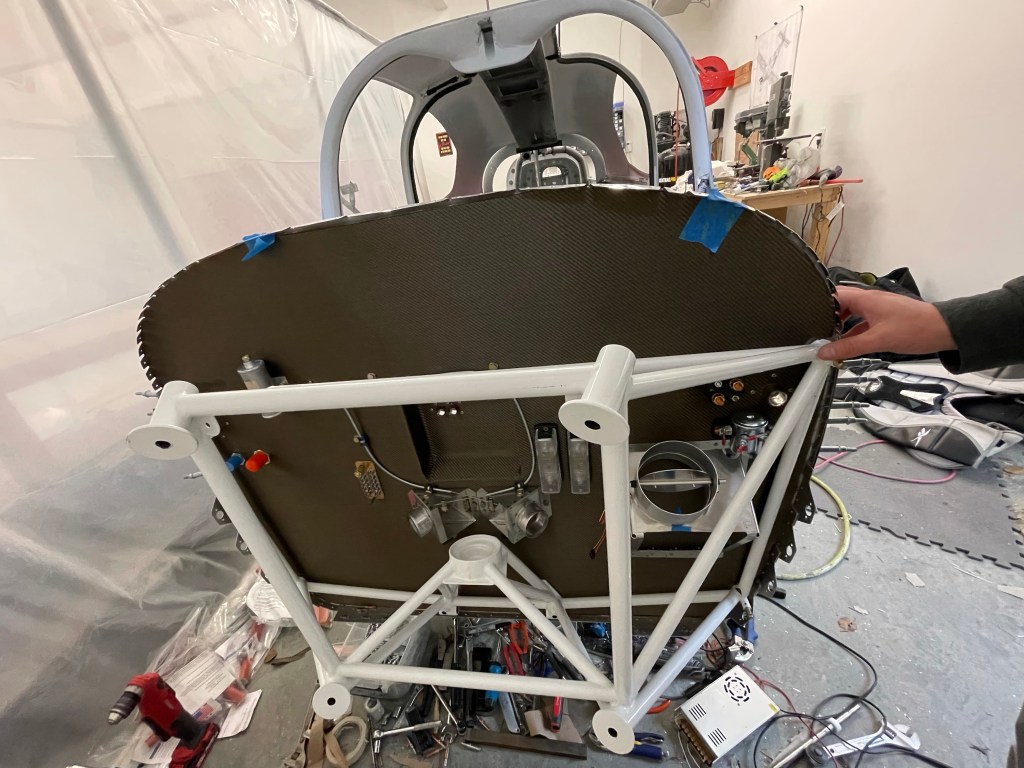
The larger piece of Lava shield mostly stuck onto the firewall with some major holes cut out. I left the backing on the upper part so that I can rivet the upper forward fuse prior to sticking it down.

I then started placing the major components back on the firewall now that the insulation is in place. Later, I cut out spots around the engine mount locations, as there should be nothing between the mount and the frame. Other things go right over the insulation.

Engine mount held in place for a quick check.
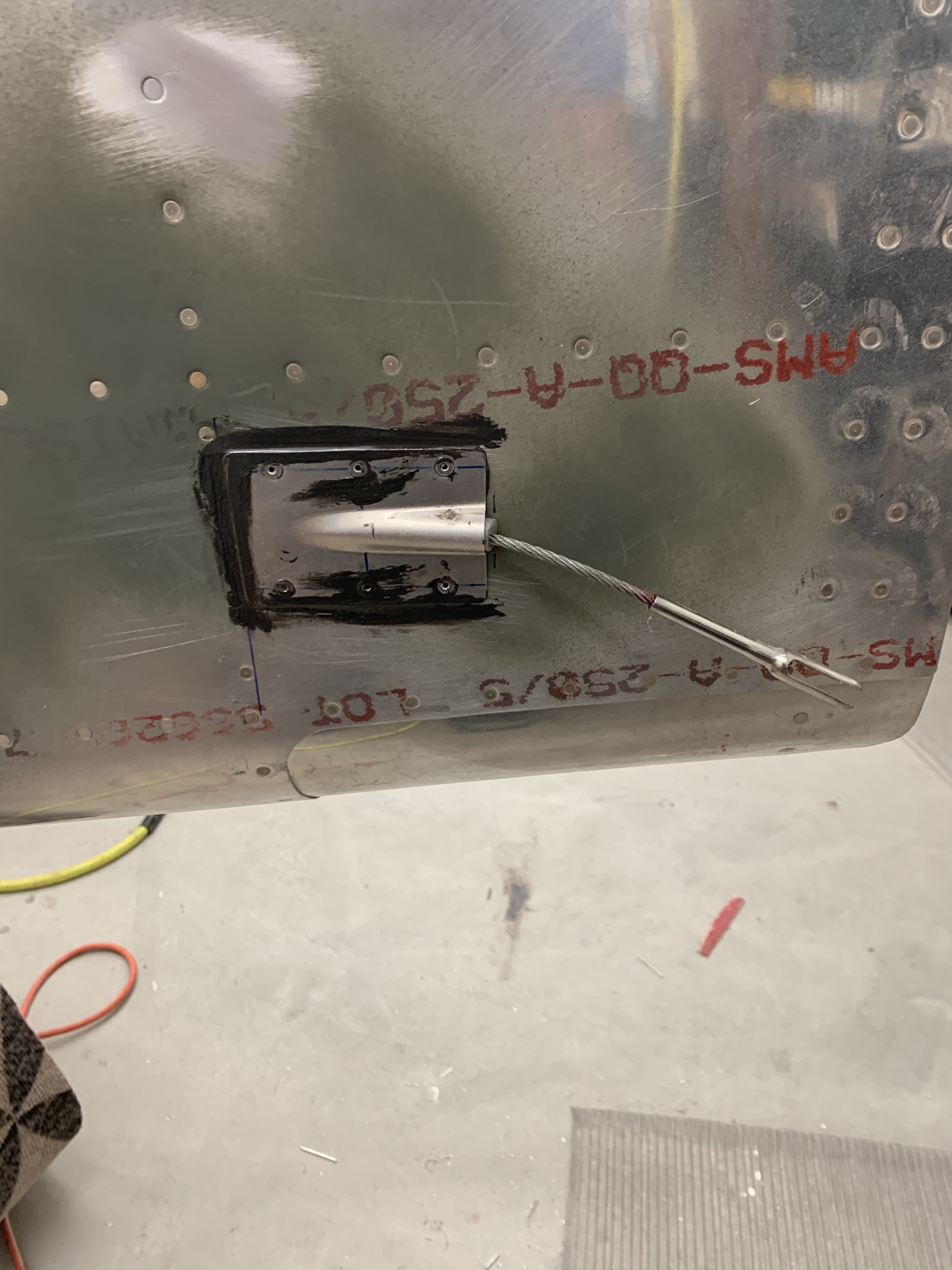
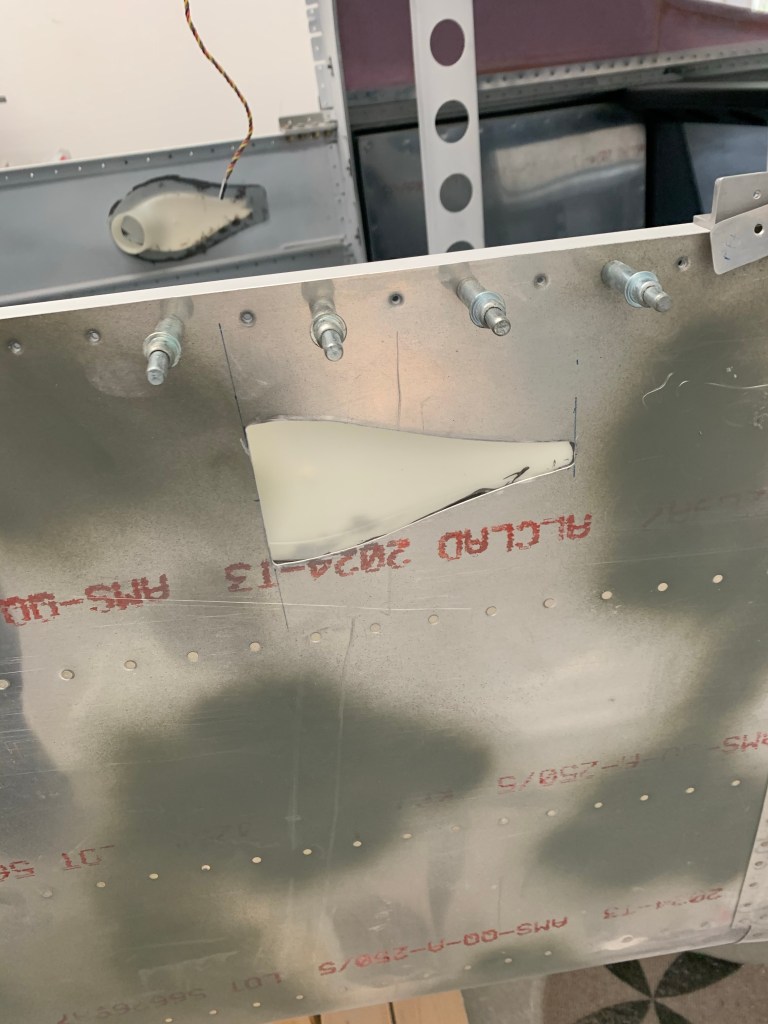
Another thing I tested out is my control servo for the oil cooler. This will allow me to control the amount of air going into the oil cooler with a knob on the panel. This will come in handy in the winter months where I can close it down a bunch and keep the oil temp right at 180 degrees.

Here’s a shot of the entirety of the plans.. followed by where I currently am in the plans. While I’m quite far along, I think I’ve reached the 90 percent done, 90% to go milestone.

Thickness of the plans
Where I currently am in the plans

After putting all the pieces back on the firewall, I decided to re-pressure test my brake and fuel lines seeing I took the connections apart. While this area isn’t a place I disassembled, I was glad I did as I found a minor leak at the post filter.

Another task prior to riveting the upper forward fuselage in place is to start routing the Air conditioning hoses from the firewall. It’s a lot easier to do it now while I have better access. Below is an overview of the hoses (2 of them) that go between the compressor in the engine compartment, through the firewall, and to the condenser on the belly of the plane as well as the evaporator in the tailcone.

Some pics of the AC hose (black hose) routing down the right side.

Connections at the Firewall.
Down the right side, over the spar

One implication of going down the right side is getting the hoses all the way to the back. This required me to drill out the right baggage and rear seat pans to re-gain access.. Probably took 1.5 hours to get that all done.. Stinks to have to do this after it was all closed up, but such are decisions to add AC later in the game.

I’ve settled on running the hoses as shown below. The red line depicts the hose that goes from the compressor to the evaporator. The green line depicts the hose from the compressor to the condenser on the belly. For that one, I’ve decided to go across the rear seat front where the hose will be hidden by the flap tube cover, then go into the bay under the rear seat closest to the tunnel, and pop through the rib where the connection comes up from the condenser. I will be adding access panels to the baggage and seat pans to allow access in the future.

I also have received a curved bar for my engine mount to accommodate the Barrett Cold Air Induction sump. Its pictured below in place of the straight bar it will replace. This will provide some additional clearance needed for that sump. I’ve found a local welder to cut the existing bar out and replace with this curved bar. I’ll be picking that up from him in the next day or so, as it is all done and ready.

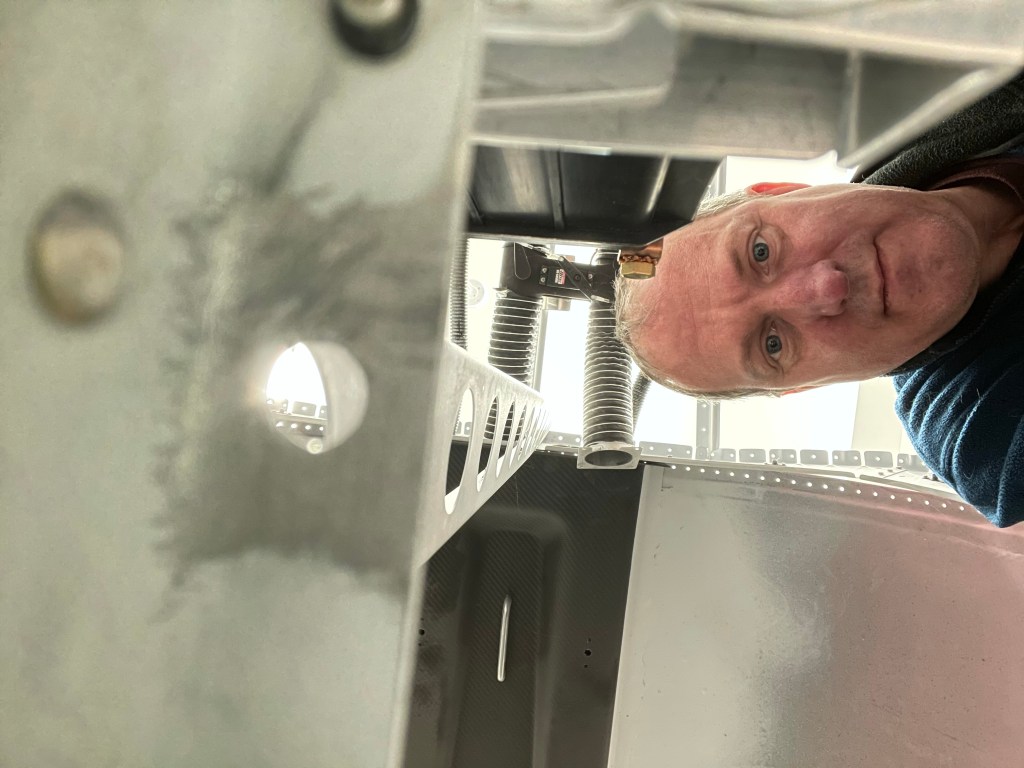
My ugly mug taking a pic of the battery area to see how good I’ve scraped the primer off of the metal where a battery ground cable will be locally connected to the structure.. 🙂
I then used the crimper to crimp the 2 AC hoses at the firewall connections and tightened them up.

Both AC hoses crimped and in place

A separate package arrived a few days later containing the shelf for the evaporator along with the scoop and condenser unit for the belly of the plane.

Condenser
Condenser scoop
Evaporator shelf (still to be trimmed)

Part of the choice to use the Barrett Cold Air induction sump, involves using a different cowling from Show Planes. It recently arrived and is stored away for early next year after my engine arrives.

After as much up-front planning as I could do, I was ready to rivet the upper forward fuselage in place permanently. Sometimes you just have to get some of these steps done and move on to allow me to continue to make progress. This might mean that I need to be upside down a little bit more as I finish some things up front, but so be it. My wife, along with a friend both helped me rivet the upper forward fuse in place. It was definitely a 2 person job with one person using the rivet gun and the other manning the bucking bar. Below is a pic of my helper today after finishing up getting the riveting done.

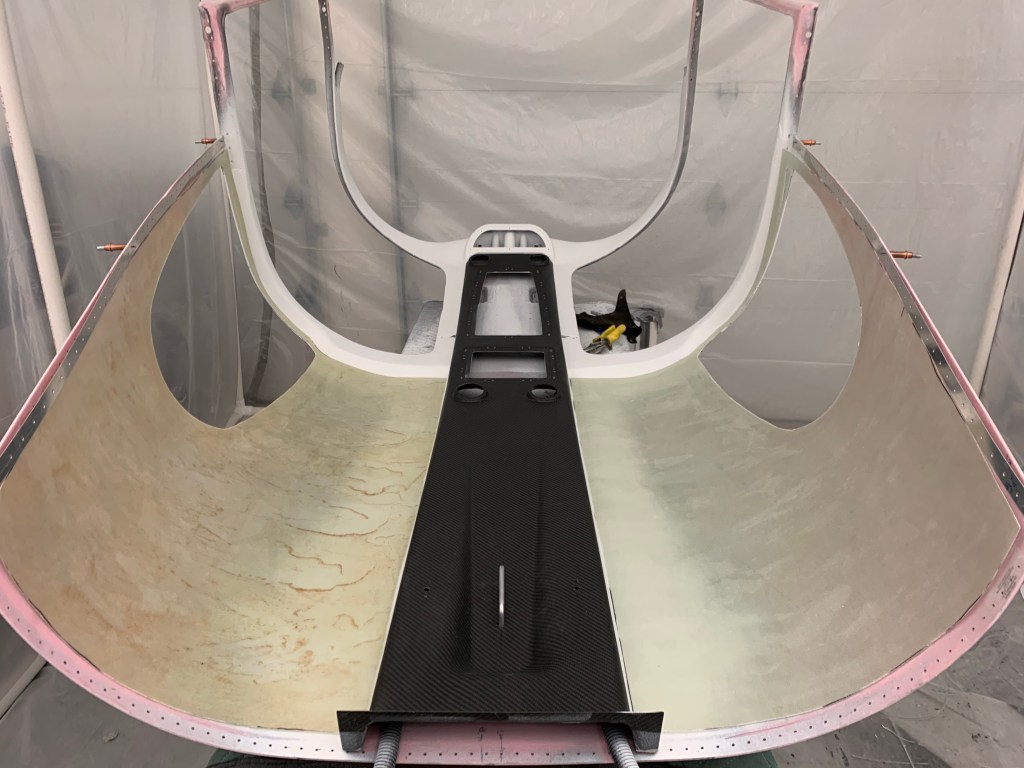
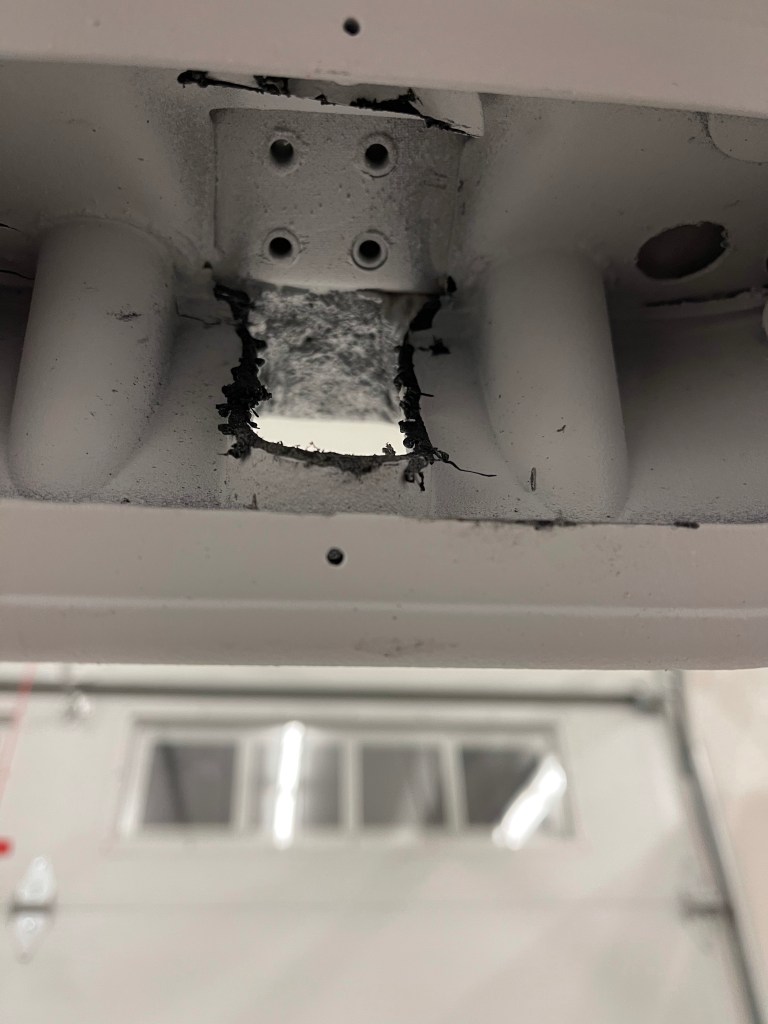
I then continued on to install the center support bar. Prior to doing so, I cut out the center support piece in the overhead switch pod. This isn’t really needed as my switch pod is bonded in and built up all around the perimeter holding it in place. This will allow better access for the nuts as well as the electrical switches etc.. that are planned for up there. It only took 10-15 minutes to get that cut done.
The culmination of the day was bolting the center support bar, which I’ve painted black, into place so I can finish up the fiberglass and interior painting prior to moving to installing the windows and putting the plane up on the gear.
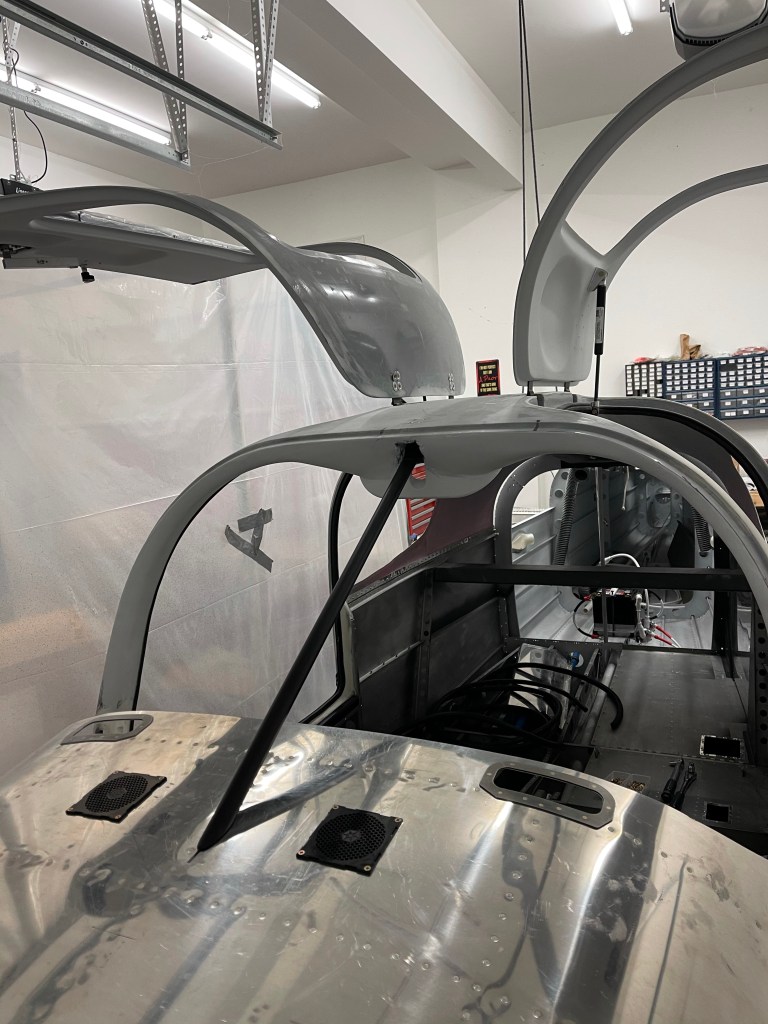
Center support bar in place!

Jumping around

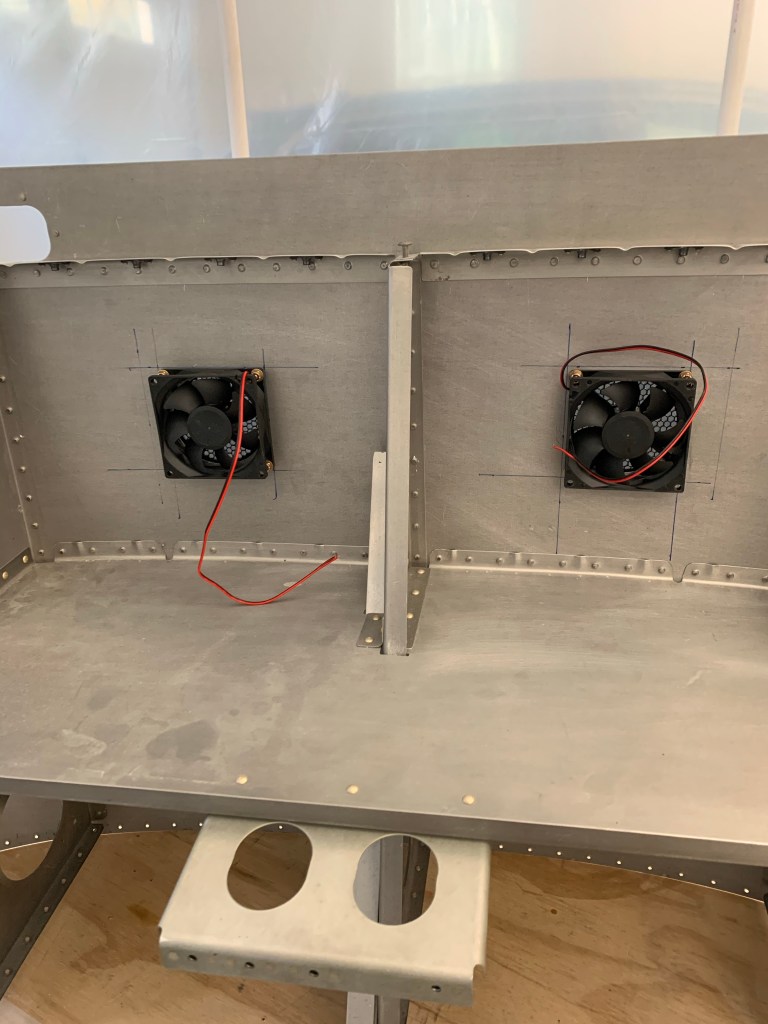
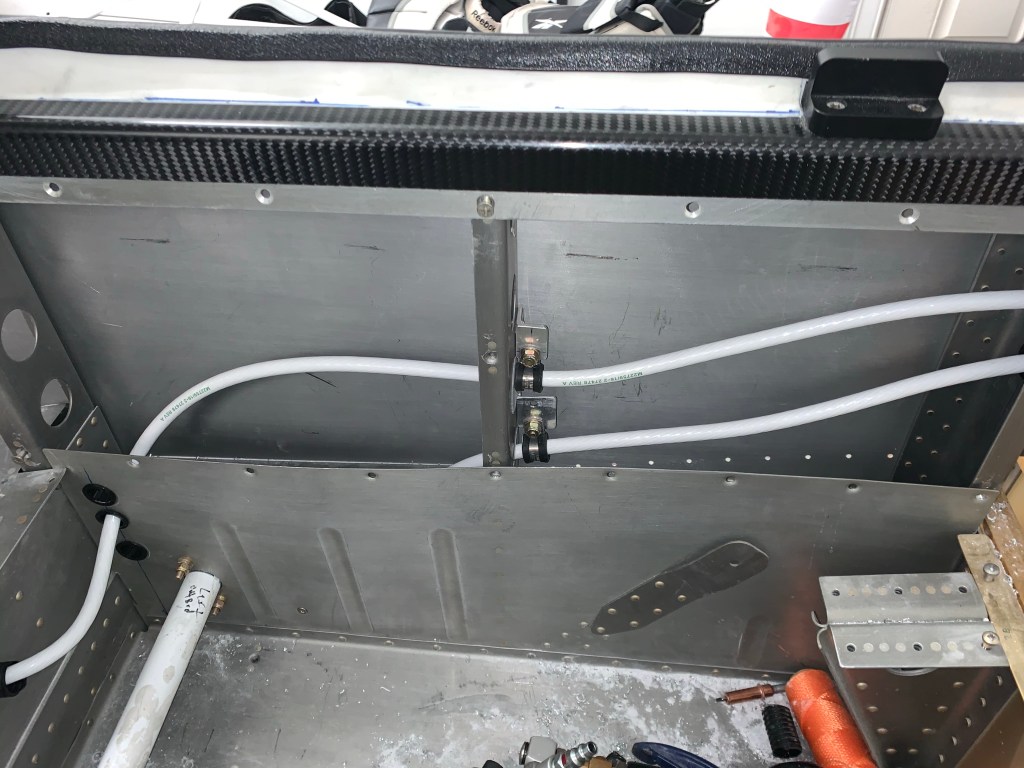
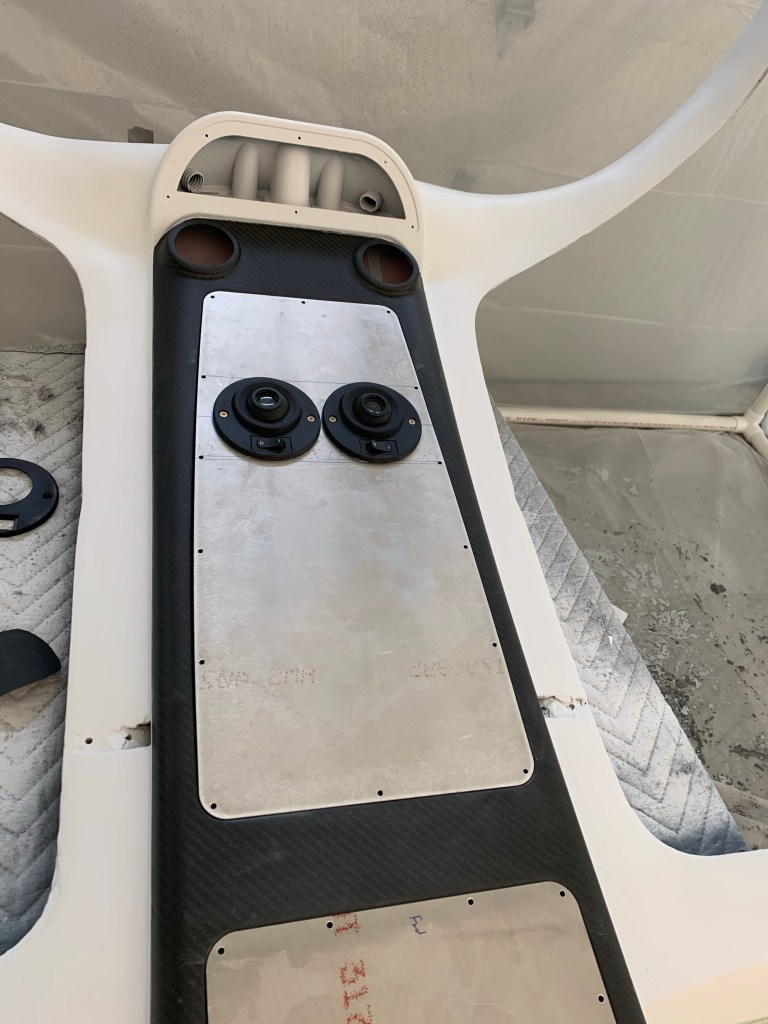
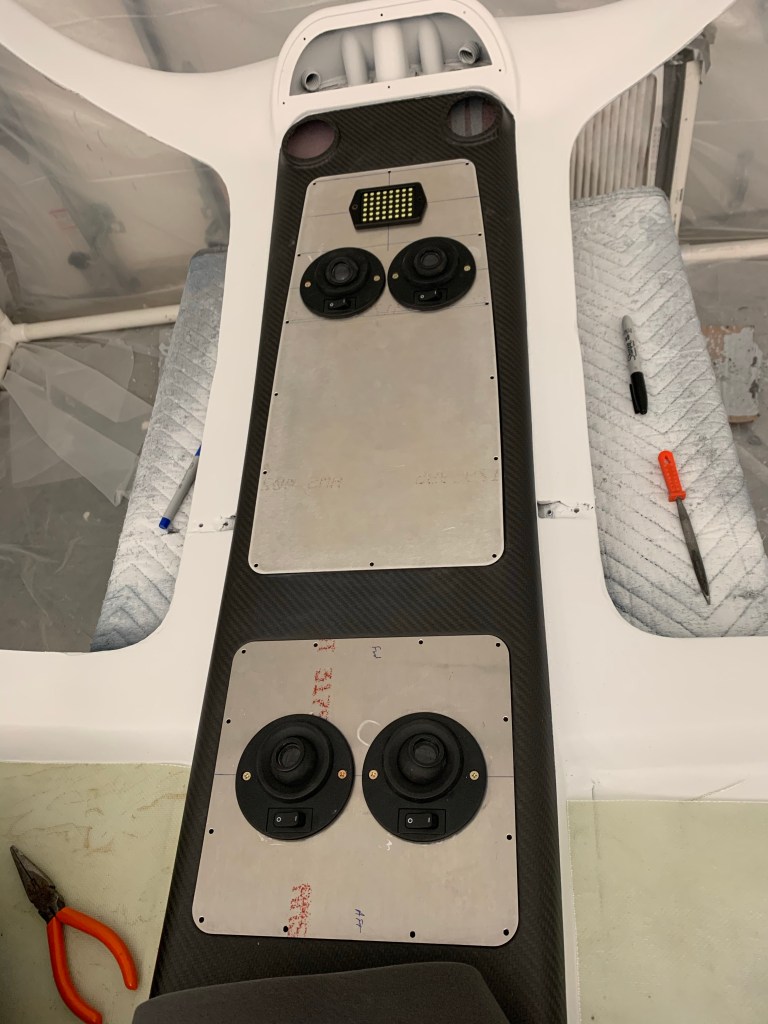
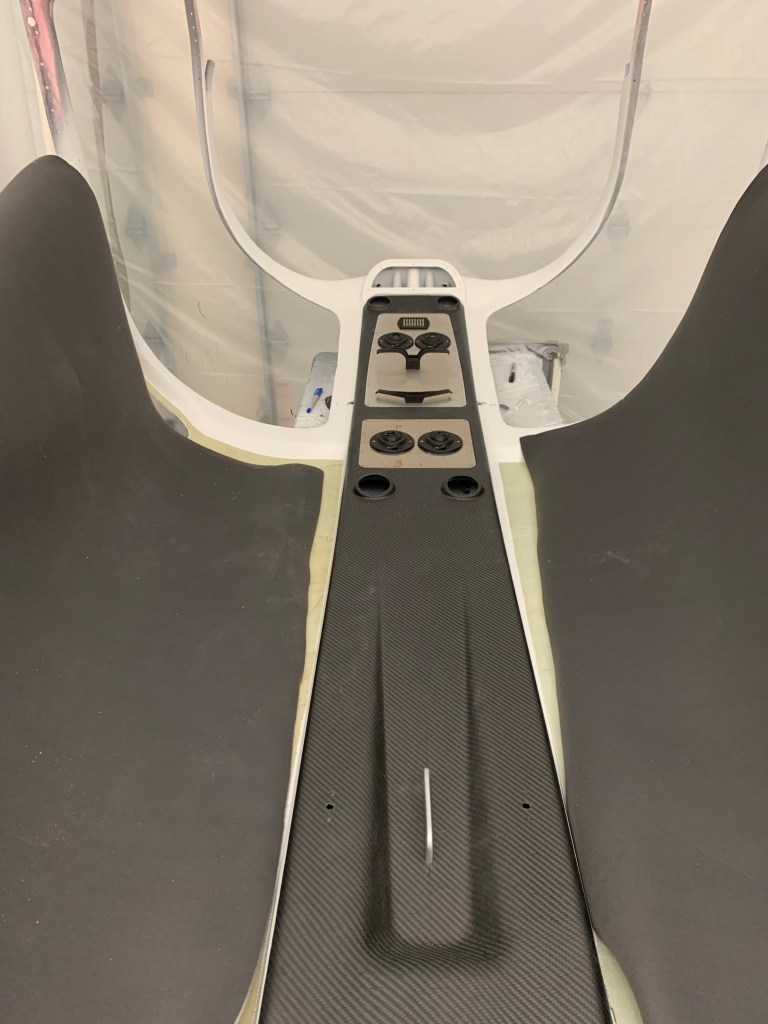
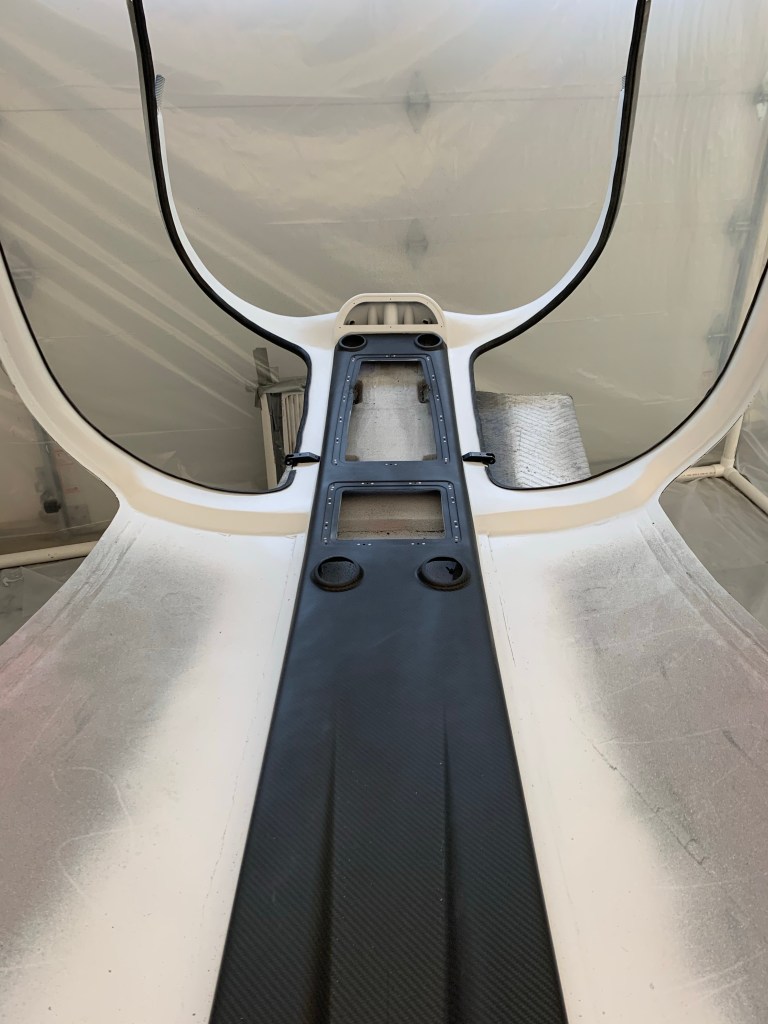
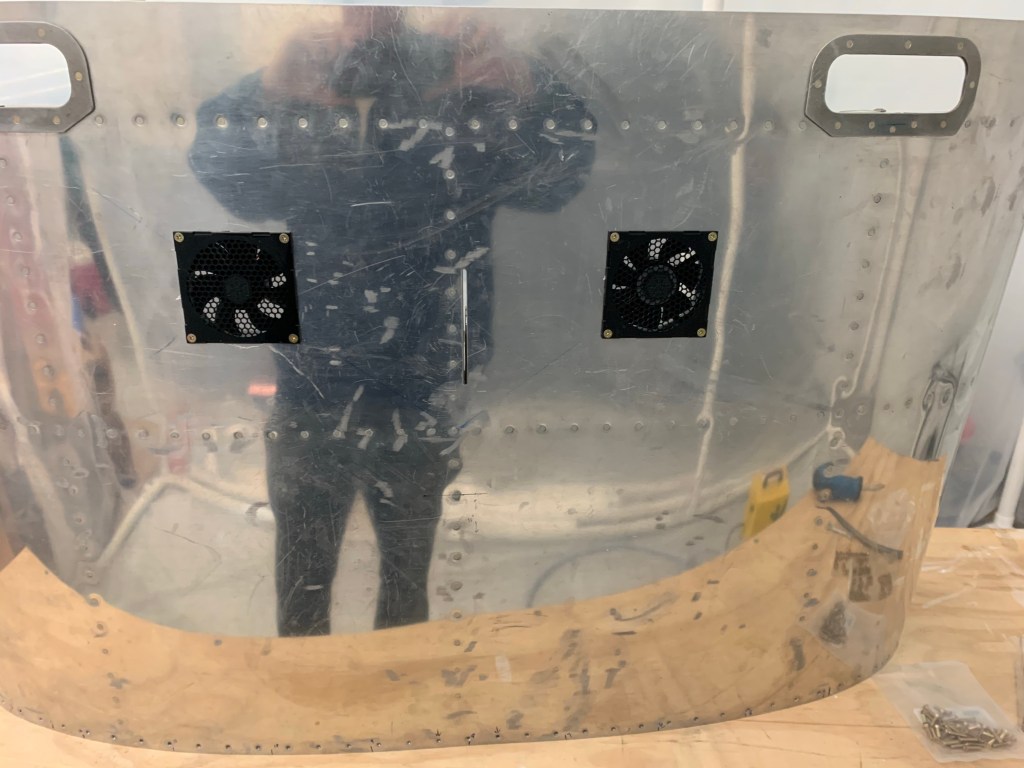
I’ve been knocking off lots of tasks here there and everywhere lately. I got the defrost fans and their plates installed. Below are views from the top and bottom side.

While waiting for some additional firewall items to arrive, I started pulling some #2 fat wire, 1 for each battery from the tailcone to the firewall. I fished the wire through the previously installed conduit

Wires poking out in the rear seat area.

A bunch of work getting Adel clamps, drilling holes for bushings and routing the wires down the left side of the plane.

Adel clamp down inside the side wall below flap tube

I added some Adel clamps around the 2 larger lighting holes with some caterpillar grommet around the holes for extra protection. The wires end up away from the edges of the holes, but I want to be sure these runs are solid.

Adel clamps around 2 large lightning holes
Making their way forward.

I also took the time to install the spring and collars on the brake cylinders. I’ve heard that if the rudder assembly isn’t 100% square, that some binding can take place and cause the brakes to stay slightly engaged. These will help ensure that they always return all the way out ones your feet are off the brakes.

Springs and collars on Brake cylinders

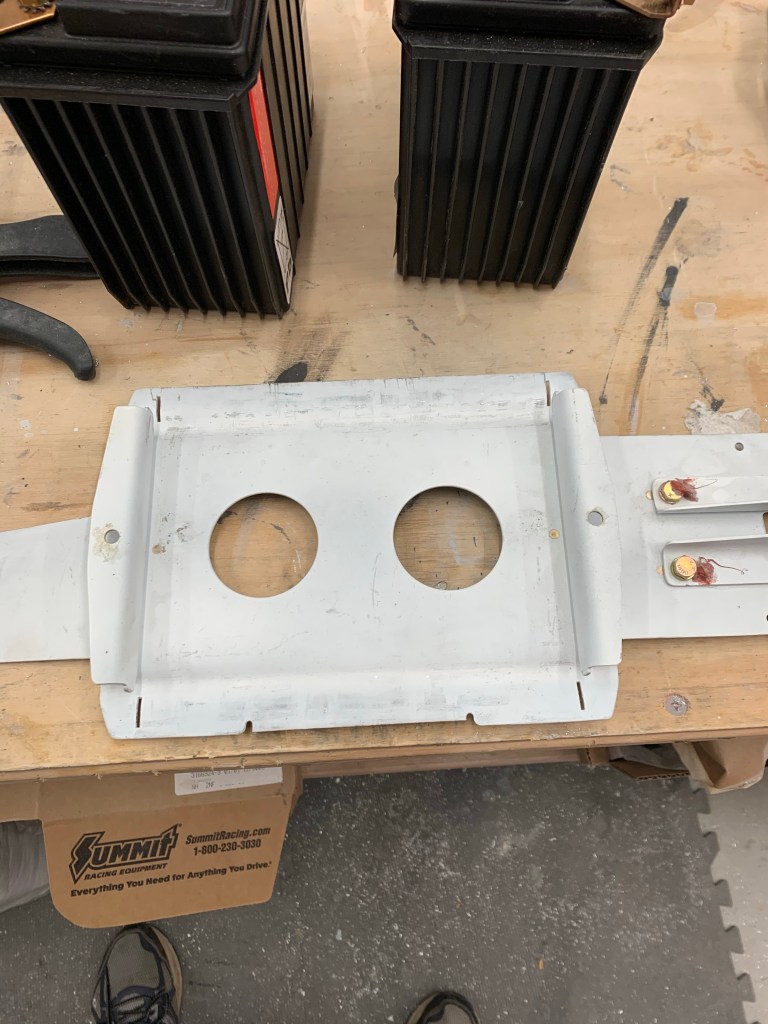
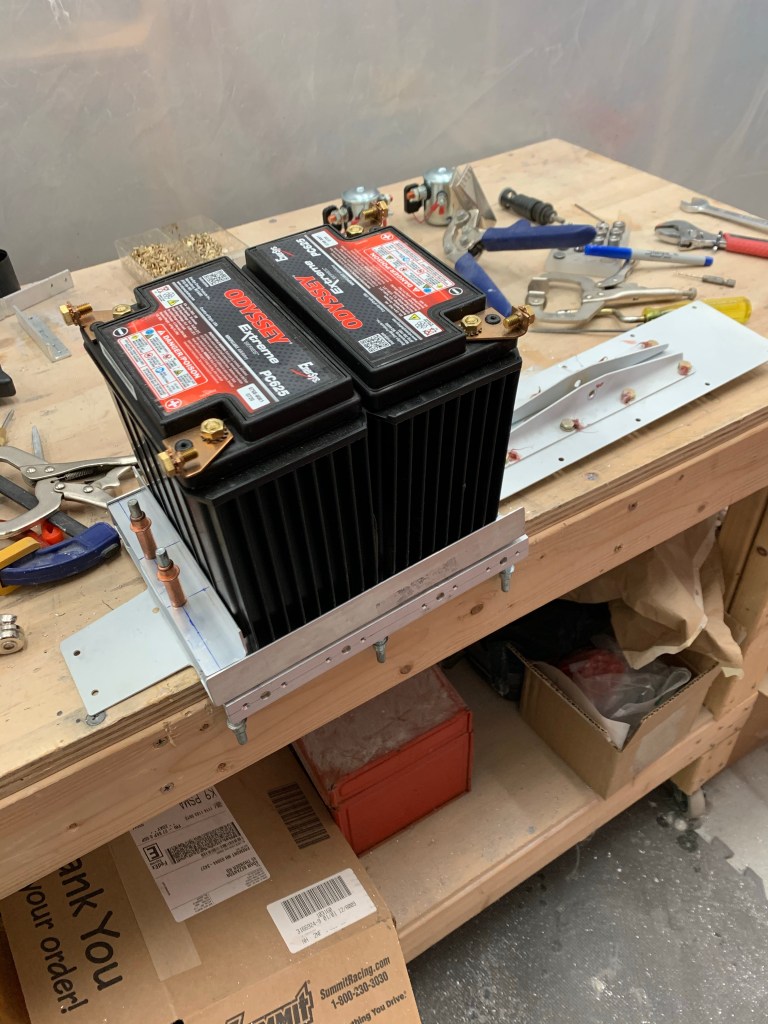
I then got to modifying the stock battery box. It needed some slight modifications to support two batteries. I decided to see if I could bend the sides downward to gain more space left and right. It seemed to work, and was a pretty close fit in the end. I’m glad I went this route, rather than cutting the sides off.

Left and right sides bent flat.
Battery length seems to be almost perfect

I then used some angle stock to retain the battery on the left and right. I also added an angle on the forward side to eat up an approx 1/4″ gap. Another angle was used on the left side below the whole assembly to house the battery contactors. You can see the holes for AN4 nut plates ready to go.

Angles all in place holding batteries tight
Installation all done with contactors installed.

I then installed a ELT/Strobe bracket between the J-channels of the tailcone that I had on hand from Van’s to house a couple of fuse blocks. These will be the main and aux battery bus hubs for all things related to my EFII installation.

Battery Bus fuse blocks installed.

Then it was time to go back and work on mounting the firewall related items. I’m doing all of this prior to installing insulation of the engine side of the firewall. I want to have as many of the passthroughs and holes/nutplates setup as possible before I do this. I mounted the cross-feed contactor in the stock location for the starter solenoid, and mounted the starter solenoid just above and to the right of it.

X-feed contactor and starter solenoid

I also go the ground block (forrest of tabs) installed. This is a kit that has 24 grounds on the engine side and 48 grounds on the cabin side of the firewall. This will be the central point of all grounds.

I’m now working on Installing a couple of ANL bases between the alternators and the main/aux busses on the firewall. I’ve also ordered the AntiSplat aero Air/Oil separator and will be locating that on the firewall too. My air conditioning unit should be shipping soon so I’ll likely hold off a bit longer to drill holes for the 2 hoses that have to pass through the firewall too. Once I get to a point where I’m mostly comfortable with the firewall the path forward will be as follows:

  1. Install upper forward fuse permanently.
  2. Finish installing what I can of the Skybolt flanges.
  3. Install firewall insulation.
  4. Install support bar in center of windscreen area.
  5. Finish fiberglass area around support bar.
  6. Paint remaining areas of fiberglass around support bar and lower door area.
  7. Install windows
  8. Plane up on gear!!!

I hope to have all of this done before I have my engine in April/May timeframe.

Initial Panel Rendering

After a bunch of back and forth with Aerotronics, we have a first pass rendering of the instrument panel. They have been absolutely great to work with thus far.

The highlights:

  • Triple Garmin 3GX touch screens
  • GTN650 IFR Navigator
  • Dual GSU25 ADAHRS
  • G5 Backup Attitude Indicator
  • GMC507 Autopilot Head
  • GMA245 Audio Panel
  • GEA24 EIS (Engine monitoring)
  • GTR20 Remote COM (COM2)
  • GTX45 Remote Transponder
  • SDS EFII Controller
  • Mountain High EDS-4ip 4 place oxygen controller.
  • GDL-51R Remote Sirius XM receiver

Odds and ends

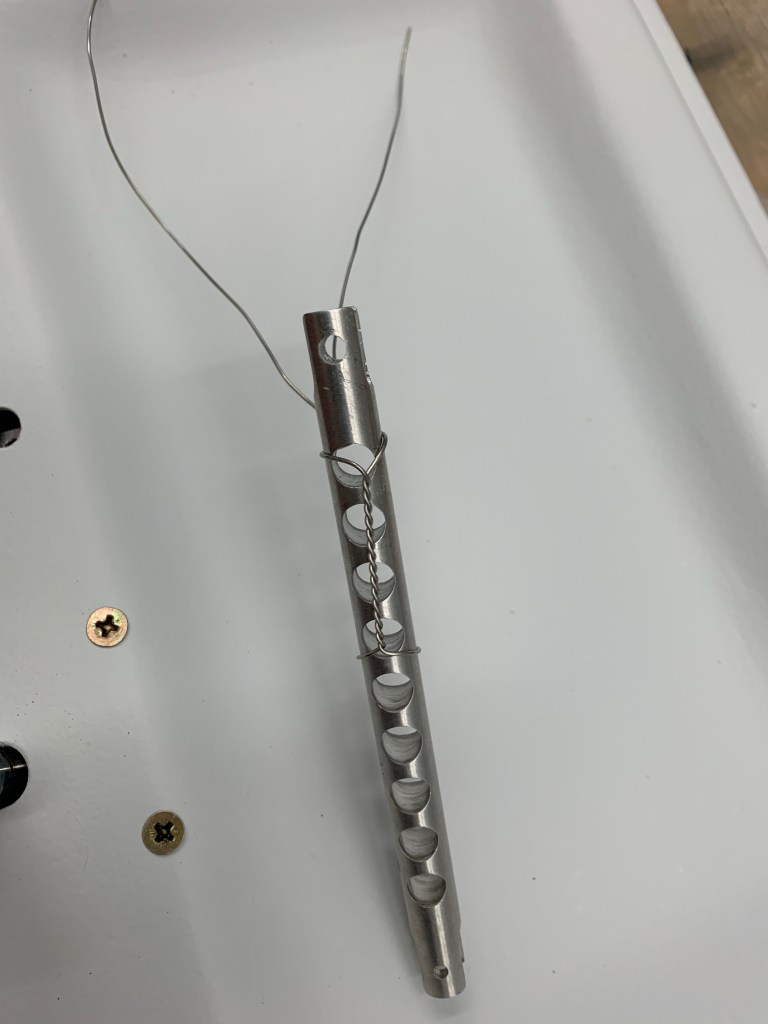
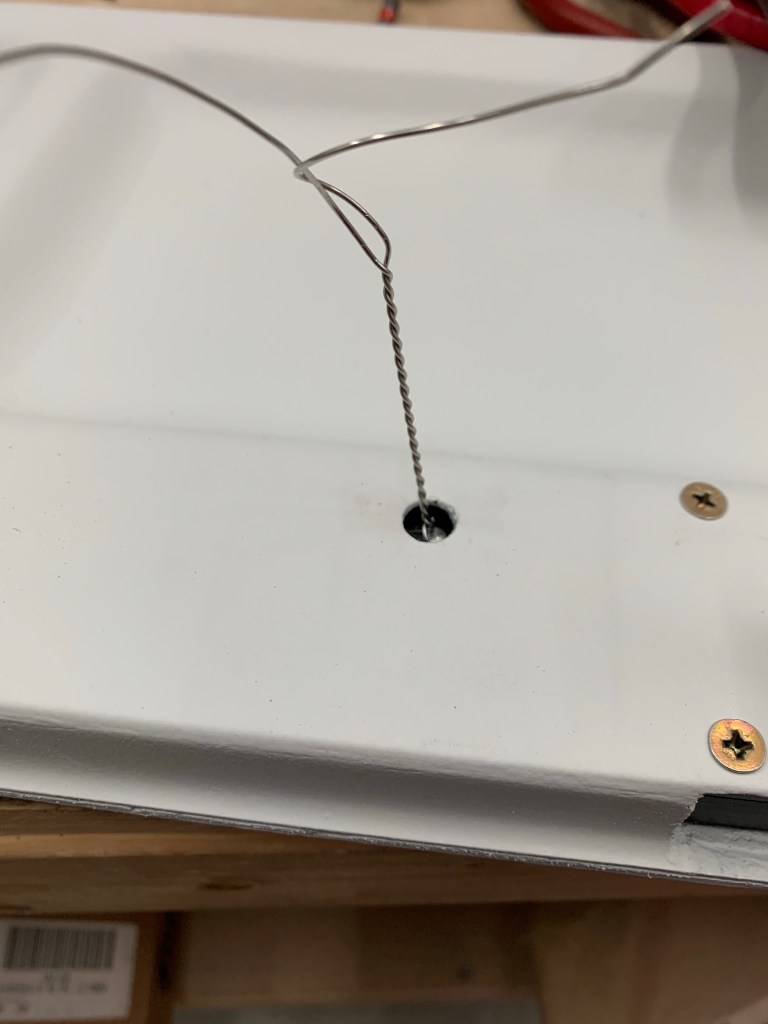
Now that the doors are painted, it was time to put them back together, including the handles and associated racks.. I pulled out the safety wire and finalized the connection between this rod from the Planearound kit to the middle rack assembly. First was to safety wire around the body of the rod leaving plenty of length to the ends to pull through the door and the access hole in the door.

I fished the safety wire up through the hole with the help of needle nose pliers.

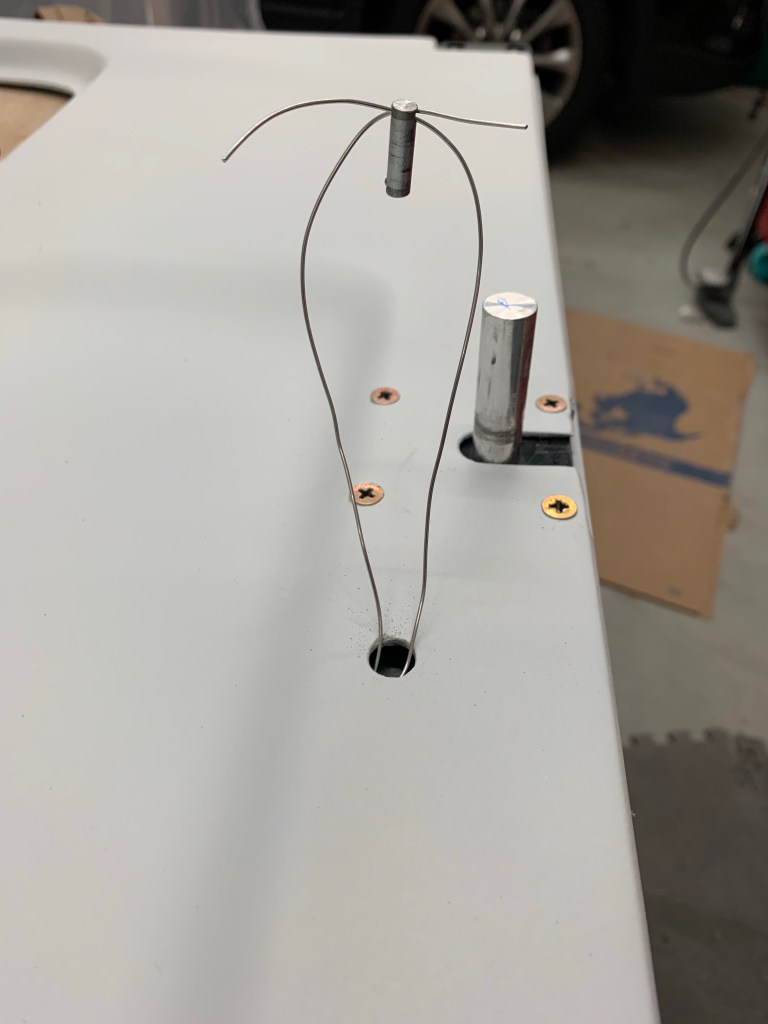
Then the wire is passed through the hole on the plane around pin that secures the rod to the rack (inside the door)

Pulling the ends of the wire causes the pin to slide downward and into the hole.

Pin pushed into the holes connecting the rod and rack.

Final step is to twist the wire, snip, and tuck the end into the inside of the door ensuring that it doesn’t snag up on anything while operating the hinges.

I then cut and sanded the Aerosport carbon fiber door sil covers. Reason for doing this now is I need to place the Planearound Cam blocks on the sil, and this will add a small amount of height. I also wanted to drill through this while match drilling the block to the door sil. As you may see below, I had to also cut out a notch from the micro that I had previously applied to get the cam block to sit completely on the sil and provide enough edge distance.

Door Sil Cap
A view of sil cap from across the plane

With that done, it allowed me to place the cam block on the sil, drill, and setup the cam location.

Cam and Cam Block on the left door.

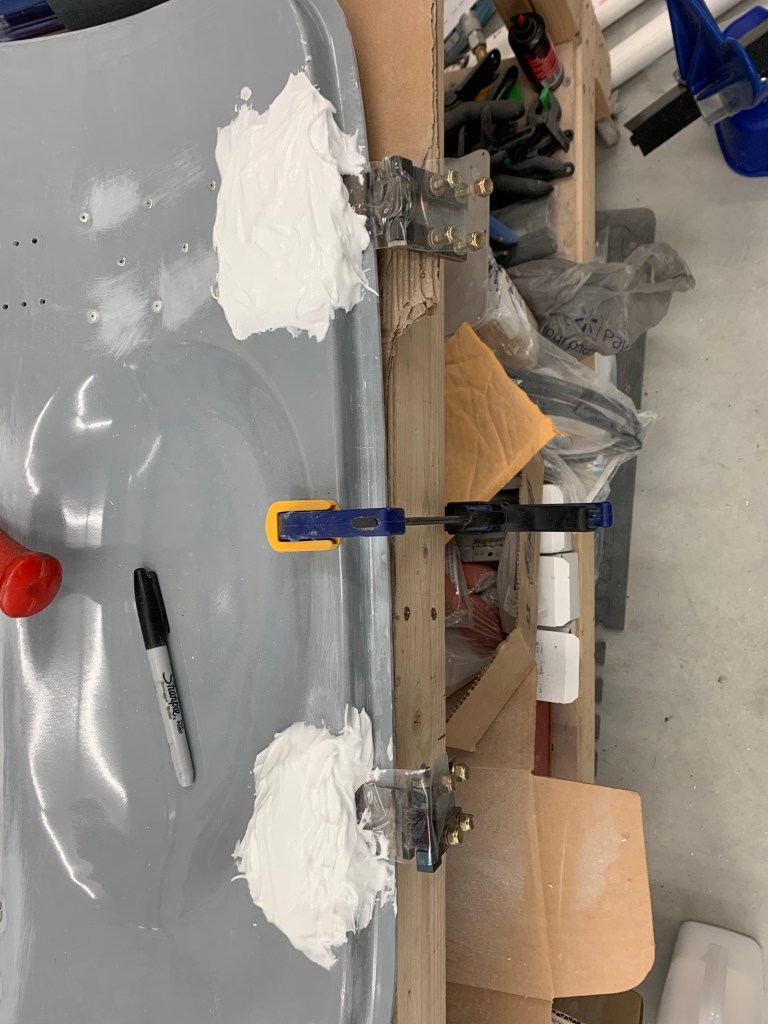
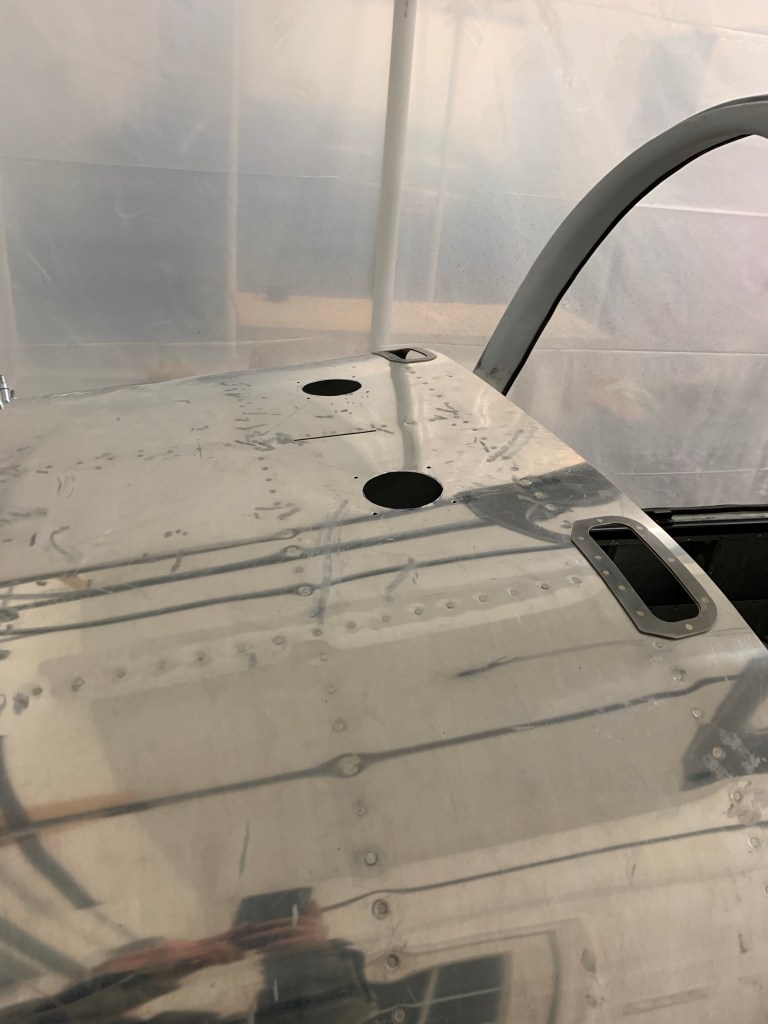
I also spent some time cutting 3″ holes in the upper forward fuselage for defrost fans/avionics cooling.

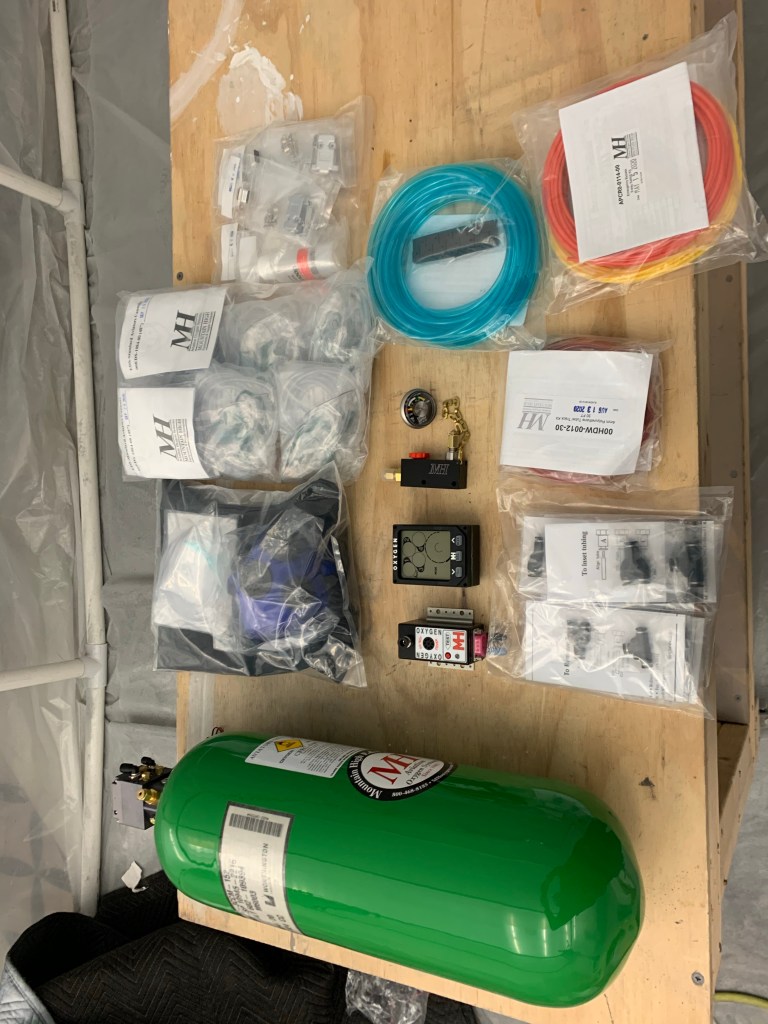
Not that I didn’t know it was coming, but I’m quickly realizing that I’m moving into the expensive part of the build. Some recent goodies that showed up are the Mountain high 4ip oxygen system and my Aerosport 310 Instrument panel!

O2!
Instrument panel, side panels, and center console test fit.

I also placed a deposit on my engine build planned for April of 2021. Still hoping to go to Aerosport Power in Kamloops, BC Canada in April to build my engine with a tech for 3 days with their build school, but we shall see. Border is still closed with no opening in sight. I also ordered an Airflow systems Air Conditioning system to install as well. It will add some time and expense, but it’ll be worth it hauling the family around in the summer months and taking the edge off.

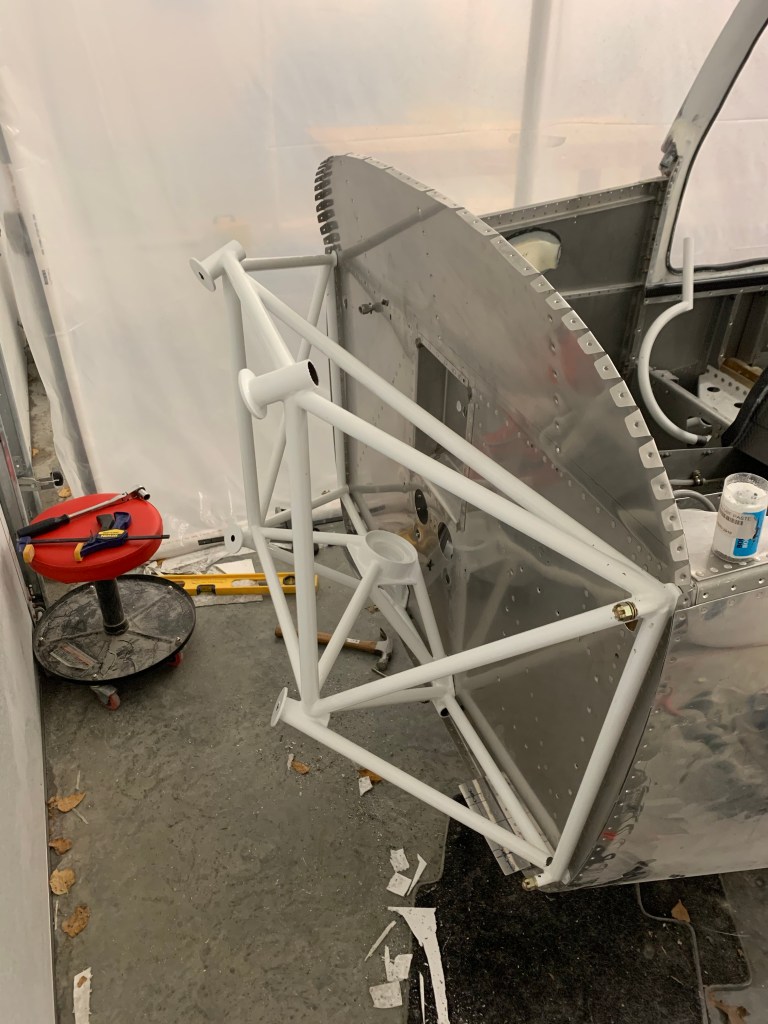
I then got to installing the engine mount by match drilling the holes and placing bolts in place as I went. One word of advise I saw from others was to start at the lower center holes and work upwards. This goes against the plans stating start at the top hole. The mount needed to be pulled outward a bit to match the center of the pre-drilled smaller holes in the firewall. All of the bottom holes aligned well from the start and allowed less stretching of the mount outward to get the hole drilled.

Engine mount temporarily mounted

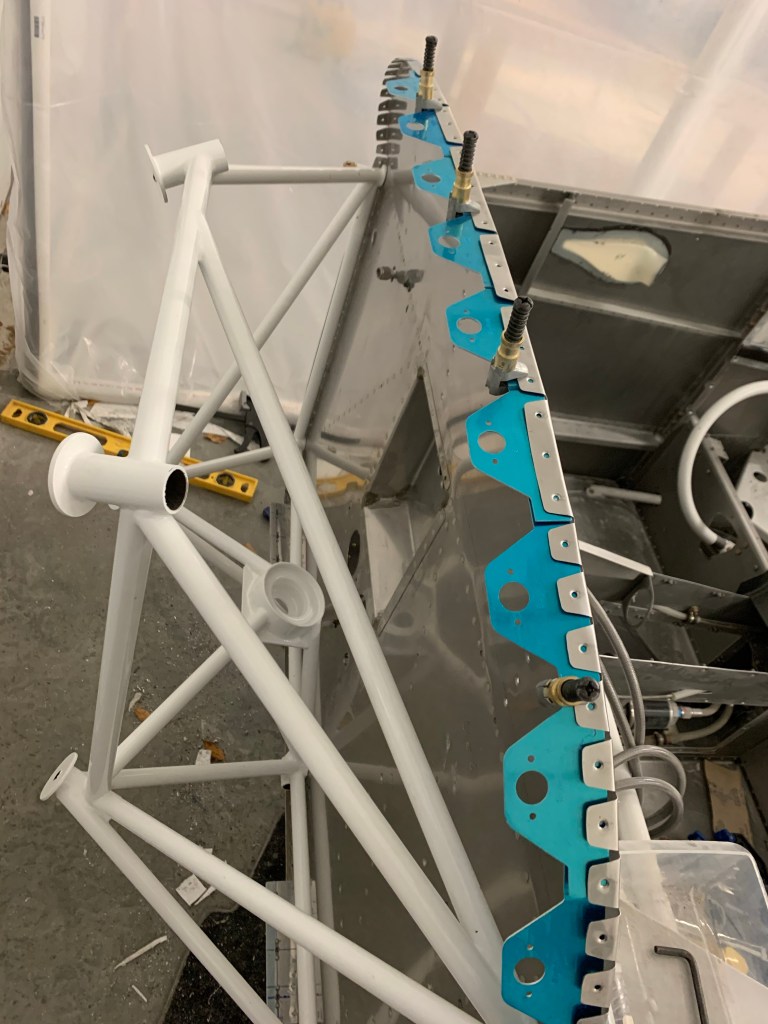
With the engine mount in place, I set out to start working on the sky bolt 1/4 turn fastener install. Really just the flanges for now. The rest will come when I am fitting the cowl after the engine is hung. I chose to install the Skybolts around the entire perimeter of the Firewall. I’ll keep the hinge and pin for the top/bottom cowl split. I played around with placement of the flanges keeping in mind to avoid any interference with the engine mount and the sky bolt receptacle.

Avoiding interference with the engine mount sets the starting position at the top of the firewall

Door gapping and paint!

Once a consistent gap of approx 1/8″ was achieved all around the perimeter of the doors, I utilized 1/8″ adhesive foam tape to finish off the gap. https://www.amazon.com/gp/product/B06XCK65QM/ref=ppx_yo_dt_b_search_asin_title?ie=UTF8&psc=1

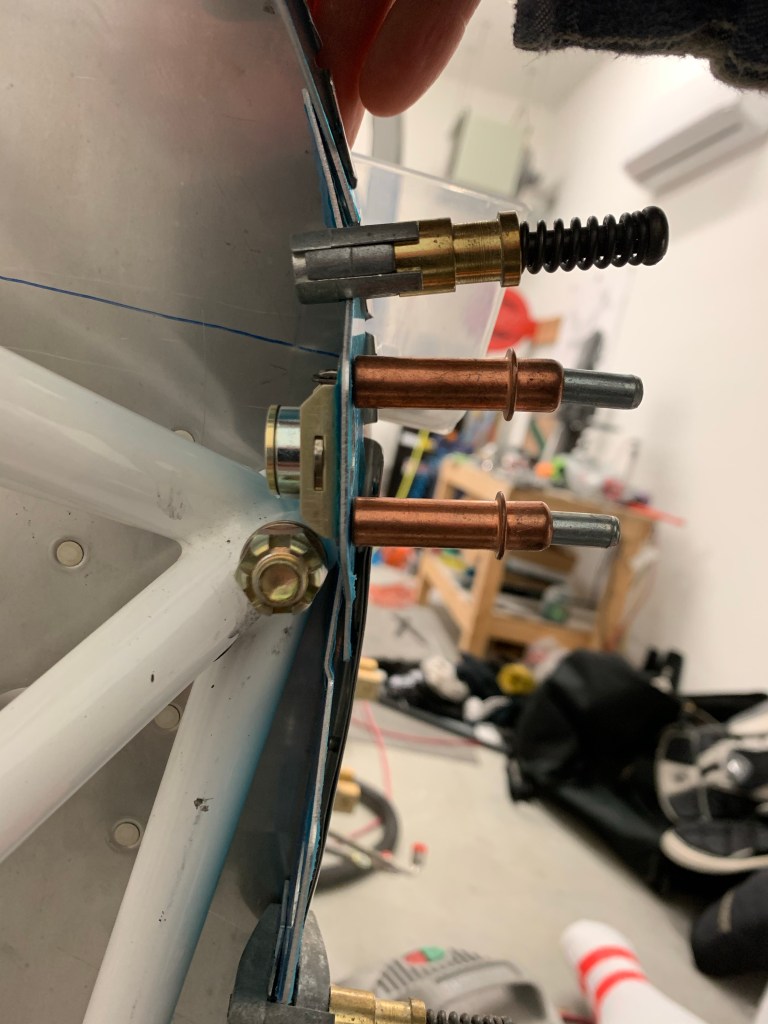
This foam tape was stuck to the edge of the door and a key point was to cover the exposed edges on both sides with packing tape so it releases from the door after the micro dries.

Foam tape on Right Door
Side view of foam tape with packing tape on the sides.

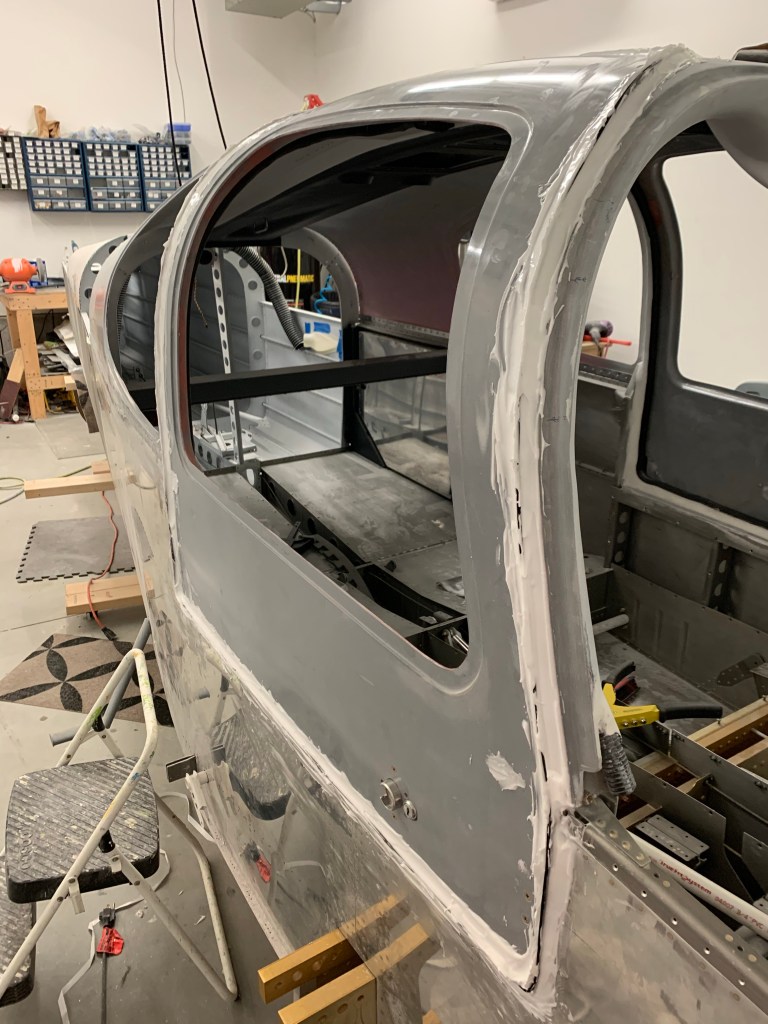
I then slathered up both sides of the tape with micro. I might have gone a little overboard here… Most of this get sanded off in the end.

View of right door complete and curing
An Airplane!

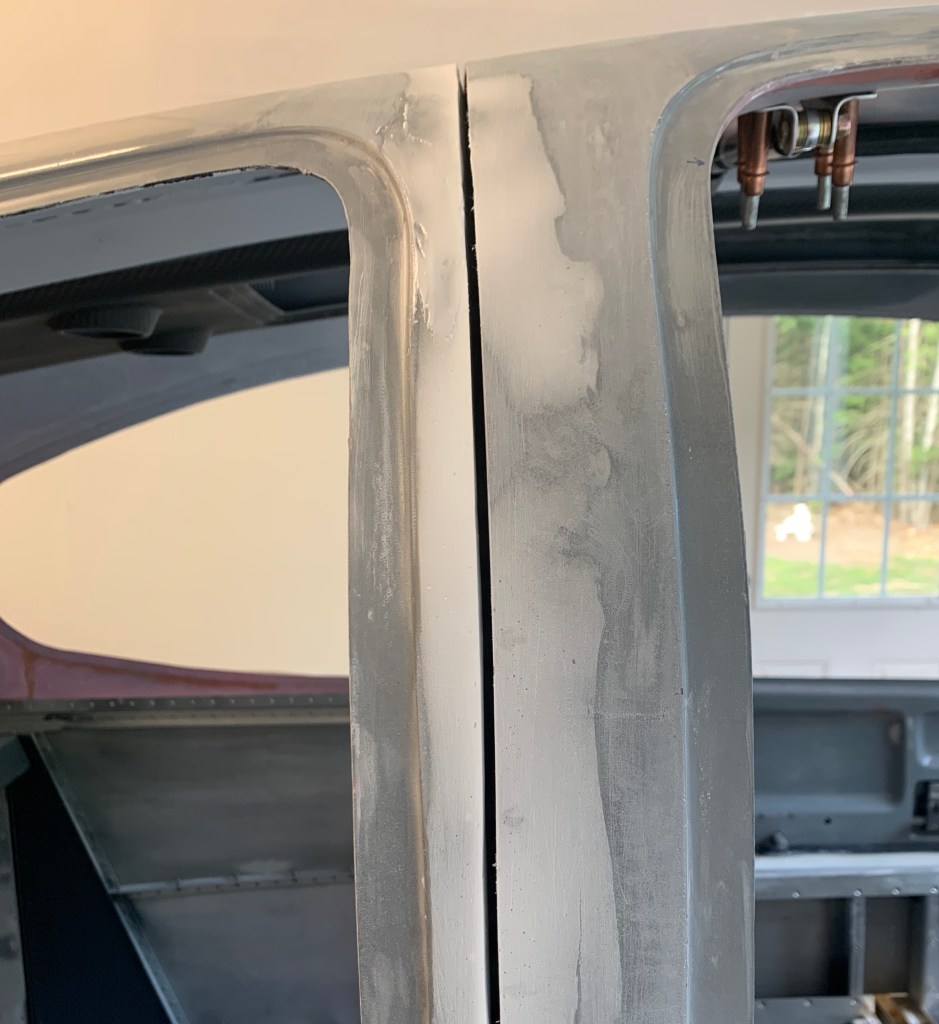
After sanding was completed, it provided a very nice and consistent gap all the way around the door. It also helped fix some spots where the door was ever so slightly above the surface of the cabin top or fuselage. This was mostly in the pillars around the windows/windscreen.

Right Side Sanded
Representative of the gap all the way around.

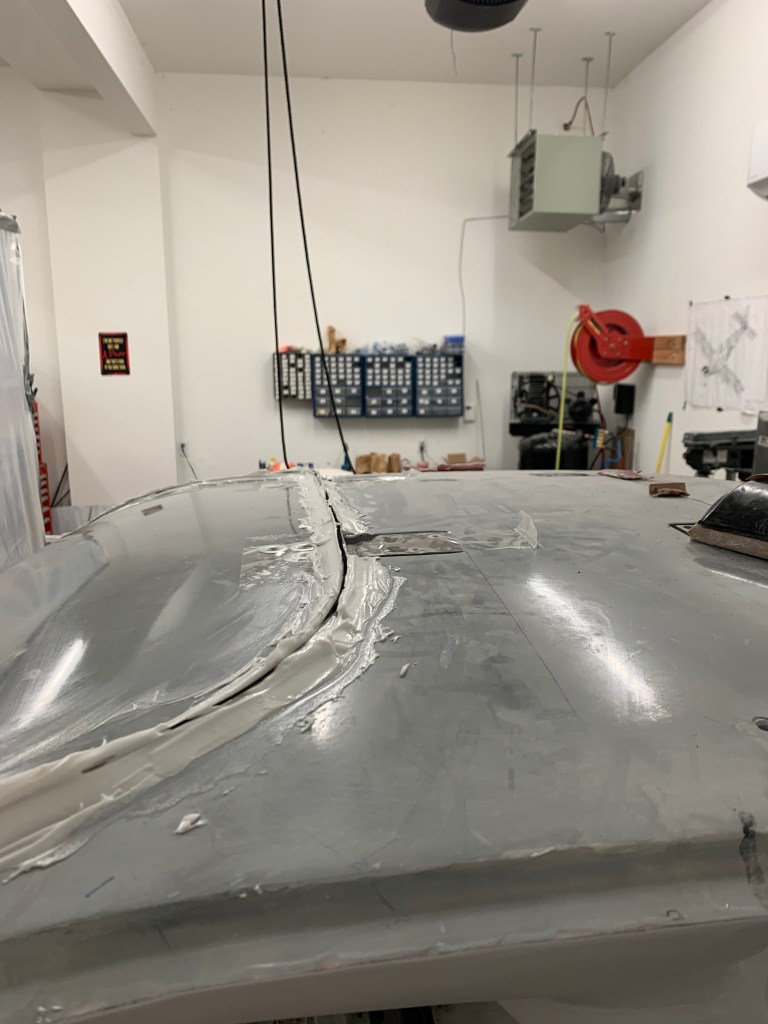
The process was replicated on the left side along with micro’ing over the fiberglass strip covering the small gap between the cabin top and fuselage.

Left door and side slathered with Micro
Right side fuse gap sanded.

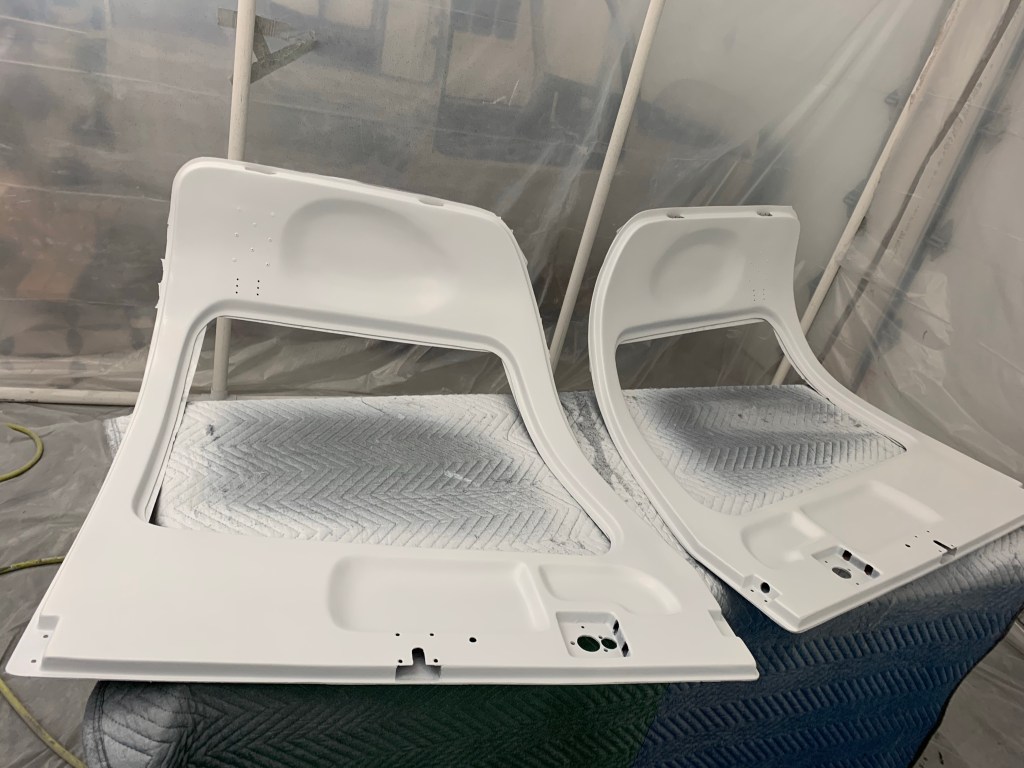
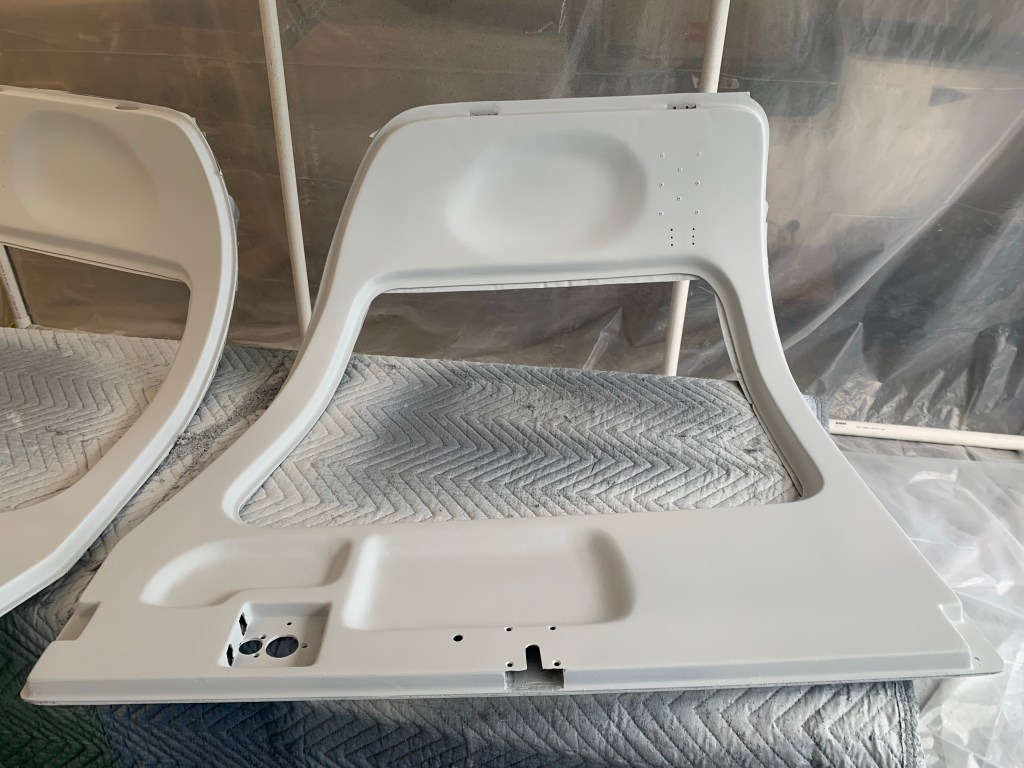
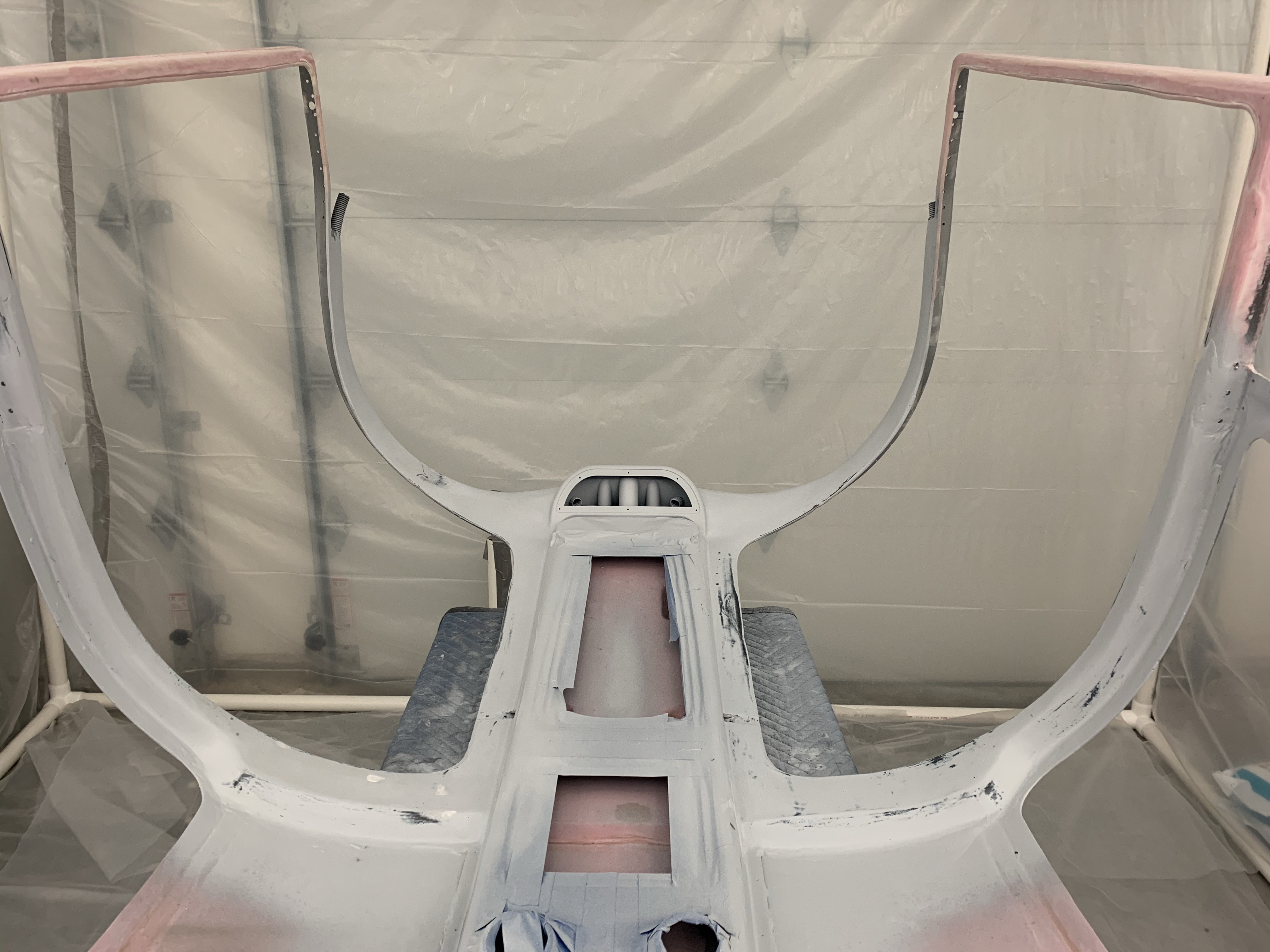
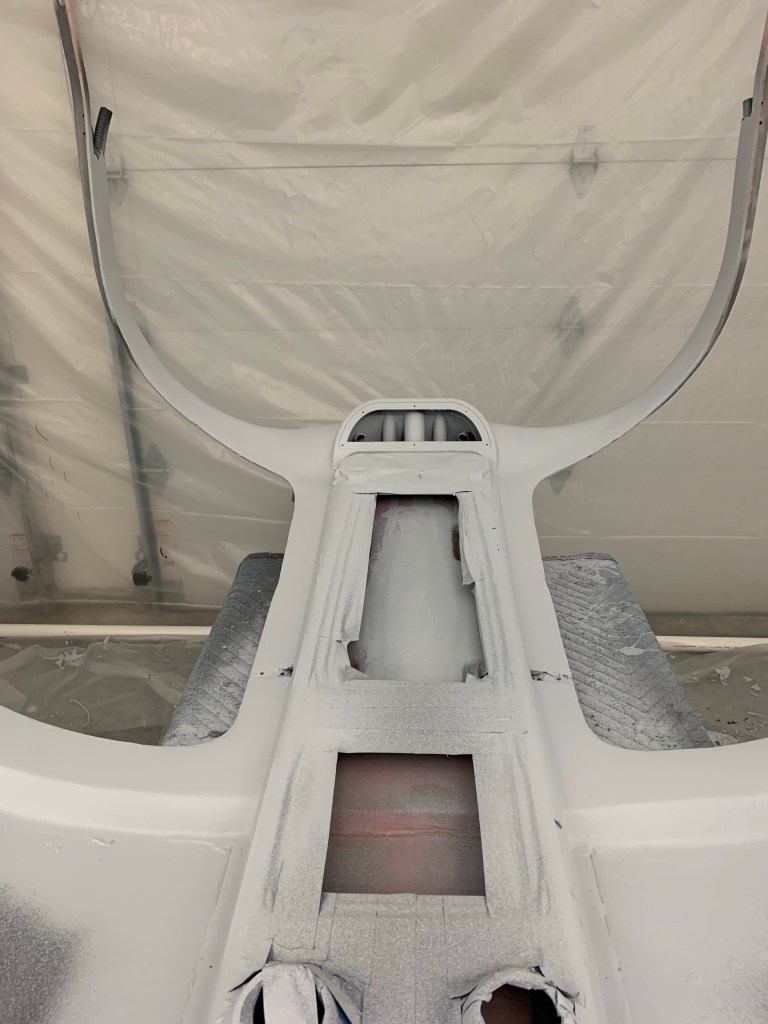
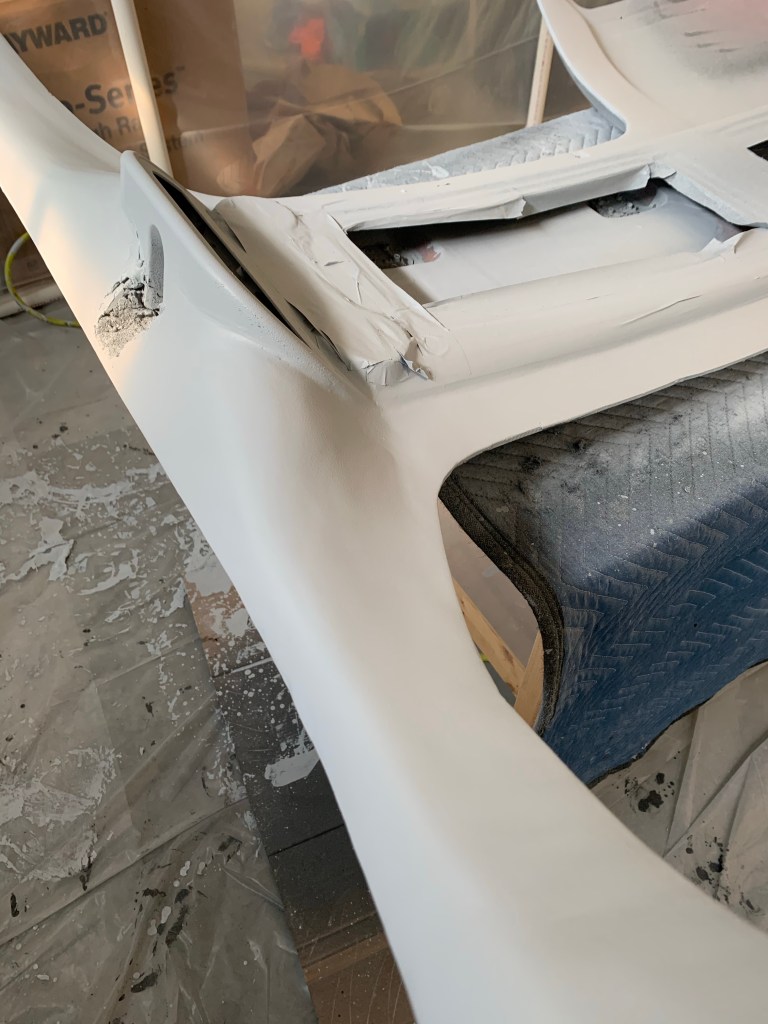
Once all the micro was sanded and I was happy. I moved on to painting the doors. I followed the same process that I did for the overhead. A black PPG DPLF epoxy primer coat followed by PPG K36 high build primer. I did 2 rounds of that after fixing a couple of minor imperfections that really showed through after some paint on it. That was followed by an application of PPG Omni sealer, then 4 coats of the Oxford White base coat. The final step was to use the same Eastwood matte clear coat that I used on the overhead. Hopefully the clear coat will help protect a bit with all the wear and tear these things will endure. Below are some various shots of the doors the latter ones being the completed ones. It’s always hard to take pictures during this process. After the DPLF primer, I’ve basically only got enough time to clean up the gun and get ready for the next coat to be put on while it’s still wet.

Done!

In between paint sessions I spent some time doing some odd and ends like attaching the rudder cable fairings and rear NACA vents with Proseal. I also drilled some holes and riveted on nut plates to accept #6 screws on the bottom cowl plates I added to the firewall some time back. Lots of progress!

Rudder cable fairings
Rear NACA vents prosealed in place

Final door gaps and misc

Starting off from where I left off.. I slobbered a fair amount of micro around the bottom of the door openings to blend it with the adjoining structure and the previously done sections of the cabin top.

After sanding smooth. Another application of micro.. rinse and repeat a couple time, mostly just filling in little divots and/or imperfections.

I also used micro to cover over the screws attaching the cabin top to the structure.

Of course in between sessions of sanding and applying micro.. I got to painting my overhead panels that house the lights. I think it came out really good and hope it blends in well with the dark natural look of the overhead console.

Some other goodies arrived as well. Tires and tube along with my Matco wheels and brakes. I went with Desser Retreads and their 90 degree stem tubes. The items I purchased are listed below:

QtyDescription
215/600-6 6 PLY AWBS RETREAD (RETREAD)
SKU: 15/600-6 6 RT
1500-5 6 PLY AWBS RETREAD,ELITE PREMIUM 2 GROOVE (ELITE)
SKU: 500-5 6 PLY RTO
315/600-6 AERO CLASSIC TR-87-70 *BUTYL EASY VALVE (GL-1587)
SKU: GL-1587B
2500-5 AERO CLASSIC TUBE, SHORT STEM 90 DEGREE (TR-87 STEM)
SKU: GL-5087B

Here are the wheel, brake, axle, and spacer combos from Matco that I purchased..

WHLNW511.25 – NOSEWHEEL, 5″ 1.251
MSCTRA1.5 – WASHER; A6 1.502
WHLARV10SL – SPACER SLEEVE, AXLE RV-102
WHLA24SPKIT – SPACER, AXLE24 KIT1
WHLWI600XLT-2 – WHL &BRK WI600 RV-10 CONFIG2
WHLAXLE24 – AXLE ASSEMBLY, A24 1.25 INCH1

I’m still a little ways away from putting the plane up on the gear, but it won’t be too terribly long from now.

Then it was back for one last skim coat of micro around the doors and I placed a strip of fiberglass over the gap between the aluminum skin and the cabin top. Lots of bouncing around working mostly off plans for now.

There was also one other thing that I’ve been meaning to do prior to getting too much further along and installing the upper forward fuselage sections and buttoning up the tunnel… I wanted to pressure test my brake and fuel lines to make sure there were no leaks. It would be much easier to fix now while things are still generally accessible. I used my air compressor with an inline regulator and a shut off valve to decouple the air compressor from the lines. I placed a pressure gauge on the other end. The procedure was to get pressure in the lines (I used 20-25psi for the gas lines and 50psi for the brake lines). Make note of pressure reading on the output. Shut off the ball valve and let it sit for about 5 minutes. There should be no loss of pressure. If there is.. you’d spray with soapy water to find any leaks, which I did anyways just to give me peace of mind.

Inlet to the return line on firewall
Pressure gauge on other end
Still holding 22psi after 5-10 minutes

I then tested the fuel supply line. I had to reverse things and measure at the firewall and insert the pressure from the wings. The fuel filters and pump are uni-directional and doing it the other way.. I couldn’t get any pressure to the other end of the line.

I used a slightly different setup for the brake lines. I got a 1/8″ to 1/4″ NPT adapter to connect into the brake fluid reservoir. I used a 1/4″ NPT tee to connect the gauge into and capped off the AN fittings that go to the gear.
Picture of the brake setup

Then it was time to final gap the doors. I’m shooting for an approx 1/8″ gap. This will allow some space for paint, which will narrow that gap down significantly. To prep for that involved a lot of sanding. I re-installed the door handles and McMaster seals for this step so the door would be as close to its final position as possible. Then sand sand and more sanding. I used some thick scrap metal and wrapped 50 grit sandpaper over it to use as a gauge and to also sand back the last little bit by running it back and forth in the gap. Below are some pics during that sanding process.

Here you can see the top part is the typical gap I started with

This was repeated for the left side..

So now it’s time to get the foam tape I ordered and place it between the door and the cabin top and micro on either side of the tape to get a really nice final gap. Micro will also be used to build up a couple of low areas of the cabin top to match the height of the door.

Cabin Top Permanently Attached

Needed to finish up a few things after the paint was done which are much easier while the top is on its back. One of those things was trimming the fiberglass substrate for the headliner. I did that by laying out paper to make a template, transferred it to the fiberglass and used aluminum sheers to cut it out.

Paper Template

Testing the fit on the right side.

The same thing was done for the left side.

Both fiberglass pieces trimmed and in place.

I then spent some time installing the Map lights for front and rear passengers, overhead lights, and the Aerosport headset and seatbelt hangers.

Front MAP lights
Rear MAP lights and overhead dome light
Closeup of the front

I also got the headliner material in a Graphite color laid out to have a look at it all together.

Overhead panels complete!

I then put the door strut brackets back in and tested out the McMaster seal. The seal is actually a little short.. I guess I shouldn’t have cut it exactly previously. I suspect the build up with micro and paint is to blame. I may end up ordering another seal to make it perfect, as this is something you see every time you enter the plane.

Sitting in the back seat observing how the overhead and paint came out

Then it was on to doubling back and finishing a few tasks that I had left prior to permanently attaching the top. I had left the #12 and #19 holes un-countersunk in order to use Clecos while finishing the doors. So I countersunk them per the plans, installed the HW (loosely), and then applied a Flox/Epoxy mixture with a zip-lock bag with the corner cut out in the gaps between the lower half of the fiberglass door frame and the metal structure. I then tightened all the screws and cleaned up the edge to make a nice fillet all the way around.

Left door floxed and bolted in place
Right side screw heads sitting flush in the door sill
Right door done too!

Now my plan is to work on finishing the transitions along the bottom edge of the door with micro to match the rest of the cabin top. Then I’ll be working on final gapping the doors and painting them to match the cabin top.

Cabin Top Finishing

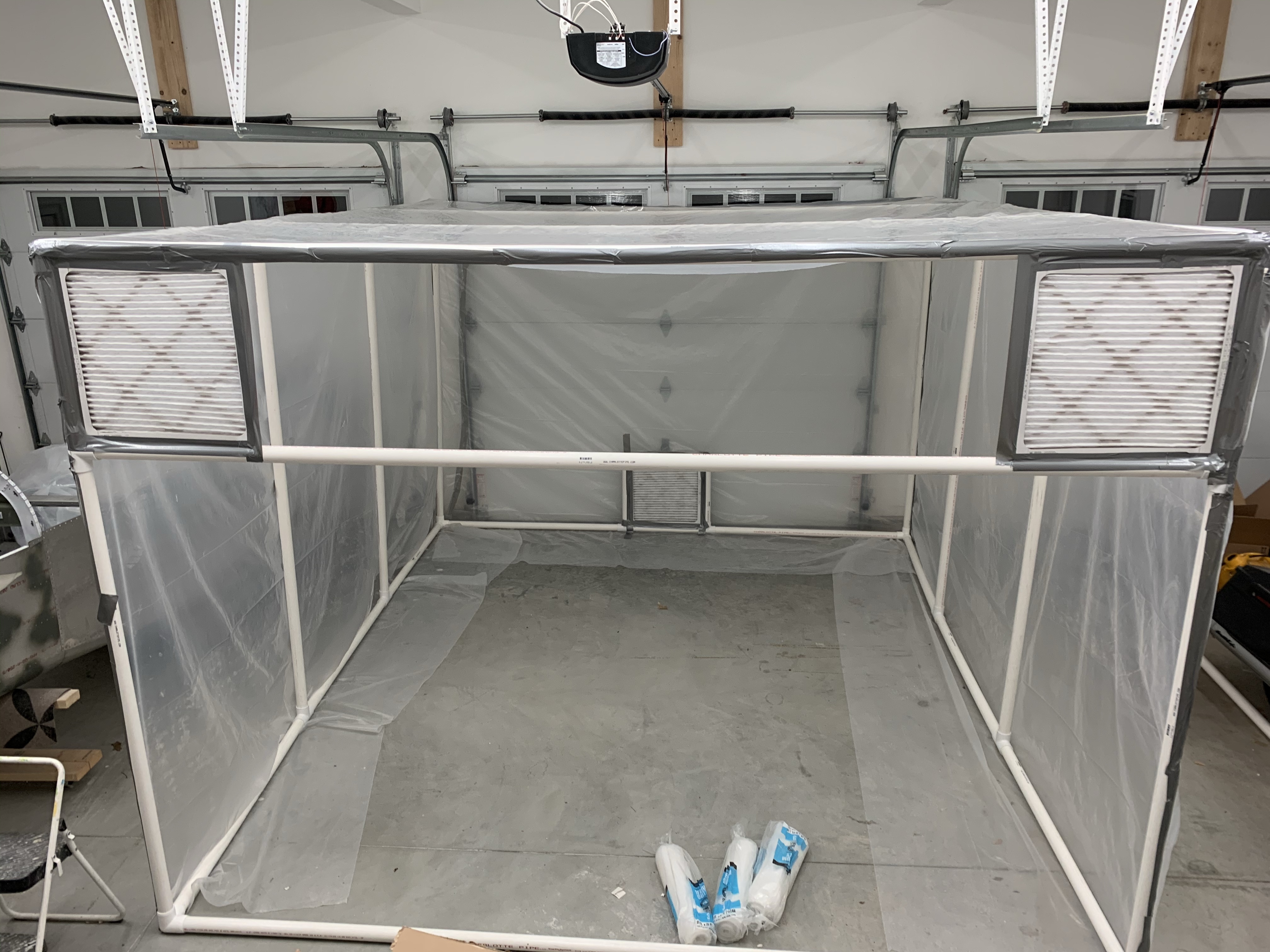
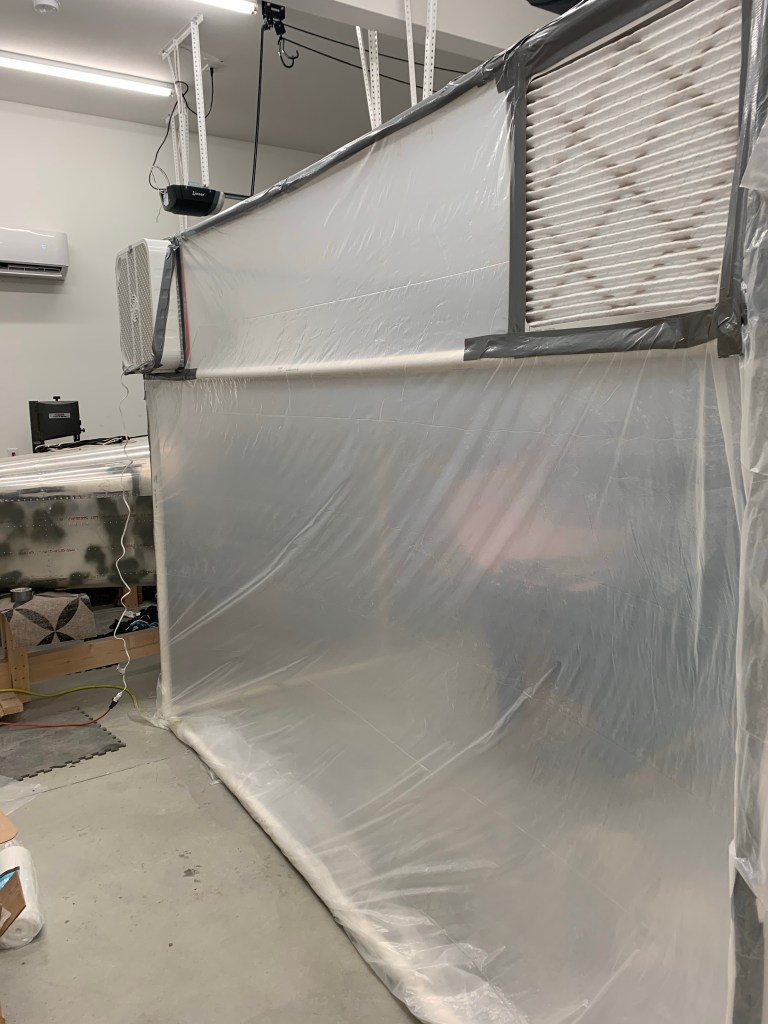
A long overdue update… Finishing the cabin top paint has dragged out longer than anticipated… After some discussion on VAF, I decided to use PPG paints. The suggested method was to use a darker epoxy based primer (like PPG DPLF) and then spray their K36 high build primer over it, wet on wet application. The darker DPLF serves as a guide coat of sorts, but also helps with adhesion. You spray 1 coat of the DPLF let it flash and then spray two coats of the K36. Let it dry, then block sand it stopping if you ever see dark come through. Clean up and do it again. The idea is to sand down the highs, while building up the lows and get something that is optically flat in the end. Knowing that these paints are pretty toxic and smelly.. I first had to setup a spray booth in my garage in order to exhaust all the fumes and overspray out. I looked online and at what a few others had done and built a 10×12 booth out of 1.5″ PVC, plastic sheeting, and a lot of duct tape. This took a while as I had to get all the supplies and do the build itself.

Rough sketch of the booth
Supplies are here.

I decided to buy a 12″ “Explosion proof” fan for the exhaust. This basically is a sealed motor type of fan. I’ve seen many people say that they’ve successfully used a standard box fan from Walmart or the like, but I wanted to be as safe as possible and not risk blowing up my house. I am using 20″x20″ furnace filters; 2 for the inlets; and 1 for the exhaust. I am using standard 20″ box fans for the inlet air as those blow shop air into the filter and shouldn’t have hazardous fumes passing through them. A single 20″x20″ furnace filter would catch most of the over spray prior to being sucked out by the exhaust fan.

Booth build in progress.
Filters in place

I was going for a negative pressure booth and as I got to testing it, I believe I achieved it as the plastic side walls were being sucked inward with the fans on. In this pic, I only have 1 inlet fan, but did add a 2nd one for more airflow.

Negative pressure
Exhaust fan at work

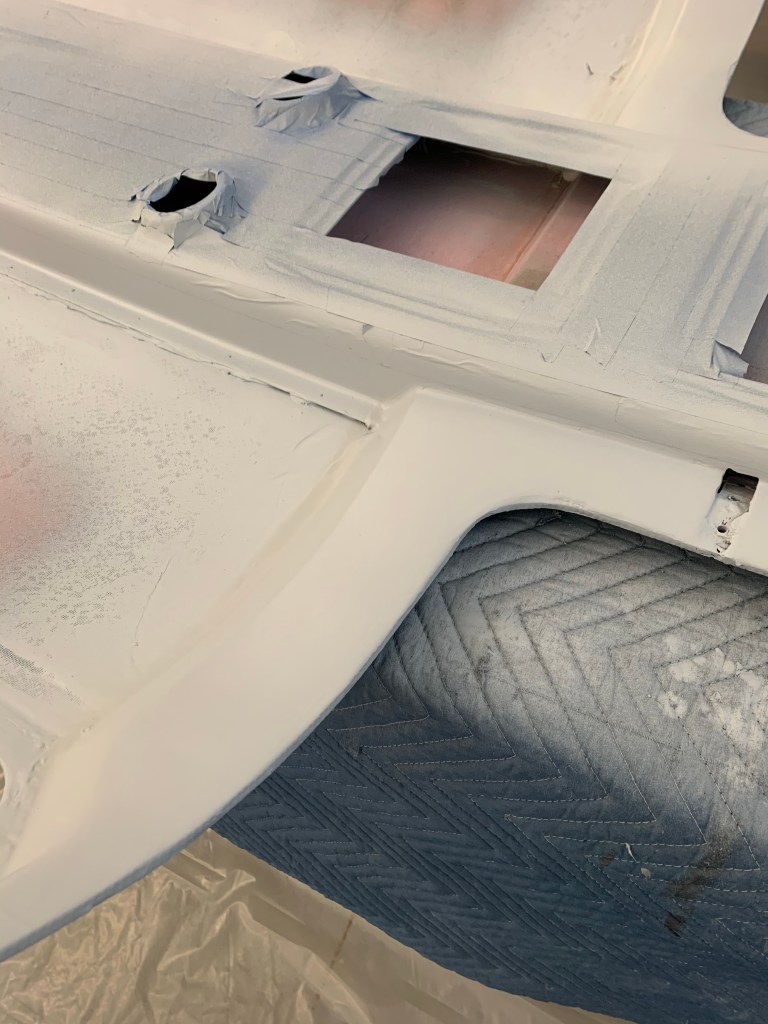
The next several pictures are of various stages of the DPLF and high build application. I didn’t take many pics of the black DPLF, because I had to spray the K36 high build about 5-10 minutes after applying the DPLF, so it didn’t leave a lot of time to take pics.

Not perfect, but more high build after this helped the transition.

The interior I’m going after is a two-tone graphite and Oxford white combo. Aerosport told me that their fabrics closely match SEM based paints. So I asked my local PPG dealer to make that color for me wanting to stick with PPG paints at this stage. They were really great to work with. Here is the Oxford White paint for the Cabin Top.

A couple more pics low to the surface.

While waiting for paint to dry etc.. I had some time to work on the doors. There were a few dings and nicks in the doors, which I filled with Micro and sanded smooth as shown below.

Micro over some big dings.
Those dings filled in after sanding

I then spent some time on filling in the door hinge pockets. This is needed to have a continuous surface for the McMaster door seal to seat against. I bolted the hinges in place with packing tape around them and used some micro/flox/cabo mixture to fill in the pocket, while leaving enough room for the hinge to slide out.

Micro/Flox/Cabo mix over the door hinge pockets.
Space for hinge to slide out.
Initial sanding of the door hinge pockets.

Here you can see a coat of the K36 high build with some hints of the darker DPLF coming through after sanding.

Then disaster struck. I had bought a disposable paint cup system ( a clone of the 3M system) to facilitate easier clean up and less use of harsh chemicals for cleanup.. First, while spraying the darker DPLF, I didn’t have the top of the paint cup seated well enough, and caused a slight drip, which I fixed, and then just dealt with it.. But then when I started spraying the K36, Well.. I must have not screwed down the top sufficiently enough because just after I had started to spray the K36 , the paint cup flew off of the spray gun getting paint (probably at least 16 oz.) all over everything… Leaving a big mess to clean up and me calling it a night at that point…

Huge mess of paint on the floor.. Thankful all on plastic.
After wiping off the bulk of the mess..

I then had to sand and start again for that coat.. it ended up okay in the end, but very frustrating when it happened… You can see here that I got some paint splatter on my hood. I opted for a fresh air system here as I did have a 3M cartridge-based system, but with these paints containing isocyanates, which don’t have an odor, there’s no good way to know for sure that your mask is working fine. Just because you don’t smell anything doesn’t mean you’re protected.

Some paint splatter on my fresh-air hood.

Then it was on to the top-coat. My PPG dealer suggested applying an Omni sealer on top of the last K36 coat, so I did that followed by a bunch of coats of the Oxford white.

After the top-coats were done, I removed all the masking, did some basic cleanup and got ready to clear coat the darker natural looking carbon fiber of the cabin top and the Oxford white as well. The darker exposed overhead areas was sanded with 220 grit, 320 grit, and 400 Grit sandpaper and cleaned up. Then a matte clear coat by Eastwood was used to clear coat the entire finished top and below are the results, which I am very happy with. Again, not 100% perfect, but very acceptable, IMHO. The rear areas that aren’t 100% painted will be covered with a fabric headliner material. Cutting and affixing the fiberglass for that area is up next along with getting the interior of the doors ready for paint. I will likely hold off actually paining the interior of the doors until I mount the cabin top and final gap the doors.

A view from the rear
Left side. You can see the paint line is reasonably straight
Similar view from the right side.

I’ll be filling in the front area where the support bar comes in once the top is permanantly attached to the plane. For now, I need to leave this area to be able to bolt down the support bar.
Overhead lighting

While waiting for epoxy to cure.. I spent some time on my overhead lighting plan. I am essentially copying what Ed Krantz came up with for an overhead lighting control circuit. It is car-like in operation. I plan for overhead white lights above the front and rear seats as well as in the baggage compartment. These overhead lights will be on a dimmer. I’ll have red map lights also dimmable. I plan to install footwell lights as well as panel/avionics lights also on dimmers. The door pins have magnets in them and I plan to use 4 proximity sensors (1 for each door pin; 2 per door). Not only will these be used to ensure that all 4 door pins are seated (causing a red LED to illuminate on the panel otherwise), but they will also be used in this lighting circuit. These proximity sensors basically act as a switch and will indicate when a door is opened. When opened, the overhead lights will come on full intensity, despite what they’ve been dimmed at, and stay on for a pre-determined time (somewhere around 15 minutes). Of course there will be an override button to disable this feature if you want/need to taxi with the doors open at night. I’ll also likely put an on/off switch on the circuit to be able to disable it during times where the doors may be open for long periods (i.e. annual condition inspection). I put together a quick video on my prototype of the circuit.