Tail and Wings

Lots of progress since moving to the hangar. It started by getting the tail pieces back on.
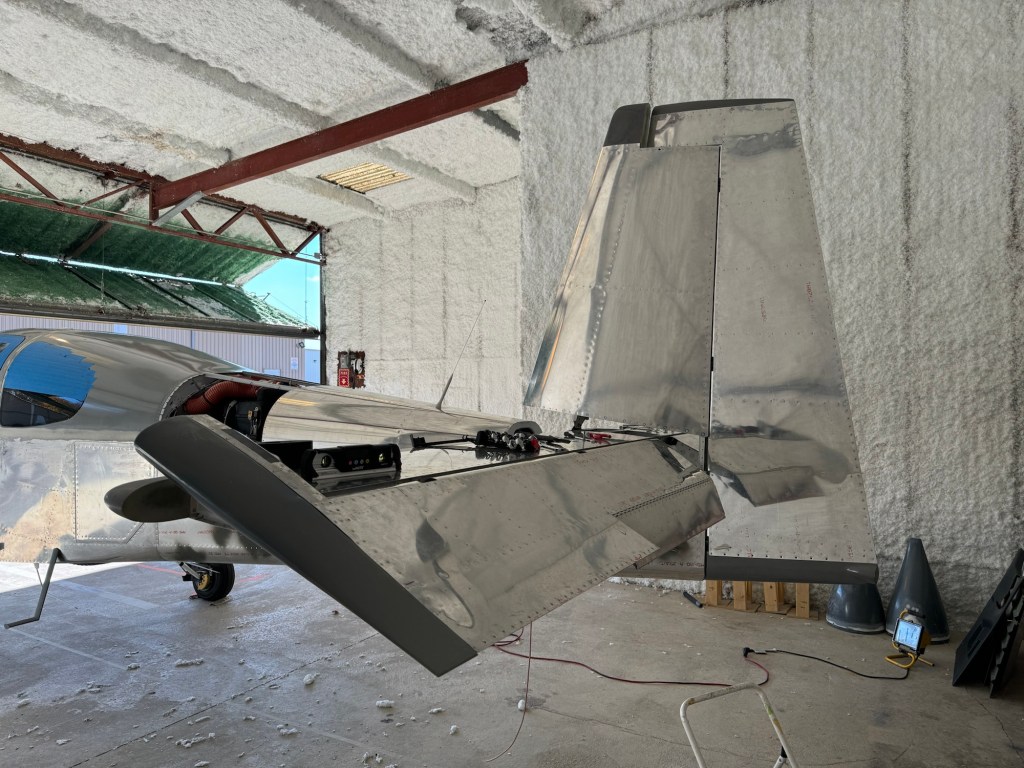
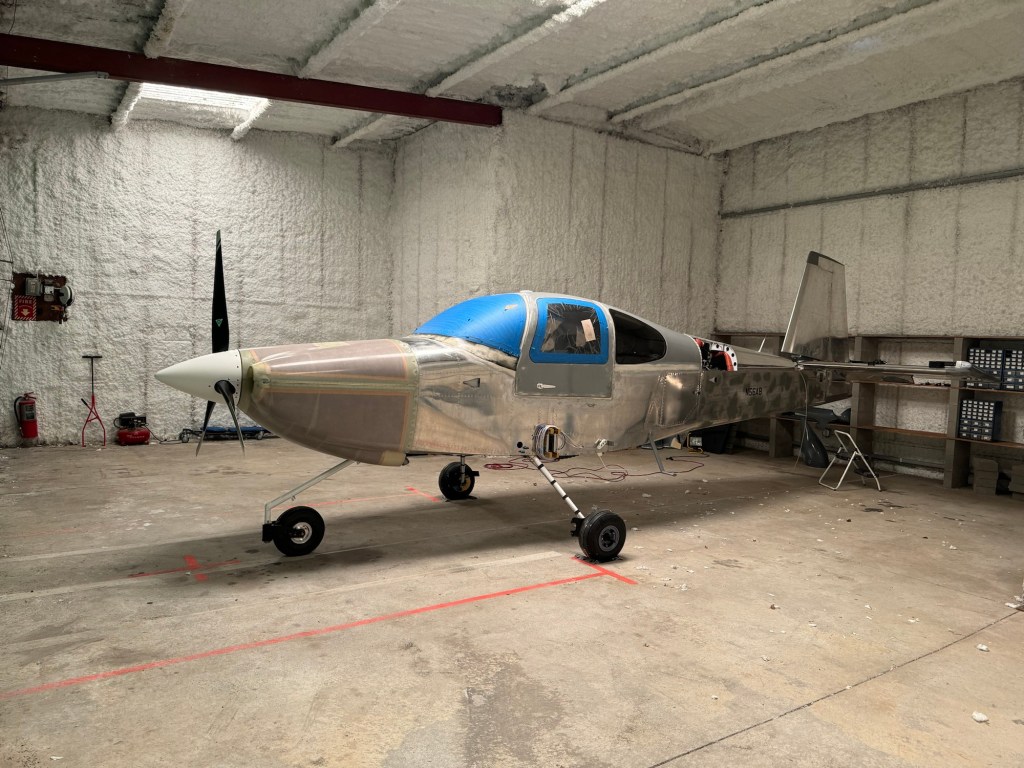
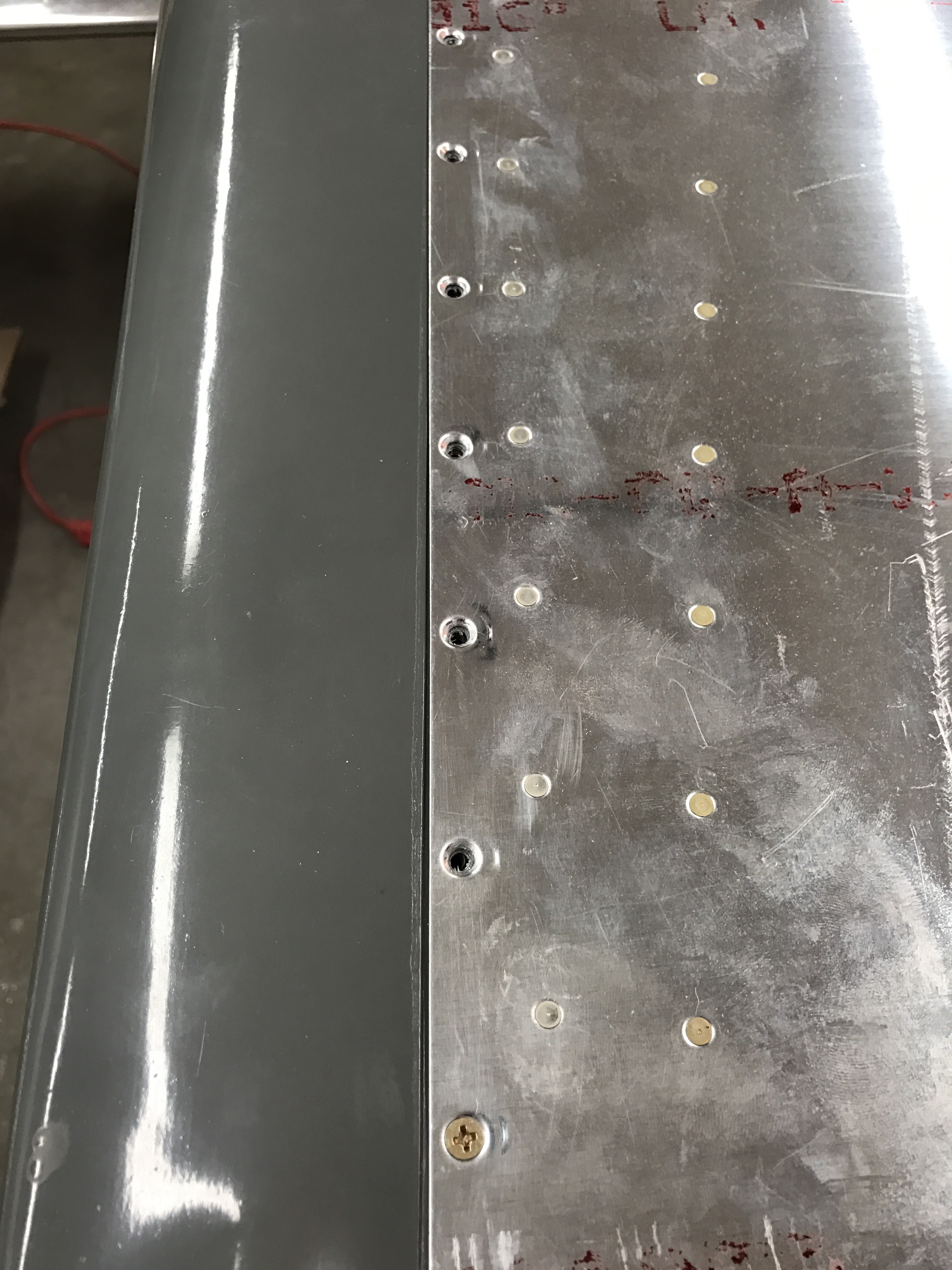
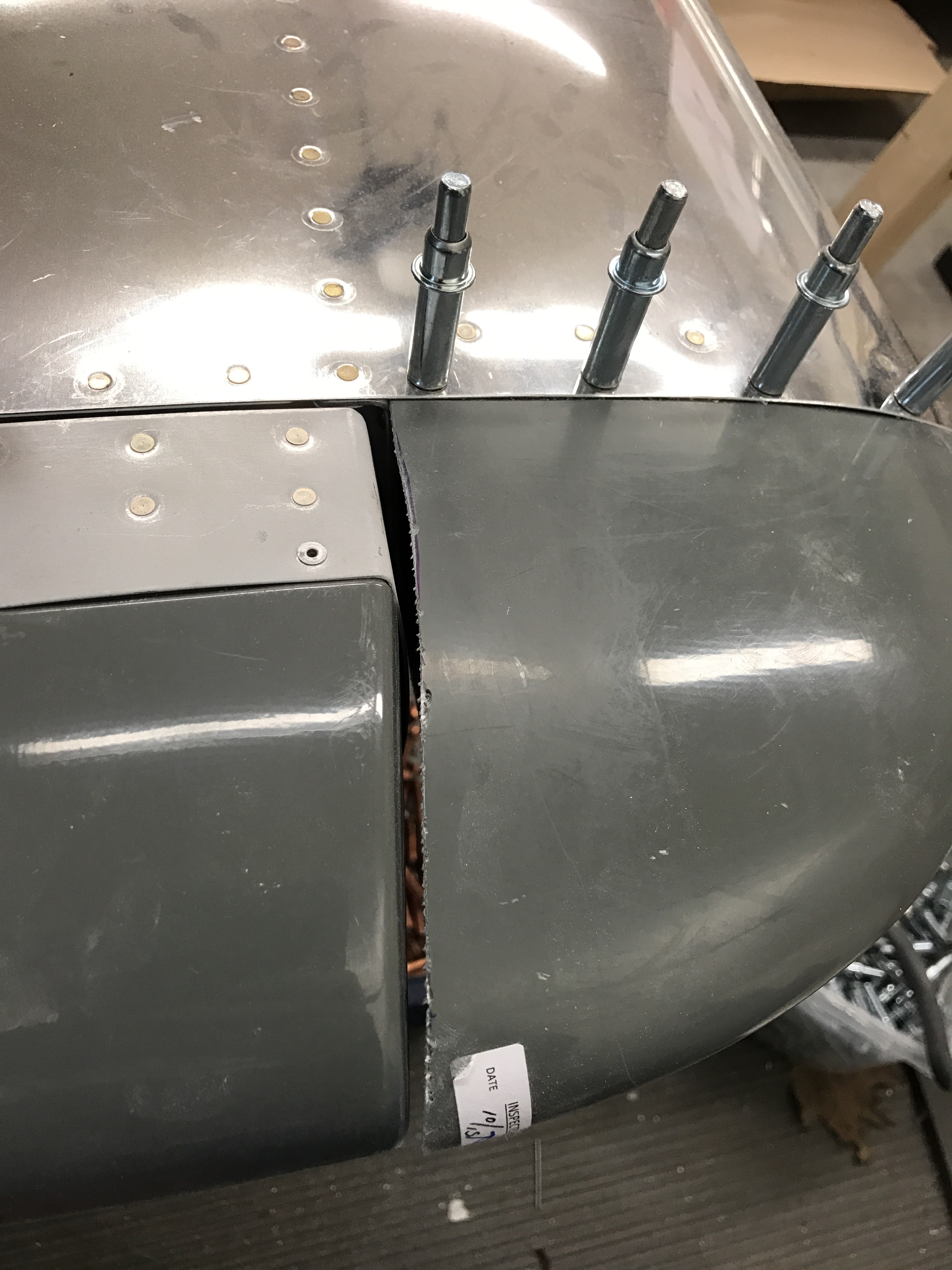
I then worked to get the emp fairing cover trimmed and in place and matched drilled to the holes in the metal using a strap duplicator. Then added nutplates so it can be held down with screws.

I needed to double check the nose wheel nut break out force and get a cotter pin installed. I really should drill a hole in the floor to thread a ring into for the strap, but I was able to use some blocks I had lying around and my creeper to pull the tail down, lifting the nose wheel off the ground.

I also spent an inordinate amount of time trying to bleed my brakes. In the end, I had to use a garden sprayer type setup to be able to build up enough pressure to push the hydraulic fluid from the brake caliper all the way up to the cylinder on the firewall. All other methods I tried (oil can, and also a vacuum bleeder from the top) failed to be able do the job.

I knew when I got my hangar that the single halogen light was not going to be enough. Still, in order to make progress, I made due with the use of some portable lights in the area(s) I was working. One day the bulb burnt out and rather than replace it, I took it as a sign that I needed to stop and just upgrade the lighting in the hangar. Below is the result of adding some new LED lights.

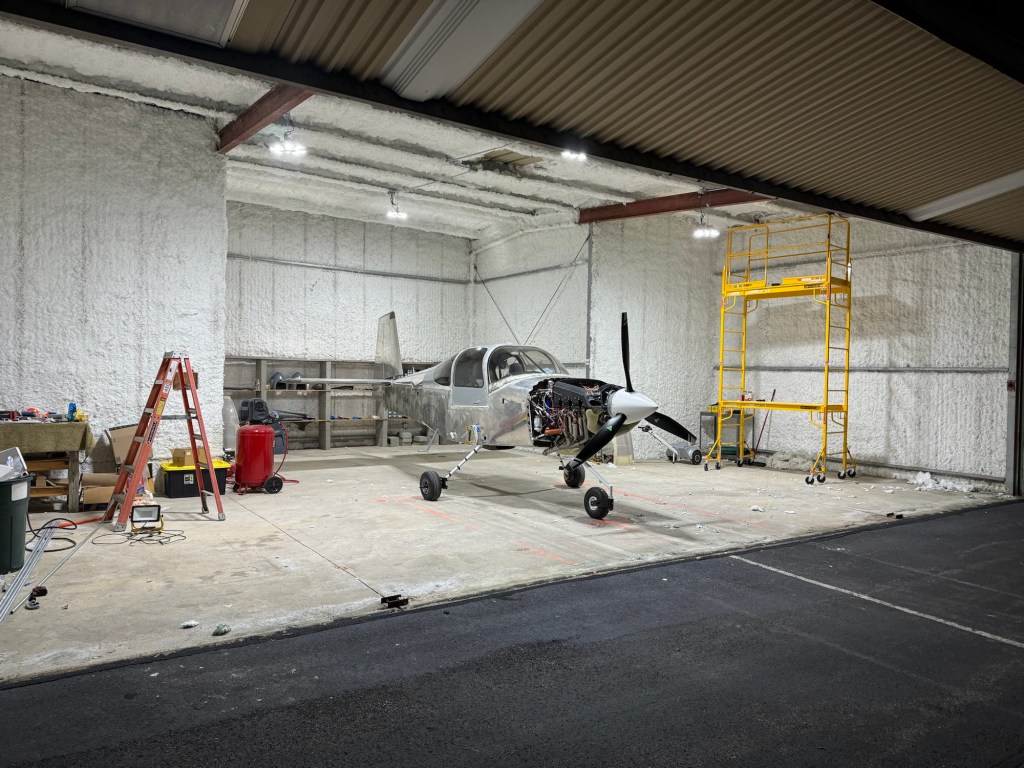
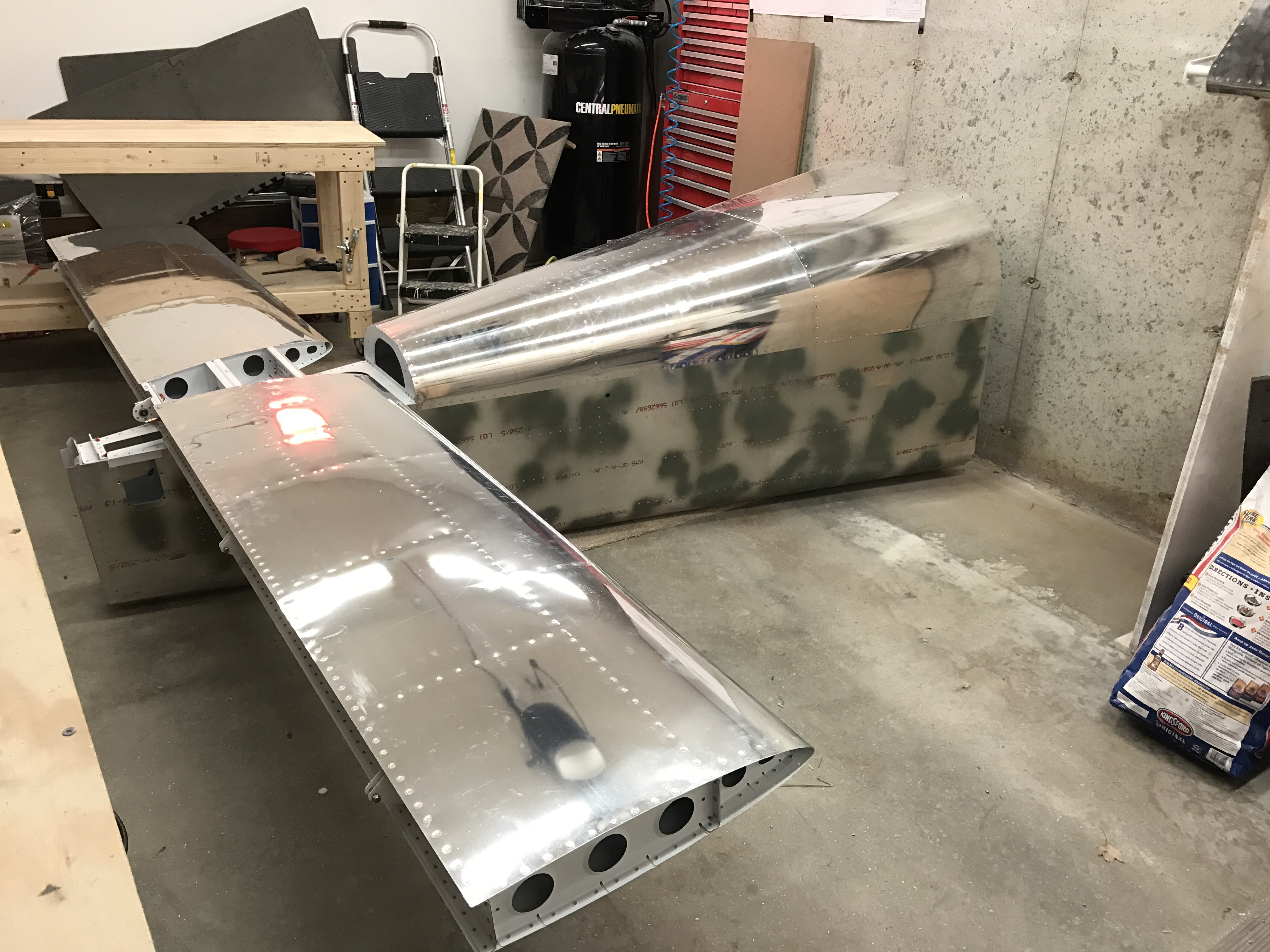
Once my ZipTips were done at home and before the first snow, I was able to get some help to transport the wings to the airport and subsequently get them onto the airplane!!!

Since getting the wings on, I’ve been able to get the flaps and ailerons on and rigged.

I’m now working on finishing up section 44 which is mostly about wing root fairings, fuel tank vent lines, and connecting the fuel lines between the tanks and the fuselage.

Flap connected
Aileron push bar connected.

In testament to the user friendliness of avionics these days, Declan seemed to pick up on how to use the EFIS right away. 🙂

I used some of the soft aluminum tubing to make the vent lines for the tanks as shown below.

So what remains is to finish the wing root fairings and get my fuel lines connected. Then I will need to take the wings off one last time to debur some things and finish some nut plates on the tank. Then I can bolt the wings permanently and finish up the electrical wiring.

After that it is mostly getting ready for first engine start and preparing for inspection.
More Goodies

While on vacation in Park City, UT , a number of items arrived.

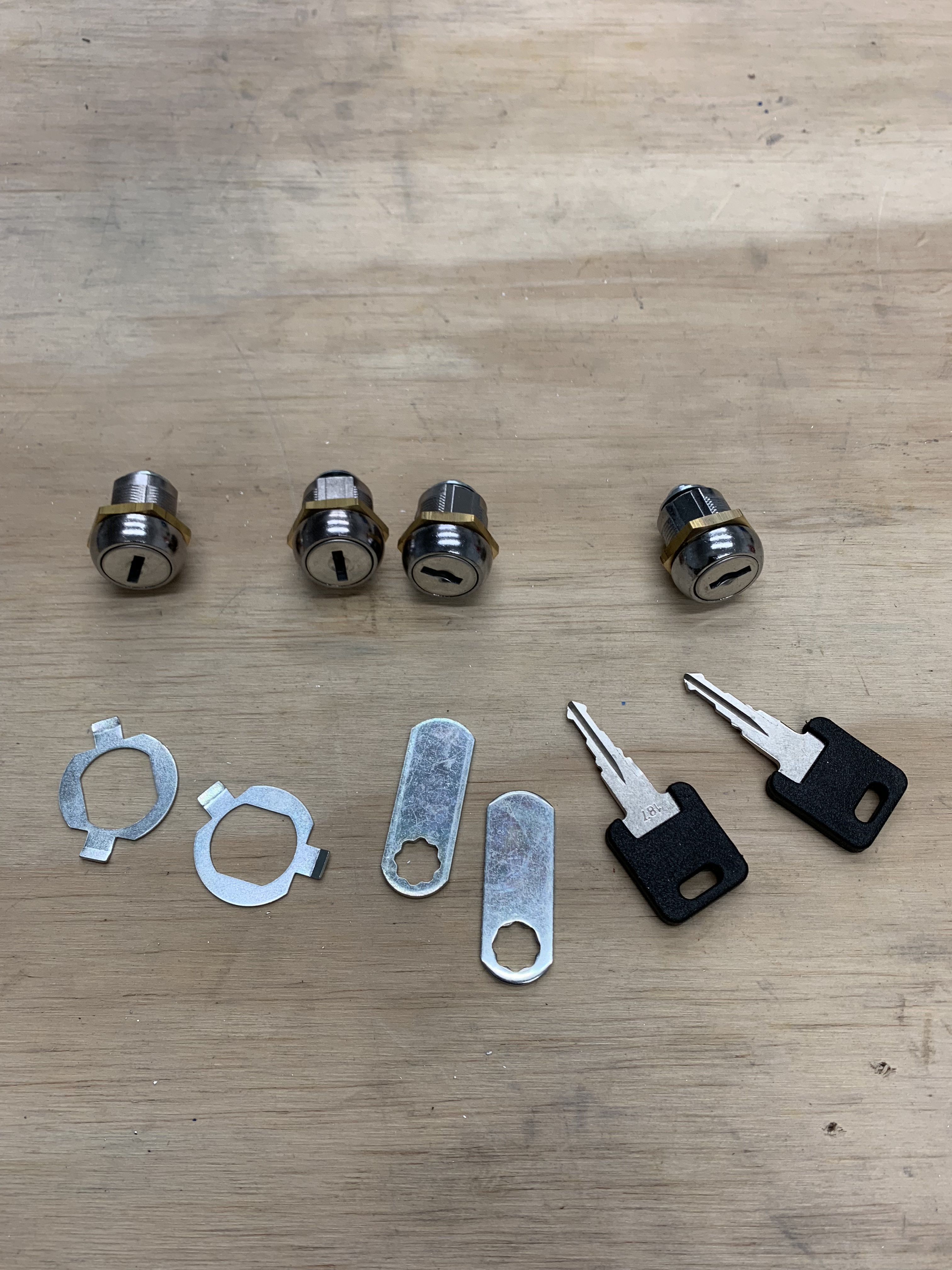
Baggage door and main door locks. These will be used to lock the baggage door as well as both doors to the cabin in unison with the Planearound 180 door latch system.

VOR/LOC/GS antenna. I plan to mount this on top of the Vertical Stabilizer. Something I didn’t do while working on that originally. I figure I’ll have some time here and there to get this going while waiting for other things.

Locking fuel caps. I’ve never been a fan of the original gas cap. It seems to be very difficult to even get your fingers under the mechanism to open the cap up. These collars proseal into the existing tank opening. The only downside is the fuel opening is a little smaller as a result.

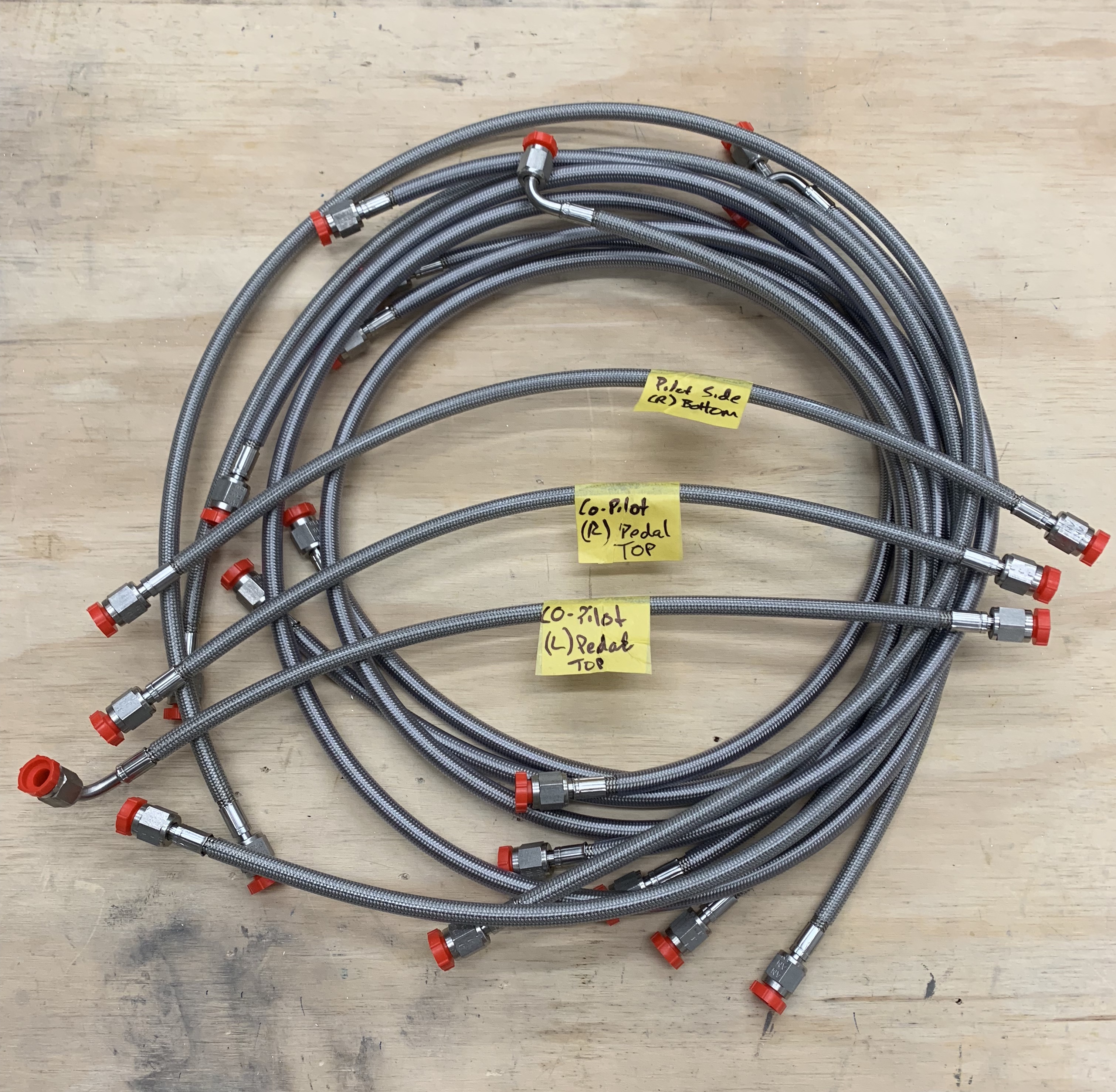
Stainless braided teflon brake line hoses.

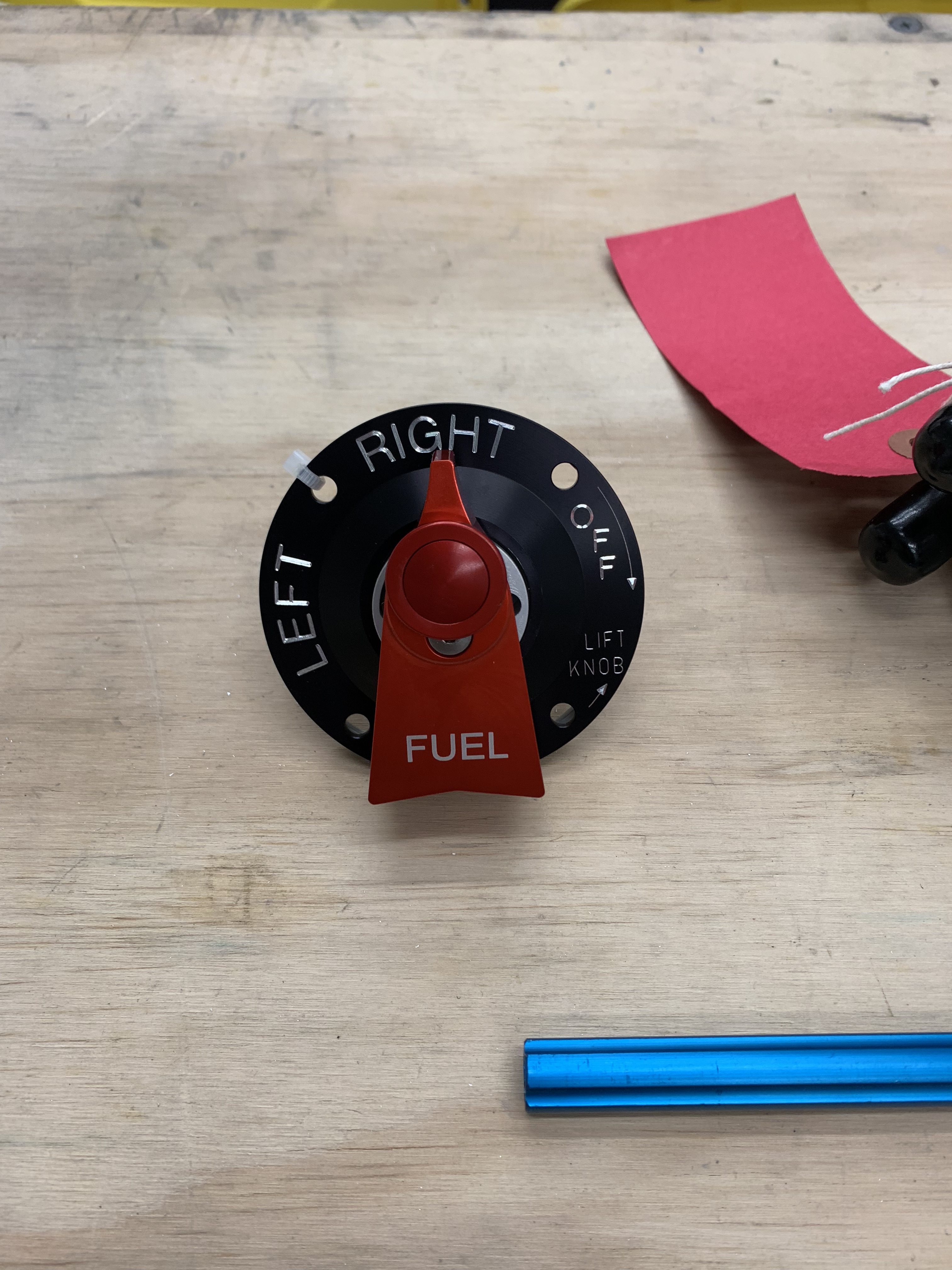
And finally, the Andair duplex fuel selector, 6″ extension, and valve

.

Tech Councilor Visit #2

Last weekend, my tech councilor came over for a visit to look over my work since his first visit. He reviewed the elevators and the tailcone construction. He also quickly looked over the rework that I did to the VS and Rudder after his suggestions. I was very happy that he only had good things to say! Always reassuring to hear that, and I’m very happy to have a more experienced eye look over everything.

Fairings Complete

Some quick pics of how the rest of the fairings came out..


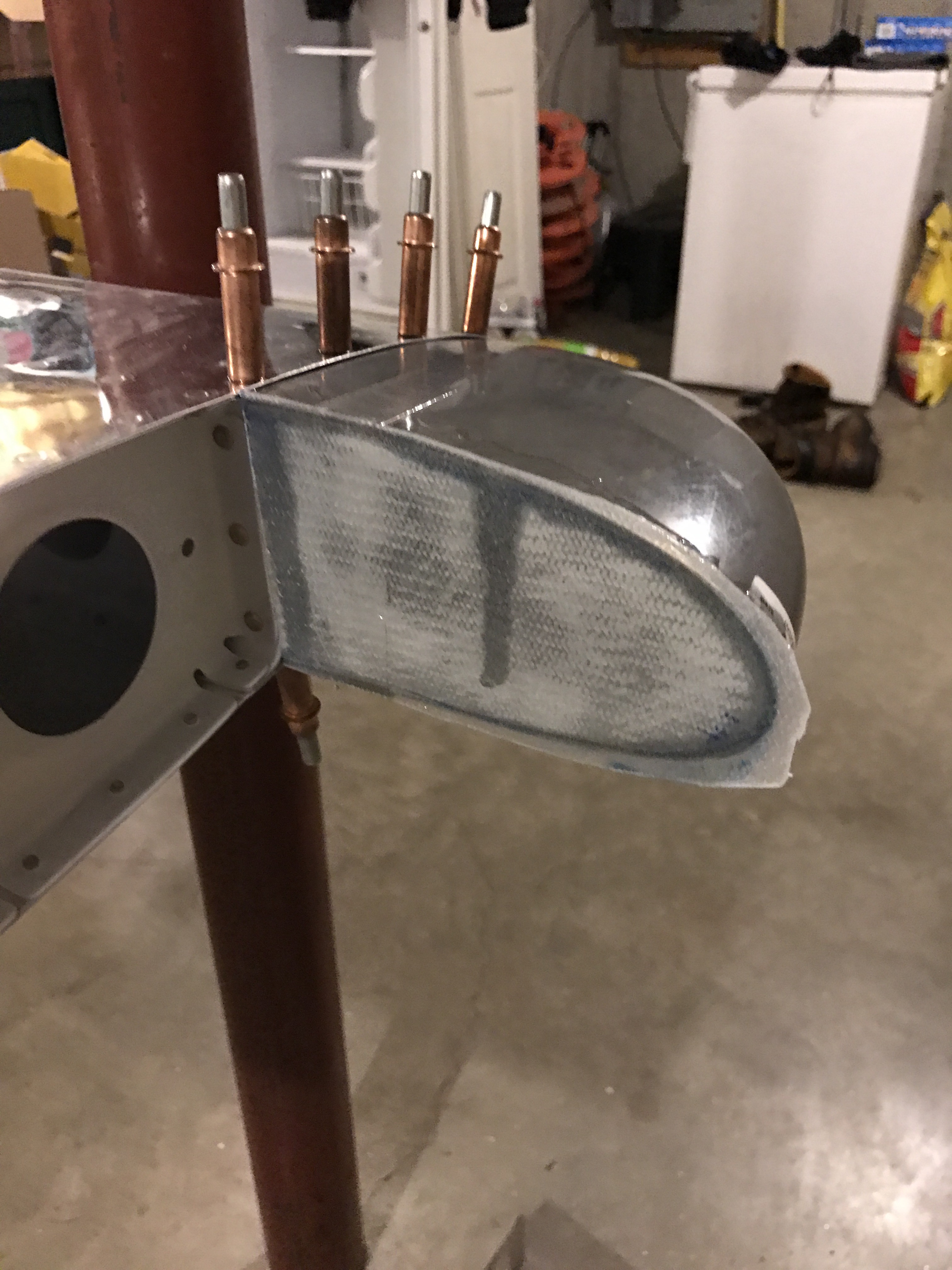
HS Closeout piece curing

Layer of Flox on the inside corner

Curing

VS Fairing prep.. Taping the closeout piece in place

VS piece done!

Riveting onto VS.

I then built a wing stand for my Quick Build Wings arriving soon….

Done minus the carpet.

Learning about Fiberglass

I’ve been doing a lot of reading and watching videos on fiberglass related things. Everything from what the best tools are to use to proper fiberglass layup techniques.

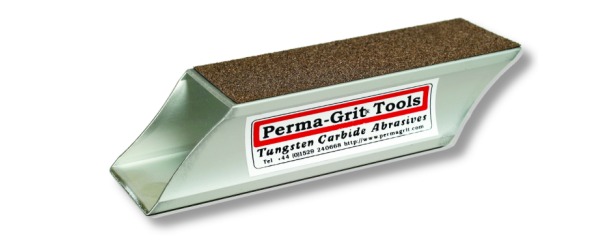
Trimming and cutting the Elevator fairings ended up spewing lots of dust all over the place… I then bought a diamond cutting wheel for my Dremel tool and also bought some PermaGrit tools, which are made of tungsten carbide materials and do a better job of making sawdust like shavings instead of dust. Seeing there is so much fiberglass work coming, I figured I’d invest in some proper tools for this work that’ll be upcoming.

I bought some sanding blocks, both flat and concave.

wb140

As well as a hand tool set and blades for my jig saw.

I then set out to finish the rudder end caps. Fairly straight forward. The only modification I did was to add nut plates to the bottom fairing to accept #6 screws to make the fairing removable. Many RV-10 builders do this mod, and it didn’t really take all that much extra effort.

Top fairing trimmed, drilled #40, and cleco’ed in place

Sanding the bottom fairing to fit

Bottom fairing cleco’ed in place

Rudder Fairings Complete.

Then it was time to figure out the Horizontal Fairings. These sit in front of the elevator counterbalance arms and elevator tips. The tips seem to taper off a bit and are not straight. So I decided pretty early to trim the HS fairings to match.

I traced the leading edge of the counterbalance arm and fairing on a piece of paper to get a template to use to mark my cuts to the trailing edge of the HS fairing. This worked pretty well. I then was able to sand to make the gap as even and consistent as I could.

Left side test fit

Left side Gap.

Right Side Gap

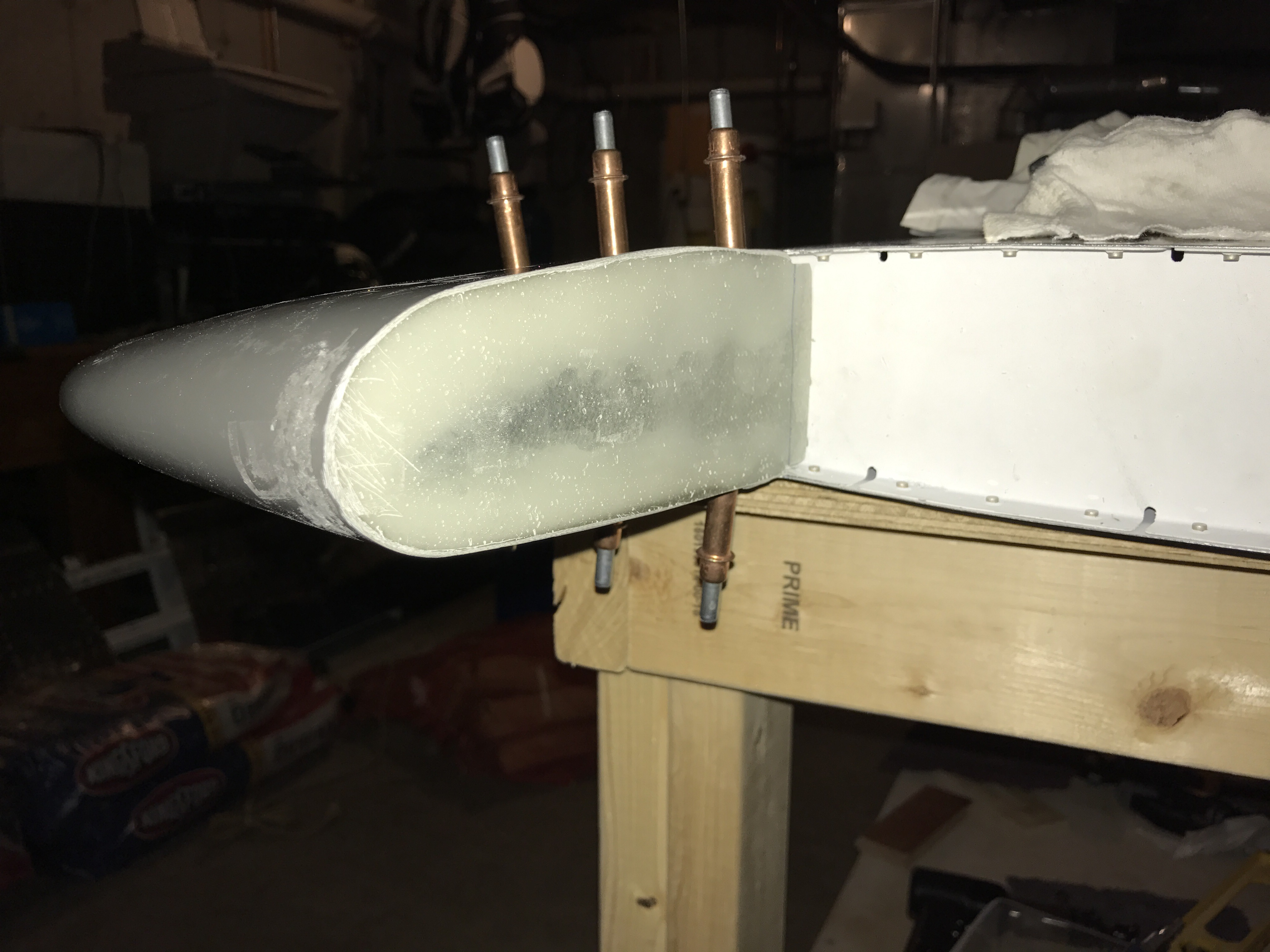
Next, the plans describe how to add a fiberglass layup to close out the aft ends of the fairings. I read an alternate method on VAF by one of the VAN’s employees that is detailed in the RV-14 plans which doesn’t involve trying to shape and tack a piece of foam into each opening.

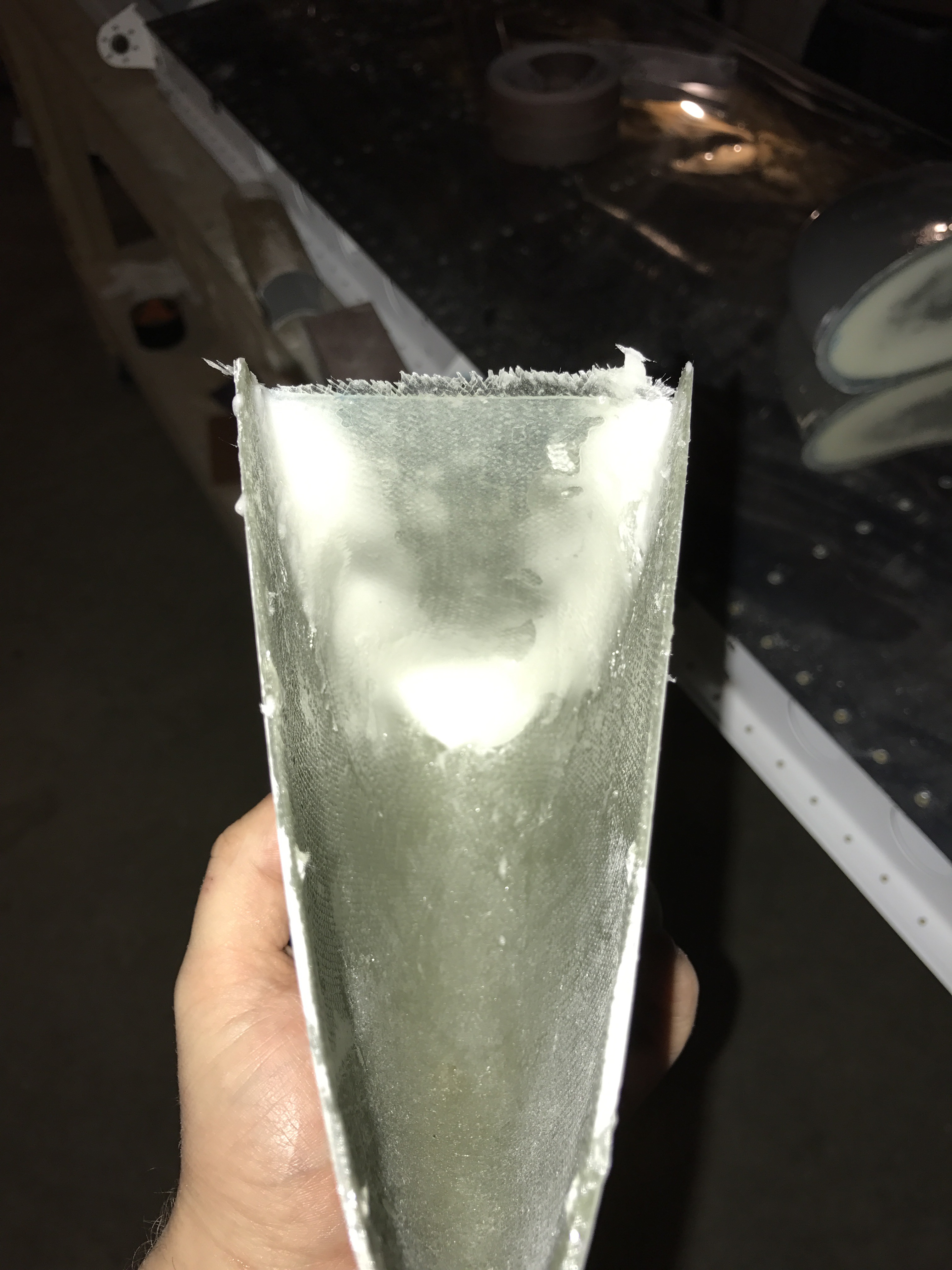
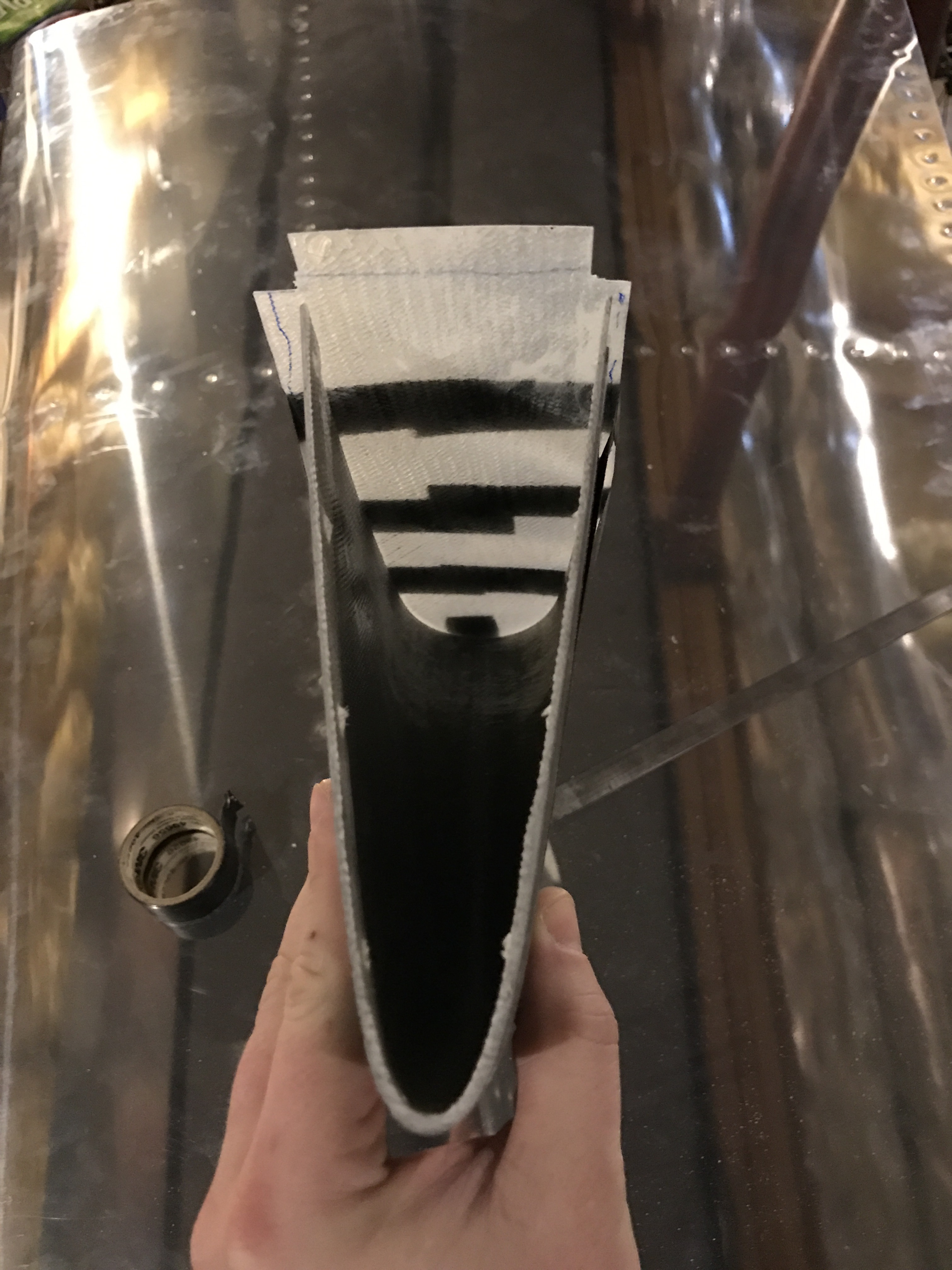
– Use a piece of waxed aluminum to make a thin laminate with two layers of cloth and resin. If the close out piece is not flat, the metal can be bent/shaped to result in a laminate piece that will match the opening you are intending to seal.

– Once it is cured cut out the filler piece so that it is approx. 1/6″ bigger around perimeter of the fairing opening.

– Sand the interior (non smooth) surface of the lay-up, and about 1″ back from the edge of the fairing for additional bonding/glass lay-up later.

-With the fairing clecoed in place and tape/etc. being used to hold it in the desired finished shape, wet the edge of the fairing with resin… and hold the laminate in place with tape to the fairing until the resin fully cures.

-Uncleco and remove the fairing. Apply a fillet of flox mixture around the interior corner/intersection point between the laminate and the fairing. While the flox is still wet, add one more layer of glass to the inside of the laminate, large enough that it laps onto the fairing by about 1″. Cleco the fairing back onto the airframe while it fully cures.

– Sand the excess laminate flush to the fairing on the outside and radius the corner as desired (possible because of the flox fillet on the inside).

As mentioned above, seeing my ends to close out are not flat from me shaping them to the Elevator fairings, I cut some scrap metal (one piece for each fairing) and bent/shaped it to match each one. This will provide the base for my fiberglass layup that should hopefully match the cut line I made. Time will tell.

My first 2 ply layup

Prepping to start the right side

The Resin Epoxy and hardener I’m using

Both layups done and ready to cure.

Section 12 – Fiberglass Fairings

Today I started on the fiberglass fairings for the ends of all surfaces. For the most part, these all come pre-formed. Some trimming and drilling are all that is needed to fit them to the airplane. There are a couple of fairings that will need to have an end closed up with a fiberglass layup. So I’ve ordered some supplies to do that. I ordered some West Systems 105 resin epoxy with hardener, along with some flox, microballons, and some fiberglass cloth to get me started. I also ordered the fiberglass practice kit from Aircraft Spruce with a book to play around a bit honing my skills. I’ve never really worked on fiberglass before, so this will be all new to me.

Fairings!

Fitting the fairing to the left Elevator

Riveted on!

Front angle

 More of this to come!

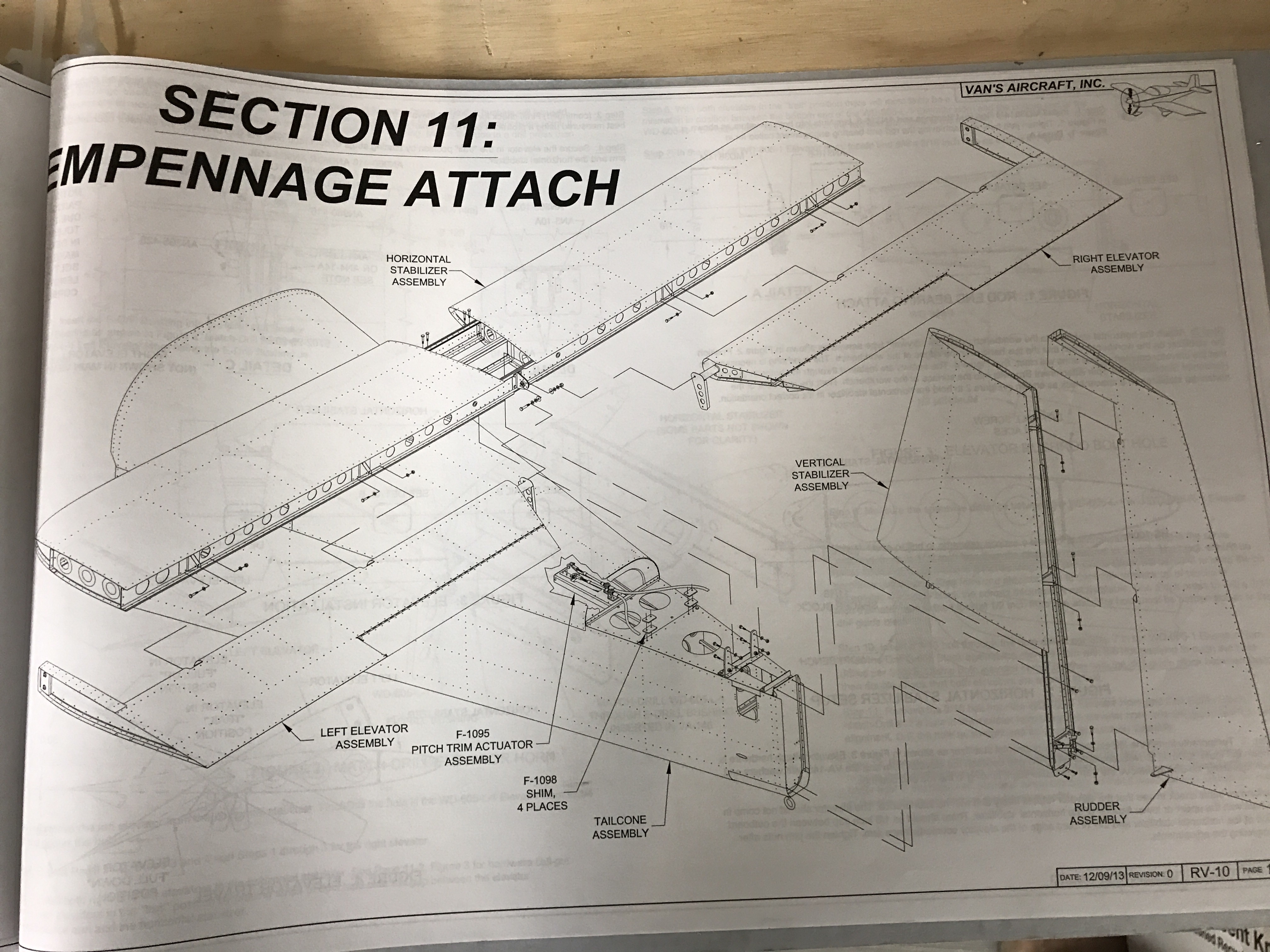
Empennage Attach Complete

For now.. The only thing remaining is to adjust the elevator trim servo.

The first steps are to attach the elevators to the Horizontal Stabilizer and making sure you have sufficient travel up and down with no binding.

Measuring the UP direction.

After drilling the Elevator horns and clamping them together. 

I then ran into a minor issue in that the gap between the left elevator and the horizontal stab wasn’t very even. The plans say there should be approx a 1/8″ gap along the entire length. I had a 1/8″ gap on the aft end, but it increased to 3/8″ forward. My right side was pretty close to perfect.

Uneven gap on the left side

Right side nearly perfect

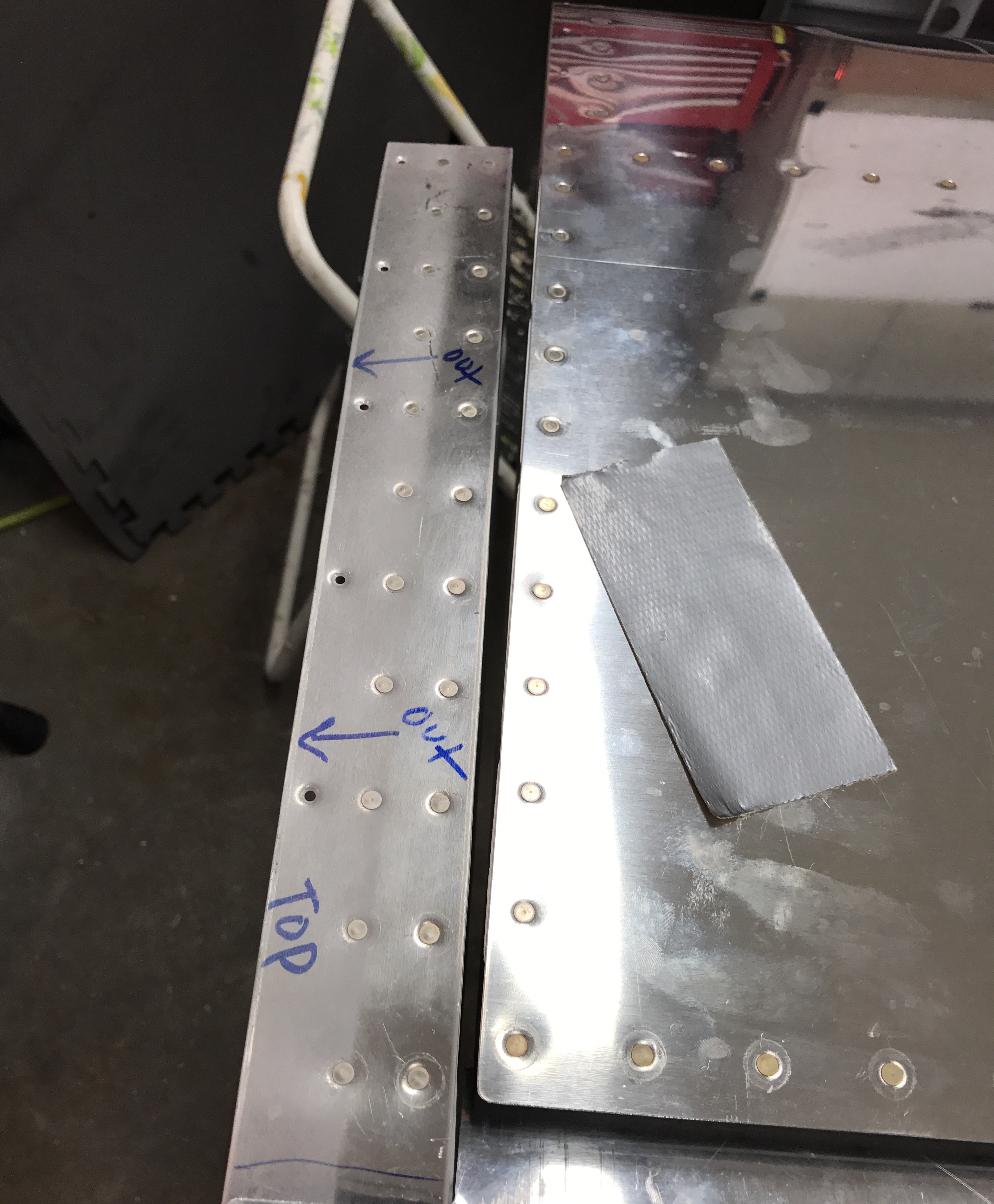
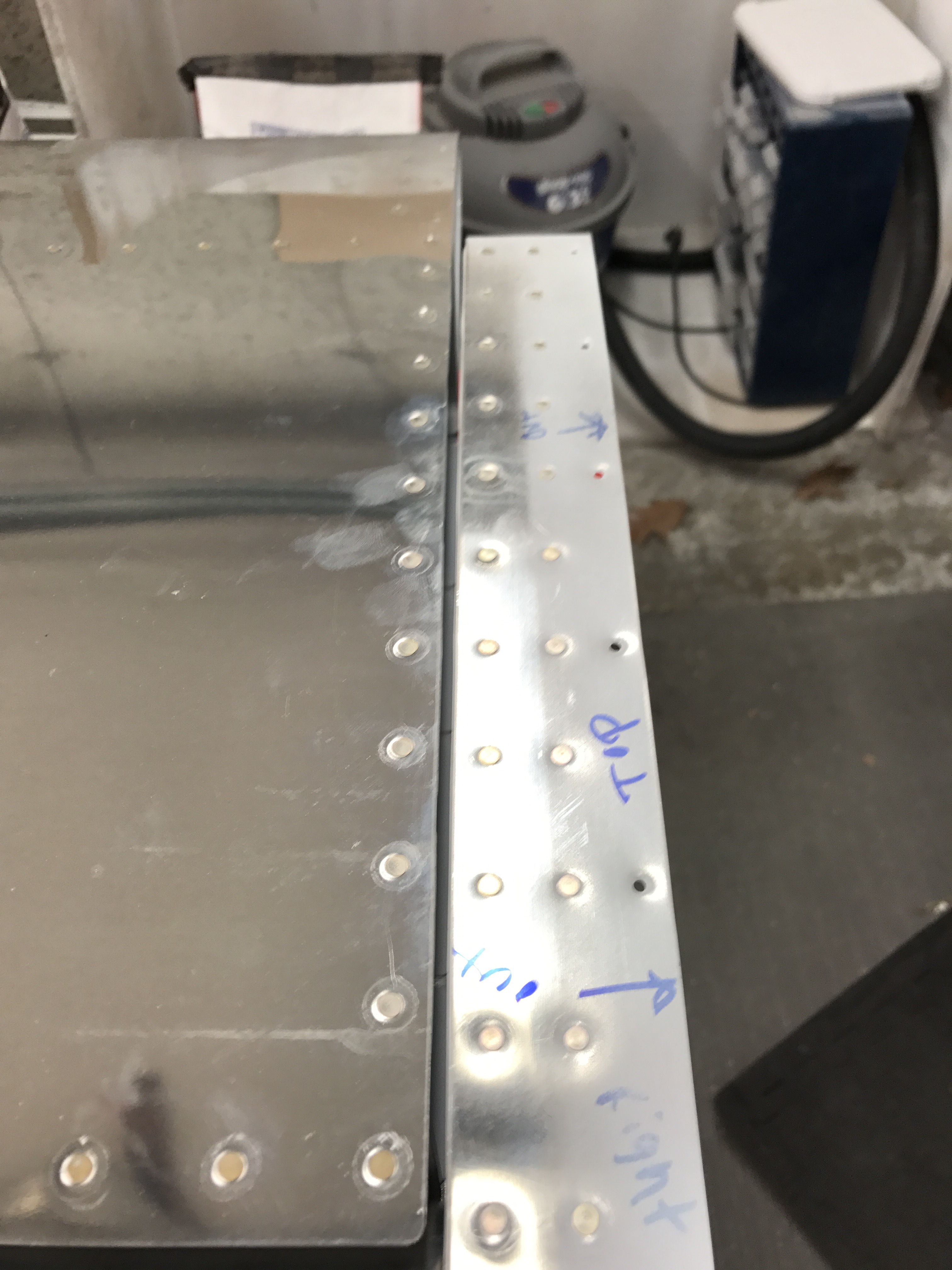
This gap isn’t a very critical thing, it’s more critical that the elevators are attached evenly to the Horizontal and that there is no binding through the entire range of motion with both elevators attached together. Still, it was pretty visible and annoying to me. Others have seen similar things, although maybe not quite as bad as me. Van’s suggested either 1) playing more with the rod end bearing adjustments or 2) drilling out 12 rivets (6 top and 6 bottom) and re positioning the elevator counterbalance arm as shown below. unnamed

I played some more with the rod end adjustments, but wasn’t able to get the gap much better without causing it to bind up. So I decided to drill out these 12 rivets, push the counterbalance arm inward where I wanted it, and re-riveted those 12 rivets to hold that position. The results were much better! There’s now only a 3/32″ difference between the aft and forward ends as compared to 8/32″ difference before! Also it was mentioned to me that once you put the fiberglass fairings on, it may tighten it up a bit more by removing any twist remaining.

Much better!

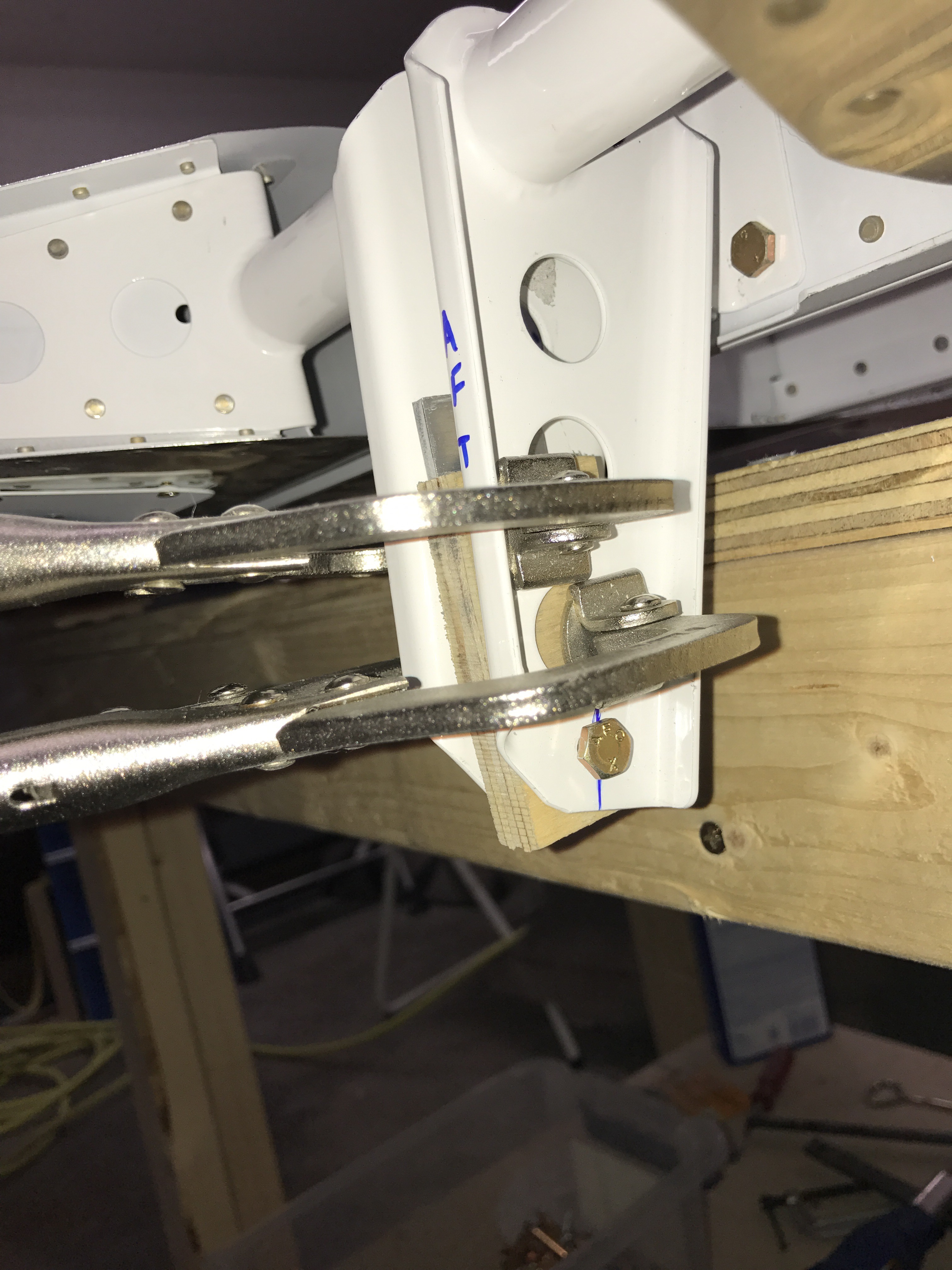
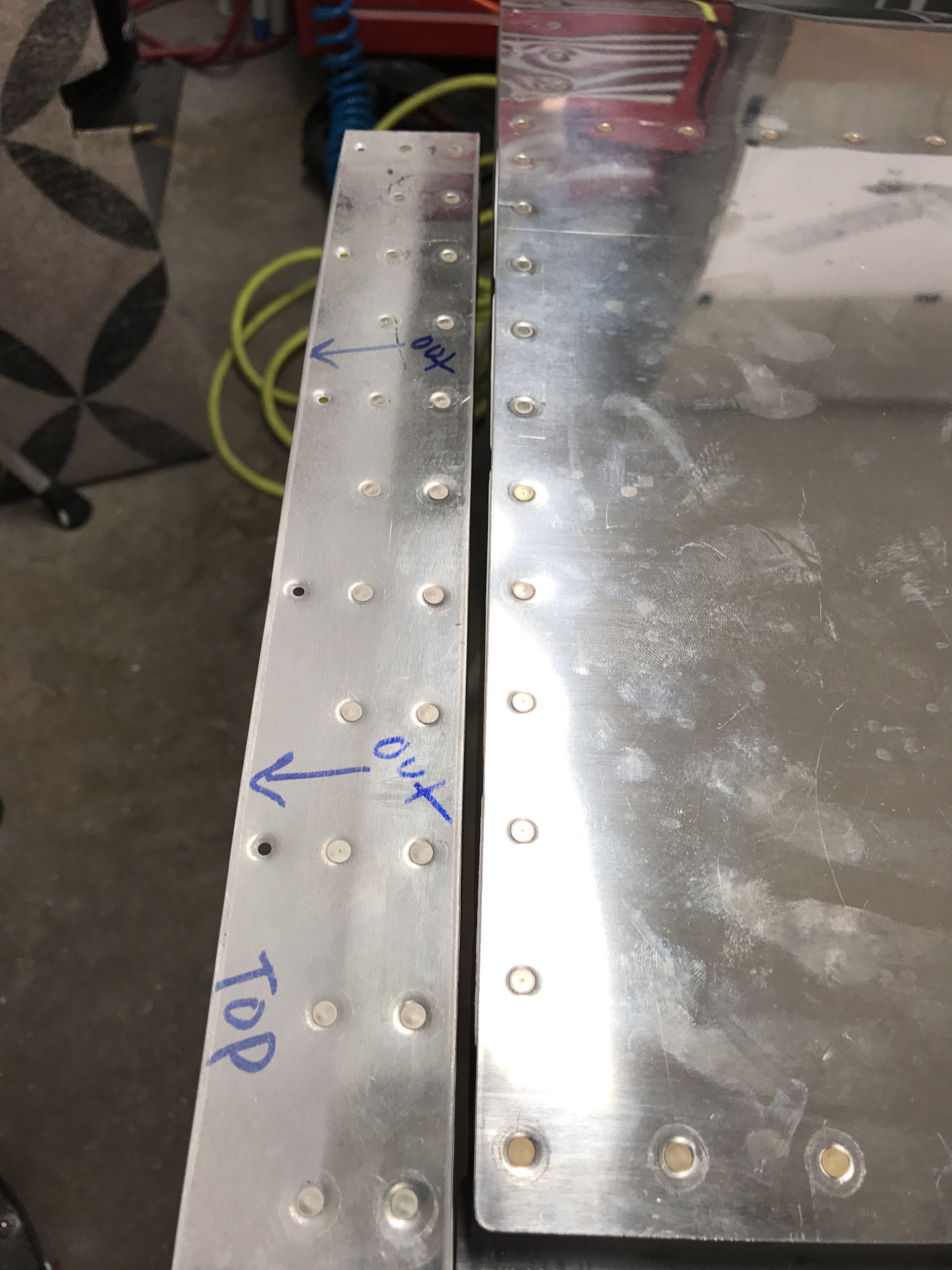
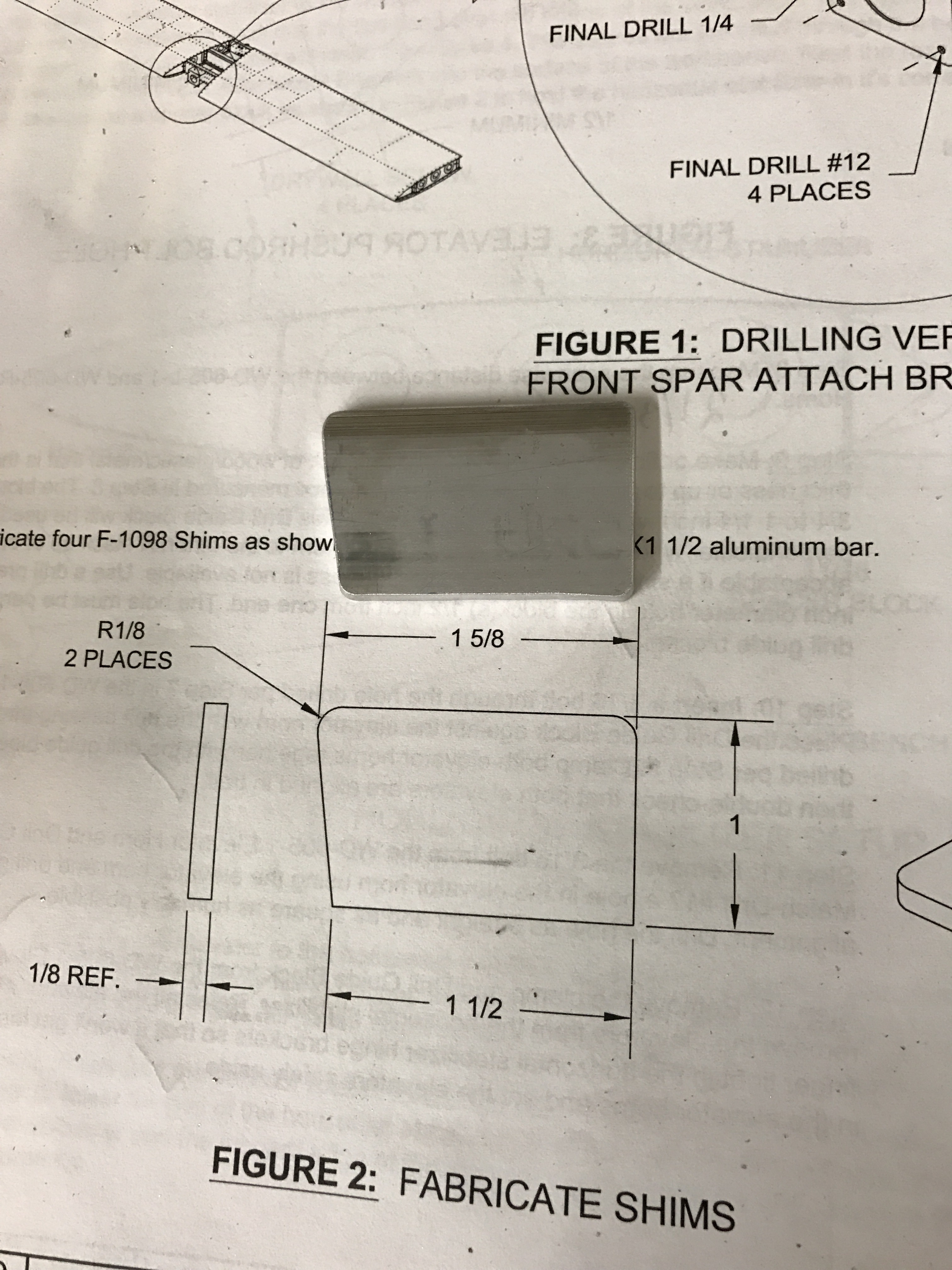
So with that behind me, it was time to make some shims and mount the horizontal stab to the tailcone.

Once mounted and partially secured, you cut a piece of 2×4 to wedge between the forward attach points and clamp it down to the tailcone. You then measure from a common center rivet on the tailcone skin to each corner to make sure the HS is square to the body. The clamps allow you to move the HS left or right and clamp it down in that position until you get it square. Took me a few rounds back and forth trying to get it as perfect as I could.

Horizontal mounted on tailcone with 2×4 and clamp to adjust squareness.

All Square, forward holes drilled and bolted.

The next steps were to mount the Vertical stabilizer, and drill some holes through the back of the tailcone, and then mount the rudder, much like the elevators.

The end result is the realization that I really am building an airplane in my garage!

A few steps are left after this achievement. Namely I connected the elevator push rod and made some basic adjustments.

Elevator pushrod. Primer a little beat up prior to a touchup coat later on. 
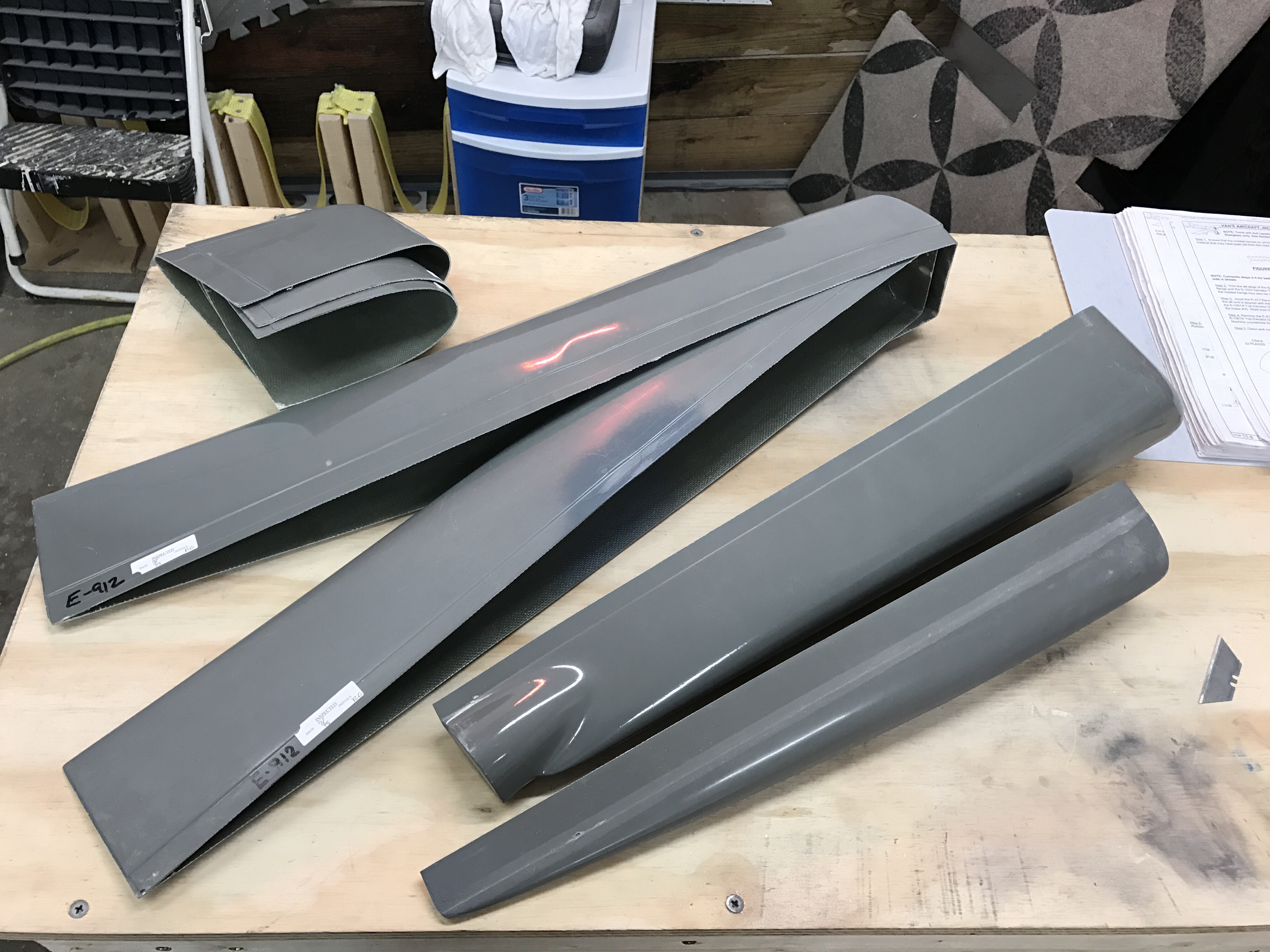
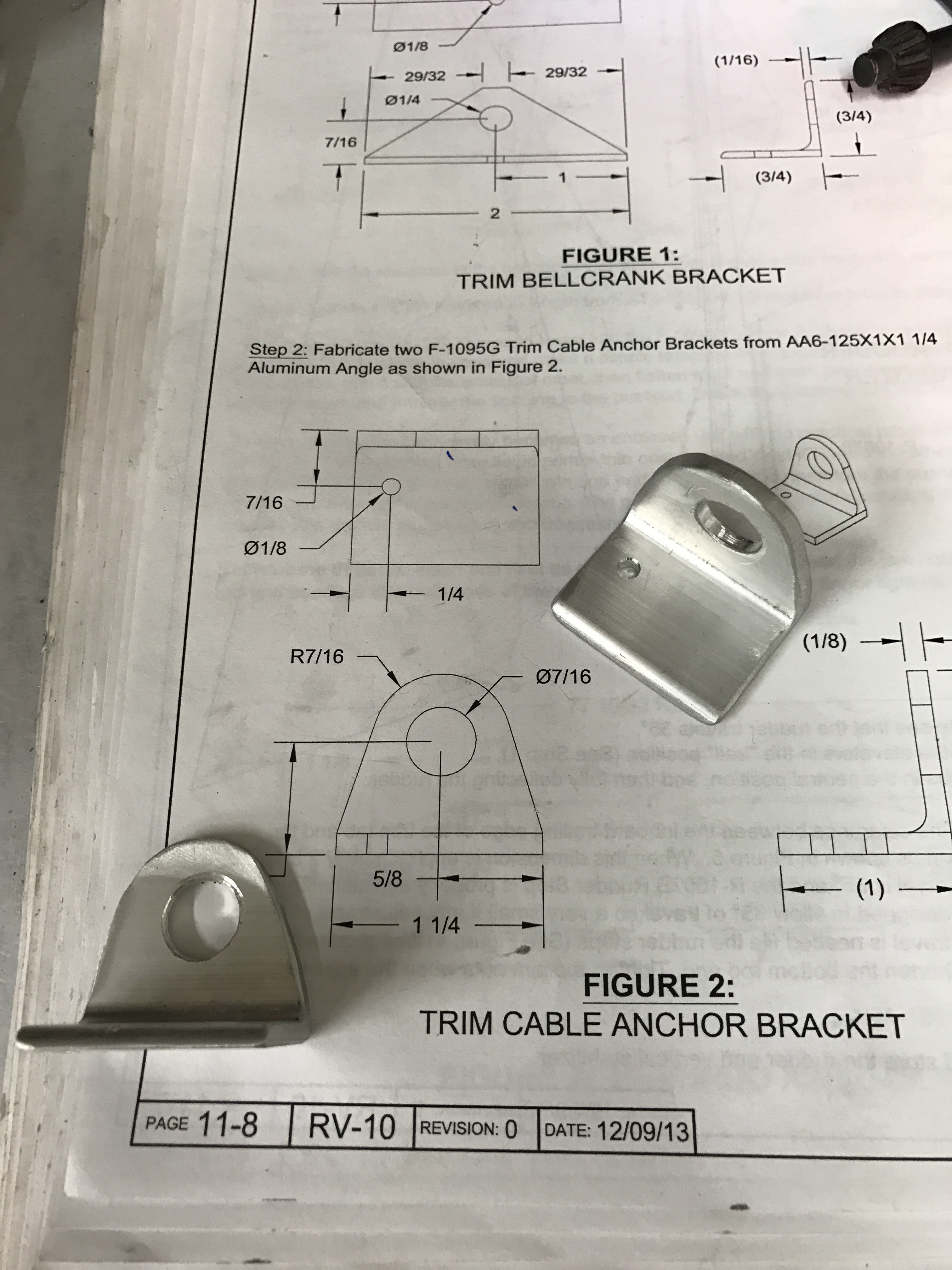
The last couple of items to finish up were to fabricate some brackets for the elevator trim bellcrank assembly.

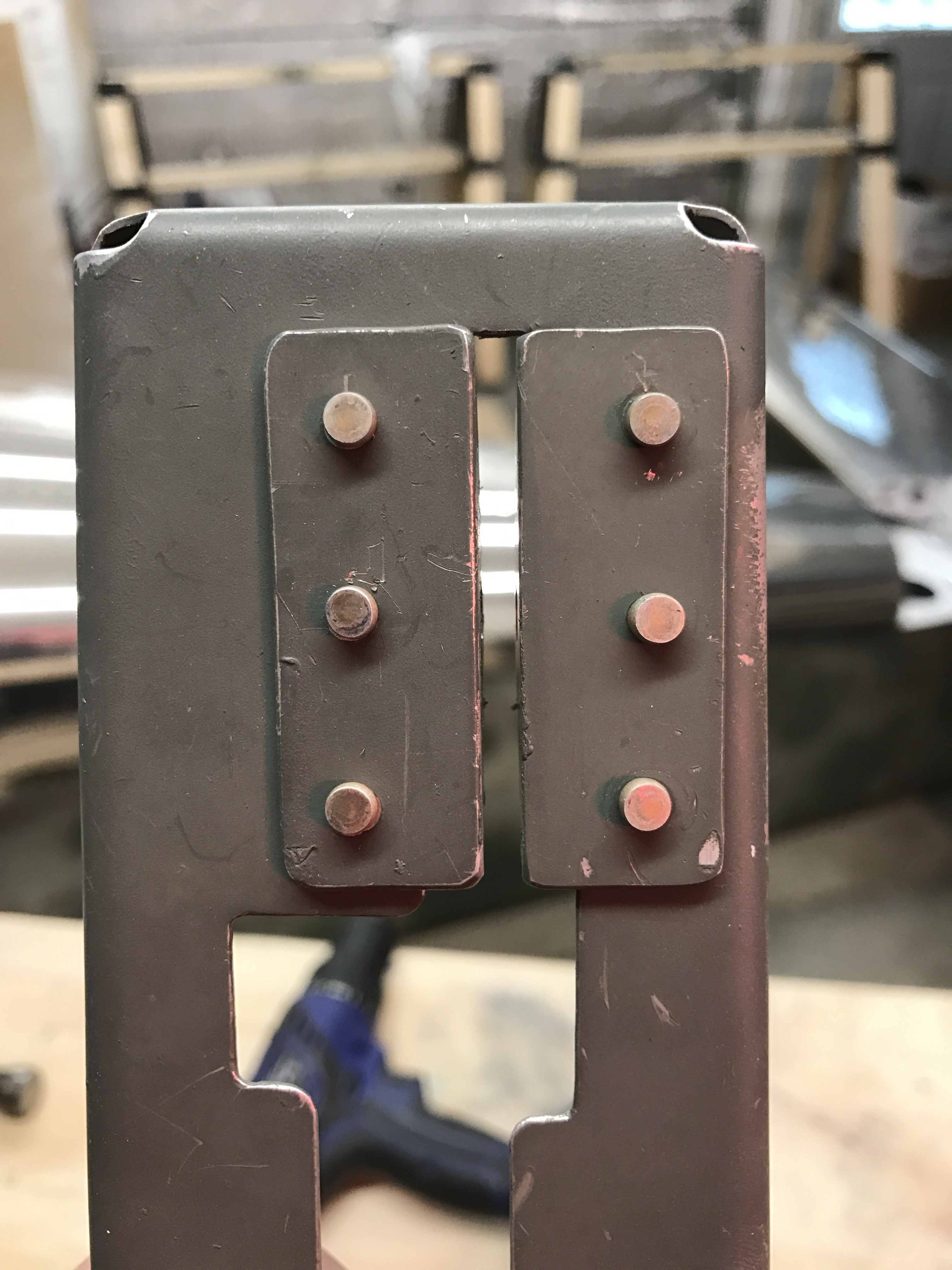
I did run into one issue, which I still have yet to resolve. There was no extra space between the bellcrank to put the washers called out. The plans are clear that thinner washers can be used, but I’m skeptical because I can’t even get a single washer in on one side without significant effort. There are washers available that are half as thick (0.016″ thick) and I have ordered them. There is a little side-to-side play with no washers installed, so maybe these will work. I will wait to get them to see if they will work.

No space to insert washers between the brackets and the middle bellcrank.

I double checked things, and I don’t think I messed anything up. The hold spacing is 7/16″ and the 2 brackets are parallel to each other.

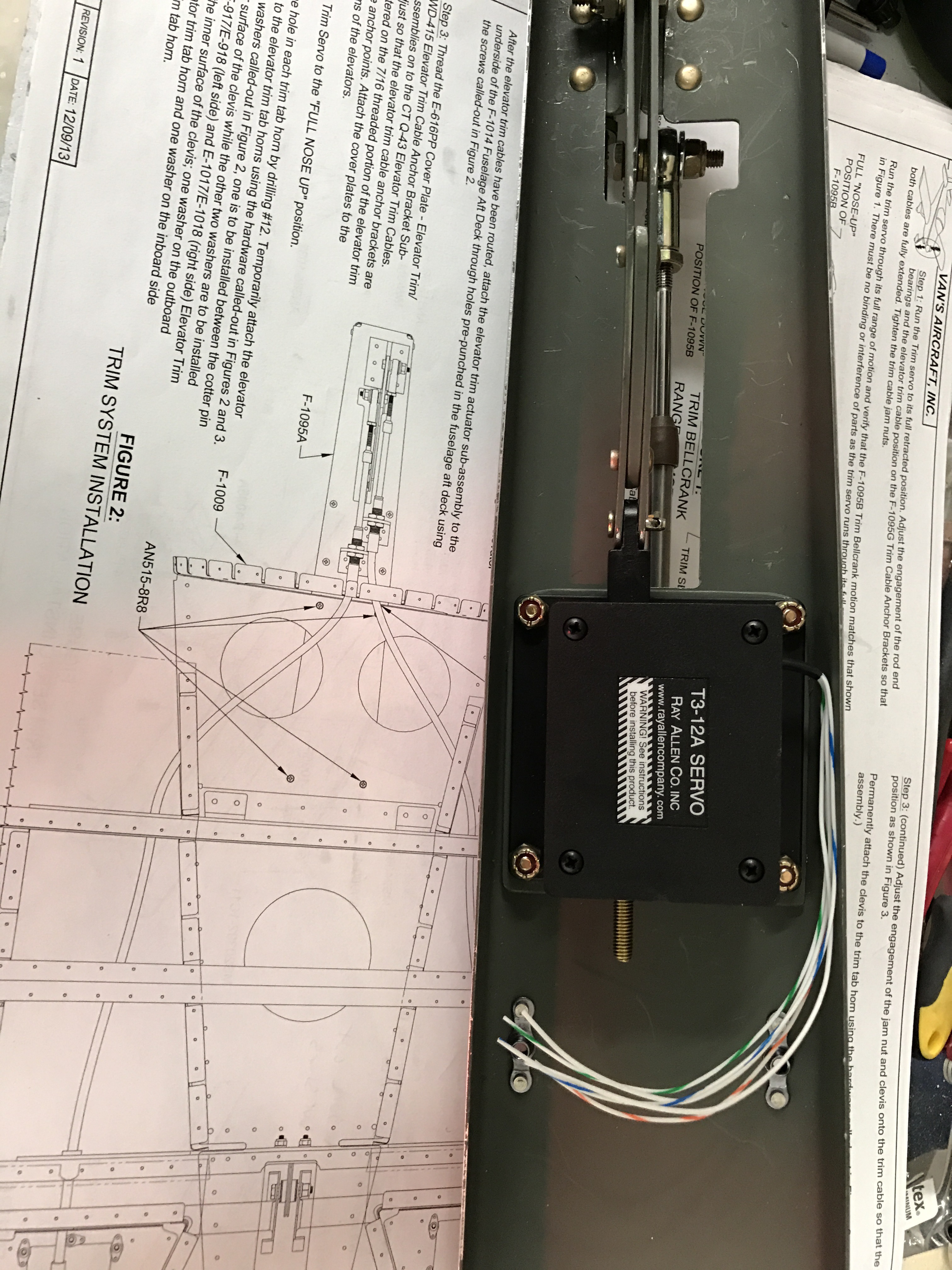
So for now I attached the servo and trim cable, but have left the adjustments for later.


Tailcone Progress

A bunch of progress since the last post.

An idea that I stole from Ed Kranz was to take some used carpet and cut out a spot for a back-riveting plate. Like him, I had to  shim underneath of the plate to make sure it sat proud of the carpet surface. The carpet allowed clecos to be inserted from the inside of the structure and poke into the carpet without disrupting a solid surface to rivet against. After a few sessions of adjustments, I finally got it just right to be a solid setup. This has made very hard to reach areas to rivet with just one person much more doable.

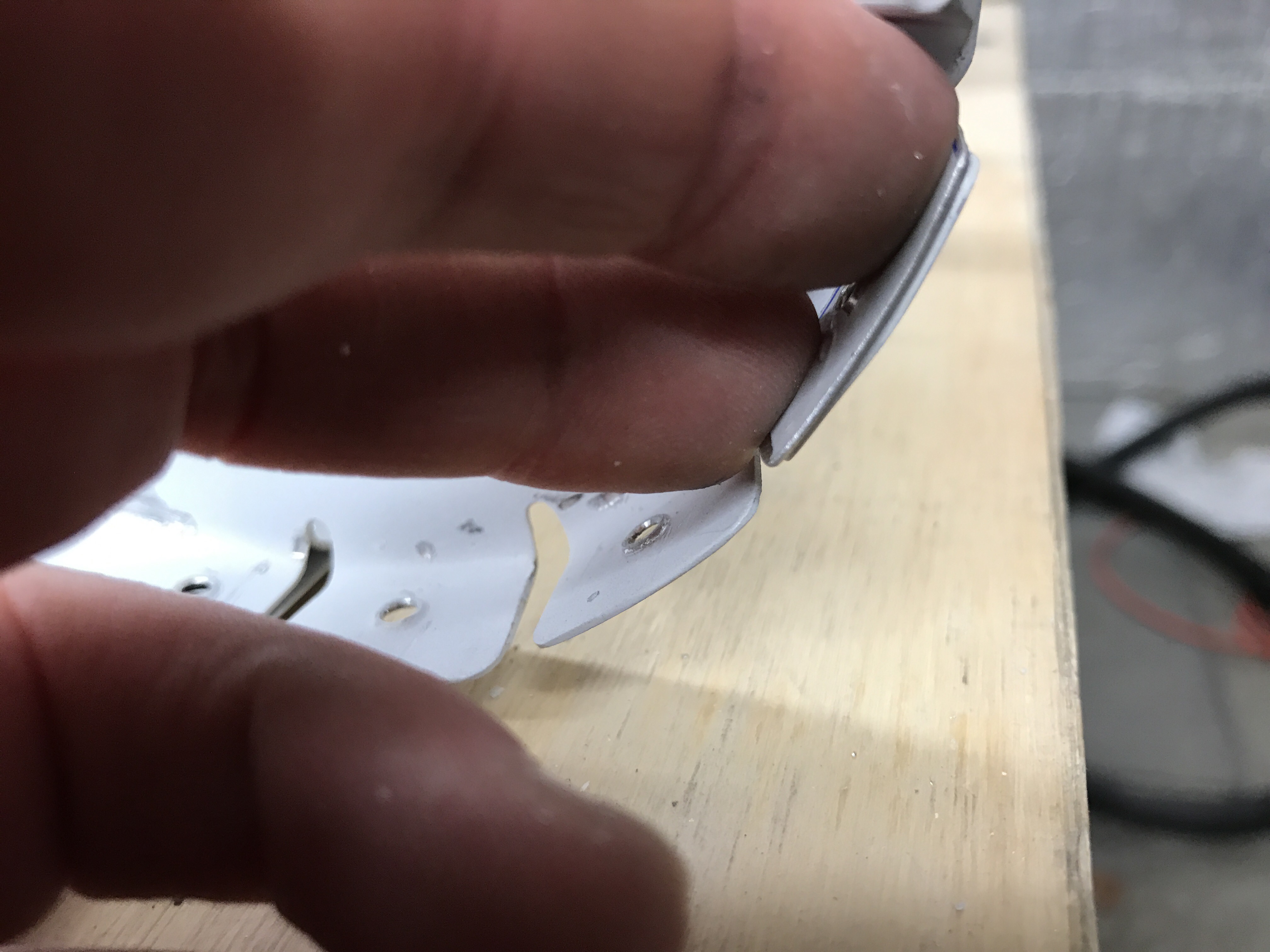
I assembled the right side first, followed by the left side, to keep the structure as open as possible for access to back riveting. One mistake that I made was getting the bottom aft skin on top of of the J-channel stiffener when it should really be between the outer skin and the stiffener.

Bottom Skin between J channel and flange tab.

A slight gap created by the incorrect stackup.

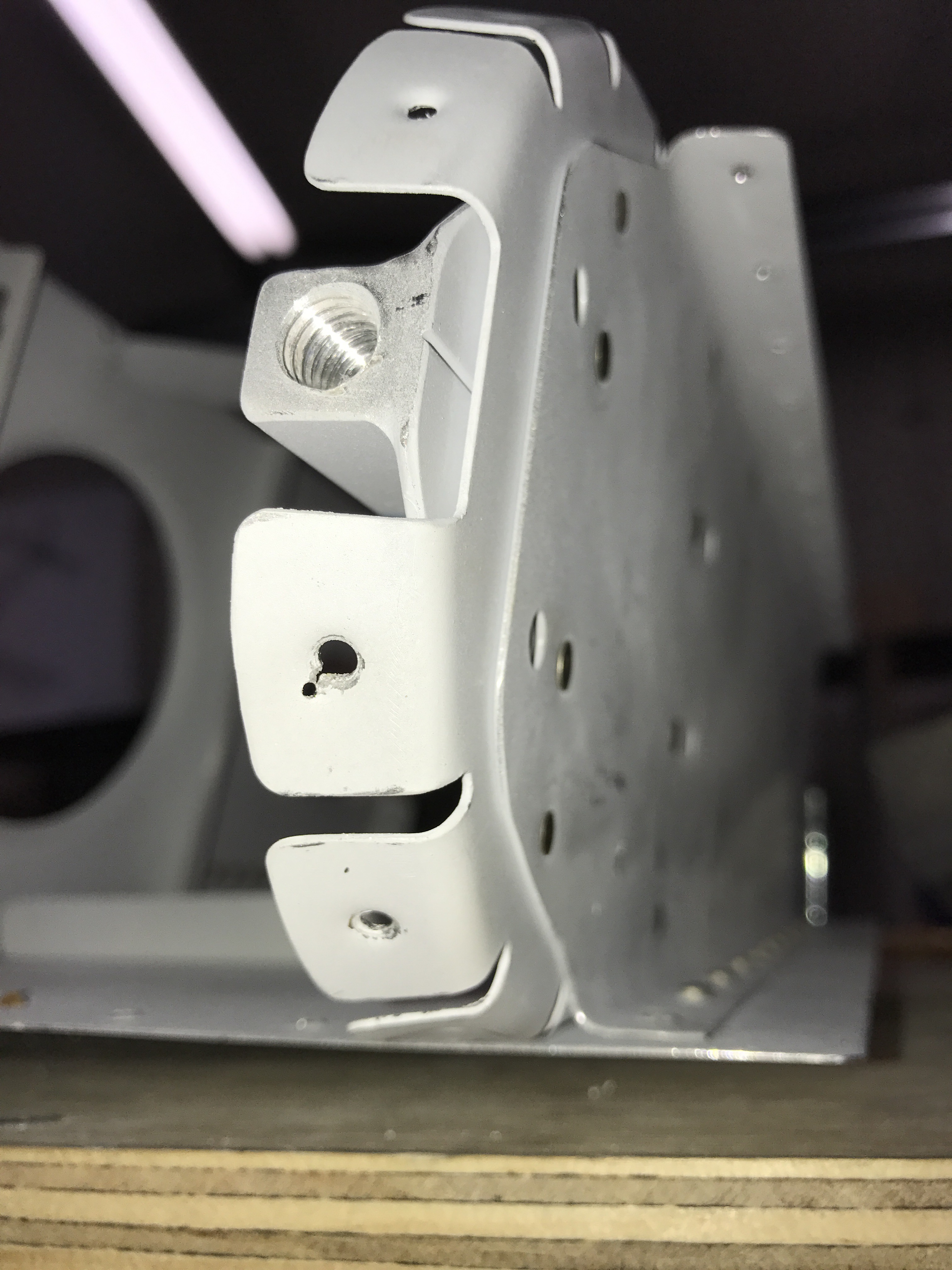
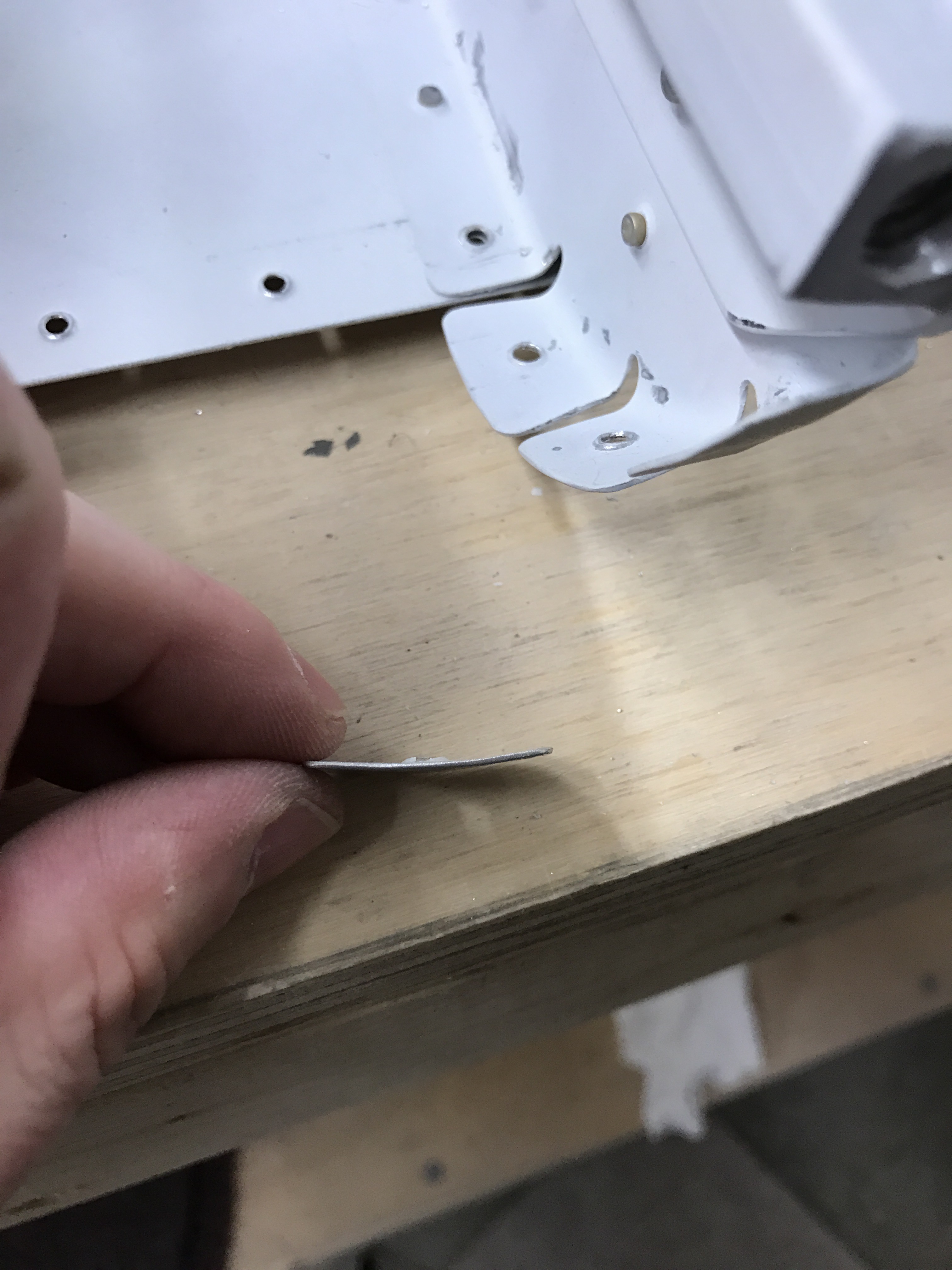
I had to drill out about 17 rivets to pull the bottom aft skin out and correct. In doing so, I buggered up one hole by somehow tearing the dimple.

I asked Van’s how to deal with this issue, seeing I don’t have edge clearance to just drill a new hole. They said to stop drill it and make a backing tab to put behind the flange tab.

Stop drilled with a 3/64″ drill

New backing tab curved slightly to match

Good fit

Some other pics of the progress by the end of the weekend.

Tailcone Priming and Final Assy. Started

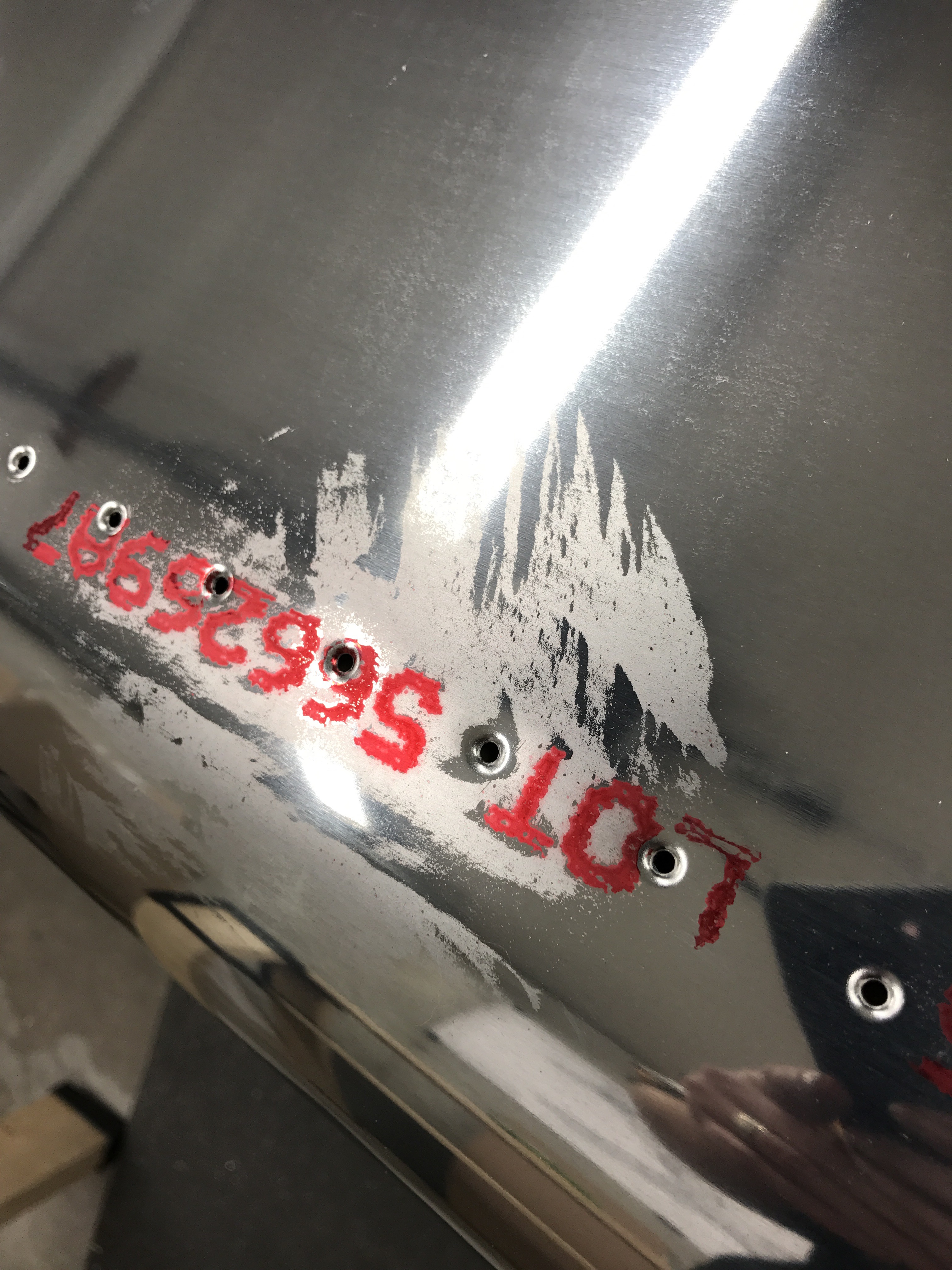
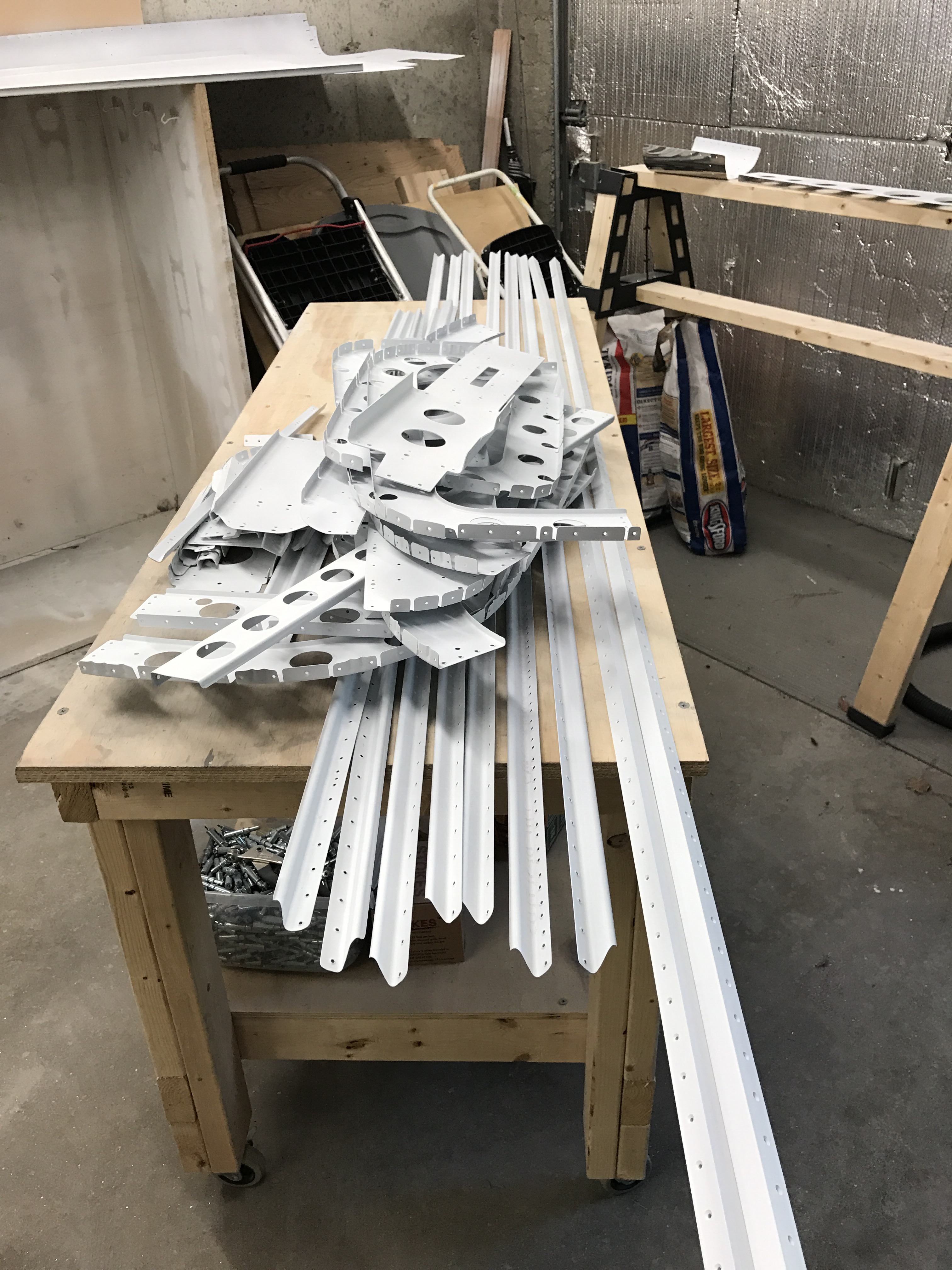
Boy there are a lot of parts to prime in the tailcone. It took several sessions to finish all of the priming. I started by doing the skins, and then 2 additional sessions to do the remaining smaller parts. On most parts I take the blue protective coating off of the part the first time I start to work on it. With the skins, I’ve been leaving the outer blue protective coating on until later in the process to help prevent scratches. Upon removing the coating from the side skins, I found a bunch of surface corrosion starting. Nothing too terrible, but enough that some spots took a lot of elbow grease to sand off. I mostly used a maroon scotch brite pad, but a couple of stubborn spots needed a little fine sandpaper to go a bit deeper, followed by more scotch brite to get it completely off. I then sprayed the areas with some rattle can self-etching primer to help protect it for now.

Lots of these corrosion spots on the side skins

Mostly all gone

This picture will give you an idea of how many spots there were to deal with.

Pile ‘O Primed Parts

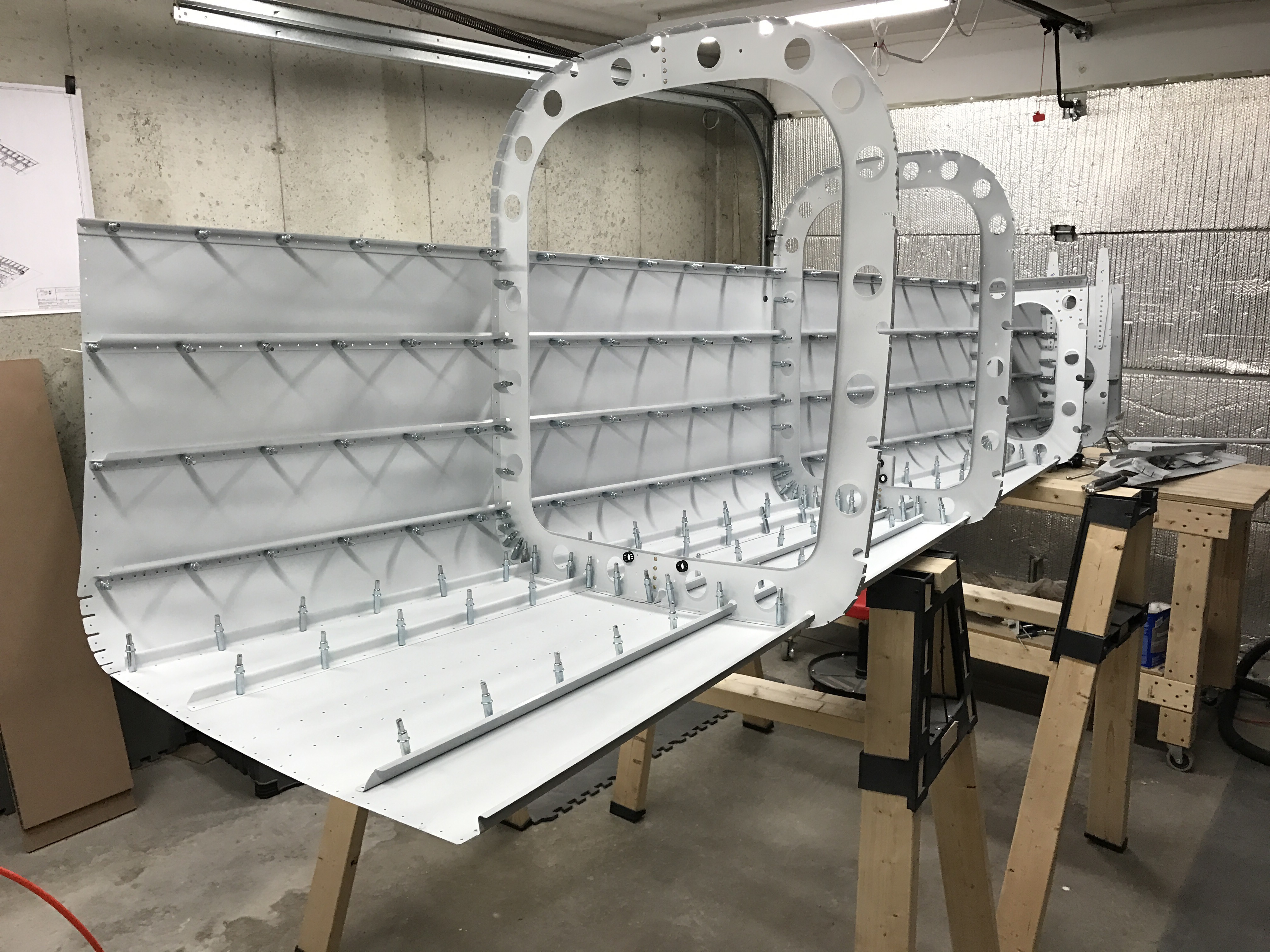
Initial Couple of Parts Assembled

Bulkheads Riveted Together

img_8082

Getting Ready to rivet skins to stiffeners