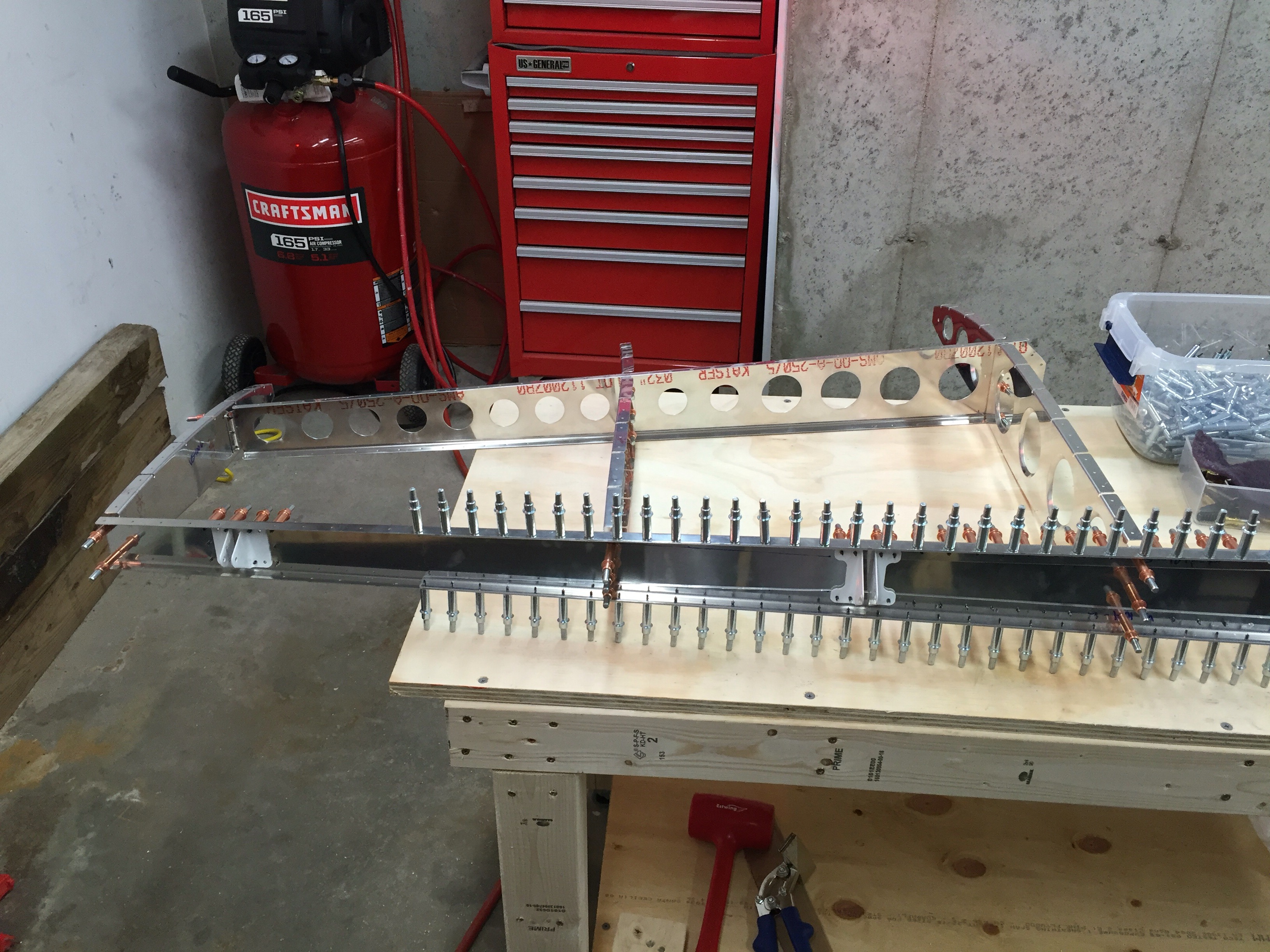
While waiting for the touch-up coat of primer on some of the Vertical Stabilizer parts to dry, I got the rest of the ribs of the rudder put together and attached them onto the spar and match drilled.
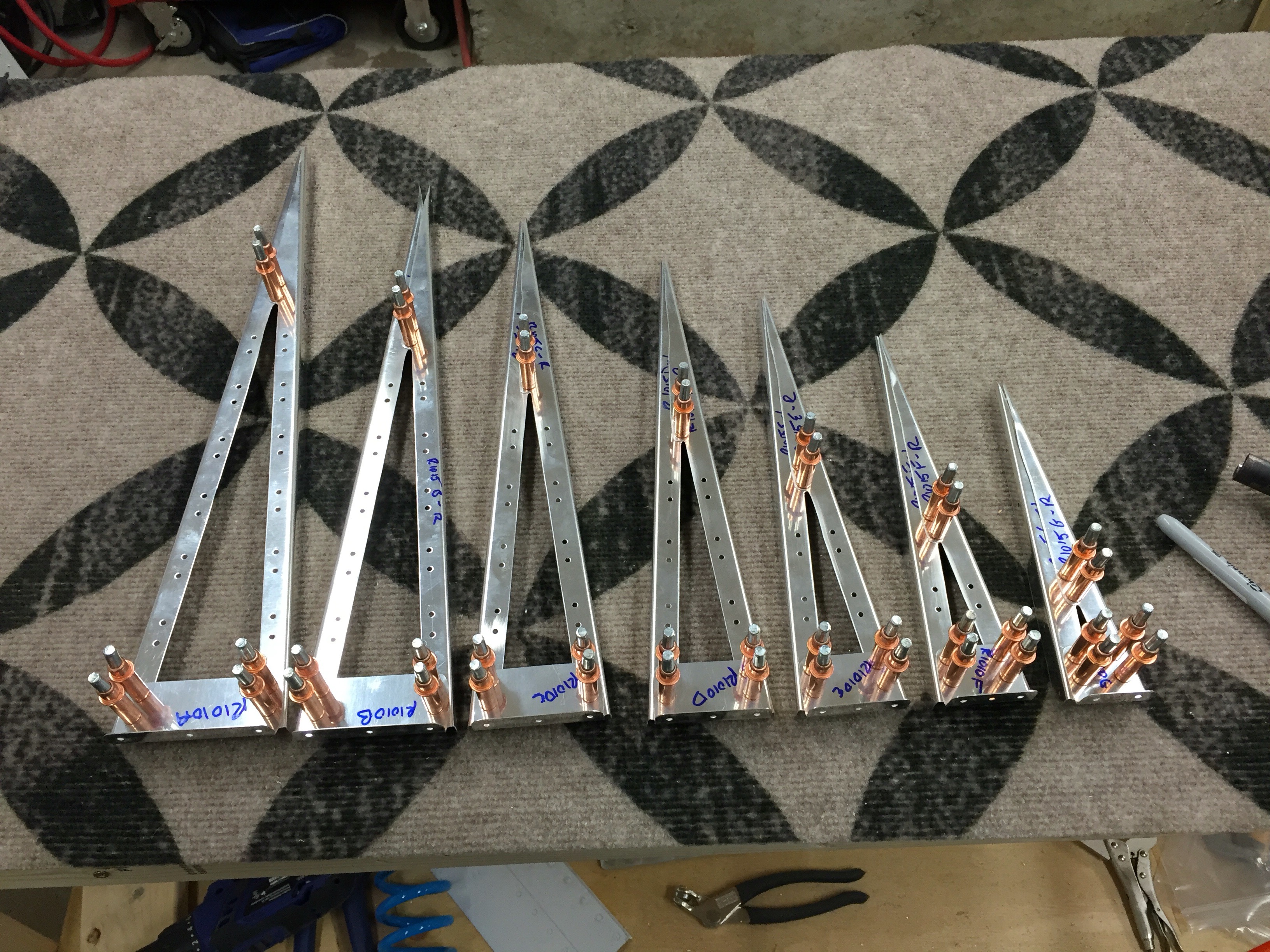

While waiting for the touch-up coat of primer on some of the Vertical Stabilizer parts to dry, I got the rest of the ribs of the rudder put together and attached them onto the spar and match drilled.
This weekend I was able to prime all of the components of the VS as a final prep step prior to riveting it together.
The first step was to transport all of the metal upstairs to the bathtub. I then used a wet scotchbrite pad with a dusting of Bon Ami to scrub down each of the parts. The parts were then rinsed and wiped off dry. I let the parts sit for an hour or so for additional drying time.
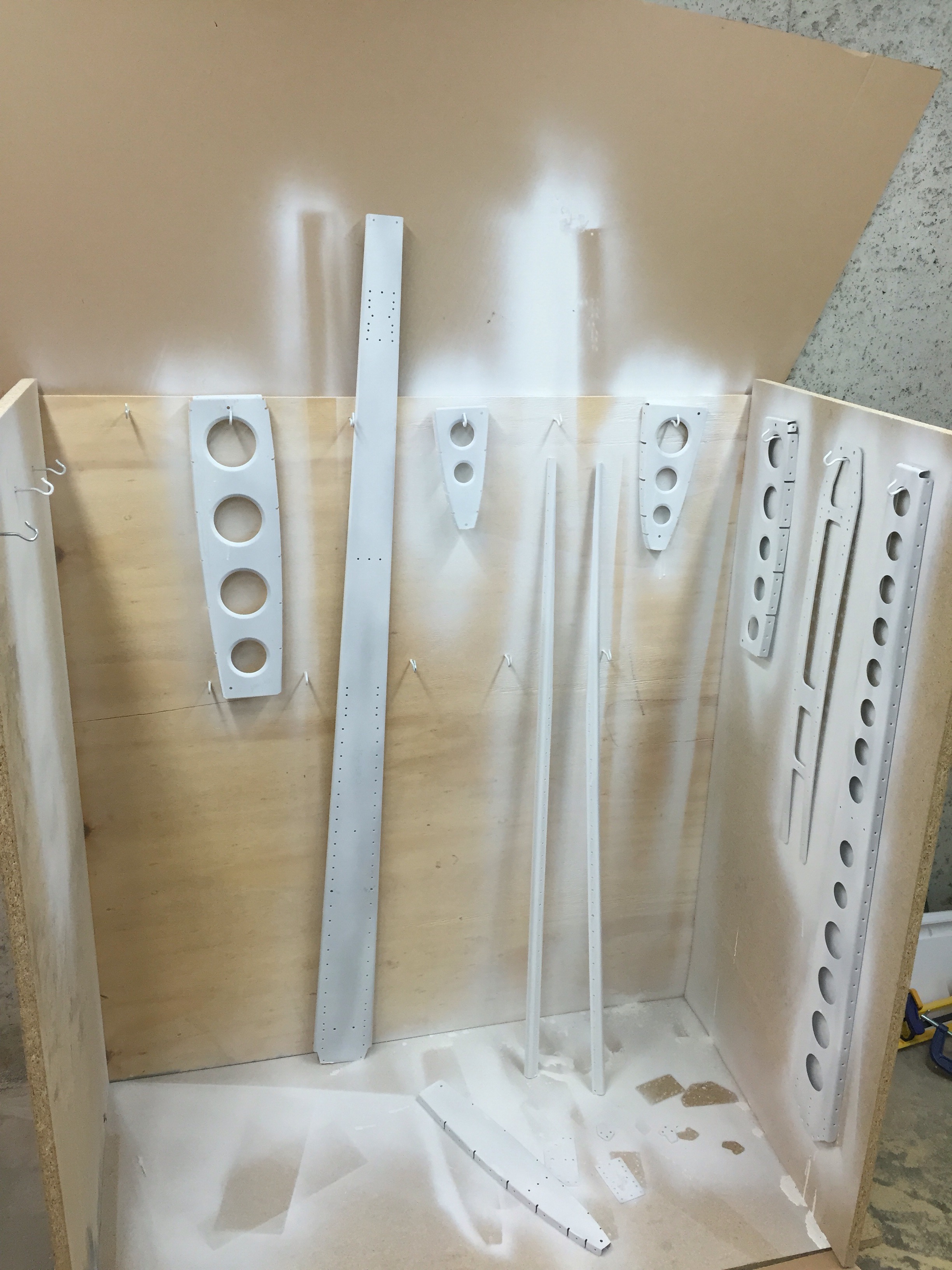
Once back downstairs, I started by using some leftover plywood and particle board from bench construction to create a makeshift spray booth. I used some hooks to hang the ribs and other items from while spraying.
This being my first time using a spray gun, I’d say the parts came out okay. Some playing around with the quantity of liquid and spray pattern settings on the gun on the application to the back side of the parts proved to be a bit better. It was clear that I had too much volume the first time around, and with the primer being relatively thin, I got some dripping going on. I may do a quick touch up mid-week and apply a thin 2nd coat. It turned out decent overall, and like anything in this process, the second time you do something it’ll go faster and turn out better.
Between priming each side and also waiting for drying to happen, I decided to make use of the down time and start section 7, the rudder.

Lots of cutting to separate combined parts, trimming to spec, and deburring them all. It seemed to go pretty quickly and was able to start on getting the rudder horn attached to the main spar and match drilled.


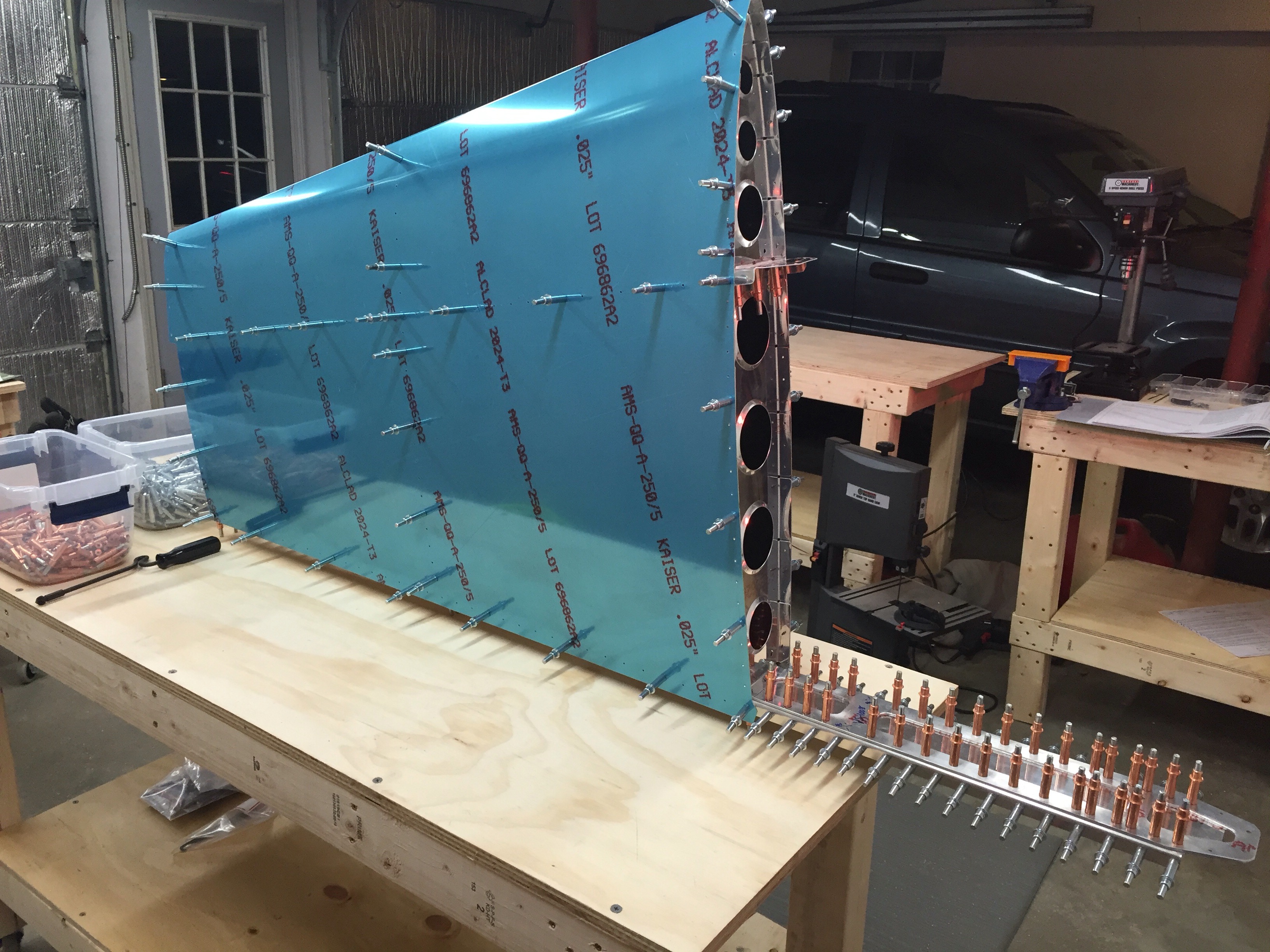
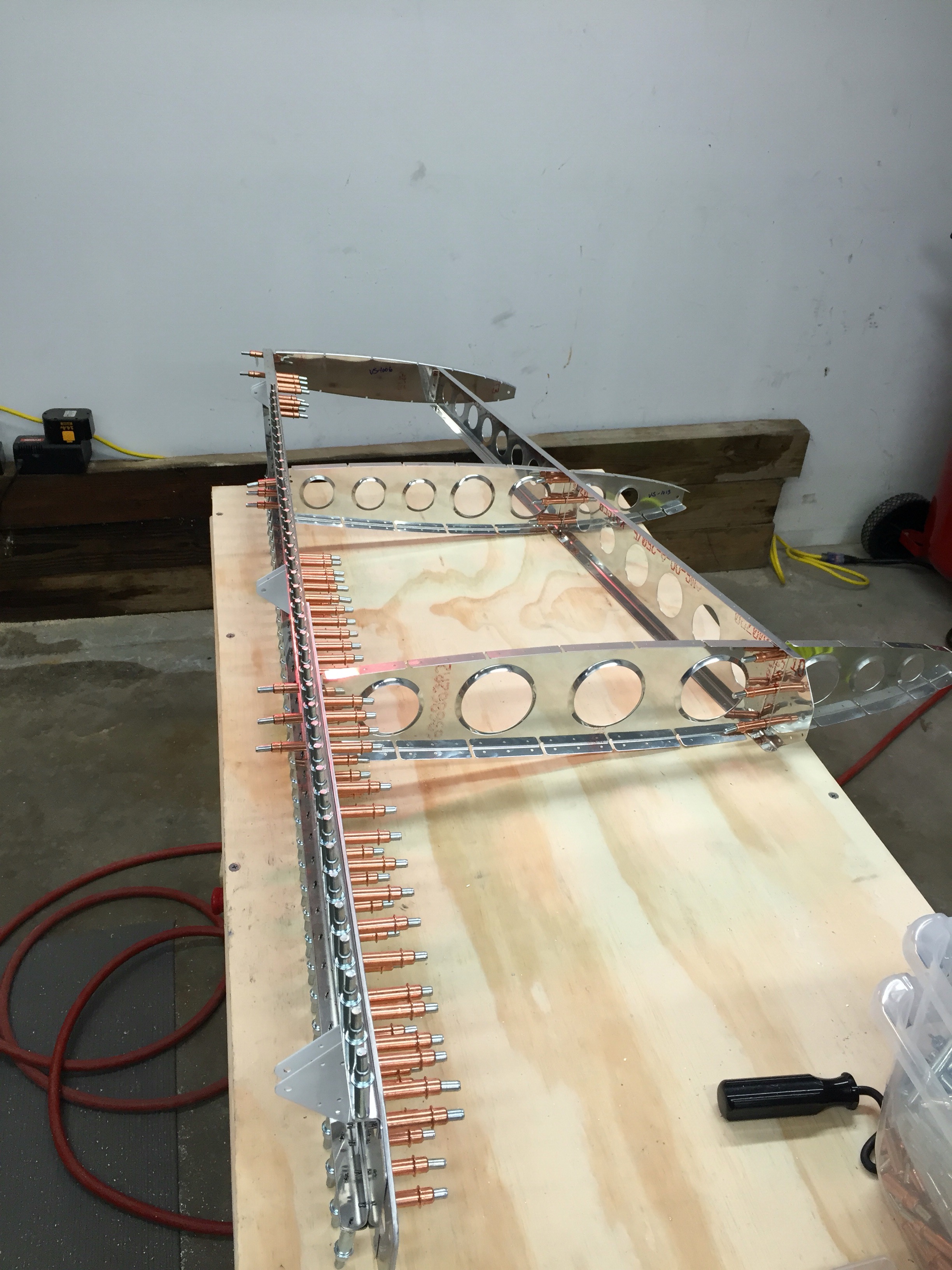
Posting a couple of additional pictures of the progress. I’m at the point where I have all prep steps done and I’m ready to prep and prime the internal surfaces in preparation for final assembly (with rivets).
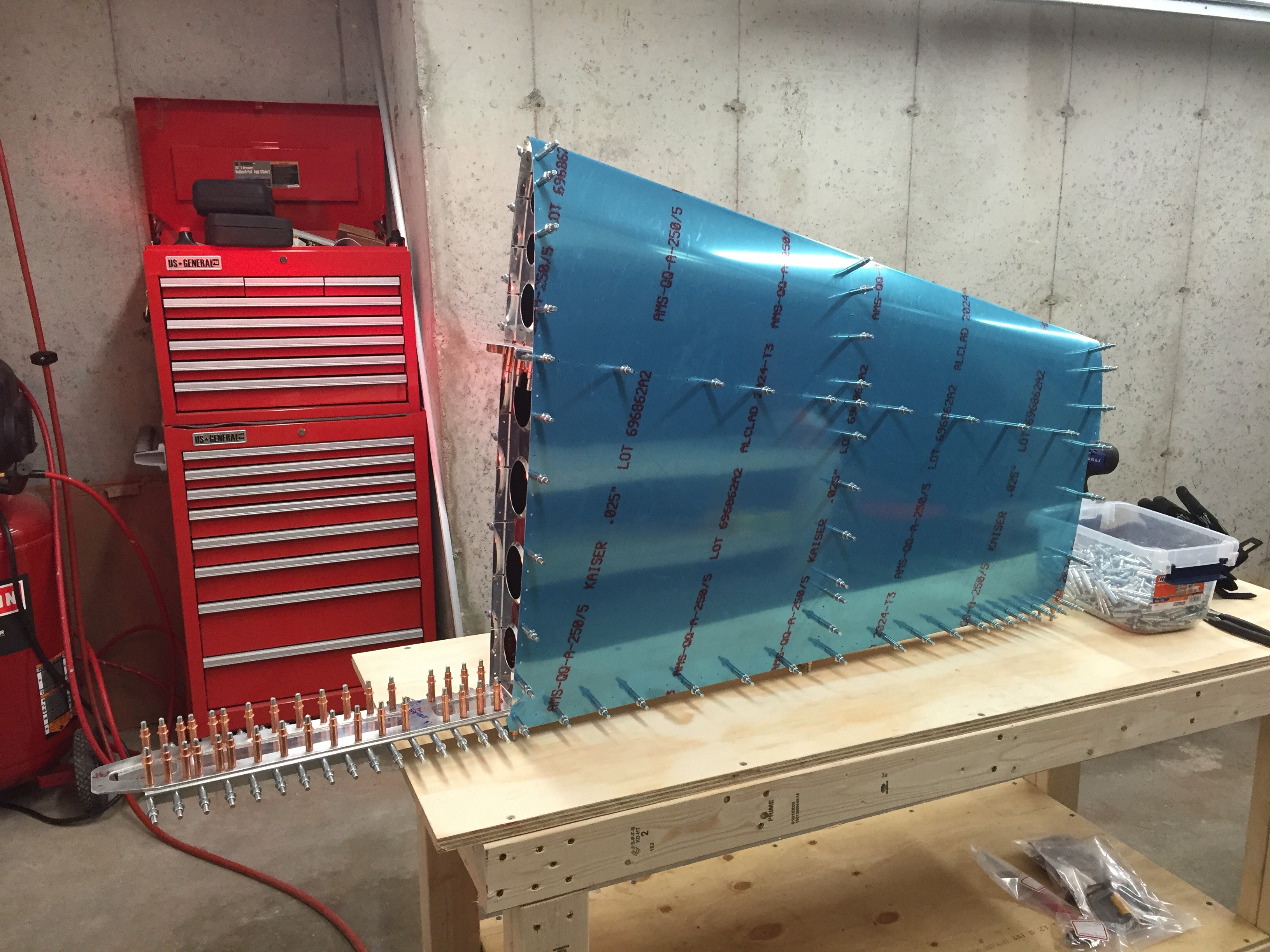
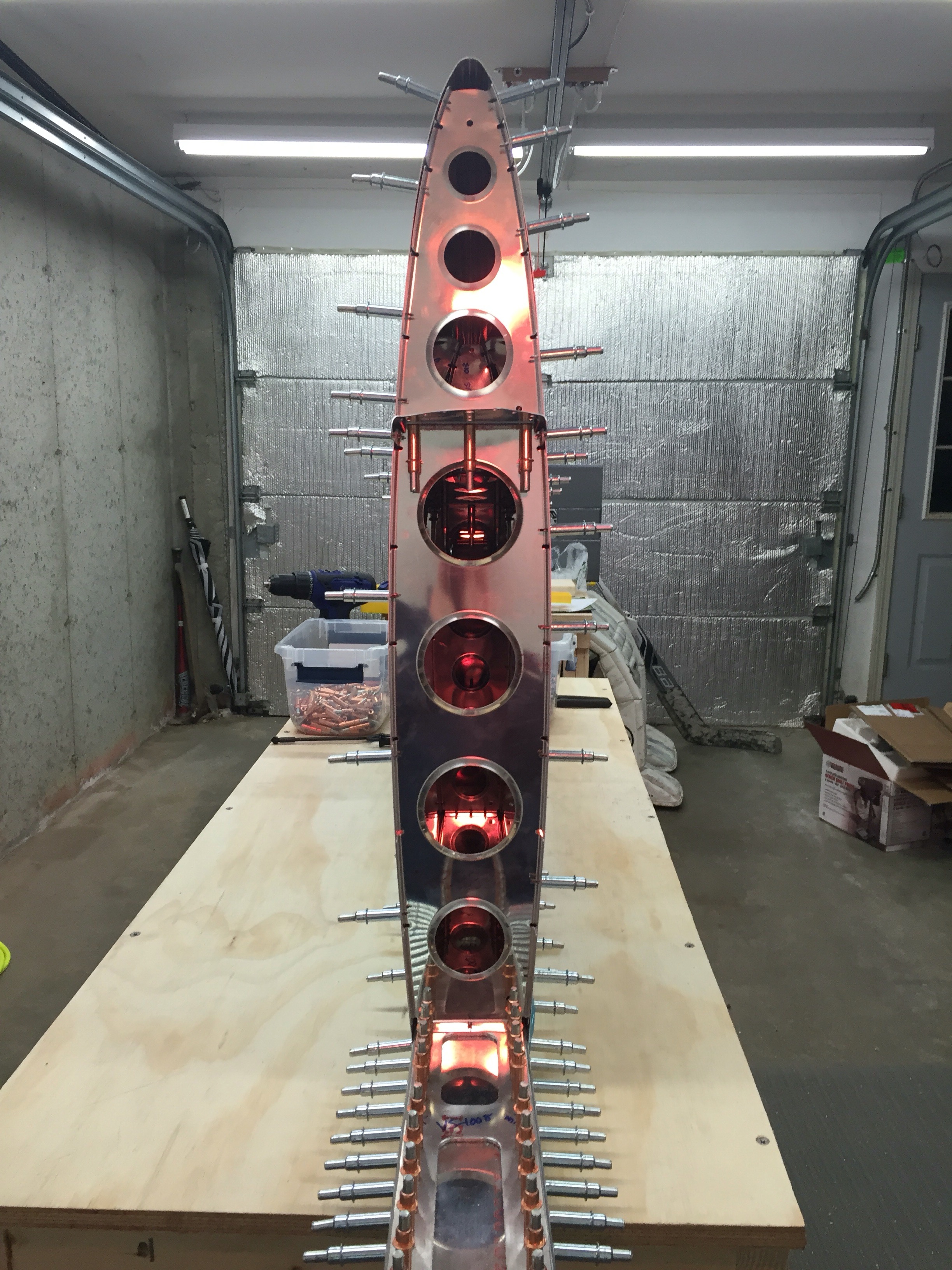

I’ve decided to use Stewart Systems EkoPrime for my primer solution. It is a water-based and non hazardous /toxic paint. It isn’t the best solution, but I’m of the mindset that putting some sort of primer on the interior surfaces is better than nothing. Most of the aluminum being used is alclad, meaning that it already has some degree of corrosion protection on it. Some people, and several certified airplanes, don’t use any primer on interior surfaces and are perfectly fine for 30 or more years. I’m also spraying this in my house, so I’d like to keep the fumes and dealing with toxic chemical disposal to a minimum. Also cleanup is a breeze compared to using an epoxy-based primer.
I’m also planning on using a household cleaner similar to Ajax or Comet called Bon Ami for surface prep. Once again, this is all natural and has no harsh/toxic chemicals. Plan is to sprinkle this power-based cleanser on a scotchbrite pad, wet it, and scrub the surface clean. This is followed by a rinse and drying time. Then I’ll have a few hour window to spray the primer.


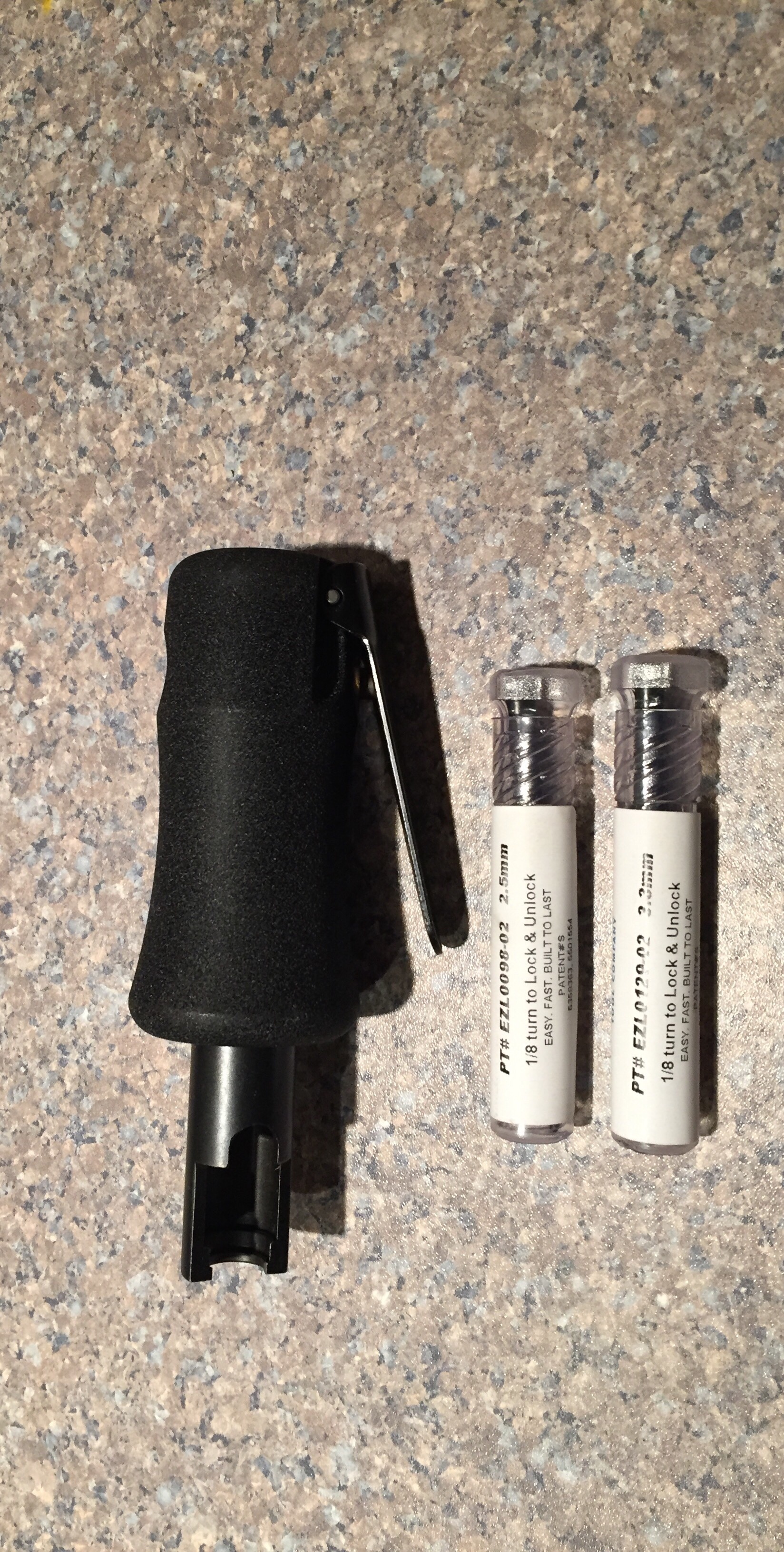
I also asked for, and got a few new neat tools for my birthday coming up next week. Deburring all the holes after drilling is one of many time-consuming tasks. especially having to hit each hole drilled twice, once on each side. I found out about Ezburr bits that are designed to deburr a hole on both sides with a single pass. It deburrs the front of the hole when the bit is passed into the hole, and the back-side of the hole on the way out. Saving lots of time.
The other tool I got was a pneumatic cleco tool. Using the manual set of pliers takes a toll on the forearms. Lots of repetitive motions putting cleos in and taking them out. This tool seems to help a tremendous amount to remedy that.
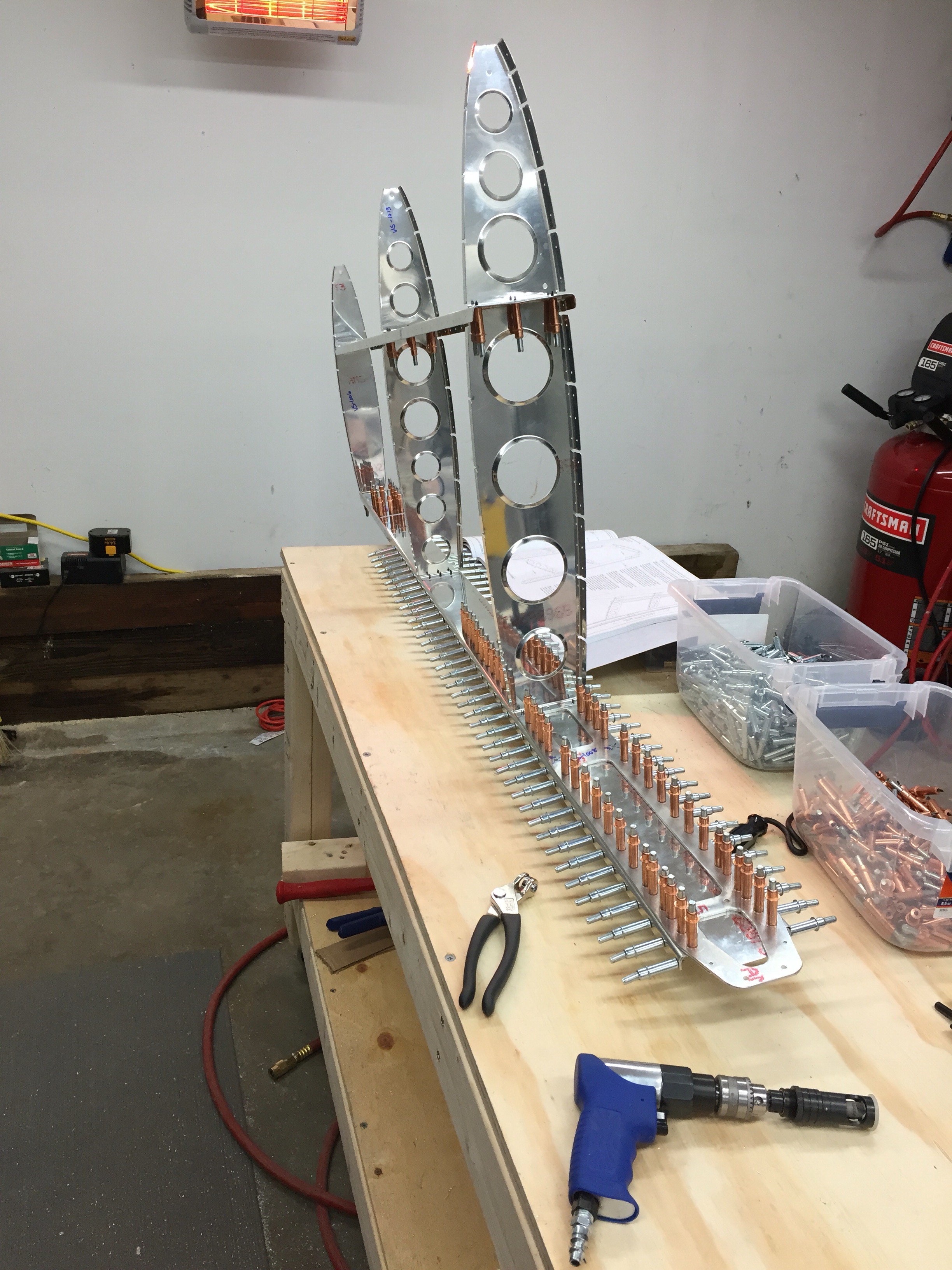
I’ve made some progress on the VS over the last week. Lots of deburring, assembling, drilling, taking apart, deburring holes, etc…
The basic skeleton is now together. Next up is putting the skin on and getting that drilled and dimpled.
Starting to look like an actual airplane part.

Tonight I made the first parts for the actual airplane!
The plans have you start on the vertical stabilizer first.
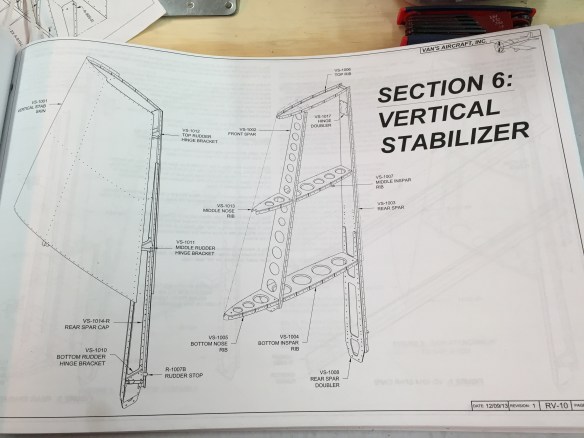
The first step is to trim and debur the rear spar caps, which is now done. I also gathered some additional pieces for the next couple of steps out of inventory.
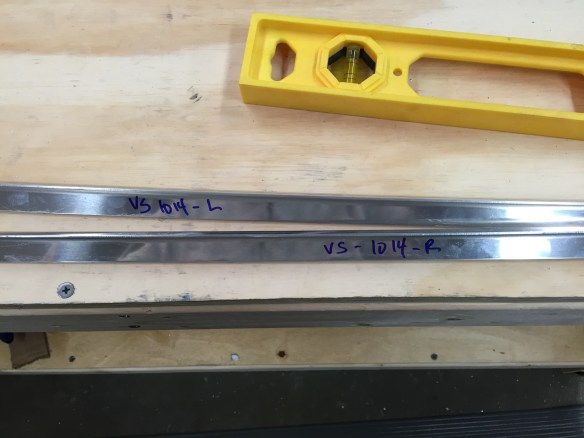
One step down.. thousands to go. 🙂
Spent some time this weekend doing the airfoil practice project. It consists of 2 basic projects; An angle frame attached to 2 skins that overlap each other, the other is a miniature section of an airfoil. The whole point of doing this was to get familiar with my tools on something that isn’t the real airplane. Better to make mistakes on this, and mistakes I made. Even though I was frustrated, they were all things that I took note of for next time, and the projects didn’t come out all that bad.
A picture of the first project:

I thought this came out pretty good with the exception that the overlapping skin wasn’t aligned perfectly with the inner skin. I think I didn’t clamp things down enough to prevent movement. I’ll know better next time.
Then I moved on to the airfoil kit and made quite a bit of progress. I was able to do some back riveting and got to use my pneumatic squeezer.
 Stiffeners clecoed onto the skins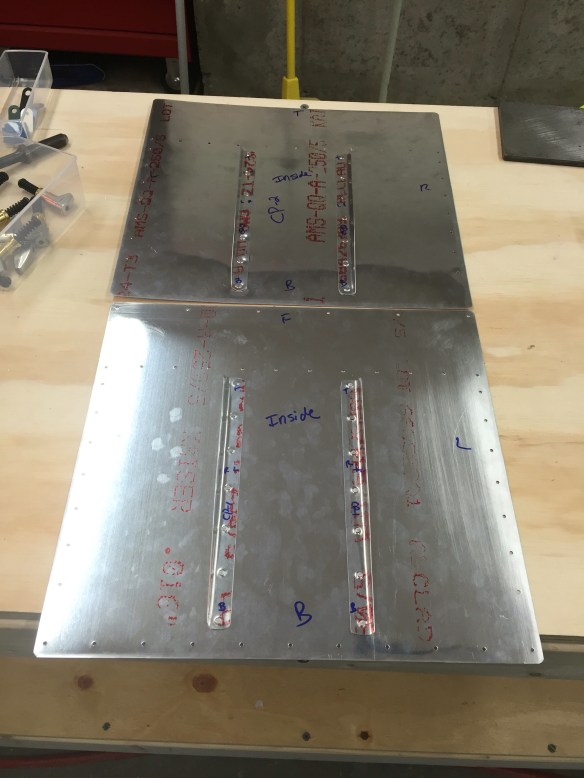
Stiffeners back-riveted on. A lot of these are over driven, and should have been replaced. Air setting was too high on my gun.
 A view of the plans and the spar, plates, and ribs laid out.
 Top and Bottom skin clecoed on

Skins mostly riveted on.
I still need to set the last couple of rivets at the trailing edge of the ribs. These are in a tight space, and I didn’t have much luck with a couple of the techniques I tried today. I ended up drilling them out. I also attempted to rivet the trailing edge, but didn’t do it right. I should have paused and read the section on double flush riveting again. So I will drill out the rivets on the trailing edge and try those again.
It’s been a long time coming, but I finally got some time today to finish taking inventory. Van’s gives you 30 days to report any discrepancies and fortunately I didn’t find any.

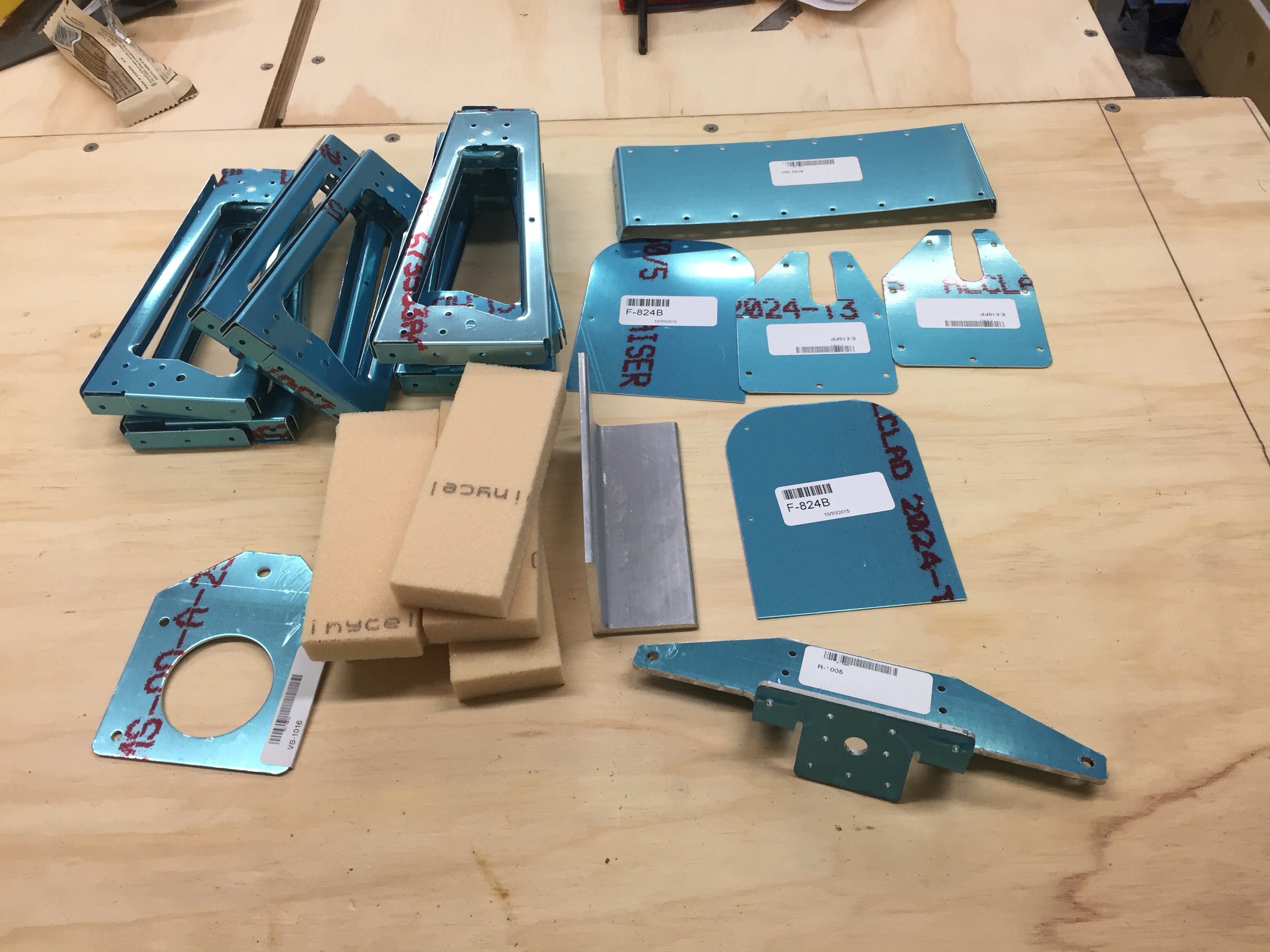
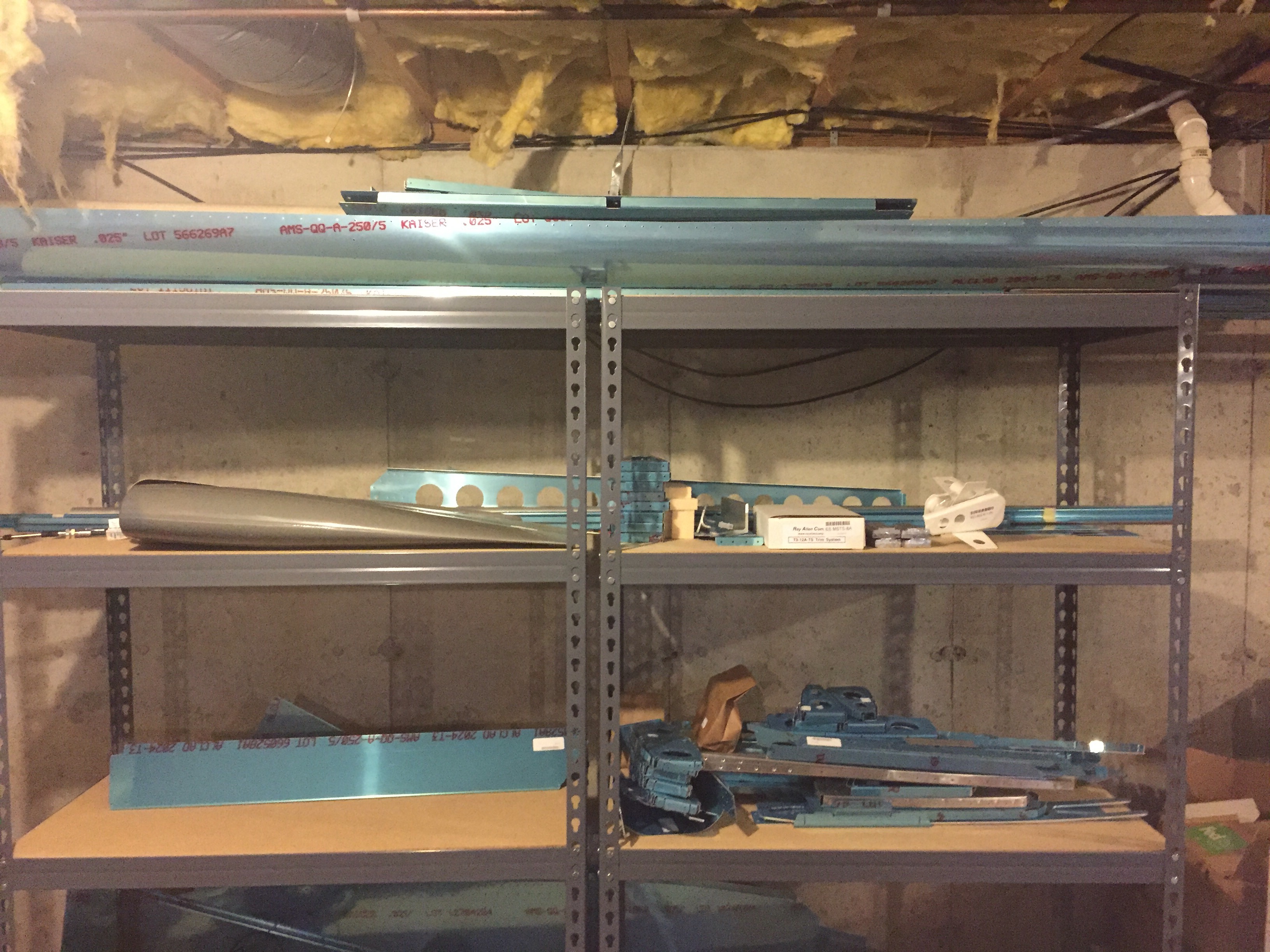
Last weekend we spent some time with friends up north, and then I spent a day and a half getting the flooring completed in our master bedroom. So working on plane things got delayed a bit. It’s amazing the amount of stuff that they package into the crate.
I was then able to organize all of the hardware into a storage bins, hang up my air compressor hose reel, and organize the workbenches the way I want them.

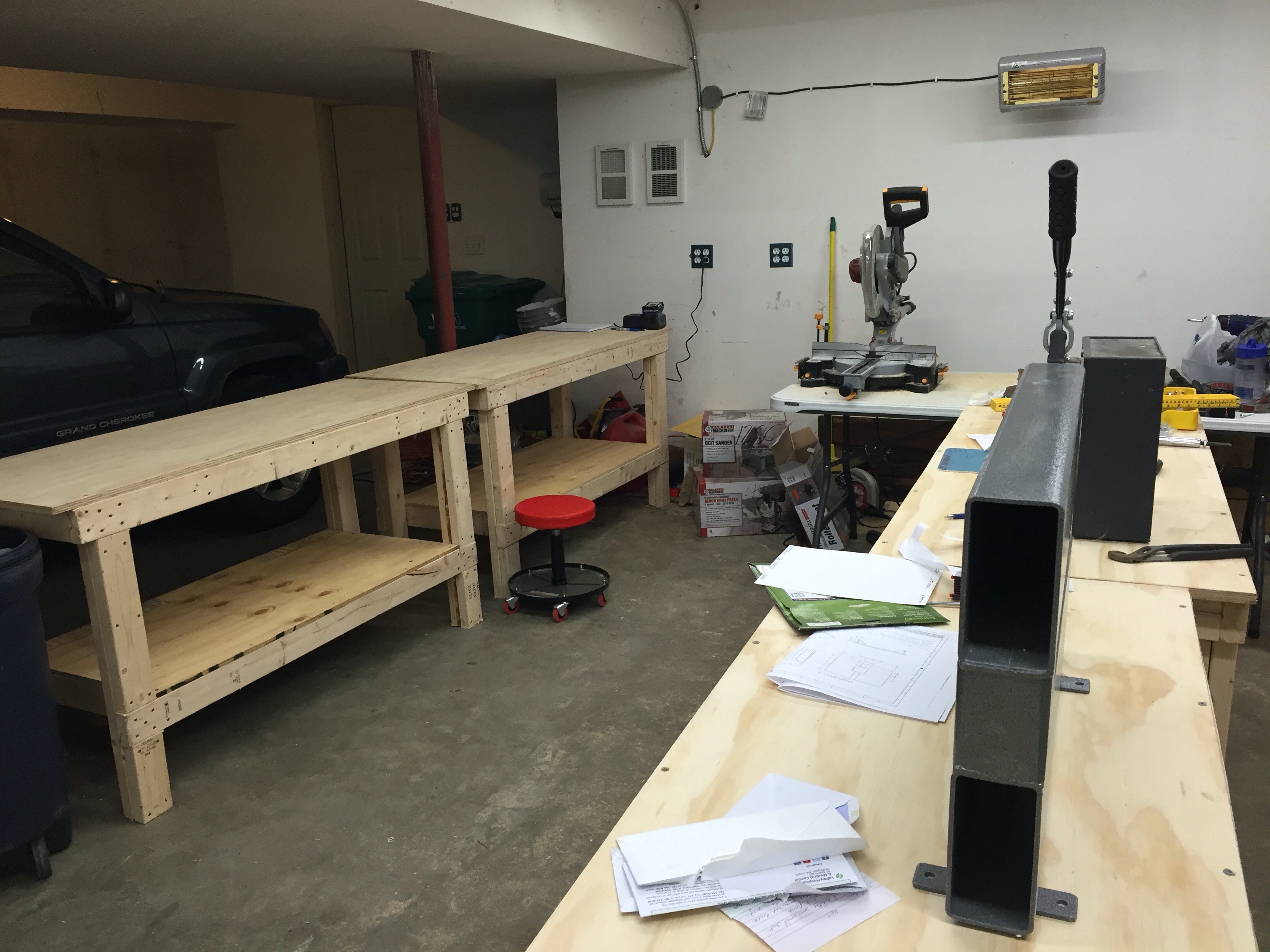
Tomorrow I’m off to Vermont on an annual ski trip. I’m now in a position to start actually working on the plane. I do have the practice airfoil kit that I will spend some time on getting used to my new tools and air compressor setup. I’d rather play around on that for a day or so then to damage real airplane parts. Seems like the month of March will kick off the actual build of my RV-10.
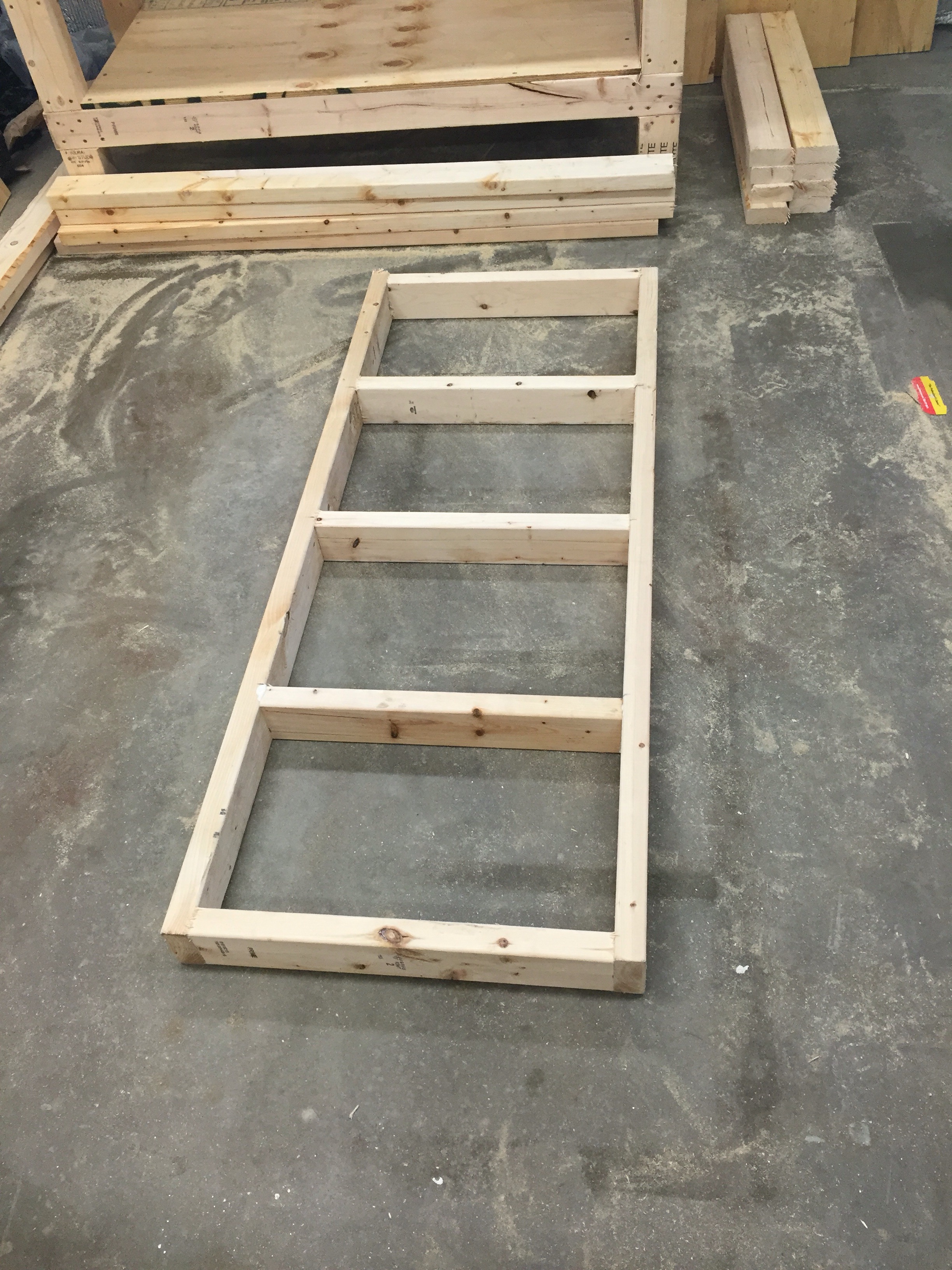
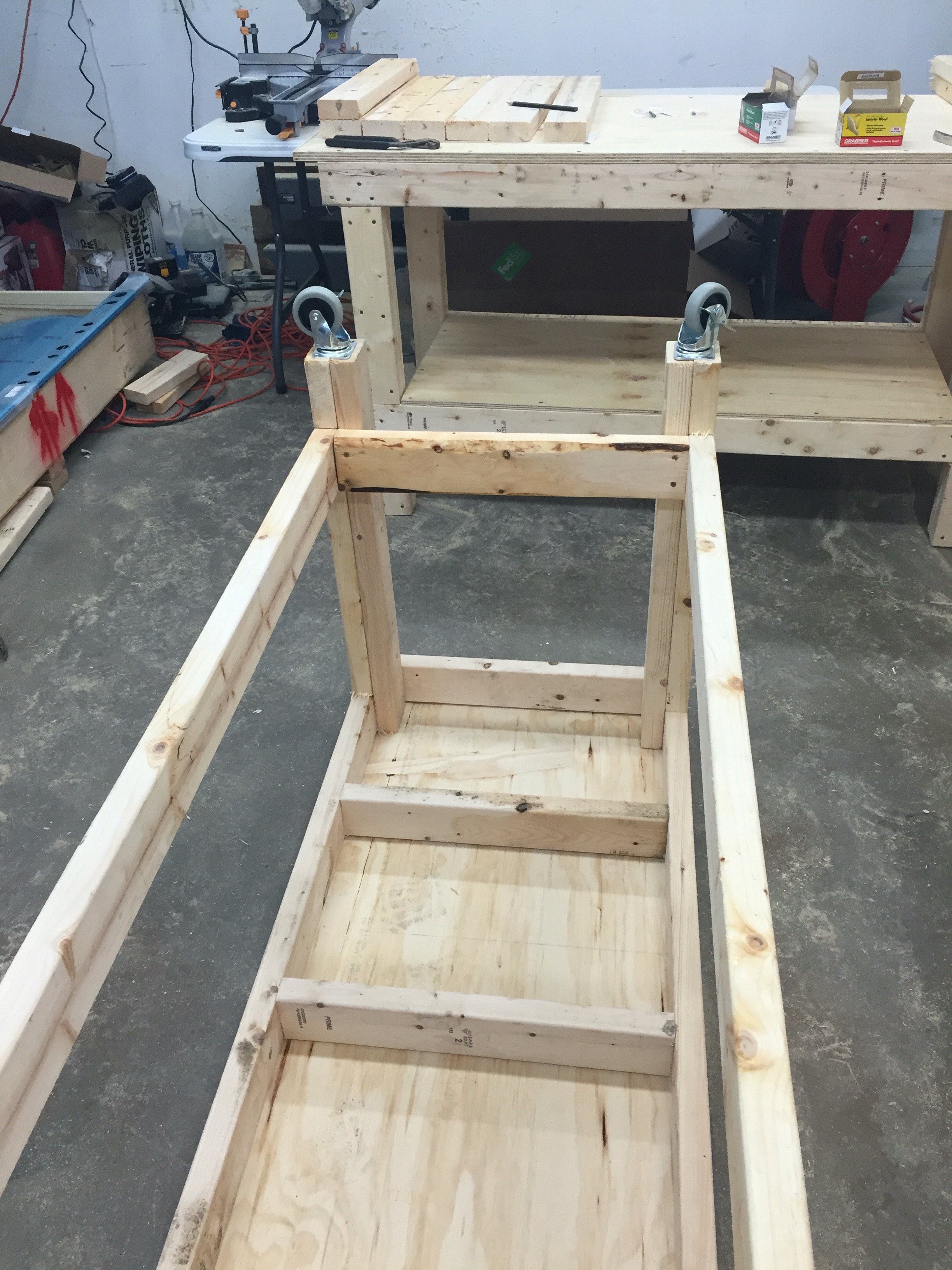
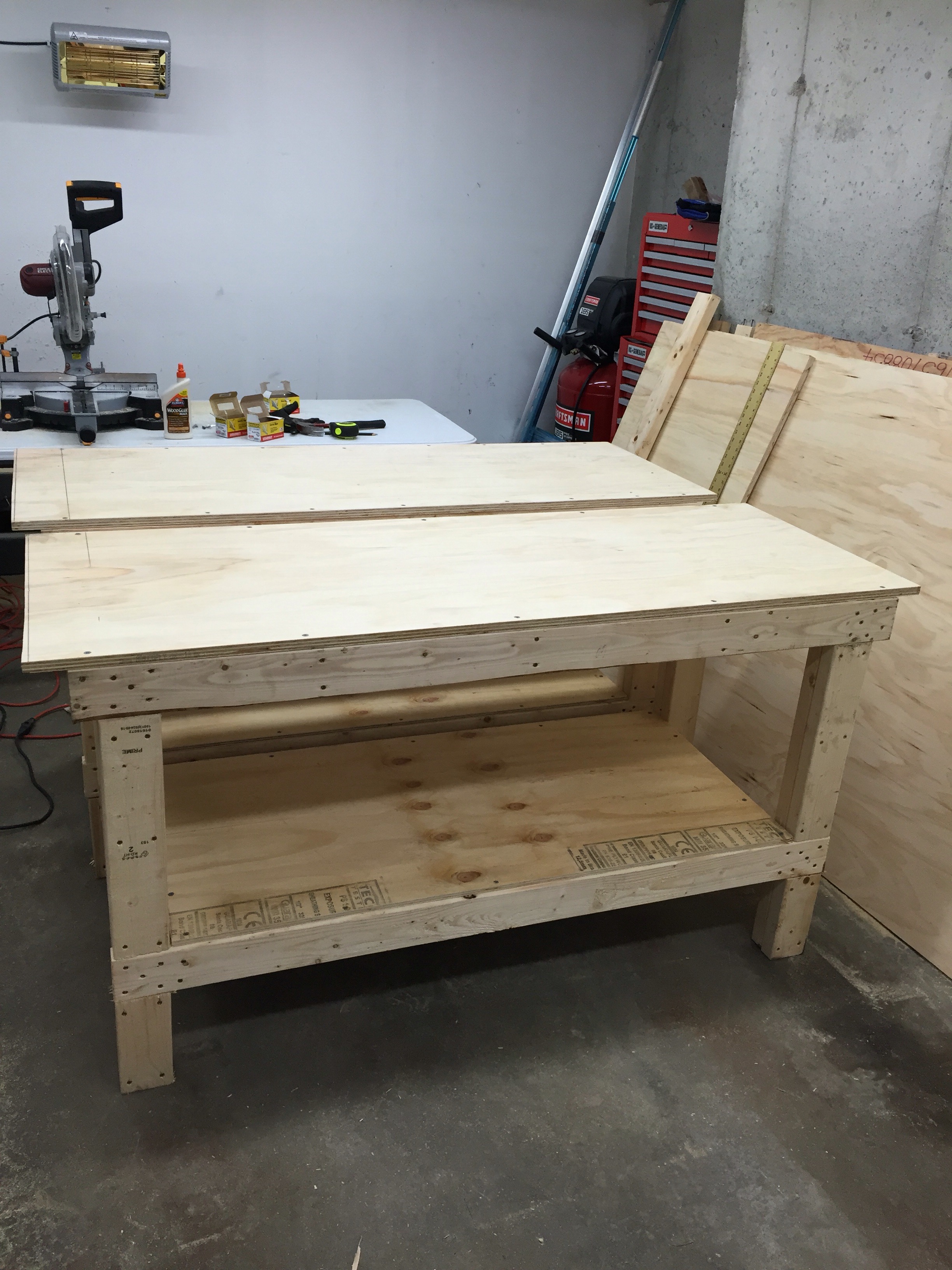
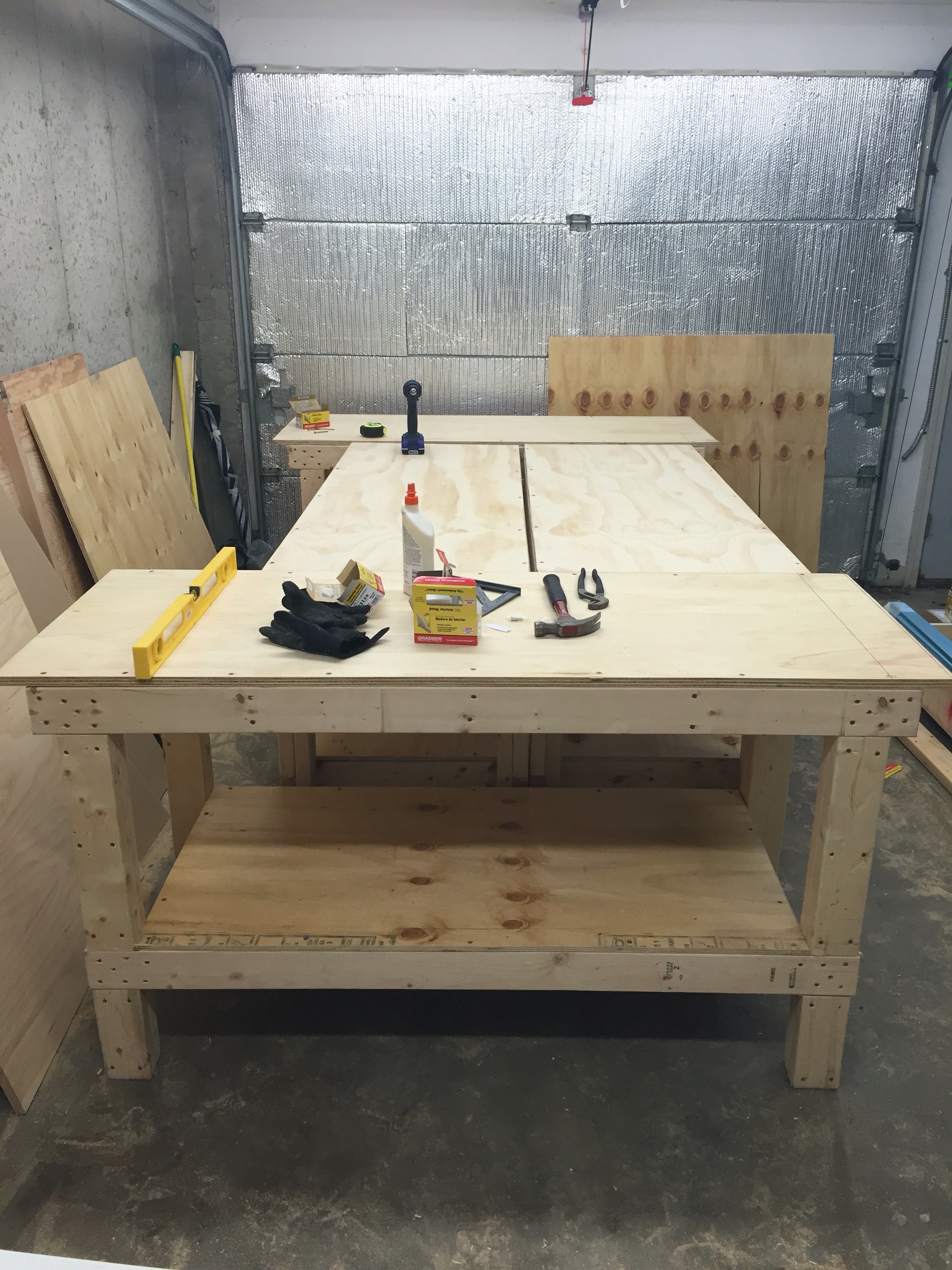
This weekend I set out to complete some standard EAA benches for my workshop.
Saturday, I grabbed my fathers truck and grabbed the lumber needed for 4 benches. I plan to use 2 of them for the majority of my work, and the 2 others will house some tools (bench vise, bench grinder, etc… ), airplane plans, and anything else I need.
I ended up doing 2 benches with locking caster wheels and 2 benches without. I’ll use the benches with casters to be able to move them around easily as the situation dictates. The other two will be staying in one place, for the most part.
Some pics of the assembly process.



It started by cleaning out our master bedroom and ripping out the rug and padding. I was also able to pull the baseboards. It’s now all prepped for painting and the eventual hardwood installation. My attention then shifted to all the work I need to do out in the garage.
I was able to install an electric heater to help heat the garage, a couple of additional electrical outlets on their own 20A circuits, hung 6 flourecent shop lights, put together a shelf, and started some inventory.

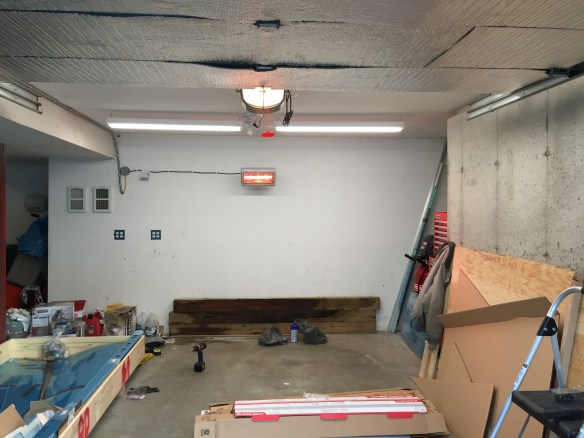

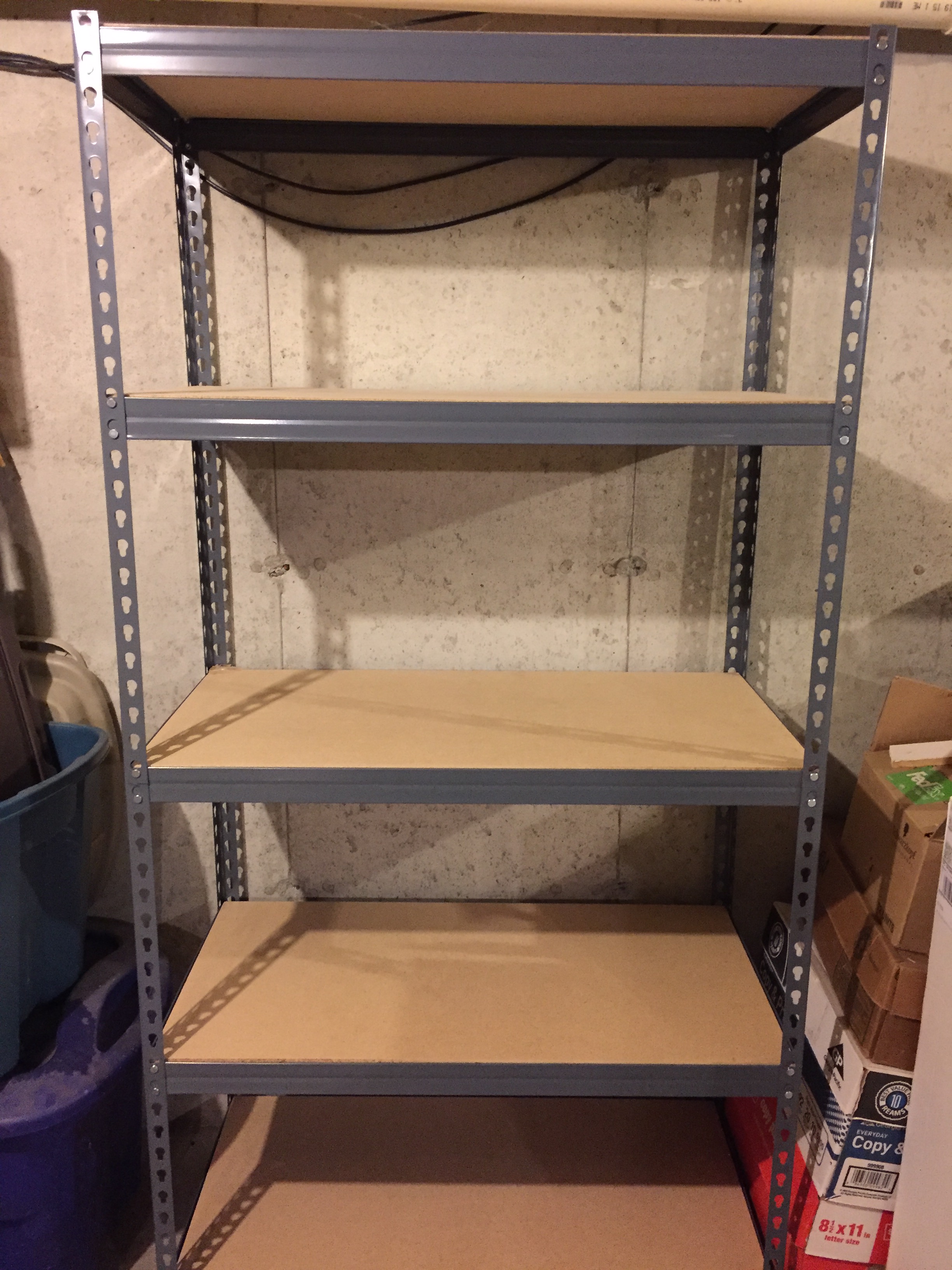
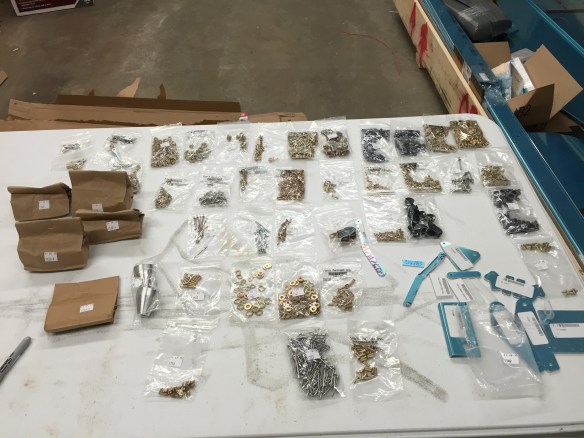
Up next is to build benches, get the shop air plumbed, and finish the inventory.
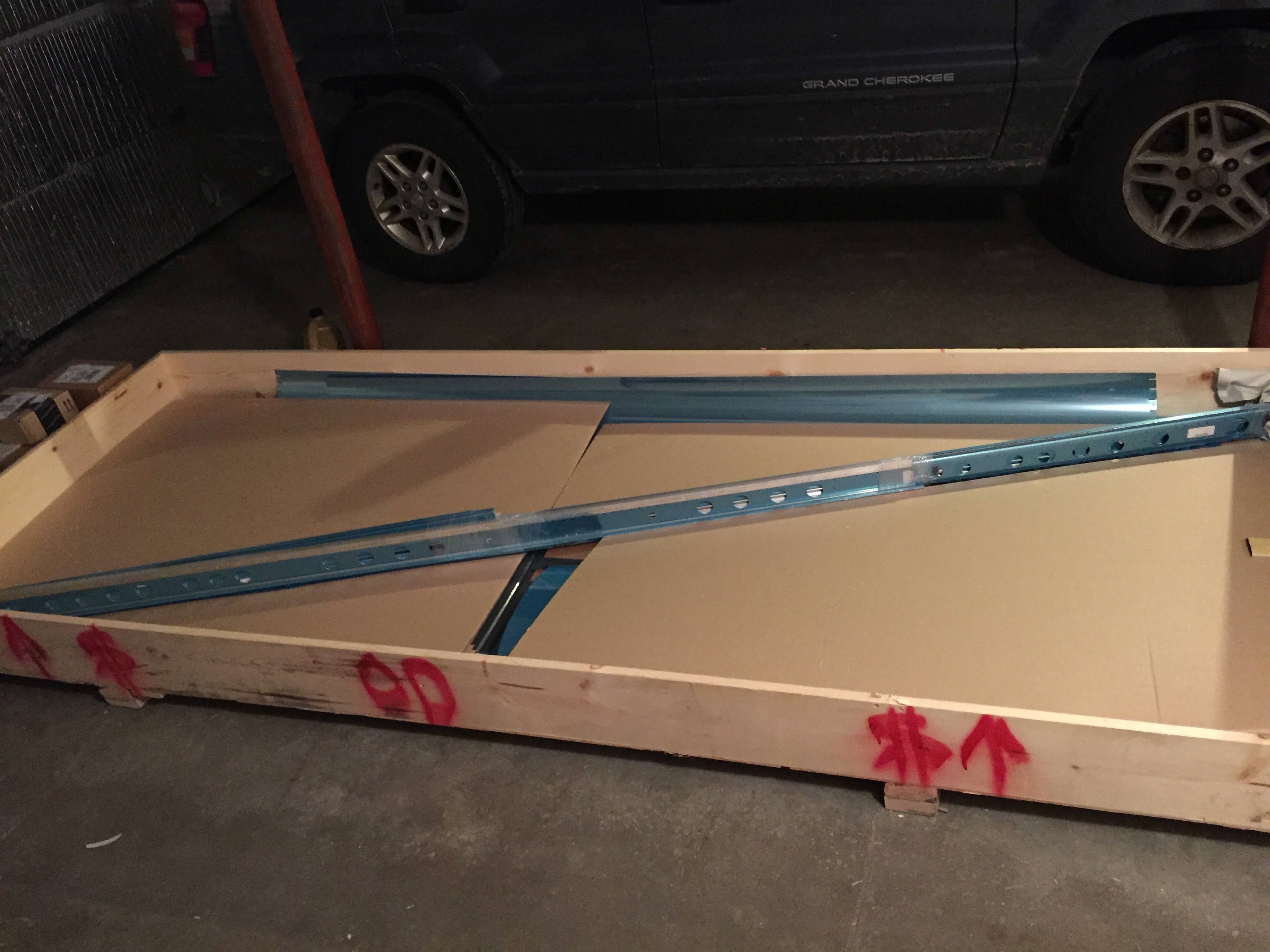
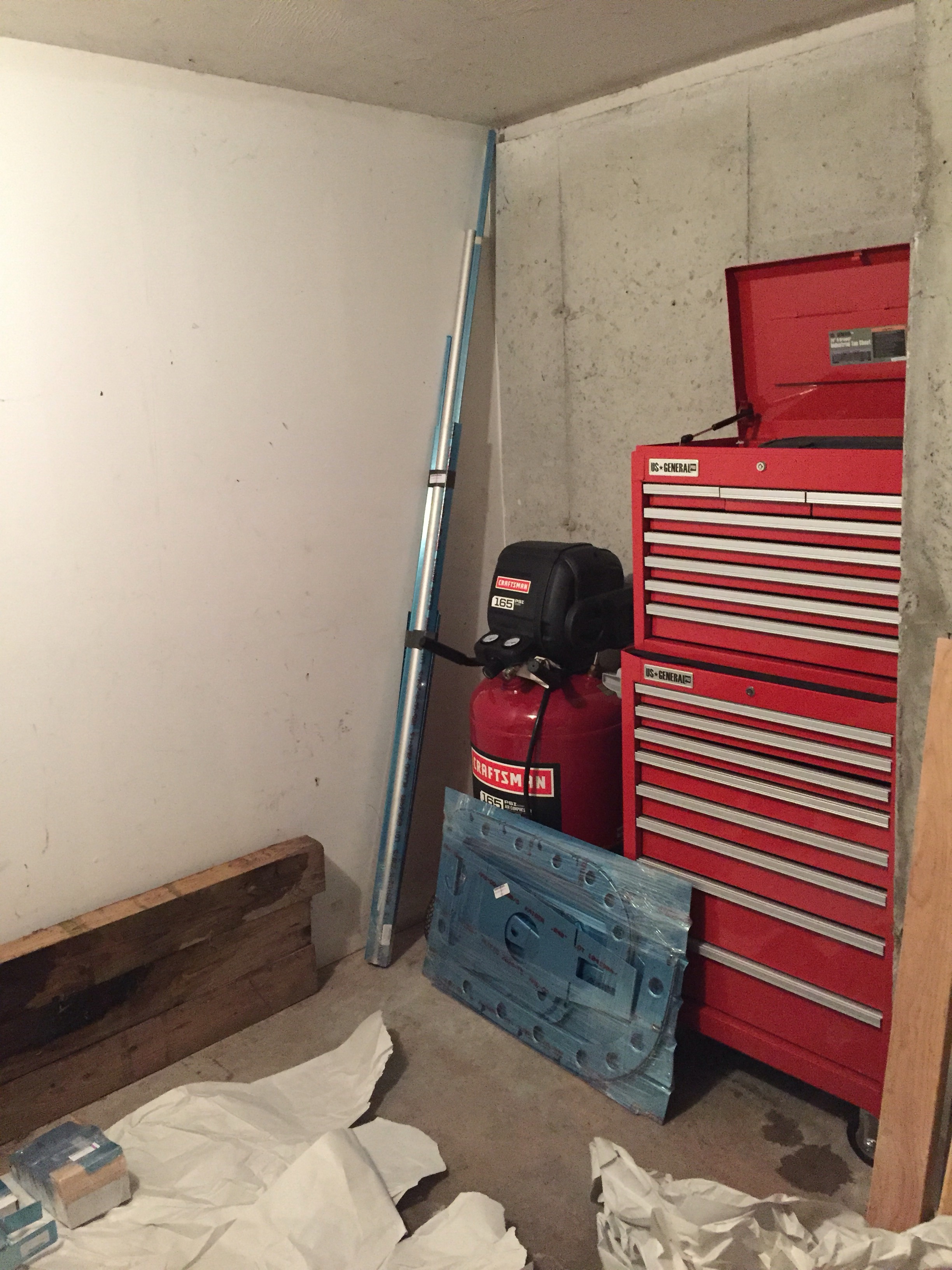
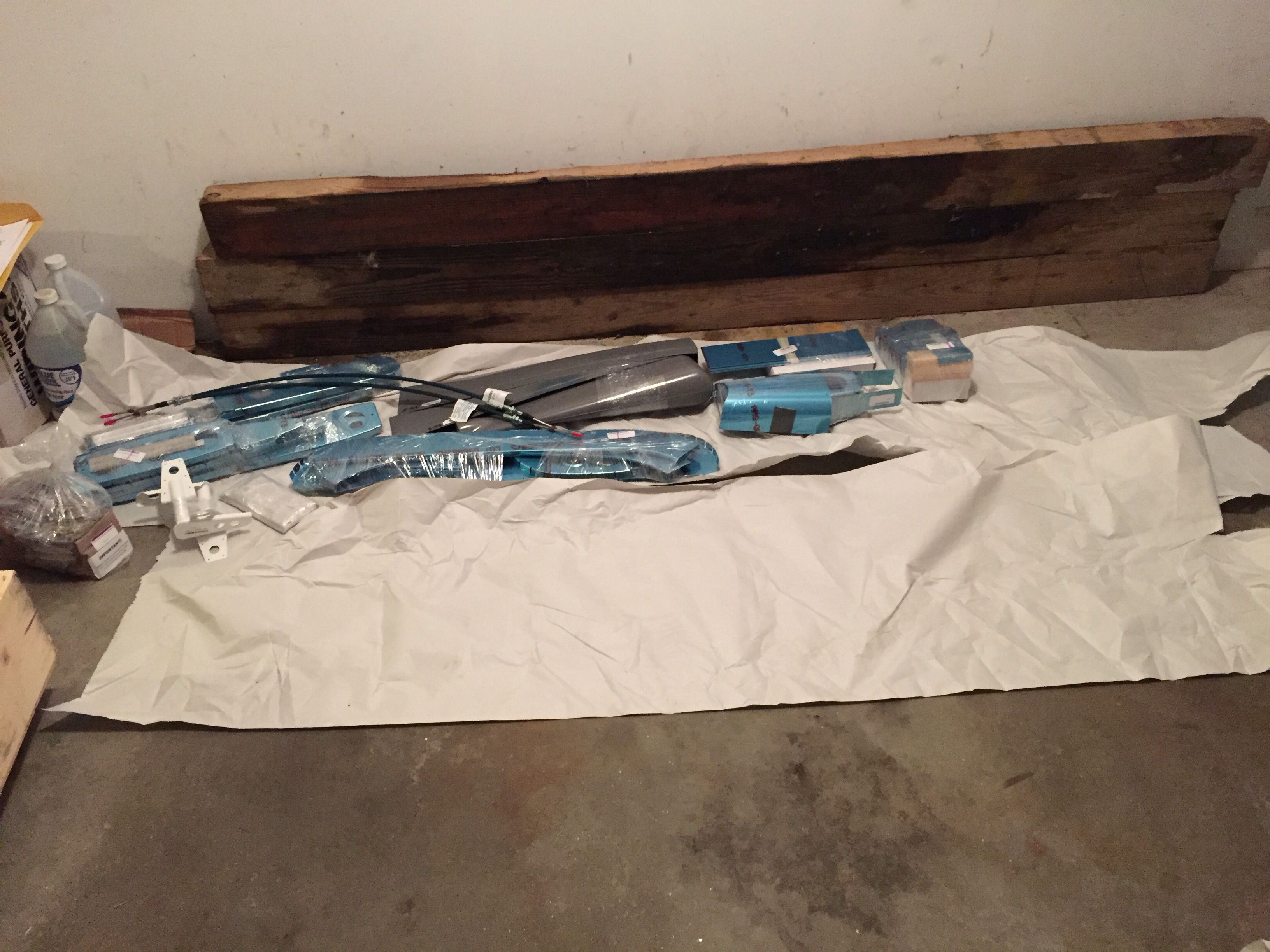
Some more pics of a partial unpacking.
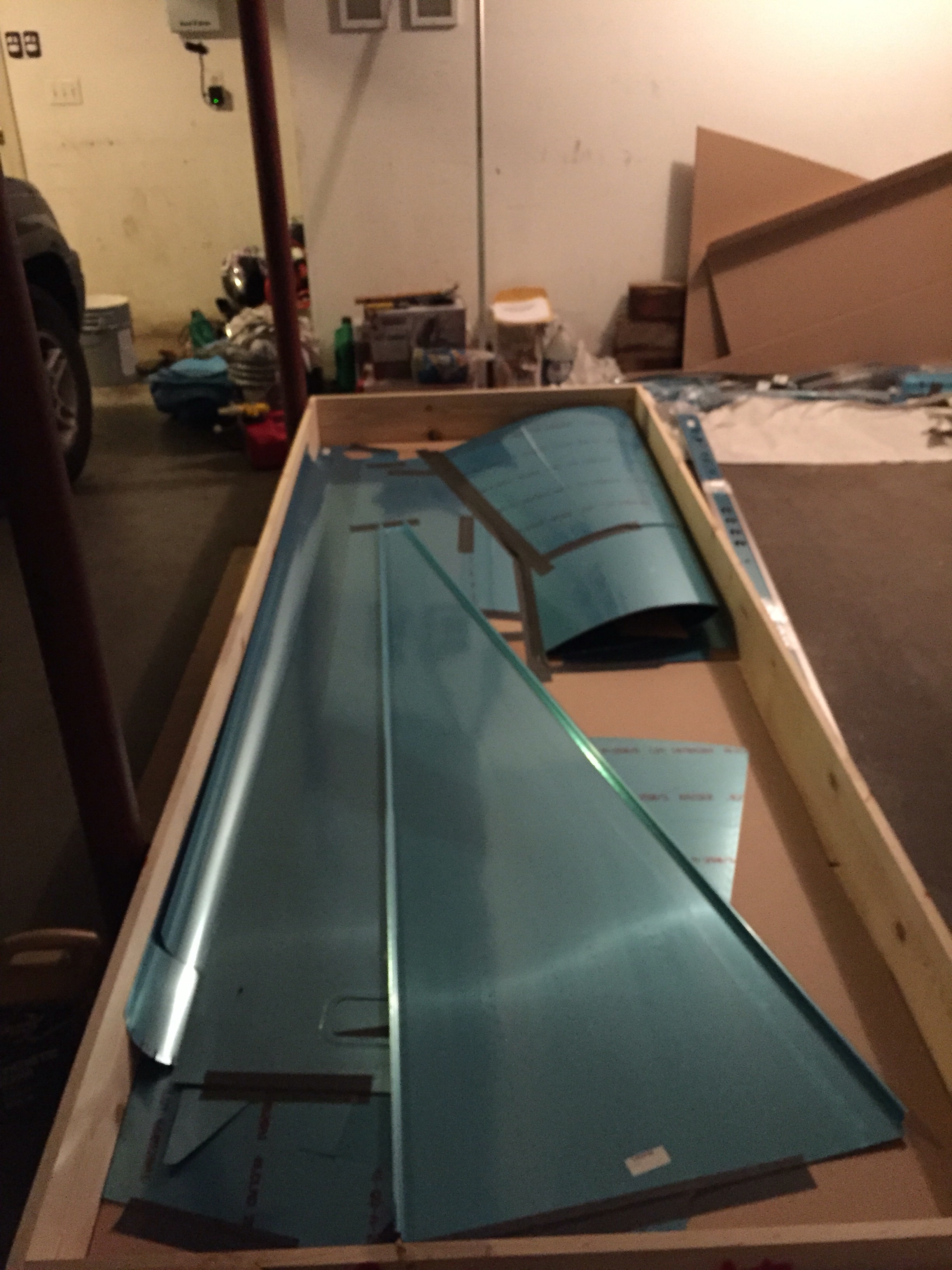
 Adam's RV10