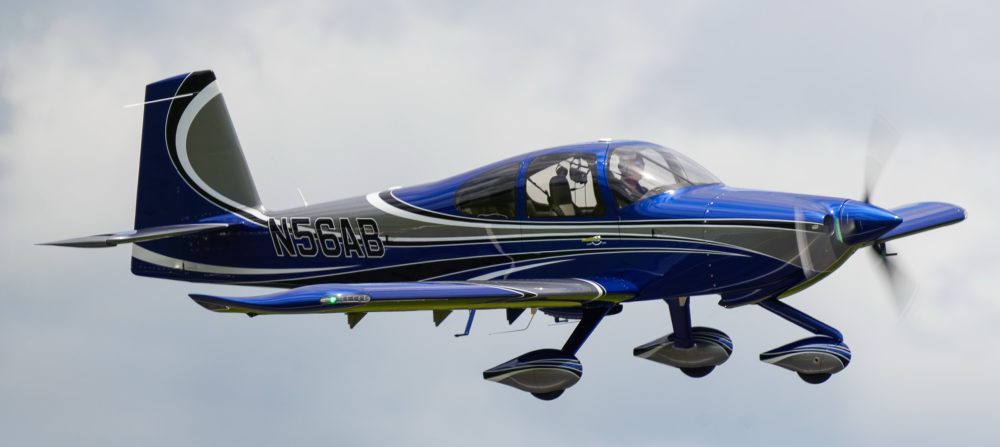
Wow.. What a ton of work! I’ve now completed all the Firewall Forward plumbing and wiring. The only thing left to do is to put spark plug ends on the wires and maybe tidy up a couple of wires, but outside of that.. I’m done. I also took a little extra time to revisit my baffle material seeing I wasn’t completely happy with it the first time. I changed the left, right, and aft material so each was one contiguous piece of material. Previously they were broken into 3 pieces. The aft part had some puckering that I didn’t like as well, so was addressed with this update.
The next couple of pics are from the front.

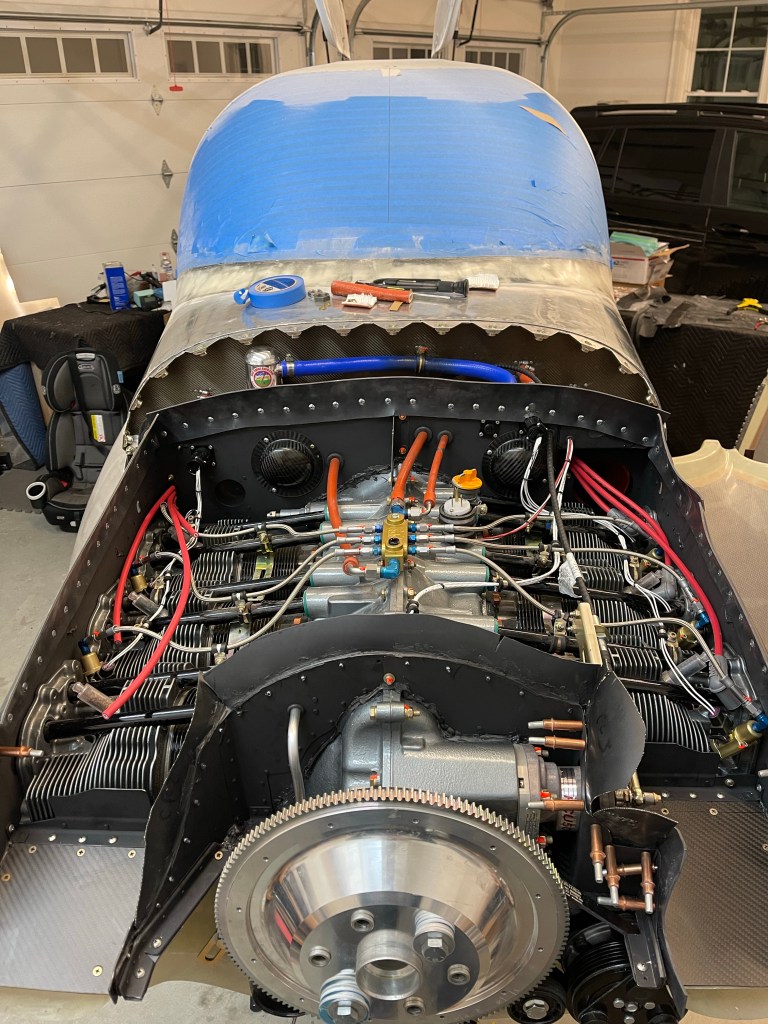
The right side of the engine.

Boy does it really get busy in the space between the firewall and the engine. Especially when you have 2 coil packs for the spark plugs.

The left side of the engine.


Again busy busy.. It really took so much time not only to wire things, but to come up with reasonable routes and securing things.

Now its back to finishing the inside wiring and getting my panel powered up!


Have you considered accessibility of the oil screen on the bottom back of the engine. Supposed to clean it at every oil change. I just did mine on my -6A and it was a pain! I’m going to really try to make it easier on my -10 but that is still a ways away for me.
LikeLike
With using the Cold Air Induction, I need a hose that connects rear port where the screen is to the oil sump drain. There’s a 90 degree AN fitting that goes into the hole where the screen is. Making it really difficult to remove and reinstall the fitting with the same clocking each time. So instead, I’m using a screen that goes inside of the AN fitting and have removed the stock screen. Removing one hose end from the fitting, I’ll be able to service the screen. See some details here about 1/2-3/4 of the way down the page. https://adamsrv10.com/2022/08/13/oshkosh-2022/
LikeLike
Interesting. I’m not real knowledgeable about how oil flows through the Lycoming engines but based on the fact that stuff collects on the inside of the screen, it must be pushed into the inside of the screen and then collected from around the outside of the screen. So if you just removed the screen and screwed the plug back into the engine, oil would continue to flow as before just not through the screen. So I don’t understand how you can use the screen access port as either an oil access or oil return port. I’m assuming the cold induction sump must be different somehow though I don’t understand why the screen would even be there in that case. I must be missing something.
LikeLike
This has to do with the CAI. There is no internal connection from oil sump to the screen area and up the back of the accessory case like there usually is for a stock engine. For this setup, you have to run a hose from the oil drain port to the port where the oil screen is. Oil flows out the drain, through the hose, to port where the screen typically is. So my setup has the AN fitting screen as it passes into that hose instead of the stock screen.
Hopefully that makes sense.
LikeLike
That explains it. I was under the impression you were removing the screen and replacing it with your external screen. But your CAI sump doesn’t support the use of the internal screen for oil pickup – hence you need to add the external screen. Thanks for taking the time to reply.
LikeLike
No problem. Slight clarification though. With this CAI solution, you can use the stock screen. Oil will still flow through it from the hose. The issue comes in that to check the screen you have to disconnect the hose and unscrew a 90* AN to NPT fitting. With pipe threads on that fitting going into the engine, it’ll be hard to get that fitting back in, tight, and with the same clocking it had without introducing a leak. Thus this external solution where you only have to remove a hose end with a flared AN fitting.
LikeLike